





Red Bull Stratos: stratospheric audiovisual technology
Felix Baymgartner es ya todo una leyenda al saltar al vacío a más de 40.000 metros de altura superando la barrera del sonido. La Red Bull Stratos ha conseguido varios récords, entre ellos haber llevado la tecnología de empresas de nuestra industria como Riedel, Panasonic, RED One o Canon a lo más alto.
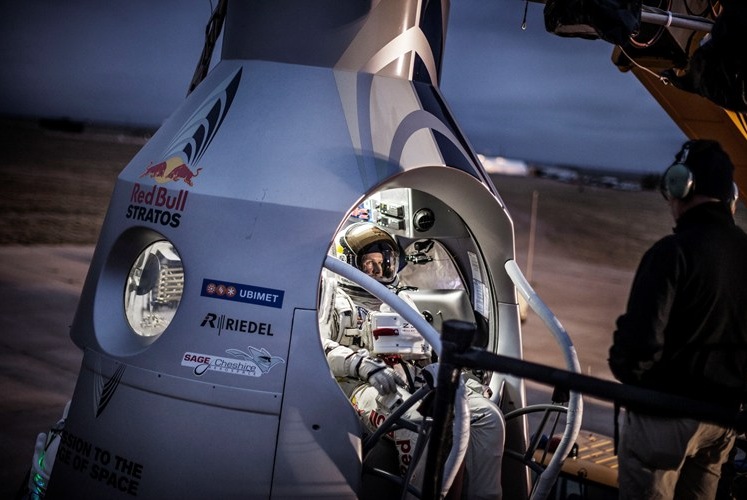
La misión Red Bull Stratos, protagonizada por Felix Baumgartner, permitió este domingo, tras varios intentos fallidos, la consecución de varios récords: el de ser el primer ser humando en romper la velocidad del sonido sin ayuda mecánica, el de realizar el salto de mayor altura con paracaídas, el de conseguir el mayor ascenso en globo tripulado hasta el punto más alejado de la Tierra y, sin duda, el haber llevado la tecnología broadcast a lo más alto.
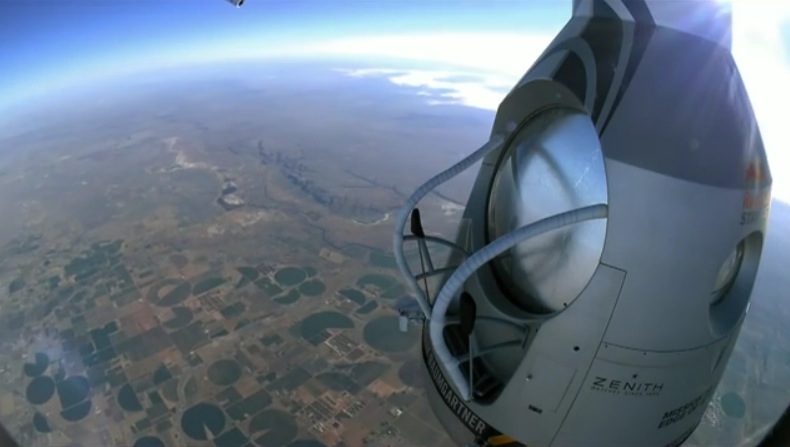
El deportista austríaco alcanzó prácticamente los 40.000 metros de altura, lo que supuso el récord de mayor altura en un vehículo tripulado, para más tarde realizar su esperado salto que le ha convertido en el primer ser humano en la historia que alcanza la velocidad del sonido sin ayuda mecánica. Baumgartner consiguió su registro de velocidad tras los primeros 30-40 segundos de caída libre cuando alcanzó la espectacular cifra de 1.342 kilómetros por hora.
Para lograr esta hazaña, la Red Bull Stratos, ha reunido a un nutrido grupo de expertos en medicina aeroespacial e ingeniería, quienes estuvieron encargados de supervisar el desarrollo de la misión. También han jugado un papel clave numerosos profesionales del audiovisual que hicieron posible que millones de espectadores de todo el mundo siguieran el ascenso y caída durante 16 largos minutos del deportista austriaco.
The latest in technology
Todo el despliegue técnico audiovisual de la Red Bull Stratos ha sido diseñado y desarrollado por el director de fotografía especializado en tomas aéreas, Jay Nemeth de FlightLine Films. Nemeth ha captado en varias ocasiones vuelos de gravedad cero para varios proyectos, entre ellos una interesante experiencia con el astronauta del Apolo 11, Aldrin Buzz. Gracias estas producciones, el equipo de FlightLine Films está muy familiarizado con trabajos en bajas condiciones de gravedad e, incluso, gravedad cero, conociendo a la perfección qué tipo de cámaras presentan una buena respuesta en estas condiciones extremas.
Esta productora ha sido la encargada de desarrollar un novedoso sistema de tracking que permitió seguir la caída libre de Baumgartner a muy alta velocidad y acondicionar los equipos con carcasas especiales para incorporarlos a la capsula de ascenso.
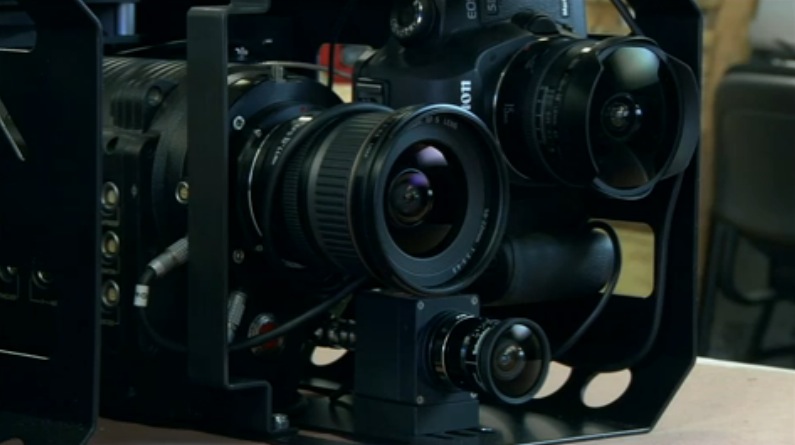 Esta cápsula contó con nueve cámaras de alta definición, entre ellas tres RED One 4K (4.000×2.000 píxeles) y tres cámaras digitales Canon 5D.
Estas cámaras se ubicaron en un cilindro protector especial que contenía más de 125 componentes electrónicos y más de tres kilómetros de cableado.
Baumgartner contaba además con tres mini-cámaras de alta definición, una en cada muslo y otra en el pecho.
Es de destacar que el principal reto en esta prueba ha sido la modificación de las cámaras para que sus sistemas eléctricos y térmicos funcionaran a la perfección a esas alturas. Las cámaras suelen presentar problemas para trabajar con calor y frío extremos, así como en situaciones como ésta de casi vacío total.
Por ello, todas las cámaras fueron previamente probadas en una cámara especial que simulaba las condiciones de altura y espacio. En la mayoría de los casos las cámaras han sido colocadas en cajas personalizadas diseñadas por FlightLine Films y Micar Fabrication & Design Company.
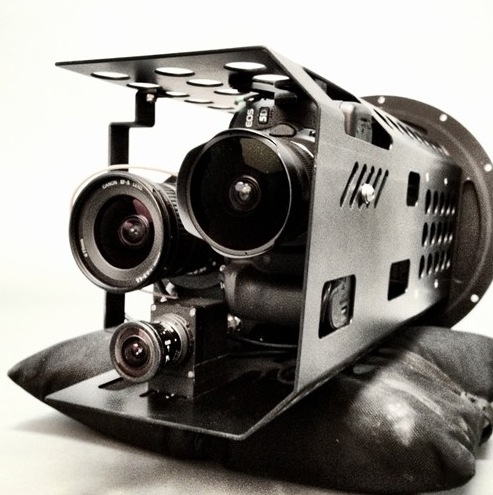 En cuanto a las cámaras de la cápsula, varias unidades se colocaron en la base exterior en compartimentos especiales y tres en el interior del habitáculo.
Todas las cámaras recogieron la señal en memorias de estado sólido y grabadoras externas, enviándose a la Tierra tres señales de vídeo digital por enlace microondas en directo.
Como curiosidad, señalar que algunas de las cámaras utilizadas en la cápsula utilizaron filtros especiales debido al intenso brillo del sol en la estratosfera superior.
En cuanto a las cámaras colocadas en el traje de Baumgartner tuvieron que trabajar en condiciones extremas durante 16 minutos, en algunos momento descendiendo a velocidad supersónica y en cualquier orientación (boca abajo, de lado…)
Seguimiento óptico
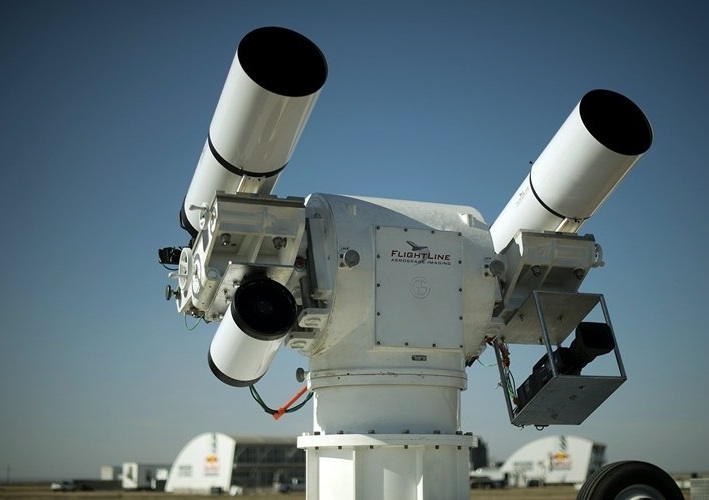
Para lograr una transmisión en vivo desde unos 37 kilómetros de altura sobre la Tierra, un sistema de seguimiento óptico se desarrolló para este evento con características especiales de infrarrojos y cámaras de alta definición. En este proyecto se han utilizado dos de estos sistemas denominados Joint Long-range Aerospace Imaging and Relay (JLAIR).
El sistema JLAIR incluía dos cámaras de alta definición Panasonic P2 (grabando a 60 frames por segundo) y dos RED 4K, así como varias cámaras digitales Canon y una infrarroja de onda corta. Además, se dotó de potentes teleobjetivos conectados a un pedestal motorizado de 3.600 kilos, anteriormente utilizado para rastrear lanzamientos del transbordador espacial.
Desde la sala de control anexa a cada JLAIR, los técnicos seleccionaron las mejores imágenes disponibles y transmitieron en tiempo real al control de la misión y a los diferentes broadcasters que emitieron la señal.
Cada JLAIR contó también con varios subsistemas para el tracker y subsistemas, codificación y transmisión vía satélite de vídeo HD.
Para el seguimiento de la caída a Tierra se empleó un helicóptero dotado de rastreo equipado con una cámara Cineflex estabilizada con un sistema giroscópico y óptica de gran precisión a nivel sub-pixel. La señal se enviaba desde un enlace microondas de 2 GHz, eligiendo la señal desde un mezclador.
Comunicaciones
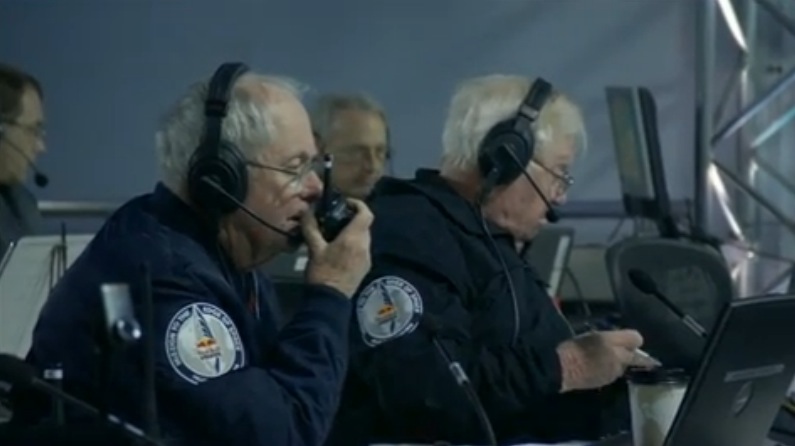
En esta misión ha jugado un papel fundamental la alemana Riedel implantando un avanzado sistema de comunicaciones basado en Tierra que comprendía dos aplicaciones principales: las comunicaciones entre el centro de control y el deportista austriaco y la transmisión y distribución de vídeo y datos.
Riedel ha sido la encargada de desplegar toda la infraestructura de comunicaciones en el lugar de la prueba interconectando el Control de la Misión, las oficinas de producción, el Centro de Medios de Comunicación / Prensa y la unidad móvil bajo una única infraestructura de comunicaciones a través de la solución Riedel Artist Digital Matrix. Artist es una solución basada en fibra que ofrece gran flexibilidad y fiabilidad bajo una única red que interconecta diferentes localizaciones con comunicaciones en audio con calidad de transmisión.
Riedel integró en sus sistemas de intercom la red de radio digital MOTORTBO con un centenar de dispositivos y diez canales. De esta forma, las radios podían directamente hablar con los usuarios (por ejemplo, en el centro de control de la misión o en la oficina de producción), y viceversa.
Todas las señales de vídeo sobre el terreno fueron distribuidas y enviados con tecnología de Riedel MediorNet. MediorNet es una red basada en fibra para la distribución de vídeo HD, audio, comunicaciones y señales de datos en tiempo real, que también proporciona un procesamiento integrado, para la instalación y el mantenimiento extraordinariamente eficiente. La misión Red Bull Stratos utilizó un total de 24 nodos MediorNet que se instalaron en una topología de anillo redundante para proporcionar la máxima fiabilidad. En caso de que una conexión entre dos nodos se perdiera, las señales podrían seguir distribuyéndose debido a esta topología redundante.
La conexión a la línea de vuelo, donde se puso en marcha el globo y la cápsula se realizó también con el sistema MediorNet. En este caso con dos frames MediorNet compactos, que estaban conectados al sistema principal. Todos los enlaces del sistema MediorNet se realizan con Riedel PURE, un cableado en fibra extremadamente robusto que está equipado con conectores Neutrik Quad OpticalCon.
MediorNet transportó todas las señales de vídeo de la misión, así como todas las señales de la unidad móvil y las procedentes desde los sistemas de seguimiento JLAIR. También distribuyó el audio emitido entre el control de la misión y gestió su grabación. Además, los datos de la telemetría utilizados para otras aplicaciones de difusión se transportaron igualmente a través de MediorNet.
Además del transporte de vídeo, MediorNet también sirvió como una red troncal de red para la conexión a Internet en el lugar, proporcionando conectividad Ethernet en todas las áreas del compuesto.
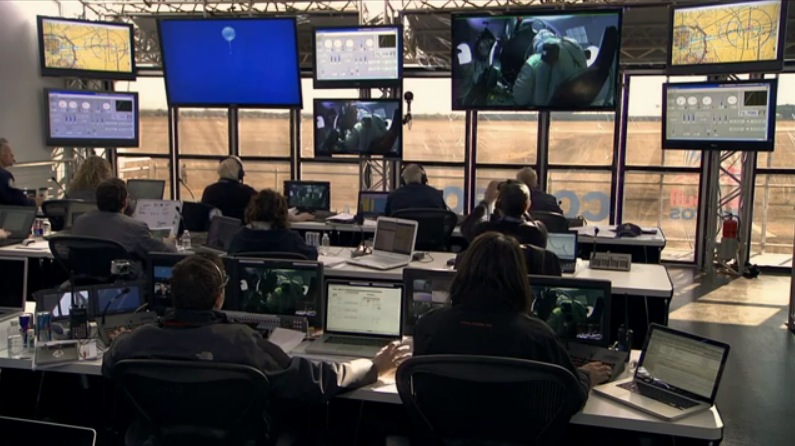
Similar a la configuración en el suelo, Riedel desplegó el sistema de comunciaciones con la cápsula, así como para las soluciones de transmisión de vídeo.
Una sistema especialmente desarrollado facilitó una comunicación fiable entre Félix Baumgartner y el Control de la Misión a lo largo de todo el ascenso.
Es de destacar que para el desarrollo de esta misión, Riedel trabajó durante tres años. El equipo de comunicaciones utilizado para Red Bull Stratos ocupaba el espacio de dos contenedores de carga empleándose un total de 5 km de cableado de fibra para las comunicaciones de la prueba. Ocho miembros del equipo de Riedel se desplazaron a Roswell, Nuevo México, dirigido por Matthias Leister, director de soluciones de radiodifusión, y Jacqueline Voss, ingeniero de sistemas.
Did you like this article?
Subscribe to our NEWSLETTER and you won't miss anything.
Related articles
 La IA de TVU Search, clave para la producción audiovisual de la carrera Wings for Life World Run de Red Bull
 AFIAL regresa con el congreso de tecnología audiovisual AVL Summit
 The audiovisual technology of corporate video: the company against society
 BIT Audiovisual Innova highlights the cutting edge in audiovisual technology
 The Spanish audiovisual technology industry increases its presence at IBC
 III Jornada de Transferencia de Tecnología, TTAndalucía, en el sector Audiovisual-TIC
 Atresmedia empleará los códecs Phoenix Stratos de AEQ en la cobertura del 20D
 BIT Broadcast 2014 will address audiovisual technology in its broadest perspective
 The stratospheric jump Red Bull Stratos, with Riedel as a technological partner, achieves an Emmy
 La potencia gráfica de Vizrt participó en el reto de la Red Bull Stratos
 Sono aplica creativamente la tecnología audiovisual en dos nuevos proyectos
 Fanta floods the street with audiovisual art and Christie technology
 Basque Audiovisual Services + Tech, new brand for Basque audiovisual technology
 The Valencian Audiovisual Cluster is committed to technology