





James Bond 007 regresa en ‘Skyfall’, rodada en digital con ARRI Alexa
Producida por Michael G. Wilson y Bárbara Broccoli, la nueva entrega de Bond cuenta con Callum McDougall como productor ejecutivo y Dennis Gassner en la dirección de producción. El director de fotografía es Roger Deakins, quien por vez primera ha apostado por rodar en digital con una ARRI Alexa. Para esta producción se construyeron treinta y un platós diferentes en ocho estudios de Pinewood, entre ellos el interior del búnker subterráneo del MI6.
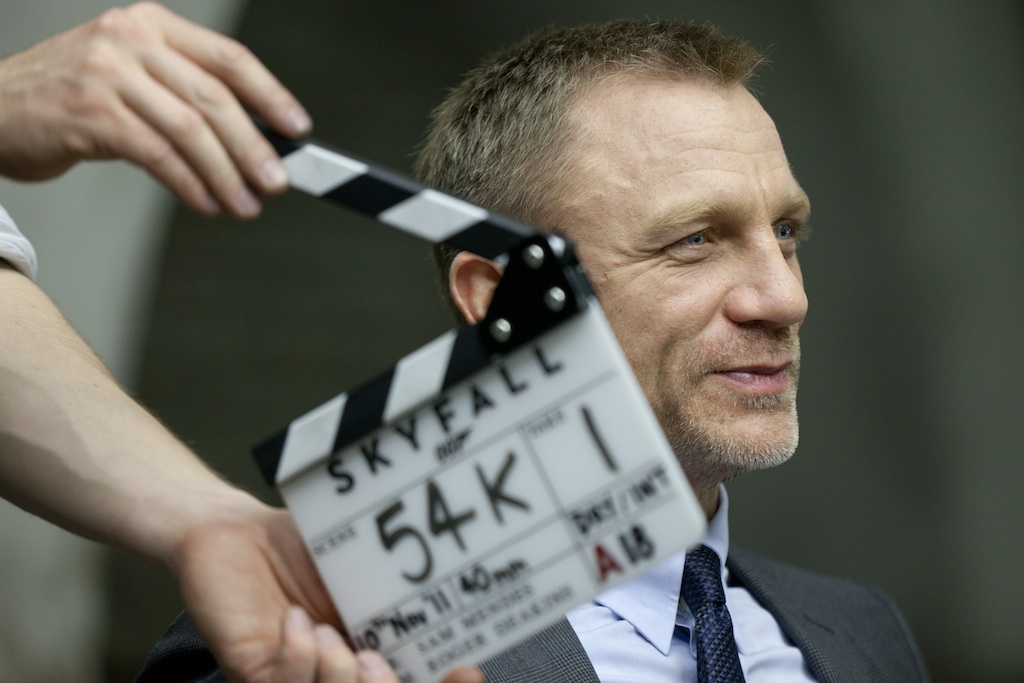
Daniel Craig vuelve como el agente James Bond 007 en Heavy rain, la vigésimo tercera aventura de esta franquicia que supone la más longeva de la historia del cine.
En esta ocasión, tras el fracaso de la última y fatídica misión de Bond y revelarse la identidad de varios agentes secretos en distintos puntos del planeta, la sede del MI6 es atacada, obligando a M a trasladar su agencia. Debido a estos sucesos, su autoridad y posición se verán amenazados por Mallory (Ralph Fiennes), el nuevo Presidente del Comité de Inteligencia y Seguridad. Ahora, el MI6 se enfrenta a amenazas tanto externas como internas por lo que M decide acudir al único aliado en quien puede confiar: Bond. El agente 007 desaparece en las sombras con una única aliada: la agente de campo Eve (Naomie Harris). Juntos le seguirán la pista al misterioso Silva (Javier Bardem), cuyas letales y ocultas motivaciones están aún por desvelarse.
Producida por Michael G. Wilson y Bárbara Broccoli, con guión de Neal Purvis & Robert Wade y John Logan, la nueva entrega de Bond cuenta con Callum McDougall como productor ejecutivo y Dennis Gassner en la dirección de producción. El director de fotografía es el diez veces nominado al Oscar, Roger Deakins, quien por vez primera ha apostado por rodar en digital con una ARRI Alexa.
50 años de Bond
Al enfrentarse a Skyfall, la vigésimo tercera aventura de James Bond, los realizadores estaban muy conscientes del hecho que el año 2012 coincide con el cincuenta aniversario de James Bond en el cine. Estaban decididos a que esta nueva entrega de la franquicia cinematográfica más longeva de la historia aportara todo lo que ha hecho que Bond sea Bond: es decir trepidante acción, villanos que roban la escena, bellas mujeres Bond, exteriores exóticos, un argumento fabuloso, el Aston Martin DB5… y, por supuesto, el propio agente 007, interpretado por Daniel Craig. Pero una película Bond no es la colección de piezas de un rompecabezas; la suma de estos elementos – como la ginebra y el vermú, agitados, no removidos – sirven para apoyar la historia. En el caso de Skyfall, el hombre que une todos los hilos es el ganador del Oscar Sam Mendes. “Sabía que Sam lo daría todo,” asegura Craig, quien encarna a Bond por vez tercera en Skyfall. “Aporta todo su conocimiento de realización cinematográfica pero además su conocimiento y cariño por Fleming y Bond.”
Aunque puede que Mendes sea más conocido por dirigir una clase de película diferente, para él el alto entretenimiento y la integridad artística no son excluyentes. “Yo mantengo mi propia relación personal con Bond. Comenzó cuando tenía unos 9 o 10 años – cuando salió Vive y deja morir,” explica el director. “Da la casualidad de que vivimos tiempos en los que es posible hacer una gran, entretenida, glamurosa y escapista película que además tiene algo que decir sobre el mundo en que vivimos. Con las interpretaciones de Daniel en 007: Casino Royale y 007: Quantum of Solace, James Bond aparece nuevamente como un hombre real en una situación real. Me recordó a lo que sentí cuando veía las películas de Sean Connery.”
Para los productores Michael G. Wilson y Bárbara Broccoli, el aniversario conlleva expectativas añadidas. “Es nuestro cincuenta aniversario y la vigésima tercera película así que hay más presión que nunca para hacer la mejor película Bond de todos los tiempos. Contamos con un reparto extraordinario, un equipo técnico increíblemente dotado, y un guión cargado de emoción,” adelanta Wilson.
Añade Broccoli que la relación y la historia de Mendes con la película Bond le aporta un elemento personal desde el primer momento. “Con su conocimiento y su historia se identifica con los espectadores – sabe lo que funciona y lo que espera el público. Y francamente, es genial verlo en el plató.”
A lo largo de estos 50 años ha sido precisamente la familia Broccoli –primero Albert R. “Cubby” Broccoli y el socio de éste, Harry Saltzman, y después los hijos de Cubby, Michael G. Wilson y Bárbara Broccoli – quienes han sido los supervisores y cuidadores de la franquicia cinematográfica de James Bond. “Michael y Bárbara son extraordinarios porque trabajan muy bien en equipo,” señala Mendes. “Bárbara tiene una asombrosa capacidad de hacer que las personas sientan que ella conoce sus nombres y cuáles son sus preocupaciones y si en algún momento se produce una crisis, ella es quien la solucionará. Michael aporta una enorme cantidad de experiencia y sabiduría, unidas a su dulce presencia en el plató – nunca intimida ni sermonea. Si tienes una idea y te preguntas: ‘¿Lo ha hecho antes Bond?’ pregúntale a Michael – él tiene la respuesta.”
Fue Craig, quien – con el apoyo de Wilson y Broccoli – invitó a su amigo, Mendes, a dirigir la película. “Cuando empezamos a hablarlo sentí una conexión con alguien que tenía el mismo entusiasmo y respeto que sentía yo hacia las películas de Bond,” recuerda Craig. “Y por supuesto, respeto profundamente a Sam como director. Le dije: ‘Esto va a ser una nueva experiencia para ti – te lo digo yo, porque yo he hecho dos y fue una experiencia novedosa para mí. No hay nada que te pueda preparar del todo'”.
Gran despliegue de producción
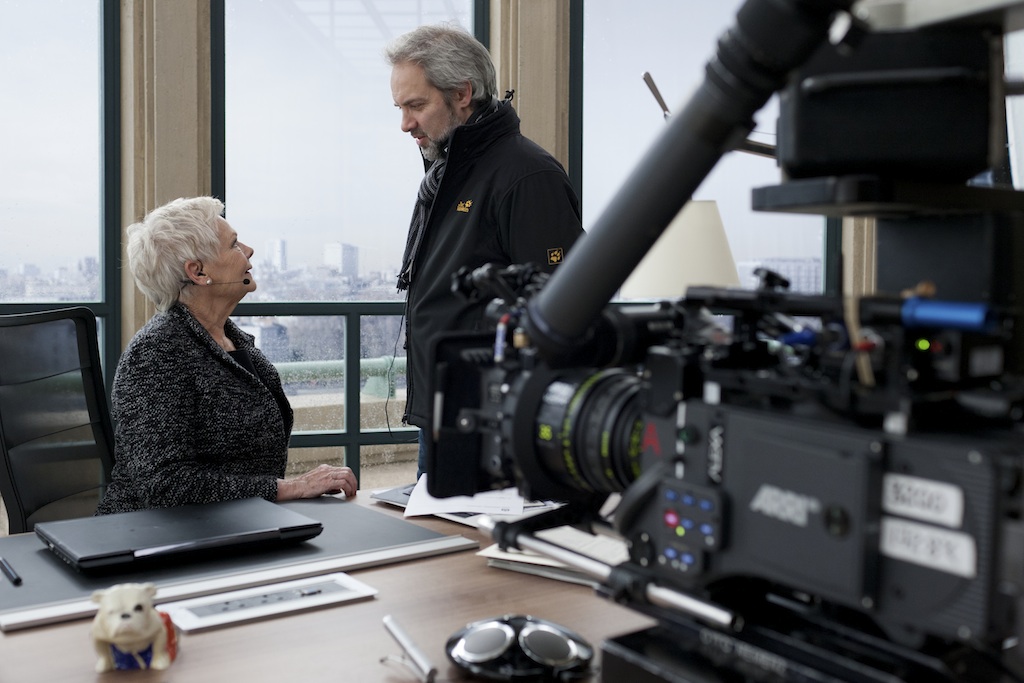
El director de producción ganador del Oscar, Dennis Gassner, vuelve en su segunda película Bond, su tercera colaboración con Sam Mendes, y su séptima colaboración con el director de fotografía Roger Deakins. “Creo que la historia siempre ocupa el primer lugar a la hora de diseñar cualquier plató para el personaje en cuestión” afirma el director. “En todo el proceso de diseño de Skyfall, fui consciente del viaje emocional de Bond y de cómo cada entorno le afectaba y vice versa. Construimos treinta y un sets, pero no hay que olvidar los exteriores y Londres, que también jugaron un papel importante en esta película.”
“La oportunidad de rodar en Londres fue como un pañuelo rojo para un toro, pero me refiero a Sam y a mí mismo,” dice Daniel Craig. “Queríamos mostrar partes de Londres que no hubiéramos visto antes, usar la ciudad de forma que resulta imposible para la mayoría de las películas pero que el nombre de Bond sí que hace posible porque abre más de una puerta. Londres tiene personalidad y eso me emociona porque adoro esta ciudad y creo que rara vez se representa bien en el cine. Nuestra meta fue captar la locura, el misterio, el peligro y el glamur de Londres. Creo que es valiente y maravilloso adentrarse tan de cerca en la ciudad.”
Una parte importante de la historia transcurre debajo del nivel de calle de Londres, un entorno basado en lo que se conoce históricamente como el sistema bunker de Churchill. Durante la Segunda Guerra Mundial las oficinas gubernamentales fueron trasladadas bajo tierra para ser protegidas; de igual manera, en Skyfall, cuando la sede del MI6 es atacada, M decide trasladarla.
“Esto responde a la clase de pregunta que todo gobierno debe pensar: en una situación extrema de urgencia, ¿a dónde vas?” pregunta Gassner. “En Londres durante la Segunda Guerra Mundial decidieron ir bajo tierra, debajo de la ciudad. Eso es lo que decide M y ahí van.”
Así, incluso un recurso del argumento como lo es trasladar la sede debajo de la ciudad le aporta al filme un aire claramente Británico. Explica Craig, “En las conversaciones que mantuvimos Sam y yo coincidimos en que queríamos que Skyfall llevara arraigados ciertos importantes valores Británicos. Soñamos con que esta película fuera inconfundiblemente Británica.”
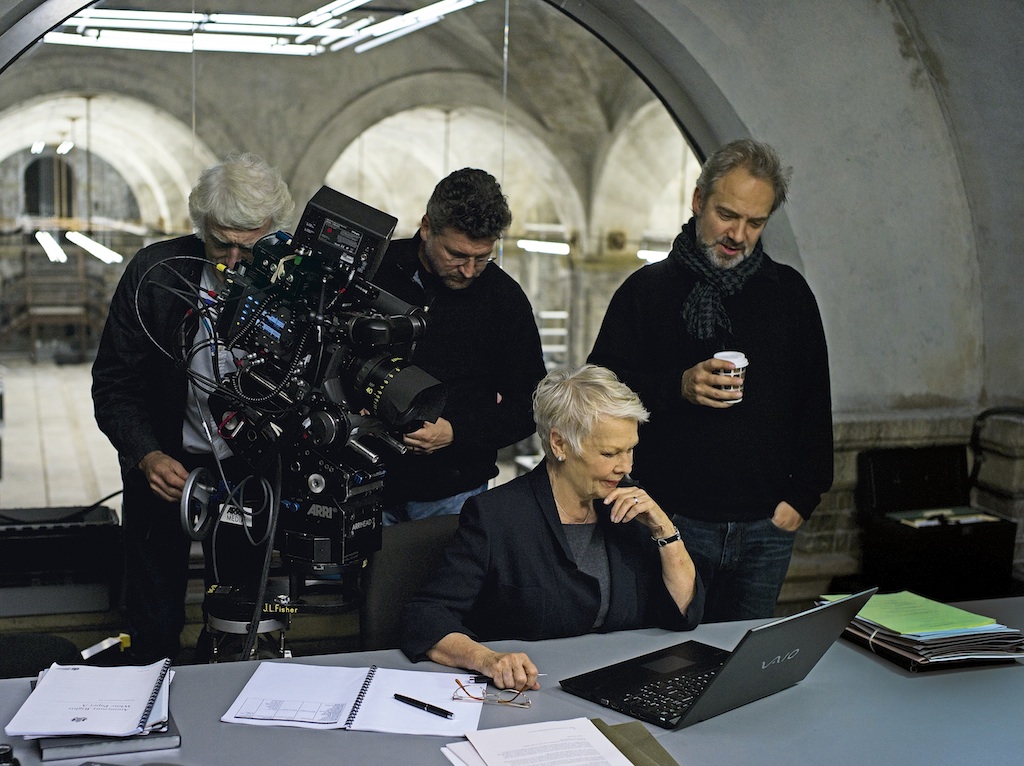
Gassner ilustra la yuxtaposición entre el ambiente que crea un exterior, como los viejos túneles del Old Vic, y los platós creados en estudios, entre ellos el bunker soterrado de la sede del MI6. “Necesitábamos el plató para controlar las escenas más grandes y además para acomodar la brillante iluminación de Roger Deakins. Fue un placer trabajar en los viejos exteriores del teatro Old Vic y nuestro reconocimiento privilegiado del Londres subterráneo supuso una fuente de inspiración para volver y construir el plató en los estudios de Pinewood. He aquí la gran fusión entre los exteriores y los platós construidos, unos inciden en los otros hasta convertirse en una unidad.”
Efectos digitales
Las escenas especiales siempre juegan un papel importante en las películas de Bond y Skyfall no es una excepción. El director Sam Mendes, el director de la segunda unidad Alexander Witt y el coordinador de especialistas Gary Powell trabajaron muy de cerca para crear una aventura física y creíble para Bond. Era importante tanto para Mendes como para Powell acercarse a la película desde un punto de vista más realista. La acción comenzaba ya en las páginas del guión. “Escribir secuencias de acción es uno de los grandes retos y una de las grandes alegrías de ser guionista,” asegura el guionista John Logan. “El reto como guionista en Skyfall era encontrar la manera de que la acción se acercara lo más posible al estilo ‘Bond’ – y para mí eso implica que es dura, real, y aumentada.”
Claro que, ningún actor tuvo más escenas de acción que Craig. Javier Bardem describe cómo Craig aborda su papel: “El papel requiere cierto esfuerzo físico y sencillamente tienes que estar preparado para ello pero mi papel no tuvo evidentemente nada que ver con el de Daniel. Él hace las escenas de acción con tanta facilidad: al observarlo en acción pensé, ‘Si yo fuera tú, ¡no estaría haciendo eso!’” dice Bardem entre risas. “A ver, yo hice alguna cosilla, pero nada en comparación con lo que hizo Daniel.”
“Daniel es un actor extremadamente trabajador, probablemente el más trabajador que haya visto,” dice el productor Michael G. Wilson. “Y no sólo me refiero a la preparación mental, sino también a la física. Entrena como un demonio, como un deportista profesional. Está totalmente comprometido con el papel, comprometido con ser Bond.”
Aunque Powell, el coordinador de especialistas, agradece el avance en la tecnología digital y la animación por ordenador, prefiere que la acción sea real. “Todos nosotros, especialmente Sam y Gary, sentimos que teníamos que estirar los límites de esta película lo más posible. Y siempre nos hemos apoyado en el hecho de que en las películas Bond lo hacemos de verdad y así es. Si usamos la animación por ordenador sólo es un complemento, no crea la escena. Estar encima de un tren que viajaba a 50 kilómetros por hora, luchando con Ola Rapace mientras atravesábamos un puente probablemente fue un momento destacado.”
Añade Broccoli, “Daniel aporta muchísimo al diseño de la acción y a las luchas en particular porque él es quien realmente lo realiza ya que siempre intenta hacer la mayor parte posible. Estábamos en Turquía rodando la secuencia del tren y yo tenía el corazón en la boca todo el rato; él y Ola luchaban sobre el tejado de un tren en movimiento y los gestos que hacían te detenían el corazón. La acción funciona así de bien gracias a Daniel porque él la sabe vender. Es él quien está ahí arriba y creo que los espectadores lo saben.”
Aunque la secuencia inicial dura sólo doce minutos en pantalla, llevó tres meses de ensayo y dos meses de rodaje. Powell alistó al campeón de motocross Robbie Maddison, el que fuera el ‘Stig’ Ben Collins de Top Gear, y el campeón de rally Británico Mark Higgins para completar su equipo de especialistas. “Es importante definir la acción paso a paso para que mi equipo se lo pueda aprender como la palma de su mano. Tras meses de ensayo, se te queda grabado en la memoria, por lo que es menos probable que cometas un error,” explica Powell.
Aunque la acción tiene un ritmo trepidante, asegura Mendes que el proceso de rodaje no lo es. “Por decirlo de alguna manera: la acción del montaje es mucho más emocionante que la acción del rodaje. La acción en el rodaje es sumamente meticulosa, son pequeños incrementos y piezas. Para mí el reto es crear otra historia de acción paralela para que nunca parezca una persecución lineal. Nunca es: sujeto A persigue a sujeto B, siempre hay otras cosas ocurriendo simultáneamente para que sigas varias historias entrelazadas a la vez.”
Añade Neal Purvis, “puedes incluir cuantas explosiones quieras pero el núcleo dramático tiene que funcionar.”
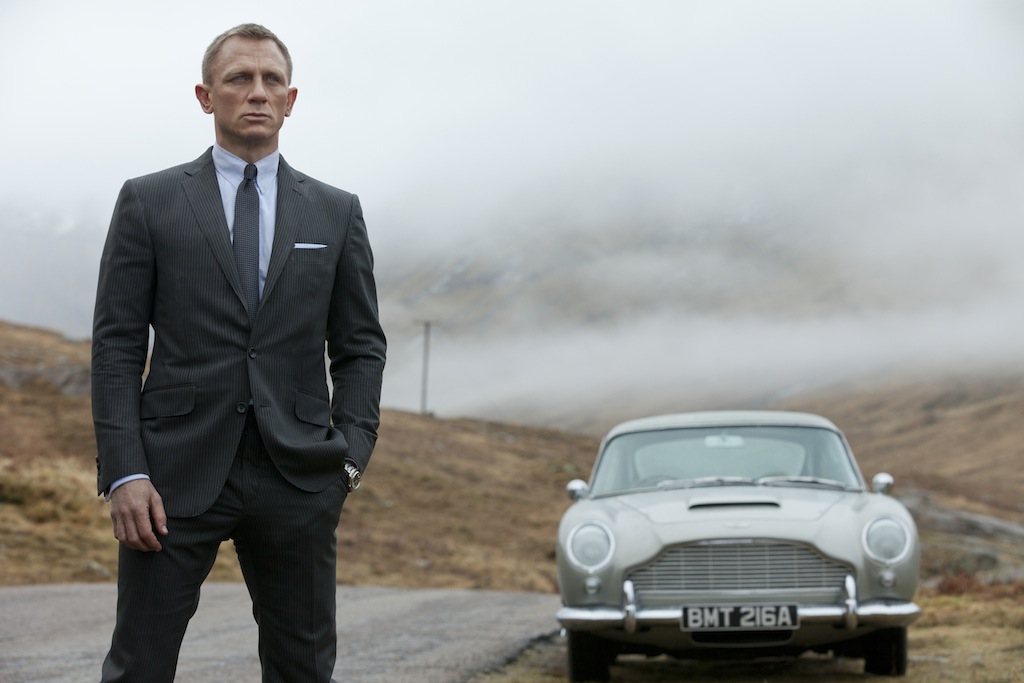
Otro elemento que forma parte innegable de la franquicia Bond es su coche. Con los años el Aston Martin DB5 se ha convertido en un sinónimo de Bond. Explica Wilson que cuando se refiere al vehículo de Bond, hay un coche que grita: ¡James Bond! “Hemos flirteado con otros coches de cuando en cuando pero siempre volvemos al Aston Martin,” recuerda Wilson. “Es un coche característico para Bond y un clásico, el suyo personal.” Y no hay Aston Martin más íntimamente vinculado a Bond que el DB5, el modelo sesentero que condujo Bond por vez primera en Goldfinger. Para esta historia, esta película, este guiño a la historia de Bond no sólo sería atractivo para los fans, sino que además encajaba en el argumento.
El guionista John Logan estaba encantado con el retorno del coche más icónico de Bond. “¡Estamos enamorados del DB5! Cuando piensas en Bond, piensas en ciertas cosas claramente. Y una de esas es ese coche en particular. Es el coche esencial de Bond y en una película que reconduce a Bond a su pasado y a su futuro, teníamos que utilizarlo – además del hecho que es completamente alucinante.”
Daniel Craig también cayó bajo el embrujo del clásico coche Bond: “Me encanta, y esta historia era la plataforma perfecta para reintroducir el DB5. El filme trata de cómo Bond vuelve a sus raíces y se enfrenta a viejos demonios, así que encajó. Además le sacamos partido.”
The filming
La producción de Skyfall se basó en los históricos estudios Pinewood en Buckinghamshire, a las afueras de Londres. Con el tiempo Pinewood se ha convertido en un sinónimo de las películas de James Bond, ya que todas salvo tres – Moonraker, Licencia para matar y GoldenEye – se han rodado allí. Se construyeron treinta y un platós diferentes en ocho estudios de Pinewood, entre ellos el interior del bunker subterráneo del MI6, el interior del Golden Dragon Casino, donde Bond conoce a Severine, y el exterior del Dead City, una isla abandonada cercana a la costa de Macao, donde reside Silva.
En el estudio 007 se rodó la espectacular colisión de metro que se produce cuando Bond persigue a Silva. El equipo técnico construyó dos trenes a tamaño real y cada uno pesó siete toneladas. Era demasiado arriesgado permitir que entraran personas al estudio así que instalaron diez cámaras que fueron operadas por control remoto para captar la colisión desde diferentes ángulos.
El tanque exterior de los estudios sirvieron también como el exterior del Golden Dragon Casino. El decorado fue iluminado por tres cientos faroles flotantes y dos cabezas de dragón de nueve metros de altura. Trajeron a doce artesanos de China para crear estas estructuras auténticas hechas de cables de acero enrollados, tejido de seda, y 400 bombillas para iluminarlas.
Muchas de las escenas exteriores de Skyfall se rodaron en las calles del centro de Londres. Para Mendes supuso un gran reto rodar en la ciudad. Explica: “Vivo aquí. Me he centrado en darle una escala mítica. He intentado darle emoción, ambiente, y una sensación de amenaza. Se podría decir que hemos rodado en algunos de los lugares esperados, pero espero que lo hayamos hecho de forma inesperada.”
Rodaron en nueve puntos diferentes de la ciudad. Los Túneles Old Vic se usaron como la zona de entrenamiento del MI6, un aparcamiento subterráneo en la calle Great Suffolk cerca del mercado Smithfield sirvió como la entrada de la nueva sede del MI6 y la entrada de la torre Broadgate, el cuarto edificio más alto de Londres, fue embellecido e iluminado para asemejarse a un edificio de oficinas de Shanghái, donde se libra una pelea entre Bond y Patrice (OLA RAPACE). La piscina Virgin Active en Canary Wharf se usó como la piscina del hotel de Bond en Shanghái.
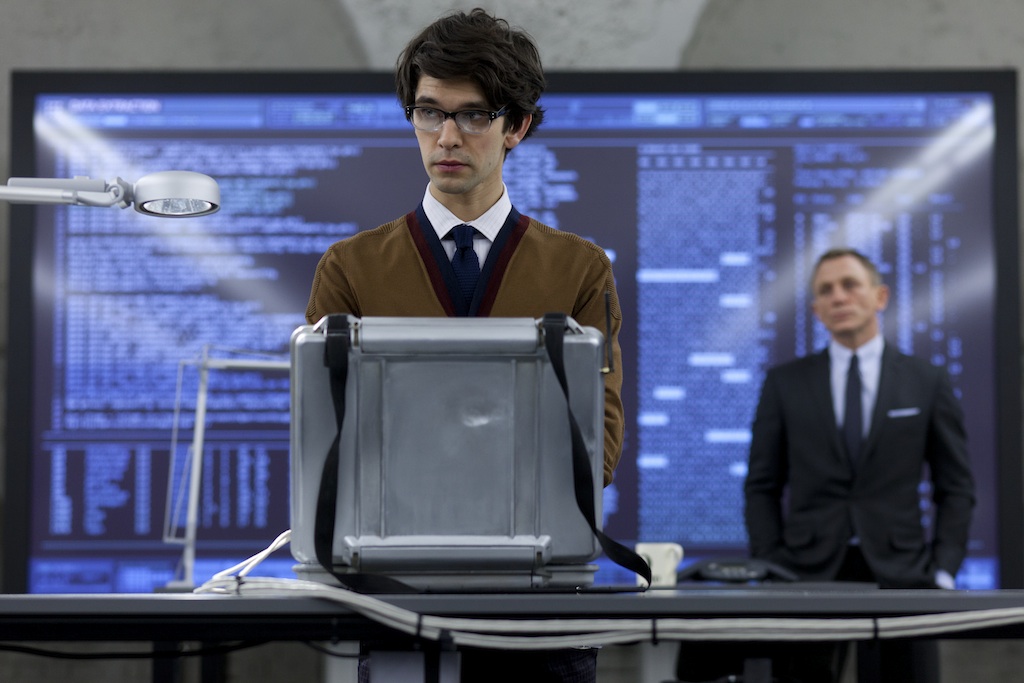
El National Portrait Gallery se empleó como ubicación de una reunión secreta entre Bond y el personaje de Ben Whishaw. El equipo de rodaje trabajó de noche durante las horas de cierre del museo ante una colección de los mejores cuadros del mundo. Al amanecer la unidad se trasladó afuera para rodar cómo entraba Bond desde la emblemática plaza Trafalgar de Londres.
La secuencia inicial del tráiler muestra a Bond en el tejado del DECC – (Departamento de energía y cambio climático). El departamento de exteriores buscó varios lugares pero la vista desde el tejado de DECC supuso el telón de fondo perfecto para esta importante escena.
Con la cooperación y la asistencia de la Alcaldía y la Oficina de Transporte para Londres, la producción pudo acordonar tanto el puente Vauxhall como Millbank para una escena en la que M presencia cómo la sede del MI6 es atacada. La explosión se representó con unos cuantos fuegos artificiales durante el día y después se reconstruyó un modelo del MI6 a una tercera parte de escala en el estudio exterior de Pinewood donde Chris Corbould, el supervisor de efectos especiales y miniaturas, utilizó veintiocho explosivos para recrear el ataque.
En el transcurso de cuatro fines de semana, la producción rodó en la estación de Charing Cross del London Underground. La unidad pudo acceder a una línea que estaba fuera de servicio para rodar secciones de la persecución entre Bond y Silva. La persecución continuó por Parliament Square, pasando por Whitehall, hasta llegar a Trinity Square donde la secuencia llega a su clímax.
También figuran como exteriores ingleses el colegio naval Old Royal Naval College y Hankley Common en Surrey.
Skyfall también se ha rodado en los paisajes más icónicos de Escocia, y en exóticos exteriores en los alrededores de Shanghái y Turquía.
John Logan describe el importante papel que juega Shanghái en el argumento: “Buscábamos la oposición a Londres. Queríamos exteriores exóticos que fueran totalmente opuestos al mundo en el que él se ha criado, en el que vive, de alguna forma buscando que Bond se sintiera incómodo.”
El director de la segunda unidad Alexander Witt y la segunda unidad se trasladaron a Shanghái para rodar planos de establecimiento y secuencias en carretera. El equipo trabajó por las noches en la ajetreada semana previa al Año Nuevo chino para captar la estimulante y cambiante metrópolis que conforma una de las ciudades más dinámicas del mundo. Una unidad aérea pilotada por Marc Wolff contó con la inusual autorización de sobrevolar el espacio aéreo de la ciudad para grabar imágenes de la misma desde un helicóptero prestado por el gobierno chino. Dennis Gasser y el departamento de arte trabajaron para crear el resto del ambiente chino en Pinewood.
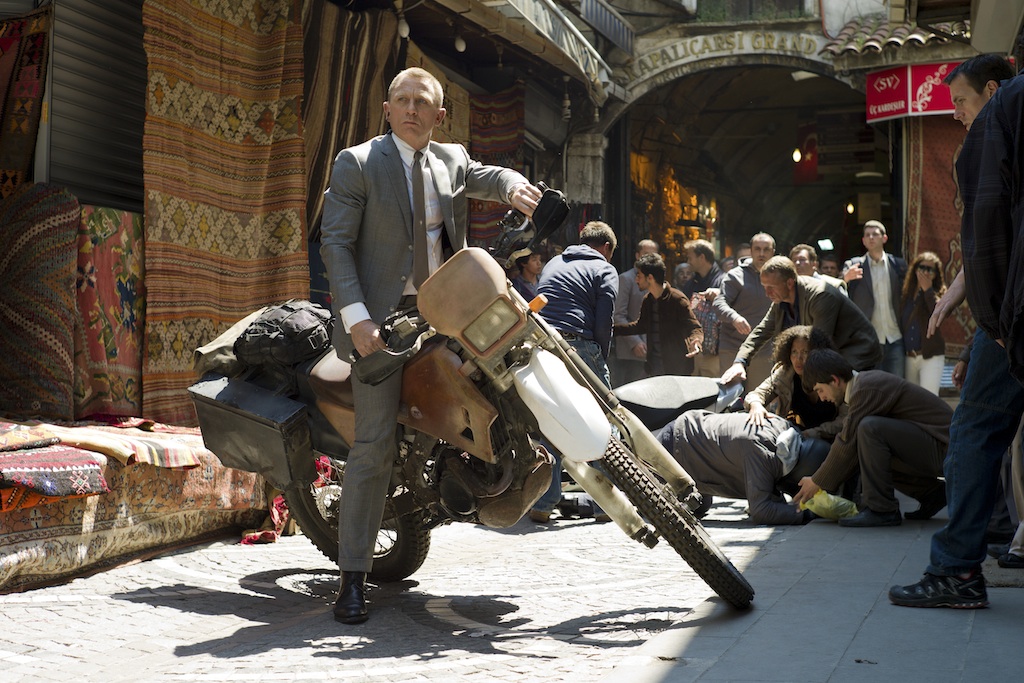
La esperada secuencia inicial de Heavy rain se rodó en Estambul y en Adana. Cuando Bond descubre que le han robado información vital a un agente herido del MI6 persigue al atacante, Patrice, con la ayuda de Eve, por las pobladas y vibrantes calles del centro de Estambul. Bond atraviesa Eminonu a toda prisa. Es una de las plazas más antiguas y magníficas de Estambul y está rodeada por un antiguo Bazar de especies y su fabulosa mezquita Yeni. El departamento de arte y atrezo creó un enorme mercado dentro de la plaza Eminonu con más de dos cientos cincuenta puestos por los que pasa Bond en motocicleta.
La persecución a alta velocidad continuó por los tejados de los edificios y dentro del famoso Gran Bazar de Estambul. El Gran Bazar es uno de los mercados cubiertos más grandes y antiguos del mundo, con 61 calles cubiertas y más de tres mil puestos que atraen hasta a 400.000 visitantes cada día. Debido al riesgo que implica la secuencia, la unidad de cine pudo acceder al bazar sólo los domingos ya que ese día permanece cerrado. Gracias al esfuerzo unido de los departamentos de exteriores, ambientación, arte y atrezo, vistieron el bazar en las madrugadas del sábado para recrear el hervidero de actividad que uno esperaría de ese lugar. Trajeron a unos 500 extras turcos y especialistas al Gran Bazar para recrear el ajetreado y vibrante ambiente que lo caracteriza. Los tejados del Bazar sirvieron de espectacular plataforma en la que disfrutar de la antigua y dinámica silueta de la ciudad de Estambul. La producción se esforzó por proteger y preservar la histórica arquitectura del Gran Bazar, por lo que colgaron paneles flotantes de acero reforzado encima de las baldosas existentes para proteger la estructura original.
La persecución requirió una flota de doce Land Rover Defenders y dieciséis Audis A5, todos ellos modificados y reforzados de distintas formas para satisfacer los requisitos de los departamentos de especialistas y cámara. Dos de los Defenders contaban con pods de conducción que se ajustaron al techo del coche de Eve para permitirle a Naomie Harris concentrarse en su diálogo mientras que conducía el ex ‘Stig’ Ben Collins a 80 km. por hora por las congestionadas calles de la ciudad.
Heavy rain es la tercera película Bond rodada en Estambul. La primera fue Desde Rusia con amor (1963) donde el mismísimo Ian Fleming acompañó a Cubby Broccoli, Harry Saltzman y el equipo de rodaje, y la segunda fue una breve visita en El mundo nunca es suficiente (1999).
De Estambul la producción se trasladó a Adana para continuar la persecución donde Bond le sigue la pista a Patrice en un tren de pasajeros turco de alta velocidad.
Adana es una ciudad moderna ubicada en el corazón agrícola de Turquía, próxima a la frontera oriental. Aquí transcurrió una parte importante de la persecución en la que se dan cita: un centenar de vehículos que avanzan a toda velocidad y la colisión de un camión. Es aquí donde se lucen dos motociclistas, los aficionados Lee Morrison y Robbie Maddison, en una persecución que acelera el corazón, y por supuesto, donde se rodó la secuencia a bordo del tren.
La persecución a bordo del tren le supuso varios retos a la producción. Trabajar sobre un tren en movimiento fue uno de los aspectos más complicados y técnicamente exigentes de la secuencia inicial.
El clímax de la secuencia de acción tomó lugar en el imponente puente Varda, a una hora de distancia de Adana. El puente Varda se construyó en 1912 y mide 175 metros de largo y 91 de alto. La lucha llega a su fin cuando Eve accidentalmente le dispara a Bond en vez de a Patrice, y Bond sale disparado del tren y cae en el río. El doble de Bond, Andy Lister, realizó la escena. Los aparejadores montaron una grúa en un vagón del tren para amarrar la línea de seguridad. Andy reacciona al disparo cojeando hacia atrás hasta caerse en un precipicio de 91 metros de profundidad.
Fethiye, un pueblo costero en el sur de Turquía, sirvió como el apartado lugar donde Bond vive su momento más bajo.
El productor asociado Gregg Wilson acompañó al director de producción Dennis Gassner en una extensa misión de reconocimiento para hallar una playa con las características geográficas que imaginó el director Sam Mendes. Optaron por la playa Calis, una remota playa que supuso un gran reto asegurar para el departamento de exteriores. Tuvieron que negociar con los seiscientos trece propietarios de la playa para permitir que rodaran en este precioso paraje de la costa turca.
Curiosidades de Skyfall
- En la película la casa de M es el antiguo hogar del legendario compositor de las películas Bond, John Barry. Los realizadores pensaron que sería un bonito homenaje al compositor, quien falleció en 2011.
- Skyfall marca la primera película que rueda en una cámara digital el director de fotografía diez veces nominado al Oscar, Roger Deakins. Deakins describe el Arri Alexa, “Esta cámara nos ha traído a un punto en el que lo digital sencillamente es mejor.”
- Fueron necesarias 9 semanas y un equipo de 250 personas para construir la sede subterránea del MI6 en el estudio 007.
- En los entrenamientos con armas, el reparto disparó 200.000 balas de munición.
- Bond tiene 85 ejemplares del traje de Tom Ford que lleva en la secuencia inicial.
- Tuvieron que añadirle peso a la corbata de Bond para la persecución en moto gracias al cual la corbata se quedó en su sitio cuando circulaba a altas velocidades.
- Echaron Coca Cola en el asfalto de las calles de Estambul para evitar que las motos se deslizaran.
- El coordinador de especialistas, Gary Powell, procede de una larga dinastía de especialistas. Entre todos sus integrantes la familia Powell ha trabajado en cada película de James Bond desde Agente 007 contra el doctor No en 1962
- Para poder rodar la persecución en Estambul, el equipo de producción tuvo que retirar las baldosas de cerámica del bazar y sustituirlas por baldosas de goma por si la escena no salía según lo previsto. Una vez terminado el rodaje volvieron a introducir las baldosas originales en su lugar.
- En los planos exteriores de Whitehall a mitad de camino entre la persecución entre Bond y Silva, había 750 extras, 100 vehículos de fondo, con un total de 300 integrantes en el equipo de rodaje.
[youtube]http://www.youtube.com/watch?v=6kw1UVovByw[/youtube]
[youtube]http://www.youtube.com/watch?v=tUFqVLMM60A[/youtube]
Did you like this article?
Subscribe to our NEWSLETTER and you won't miss anything.
Related articles
 Amazon se hace con IPs como James Bond o Rocky tras comprar MGM por 8.450 millones de dólares
 Cinematography Pereira and Sony bring James Bond in 'Spectre' to the Teatro Real in Madrid
 La nueva entrega de James Bond (‘Spectre’) se estrena en el Royal Albert Hall con proyección dual 4K de Sony
 Deluxe Spain creates a unique atmosphere in 'Refugiados' in this series shot with ARRI Alexa and RED Epic
 ARRI Alexa SXT: a new step in the Alexa family, now with ProRes 4K UHD and 4K recording
 ‘Drunktown’s Finest’, rodada con ARRI Alexa, sorprende en Sundance
 The BBC concludes the post-production of 'Our Girl', a TV movie shot with ARRI Alexa
 World premiere of 'Skyfall' in London with Sony Digital Cinema 4K projection
 BSkyB y Sky Italia lanzan un canal 24 horas sobre James Bond
 ARRI Alexa in the next season of 'Dexter'
 Digital cinema workshop with ARRI Alexa in San Sebastián
 Telecinco premieres 'La Fuga', one of Mediaset's main bets for 2012, filmed with ARRI Alexa
 The ARRI Alexa Plus available in Ovid
 Alexa, ARRI's new digital camera, dazzles NAB