





La tv conectada podría abrir las puertas del mercado laboral a las personas con discapacidad
Investigadores de la ETSI de Telecomunicación de la Universidad Politécnica de Madrid diseñan una plataforma de televisión conectada. La plataforma, desarrollada en el marco de la Cátedra Indra-Fundación Adecco de Tecnologías Accesibles, será el punto de encuentro y de difusión para personas con discapacidad y empleadores.
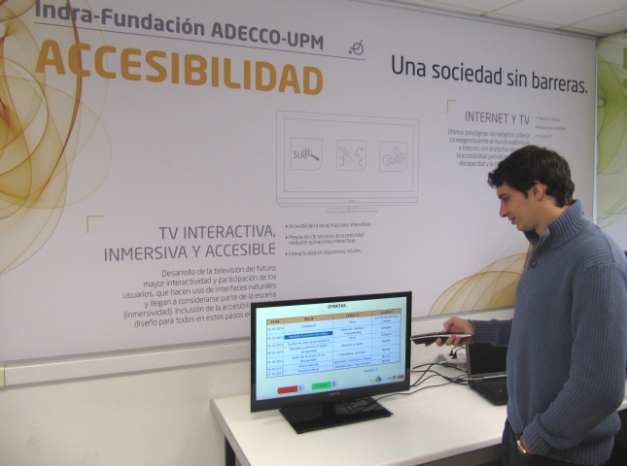
El potencial creado con los televisores de última generación que se pueden conectar a Internet abre enormes posibilidades para la prestación de nuevos servicios a los usuarios.
Investigadores de la ETSI de Telecomunicación han visto cómo ese potencial puede facilitar la integración social de las personas con discapacidad. En ese ámbito, ha nacio el proyecto INLADIS, “Plataforma multipantalla para la Integración Laboral de las Personas con Discapacidad”, una plataforma con servicios para la integración laboral de este colectivo, desarrollada en el marco de la Cátedra Indra-Fundación Adecco de investigación en Tecnologías Accesibles de la Universidad Politécnica de Madrid.
El estándar HbbTV es una iniciativa internacional que ha creado una especificación abierta para sistemas HBB (Hybrid Broadcast Broadband) también conocido como televisión híbrida o televisión conectada. Se caracteriza por la existencia de pantallas híbridas que son capaces de recibir y de mostrar contenidos que llegan tanto de la red tradicional de difusión (esto es, la TDT) como de la red de banda ancha (Internet). El televisor, dotado de un conector para Ethernet o de wifi, se convierte así en un equipo más de la red doméstica, capaz de acceder a contenidos audiovisuales en Internet.
Gracias a este estándar, investigadores del Grupo de Aplicación de Telecomunicaciones Visuales (G@TV), a través de la Cátedra Indra-Fundación Adecco, están desarrollando una plataforma de televisión en la que personas con diferentes discapacidades puedan acceder a servicios tales como teleformación y ofertas de empleo y, por otra parte, los propios empleadores y cualquier ciudadano podrán obtener información sobre discapacidad e integración laboral.
Los usuarios de esta nueva plataforma definirán el modo de interactuar con el interfaz en el momento de registrarse y especificar el tipo de ayudas técnicas que precisa. Por ejemplo, una persona ciega recibirá la información de la plataforma en forma de locuciones a través de un fichero de audio transmitido por Internet. En el caso de personas con resto de visión, la plataforma jugará con el tamaño de la letra, con tipos de letra poco ornamentados y con el contraste entre el color del texto y el color del fondo.
Las personas sordas y con discapacidad auditiva pueden beneficiarse de vídeos de lengua de signos y de subtítulos, ya que ambos tipos de información están incluidos en el estándar. Las personas con movilidad reducida o con una discapacidad intelectual se beneficiarán de una cuidada interfaz gráfica, donde se han cuidado los aspectos más visuales y se ha pretendido lograr una navegación más intuitiva, que facilite el desplazamiento por menús y pantallas.
Acceso al mercado laboral
Una de las funcionalidades más destacadas de la plataforma es el acceso a ofertas de empleo, que se incorporan en tiempo real cuando son editadas por el personal de la Fundación Adecco. El contenido de las ofertas se locuta automáticamente mediante un software de síntesis de voz para que resulte accesible para personas con discapacidad visual.
Este proyecto pretende contribuir a la integración laboral de las personas con discapacidad, que constituyen un colectivo especialmente vulnerable en coyunturas como la actual, dado el deterioro del mercado laboral.
Según José Manuel Menéndez, director de la Cátedra Indra-Fundación Adecco y del G@TV, esta plataforma “sólo es una muestra del gran potencial de la TV conectada para ofrecer contenidos novedosos a los usuarios gracias a las capacidad de personalización que supone la conexión a Internet”. Para el profesor Menéndez, “el valor añadido del proyecto es que supone, además, un uso social de la tecnología”. El G@TV ha sido pionero a nivel nacional en la investigación de nuevos servicios y aplicaciones sobre el estándar HbbTV, con trabajos que se remontan hasta el año 2010. La utilización de una especificación estándar, como HbbTV, permite la interoperabilidad entre los contenidos interactivos, los operadores de TV y las pantallas, frente a especificaciones propietarias de fabricantes concretos de pantallas.
La iniciativa HbbTV nació en 2009 a propuesta de diferentes empresas de la industria electrónica y audiovisual (Philips, Samsung, Sony, LG, Loewe, Sharp, entre otras) y de Internet, así como de organismos de normalización (Unión de Radiodifusión Europea) y de radiofusión (RTVE, France Télévisions, TF1, Canal +, NRJ 12, RTL Group, Astra, Eutelsat, Abertis Telecom, TDF, ITV, BSkyB), que pretende la unificación de los diferentes criterios tecnológicos existentes hasta ese momento que armonizaran la convergencia entre televisión e Internet en un estándar abierto.
Did you like this article?
Subscribe to our NEWSLETTER and you won't miss anything.
Related articles
 Brian Gleason liderará la expansión de Seedtag al mercado de la televisión conectada
 Convergenze abre las puertas a Agile TV al mercado italiano
 La sala independiente Cinéma Bellevaux vuelve a abrir sus puertas con la Lawo mc²36
 BBC y Netflix desarrollarán contenidos creados por personas con discapacidad
 Atresmedia and Fundación Universia join forces to promote the employment of people with disabilities
 PROA impulsa la inserción laboral de personas con discapacidad
 El sector audiovisual analiza la presencia de personas con discapacidad en la profesión
 Movistar pone en marcha la primera campaña en cines adaptada a personas con discapacidad audiovisual
 RTPA amplía sus servicios de accesibilidad para personas con discapacidad
 Las nuevas tendencias en el mercado de la televisión conectada, a debate
 TVE is the network that broadcasts the most accessible programs for people with disabilities
 La Corporación RTVE, reconocida por su apoyo a las personas con discapacidad
 Proyecto Pro: segundo curso de la primera Escuela Audiovisual para personas con discapacidad
 El Gobierno promueve el acceso de las personas con discapacidad a la TDT