





QinMedia and Broadcast Meditel present the advantages of Versio, an 'all-in-one' solution for automation, graphics and playout
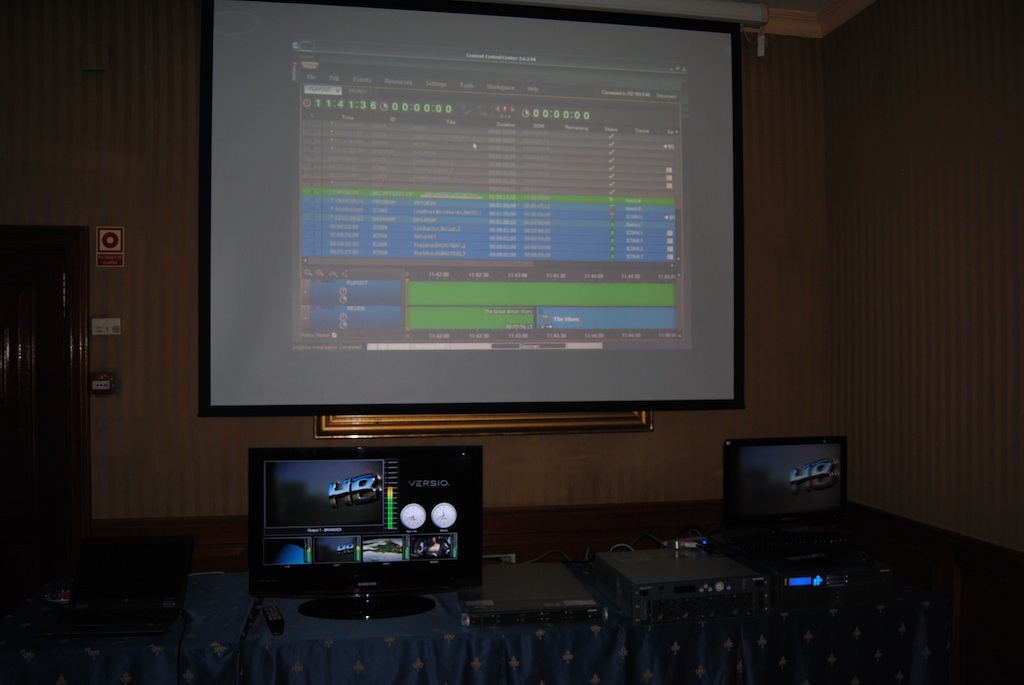
QinMedia y Broadcast Meditel han presentado en Madrid la nueva apuesta “Channel-in-a-Box” de Harris que aúna en un solo equipo módulos de conocidos elementos del catálogo de Harris tales como ADC-100, servidor Nexio, IconMaster, Branding, … ofreciendo una solución única para continuidades de nueva generación con un considerable ahorro de costes y tiempos de despliegue de nuevos canales.
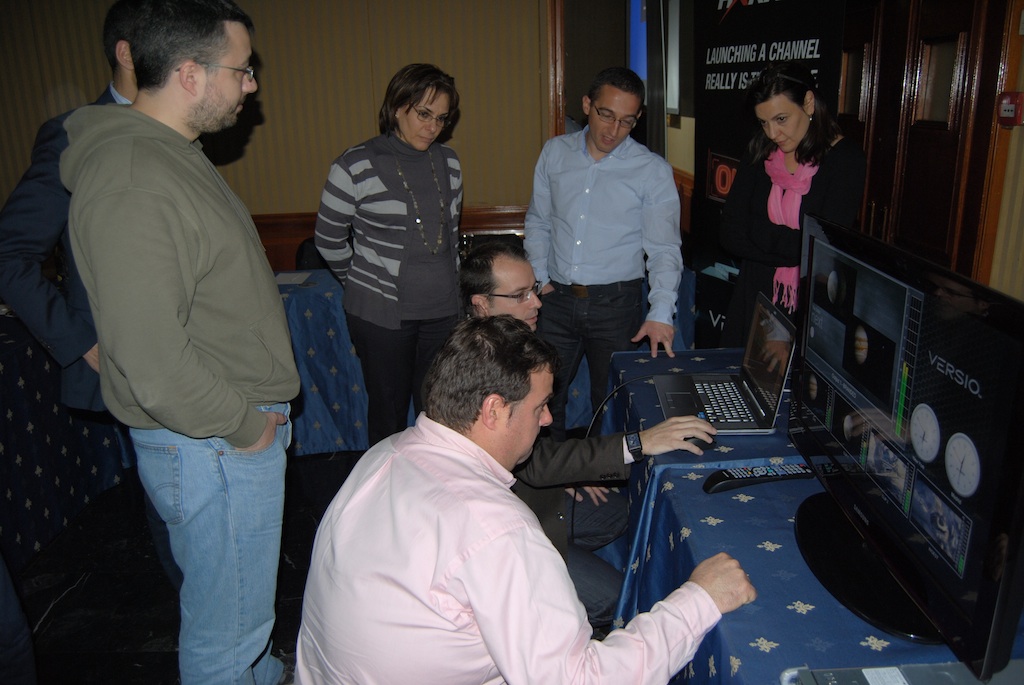
De mano de QinMedia y Broadcast Meditel, el tour mundial Harris On-the-road recaló este martes en Madrid centrándose en dos de las soluciones más punteras del fabricante: Selenio y Versio.
Con respecto a Versio, la apuesta “Channel-in-a-Box” aúna en un solo equipo módulos de conocidos elementos del catálogo de Harris tales como ADC-100, servidor Nexio, IconMaster, Branding, … ofreciendo una solución única para continuidades de nueva generación.
Versio de Harris combina video de banda base, branding de canal y capacidades automatizadas de flujo de trabajo en una solución basada en software, sencilla de instalar y en un solo bastidor. Versio está consiguiendo reducir el coste y el tiempo necesarios para lanzar canales y servicios de broadcast, cable y TV a la vez que ofrece una integración sencilla con producción, trafico y facturación, programación, gestión de activos, reproducción de contenido y funciones de control maestro, aprovechando los flujos de trabajo existentes para obtener un máximo rendimiento sobre la inversión.
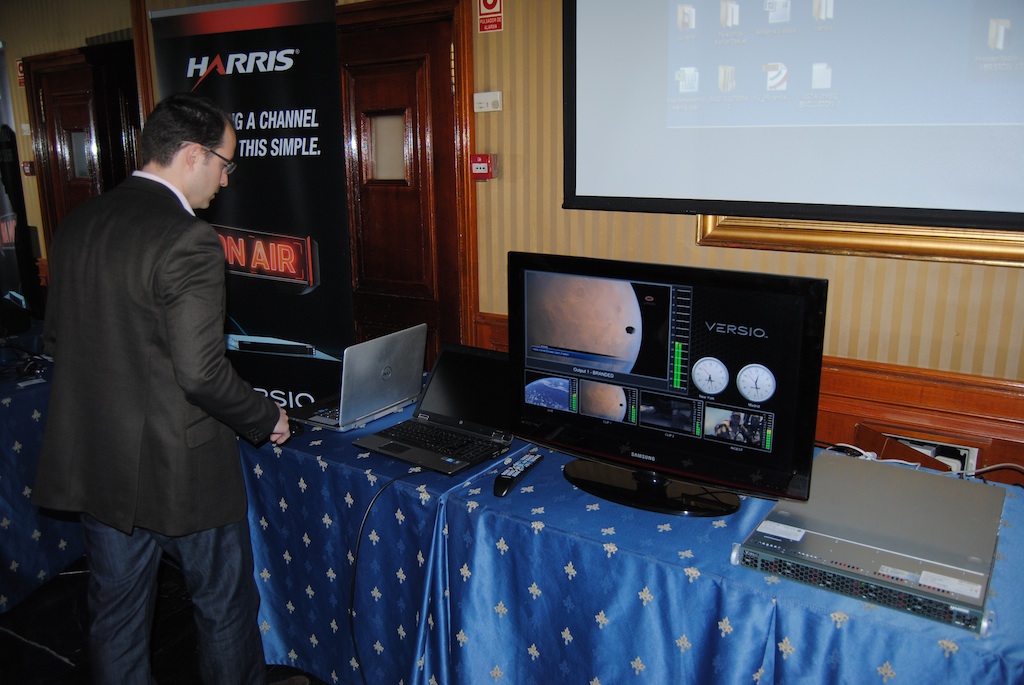 Al tratarse de una arquitectura basada en software, sólo se paga por lo que se necesite, pudiendo trabajar con una gran variedad de soporte de códec (la automatización permite controlar hasta 24 canales). Además es un sistema muy simple ya que todo está integrado y preconfigurado en el propio equipo, perfilándose casi como un plug and play.
Según estimaciones de Harris, Versio permite reducir el coste en un 40% con respecto a una arquitectura tradicional y todo ello en una única unidad de rack. Además, su instalación es un 50% más rápida que un sistema tradicional.
Versio comprime múltiples flujos de trabajo de canal único en una plataforma 1RU, incorporando el servidor de video Harris, branding de canal y gráficos y componentes de automatización opcionales. Las configuraciones flexibles basadas en software abarcan desde lanzamientos de canal único, de forma independiente o dentro de un sistema existente, hasta la distribución de multicanales y sistemas de expansión y recuperación de desastres.
Los broadcasters ahora podrán acelerar los tiempos necesarios para lanzar un canal, reduciendo el habitual plazo para los preparativos de meses a solo unas semanas o días al eliminar los recursos necesarios para el lanzamiento de canales tradicionales.
Los clientes de Versio podrán aprovecharse de la gran experiencia de Harris en la gestión digital de activos, tráfico y facturación para ayudar a la administración de los costes generales del canal e incrementar los ingresos, a la vez que se añade una solución al flujo de trabajo existente. Esto incluye la capacidad de vender y programar nuevos anuncios prácticamente a la vez que la emisión para así maximizar la flexibilidad.
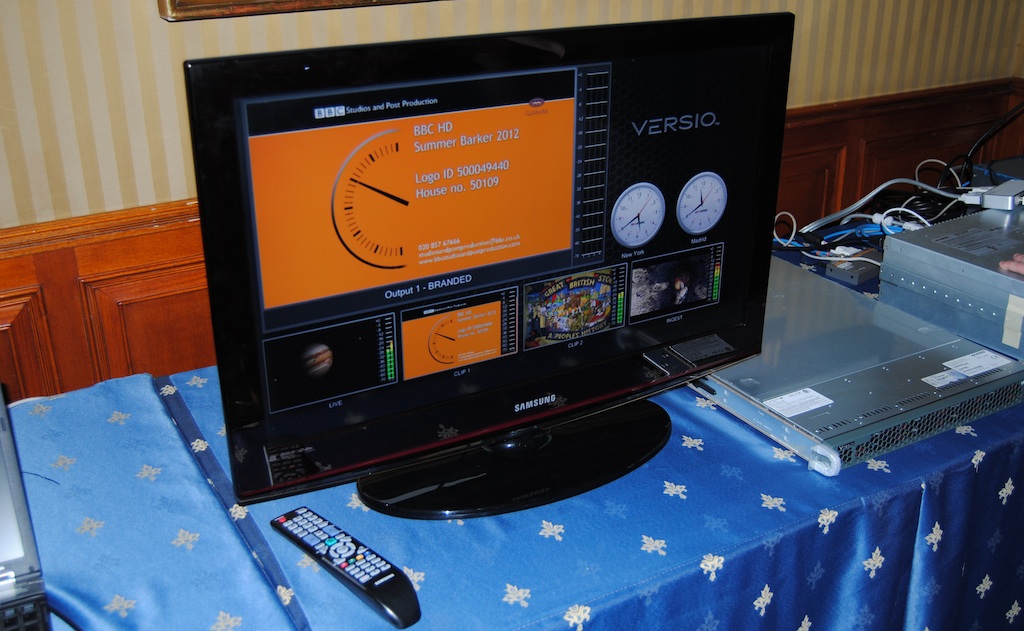
Sencillez y reducción de costes
Versio está pensado para poner en marcha de forma sencilla un nuevo canal (con un playout unificado), expandir un sistema ya existente con nuevos canales, como disaster recovery (si el sistema principal utiliza la ADC, Versio retomaría incluso la playlist para continuar la emisión desde otro centro o por otra ruta), o como proveedor de servicios para añadir canales conforme sea necesario.
Otra de las ventajas es su gran fexibilidad, ya que el cliente puede optar entre una automatización interna +a lmacenamiento interno, automatización externa + almacenamiento interno, o automatización interna + almacenamiento externo.
En cuanto a grafismo, Versio ofrece un entorno similar a un Inscriber G5, con gráficos 2D y 3D sin compresión, hasta 2 DVE 2D, un mezclador integrado para efectos o cortinillas, branding desde servidor o live, gestión de contenidos y creación e importación de gráficos. Los gráficos 3D admiten hasta 32 bits, sin limitación en el número de layers (con hasta 5 layouts simultáneos).
Como servidor, su gran ventaja es la flexibilidad de trabajar con codec nativos desencapsulando el fichero guardando las esencias, pudiendo optar entre un almacenamiento interno externo. Otras ventajas son la importación de subtítulos, posibilidad de gestionar tracks de audio sin tener que volver a ingestar un vídeo, up/down/cross conversion y soporte AFD /ARC. Harris ofrece la posibilidad de almacenamiento externo con Nexio Farad con RAID 601 o RAID 60, con un ancho de banda entre 3.000 y 48.000 Mbps.
Selenio
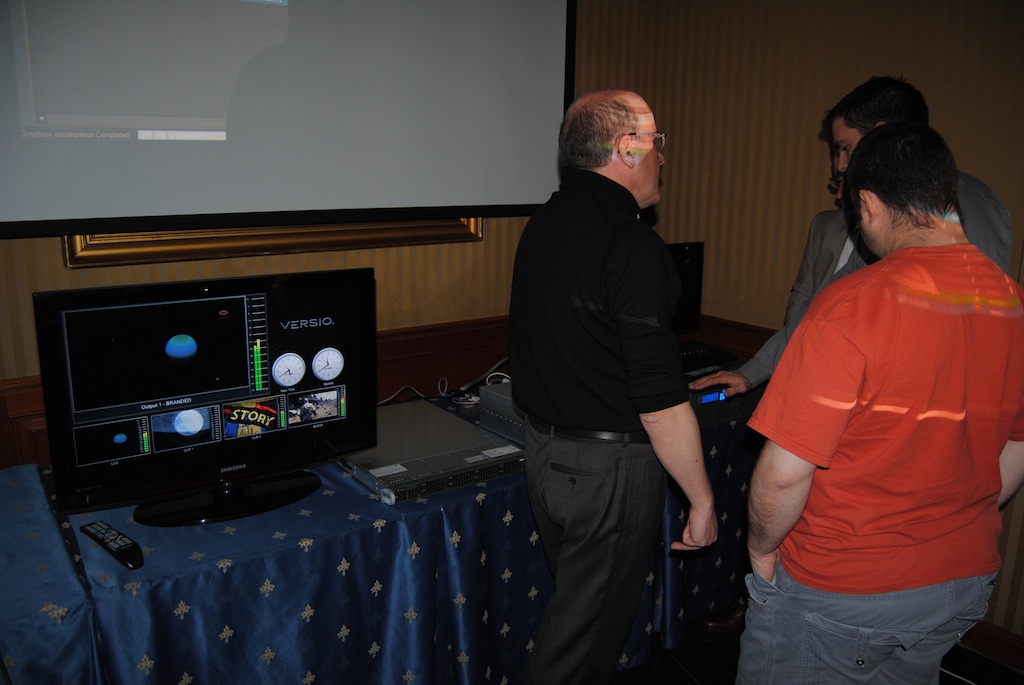
Durante el Tour Harris On-the-road también pudimos ver en acción Selenio, su plataforma de procesado y codificación. Se trata de un concepto revolucionario en el que convergen el mundo del broadcast y broadband contando con múltiples salidas y entradas (SDI, ASI, IP-cobre y óptic) para todo tipo de formato broadcast (SD, HD, 3G, 3DTv, móvil, web…).
Un aspecto a destacar es que se trata de una plataforma muy joven con amplia vida por delante de desarrollo, por lo que quizás hoy sólo estemos viendo una parte de lo que será en el futuro.
Este sistema tiene la vocación de sustituir sistemas completos con máxima fiabilidad y disponibilidad sin un único punto de fallo en toda la cadena con una operativa muy sencilla mediante una interfaz web, y fácil de instalar en una arquitectura de forma sencilla y compacta que aporta una importante reducción de costes.
Selenio sustituye la red de gestión, de vídeo IP, control, y sincronismo por un único módulo y su equivalente en backup. Reseñar que entre cada controlador y slot solo hay cobre, por lo que no hay posibilidad de error mediante buses intermedios.
Cada módulo de Selenio puede almacenar dos versiones de firmware. El nuevo firmware se carga en el banco secundario y se activa manualmente.
 Al insertar un nuevo módulo podemos mantener su firmware intacto (test mode) o permitir que la controladora lo actualice (normal mode). Además, al activar la función Deja-View (intercambio de módulos), la controladora aplicará la configuración al nuevo módulo o en caso contrario, se mantendría la configuración del módulo.
Con respecto al chasis, se aloja en 3RU con 14 módulos y un consumo de apenas 40 W por cada uno. Tanto la controladora como la fuente de alimentación es redundante, asegurando así una fiabilidad total (mediante matriz interna o externa, la redundancia se controla por las propias controladoras con dos entradas de referencia de vídeo independientes). Para gestión remota podemos utilizar CCS Nucleus, Navigator, HTTP web Browser, SNMP…
Desde el punto de vista de audio, cuenta con cuatro bloques virtuales para procesado de audio, en cada uno de ellos se elige los modos de funcionamiento por cada canal de vídeo.
Para aplicaciones de codificación, cuenta con dos modelos (según la tarjeta): uno para contribución (H264 4:2:2 10 bit a baja latencia entre 150-650 ms, con encriptado BISS,) y otro para distribución de cabecera con los perfiles más habituales.
Para contribución en entornos de unidades DSNG o donde la falta de espacio sea importante, las ventajas son muy notables: máximo de 650w para un frame completo con los 14 módulos, peso máximo de 14 kilos, y latencia de 300 ms entre punto a punto, pudienmdo escoger el codec que más se adapte a las necesidades.
El módulo multiplexor de Selenio cuenta dos dos modelos (MUX1 y MUX2 que incluye un gateway DVB-T2. Cada tarjeta cuenta con 8 módulos multiplexores/desmultiplexores hasta 800 Mbit/s, pudiendo procesar hasta 240 programas y/o 4096 Pids.
[youtube]http://www.youtube.com/watch?v=P0-903ILgqw[/youtube]
Did you like this article?
Subscribe to our NEWSLETTER and you won't miss anything.
Related articles
 Grass Valley will bring Sport Producer X to ISE 2025: mixing, replays and graphics, in an all-in-one solution
 Disguise will debut its solution to produce television graphics from the cloud at IBC 2022
 Broadcast Meditel demonstrates at BIT Audiovisual all the potential of the latest from NewTek
 Brainstorm debuts Neuron at IBC 2017, a solution for comprehensive graphics management in broadcast environments
 Globosat uses Pebble Beach Marine automation for the Olympic Games playout
 Vantec will show at BIT an extensive portfolio of solutions for studio, graphics, playout and production
 Vizrt goes beyond graphics with solutions for multiplatform flow, IP streaming and playout
 Live graphics, playout automation and MAM, wTVision proposals for IBC 2015
 Harris Broadcast Provides Graphic Automation Solution to TVSN in New Zealand
 wTVision presenta sus soluciones de gráficos en tiempo real y automatización de playout en Broadcast&Cable 2013
 wTVision and Unitecnic collaborate together to offer a complete playout automation service for DirecTV
 The advantages of Versio, an all-in-one solution for automation, graphics and playout
Vector 3 will show its latest proposals for control, automation and playout at NAB 2012
The advantages of Versio, an all-in-one solution for automation, graphics and playout
Vector 3 will show its latest proposals for control, automation and playout at NAB 2012
 Cinegy updates its server for automation and playout