





¿Qué es LTE? Cómo el HD Ranger+ puede identificar interferencias en sistemas de TV
La tecnología móvil LTE o de cuarta generación puede generar interferencias en los sistemas de recepción de TV y radio terrestre. Contar con instrumentos de test y medida apropiados, permite detectarlas a tiempo y tomar medidas preventivas para evitarlas.
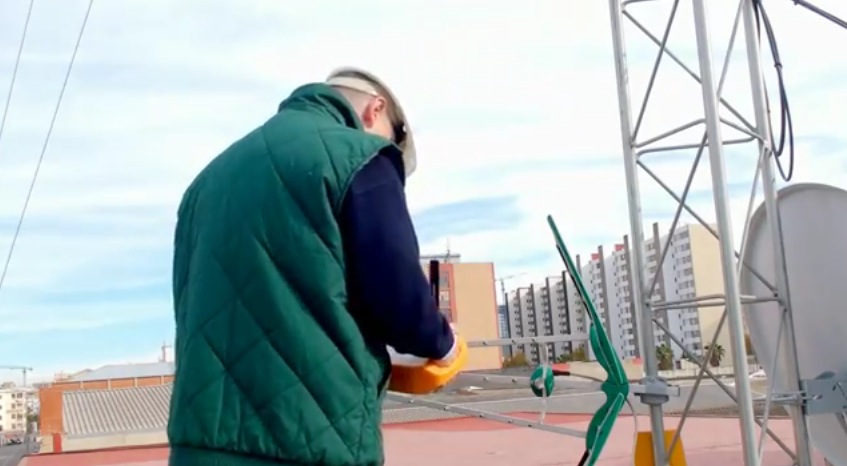
La utilización de aplicaciones móviles en la banda de 800 MHz, que forma parte del “dividendo digital”, puede así interferencias en las señales de televisión en terminadas circunstancias. Las nuevas aplicaciones móviles (denominadas LTE, Long Term Evolution: evolución a largo plazo) utilizan frecuencias también empleadas en la televisión digital terrestre (TDT o DVB-T) y en las redes de televisión digital por cable (DVB-C).
La utilización de dispositivos LTE, como los teléfonos móviles LTE o las estaciones base LTE, puede provocar interferencias en la televisión digital terrestre (DVB-T) y/o en la televisión digital por cable (DVB-C) del propio usuario LTE o de sus vecinos cuando coinciden las frecuencias. Es esperable que se produzcan interferencias en la recepción de televisión digital terrestre (DVB-T) l- y/o en la televisión digital por cable (DVB-C).
Que se produzcan interferencias depende de muy diversos factores. No solo hay que tener en cuenta la potencia de la señal de DVB-C o DVB-T, sino también la emisión y la situación del receptor de LTE. También son muy importantes los dispositivos, cables y antenas utilizados. Es muy difícil determinar por adelantado la procedencia de las interferencias. En teoría es posible que, en un bloque de pisos, algunas viviendas se vean afectadas y otras no.
Contar con instrumentos de test y medida apropiados, permite detectarlas a tiempo y tomar medidas preventivas para evitarlas. Por ello, el medidor de campo HD Ranger+ de Promax puede ser de mucha utilidad en estos entornos.
[youtube]http://youtu.be/Rg44frq6V6o[/youtube]
¿Te gustó este artículo?
Suscríbete a nuestro NEWSLETTER y no te perderás nada.
Artículos relacionados
 Nielsen estrecha lazos con TikTok para identificar las mejores prácticas dentro de la plataforma
 La CNMC abre una consulta pública para identificar a los nuevos agentes audiovisuales o vloggers
 Vislink amplía por tres años más su colaboración con Dorna Sports como proveedor de sistemas de radiofrecuencia para MotoGP
 Datos Media instala en Movistar+ dos sistemas MOG F1000 como pasarela multiformato
 ‘Sistemas de producción audiovisual’, un compendio sobre gestión, instalación y mantenimiento de sistemas audiovisuales
 Promax HD Ranger permite ahora crear un mapa de cobertura en 3D
 Promax ofrece GPS, como opción, en sus medidores de campo HD Ranger 2 y HD Ranger+
 El medidor de campo HD Ranger Lite permite ahora detectar interferencias procedente de señales LTE
 Beacon y nuevas aplicaciones para SNG y VSAT con HD Ranger+
 Adquisición de medidas (datalogger) disponible ahora para el HD Ranger+
 HP muestra en SIMO Network 2012 cómo la tecnología puede ayudar a las empresas a mejorar sus negocios
 Recomendaciones para proteger la TDT de interferencias
 Comienza en Barcelona el rodaje de ‘Interferencias’
 Medidas para proteger de interferencias la banda 790-862 MHz