





In 2017, Spanish animation could generate 21,000 jobs directly and indirectly
Diboos, Spanish Federation of Animation Production Companies Associations, publishes an extensive report on the animation industry in which it is revealed that the sector invoices more than 300 million euros annually, which represents an effect of 729 million euros on the Spanish Economy and 8,599 direct and indirect workers.
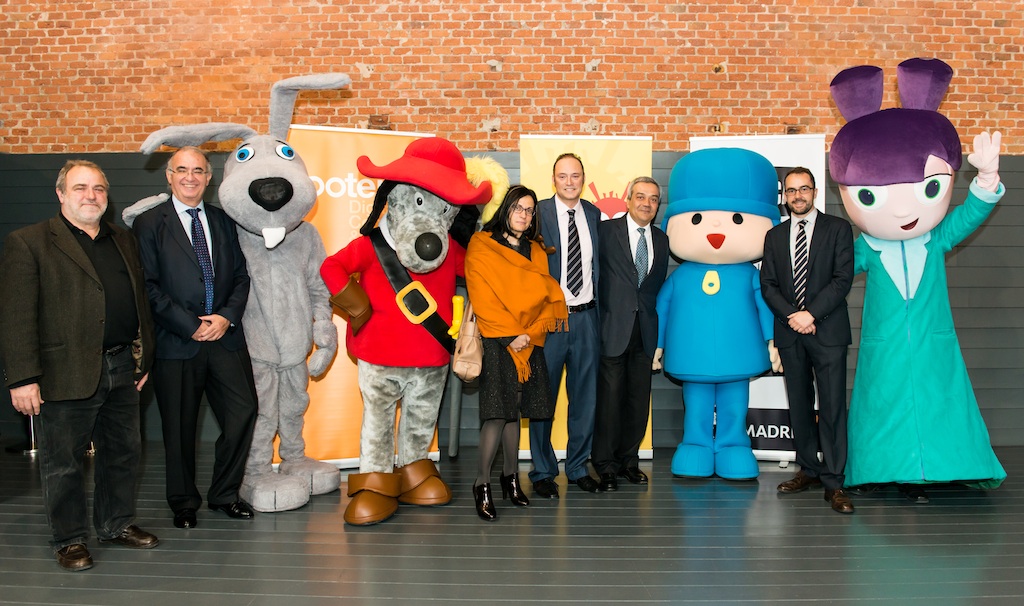
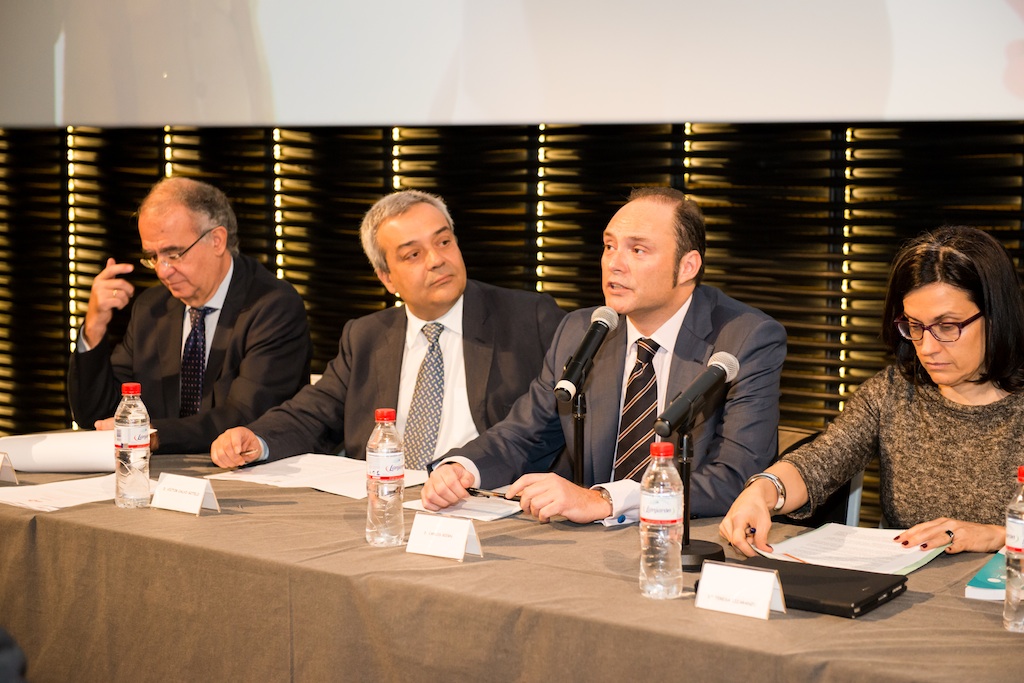
Back, Spanish Federation of Associations of Animation Production Companies, has presented the White Paper on Animation at the Cineteca de Matadero Madrid, a work in which Consultoría Rooter has participated. Carlos Biern, president of Diboos, attended the presentation event; Teresa Lizaranzu, General Director of Policy and Cultural and Book Industries of the Ministry of Education, Culture and Sports; Conrado Castillo, from the Rooter Agency; Pedro Pérez, president of FAPAE and Víctor Calvo Sotelo, Secretary of State for Telecommunications and Information Society.
According to the White Paper, Spanish animation has a turnover of more than 300 million euros per year. The total effect of the animation on the Spanish economy is 729 million euros and 8,599 jobs, direct and indirect.
Spain has more than 200 animation companies and generates more than 5,000 jobs. In this regard, the study foresees an increase of up to 7,000 jobs, given the multiplier factor of the sector.
 The Spanish animation sector has a very high capacity for internationalization, examples of which are series such as Pocoyó, exported to more than 150 countries, or Jelly Jamm in 165.
62% of Spanish animation companies export their content abroad, obtaining between 38% and 70% of income.
Carlos Biern has highlighted that "the animation sector worldwide is always considered a friendly sector, probably due to its educational work, entertainment or its commercial aspect aimed at children. Animation is a sector that fills cinemas, televisions, tablets, stores and shopping centers with color and joy, and a large part of family leisure time, not in this country but in the entire international public. Unfortunately, we often perceive that we are a totally unknown industrial sector, not for audiences or for the international public, but for actors in the audiovisual sector, for potential investors or for national public administrations.”
The White Paper on Animation is an extensive analysis of the animation sector in Spain, demonstrating its potential as well as its impact on the current Spanish economy. Rooter Consulting has prepared this report at the request of the Spanish Federation of Animation Production Companies Associations in its work to carry out actions to encourage research and development in the sector.
21,000 jobs in 2017
Currently, the number of companies that produce and distribute animation in Spain is more than 200 and they generate more than 5,000 jobs. In 2011, a turnover of 306 million euros was recorded, which represents an effect of 729 million euros on the Spanish Economy and 8,599 direct and indirect workers.
This billing has meant an impact on the GDP of 0.04% and a fiscal impact of 0.042% on the tax collection of the Spanish State. In relation to these data, it is expected that in 2017, Spanish animation will generate an impact of 1,581 million euros, generating more than 21,000 jobs directly and indirectly.
The multiplication factor of the animation sector stands out, which corresponds to 1.7; indicating that for each direct job, 0.7 of other jobs are generated in the economy.
The study highlights the internationalization capacity of Spanish animation, since 62% of Spanish companies export content, generating between 38% and 70% of their income thanks to exports. As an example of this strong internationalization, the recently released feature film The Adventures of Tadeo Jones (2012) sold in 35 countries. Without a doubt, the most successful example are series like Pocoyo with presence in more than 150 countries or Jelly Jamm, at 165.
A characteristic of this internationalization is also the large number of co-productions that are made, which amounts to 70%, with the European Union being the main co-producer with Spain.
In the field of television co-productions, TVE and Televisió de Catalunya are the main animation co-production networks.
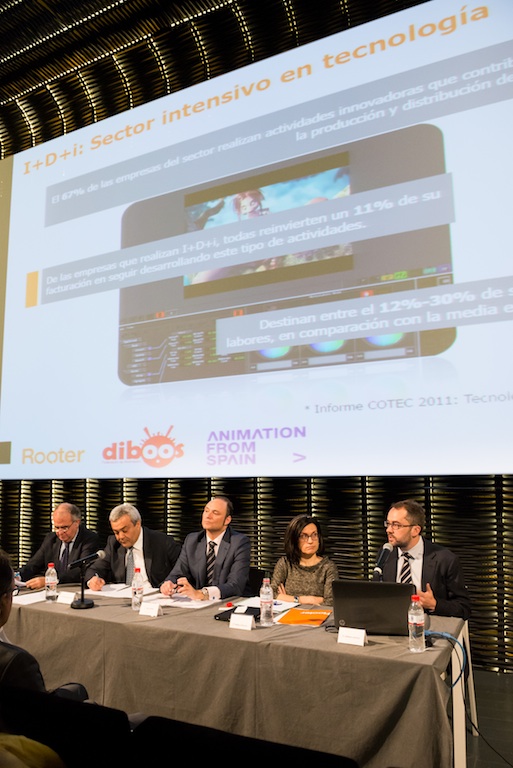
The study also reveals that the animation sector is considerably focused on the development of R&D, with 67% of companies carrying out this type of innovative activities to improve the production of their content. These companies allocate between 12% and 30% of their staff for these purposes, compared to the average of Spanish companies that only allocate 2%.
Regarding animated film production, as declared by the president of FAPAE, Pedro Pérez: “This year, Spanish cinema has broken the best screen share of the last 27 years, in part thanks to Tadeo Jones.” He also pointed out the importance of animation in the production of this country and that is why, from now on, Diboos will also be part of the FAPAE Confederation.
In relation to training, the report addresses the training needs of the sector, highlighting the shortage of trained human capital, the lack of regulated public training and the considerable drain of talent that takes place in our country.
With respect to the results of all the analyzes carried out for the study, a series of recommendations are proposed aimed at the public sector and the private sector. Regarding the public sector, the proposal to develop a system of tax incentives stands out, the creation of aid for projects and companies as well as the promotion of export-oriented productions.
For the private sector, animation is presented as a business opportunity, given its high international projection as well as the quality of Spanish content. The animation sector is considered a creative and cultural industry with greater growth projection and strong demand in the European market.
The Animation White Paper has been prepared by Rooter Consulting for Diboos in collaboration with the Ministry of Industry, Energy and Tourism, the Ministry of Education, Culture and Sports and ICEX and the support of FAPAE.
Access here to the White Paper.
Did you like this article?
Subscribe to our NEWSLETTER and you won't miss anything.
Related articles
 The federations and associations of the sector accuse RTVE of hindering the progress of Spanish animation
 RTVE offers 767 permanent jobs: first call since 2007
 Animayo promotes recruitment days with more than 200 jobs
 Dirk Ellis (AJA): “The Ki Pro Go could play a very important role in the Spanish industry”
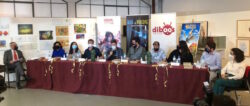 Innovation and future of Spanish animation, up for debate
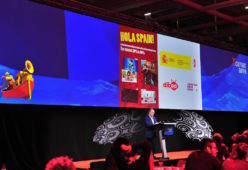 Spanish animation shines with its own light in the Cartoon Movie
 Sony anticipates at CineEurope 2017 what the cinema of the future could be
 Netflix will create four hundred new jobs in Europe
 Animation now represents 26% of total Spanish audiovisual exports
 The number of Ultra High Definition channels could reach 135 in 2017
 The Spanish animation industry returns to MIP Junior in top form
Spanish animation to win the Oscar and the international market
The Spanish animation industry returns to MIP Junior in top form
Spanish animation to win the Oscar and the international market
 Spanish animation opens borders in Latin America
 'Suckers', the first Spanish animated series to be broadcast by Disney Channel USA