





SBT in Brazil adopts Avid solutions
El sistema disminuye el tiempo entre la llegada del material bruto y la emisión del mismo al integrar almacenamiento en servidores Avid ISIS con nuevas herramientas de ingesta, edición y playout.
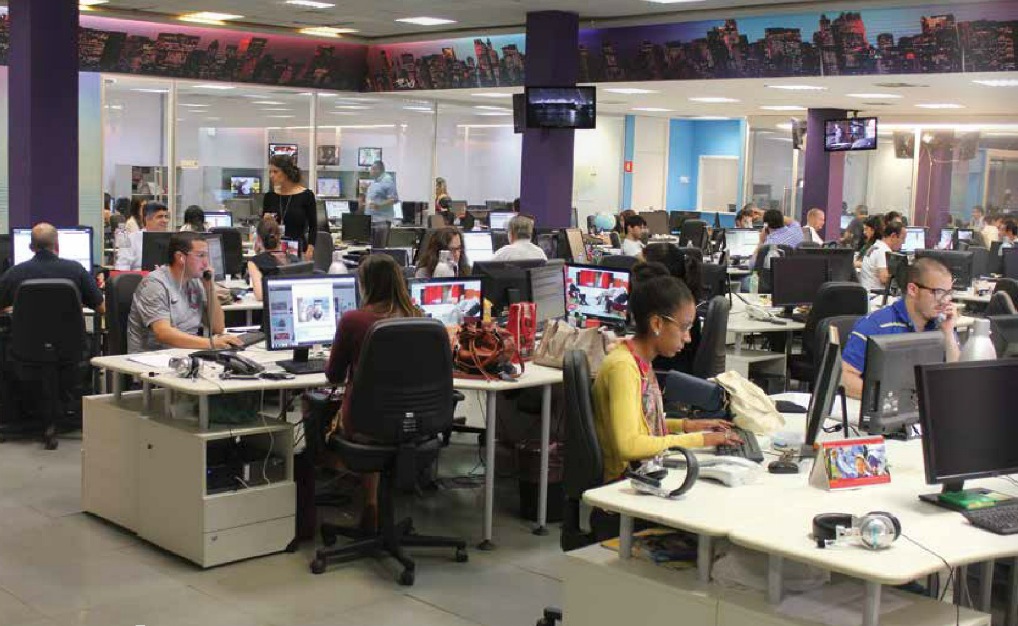
La redacción de la brasileña SBT ha dado un gran salto de calidad con la actualización de los sistemas utilizados para la recepción de archivos producidos por los equipos ENG (ingesta), almacenamiento, acceso y edición previa de las imágenes por parte de los periodistas, así como la postproducción y revisión final de cada reportaje.
Una solución completa con tecnología de Avid, integrada por CIS Group, ha permitido la eliminación casi total del tráfico de discos, tarjetas y cintas en la redacción. “La solución está en línea con lo que ya contamos en el área de edición y postproducción de entretenimiento, que también utiliza soluciones de Avid”, destaca Alexandre Sano, director técnico y de operaciones en SBT.
Según Sano, la solución ha significado una mayor integración y dinamismo en todo el departamento, que hasta ahora venía trabajando en un entorno de soluciones de Leitch (hoy incorporada en Harris), utilizando numerosos discos XDCAM para transferir los materiales de una máquina a otra para revisar el contenido dentro de la redacción. Eventualmente, algunos materiales llegaban incluso a emitirse directamente desde los propios discos. “Hoy estos discos se utilizan apenas en la captación, que se lleva a cabo con cámaras XDCAM SD 50 Mbits/s. Todo el sistema está listo para alta definición, dependiendo solo de la sustitución de las cámaras por modelos HD”, asegura.
En el workflow actual la transferencia de archivos se ha simplificado considerablemente. Cuando las imágenes llegan a la sede del broadcaster, comienza de inmediato la ingesta de datos para el sistema Avid, que reconoce el formato utilizado por Sony. El proceso se lleva a cabo a un 50% del tiempo real, acelerando aún más la liberación de las imágenes en el servidor Avid ISIS, para que puedan ser de inmediato buscadas y editadas en una de las 19 estaciones de trabajo.
Media accesible
SBT cuenta en Sao Paulo con 22 equipos para la producción de reportajes, además de una unidad SNG satelital y tres unidades con enlace terrestre. Ya que la ingesta se lleva a cabo a partir de los discos XDCAM, las contribuciones hechas desde las unidades móviles, las emisoras afiliadas y los corresponsales internacionales, también se almacenan directamente en el servidor ISIS. En este núcleo del sistema está toda la media que abastecerá a los informativos de este broadcaster.
Esta configuración facilita la reedición y reutilización de imágenes, una vez que la misma entrevista o cobertura de un evento puede presentarse con tiempos y planteamientos diferentes a lo largo del día.
Otra ventaja aportada por Alexandre Sano es el aumento de la capacidad de entrada de los datos (media) en el sistema, en lugar de audio y vídeo en banda base, lo que reduce la necesidad de conversión. “Antiguamente teníamos una limitación muy grande para recibir contribuciones vía FTP. Ese cuello de botella también ha sido eliminado, ya que ahora tenemos una estructura mucho más ágil para llevar a cabo la conversión al formato patrón que utilizamos”, asegura Sano.
En el modelo anterior, la reducida capacidad de ingesta obligaba al broadcasters a utilizar incluso las islas de edición para este fin. Ahora, todo eso se lleva a cabo desde la nueva central de ingesta, ubicada junto a la redacción. Está dividida en dos salas, siendo una para contribuciones de agencias de noticias, afiliadas y DSNG/UM, y otra para atender a los equipos de reportajes que llegan desde la calle.
“Esta central está preparada para recibir cualquier tipo de media, desde discos y tarjetas de memoria hasta imágenes desde smartphones o pen drives, con la agilidad que el periodismo exige”, detalla Sano.
Aumento de fuentes con seguridad
Destacar, por otro lado, que la irrupción del intercambio por FTP incrementó la participación de las afiliadas ya que todo llega a tiempo para editarse y emitirse. Algo que no siempre ocurría antes de la implantación del nuevo sistema.
Sin embargo, aunque se han abierto nuevas puertas para la entrada de datos por canales de Internet, esto no ha supuesto, a juicio de Sano, comprometer la seguridad de la operativa. Toda la comunicación externa pasa por un servidor Linux que recibe el contenido y no deja pasar ningún tipo de virus dentro del sistema. Es un puente que garantiza la comunicación entre los dos lados sin riesgos.
 Redacción y pre-edición
Todos los periodistas disponen del sistema AP/ENPS para elaborar sus reportajes, así como para establecer las asociaciones con los materiales y con las automatizaciones para generación de caracteres, teleprompter… “Los sistemas ENPS y Avid están completamente integrados y toda la playlist de los materiales está coordinada por ENPS. Si durante un informativo, el editor jefe decide alterar la posición de una pieza, el sistema Avid reconoce el cambio y lleva a cabo las alteraciones necesarias. Esta función es extremadamente importante porque de lo contrario todo el proceso sería manual”, afirma Sano.
El disparo de media, incluyendo GC y TP, comenzó a automatizarse en 2005, pero la reciente actualización incorporó nuevos recursos y una mayor precisión.
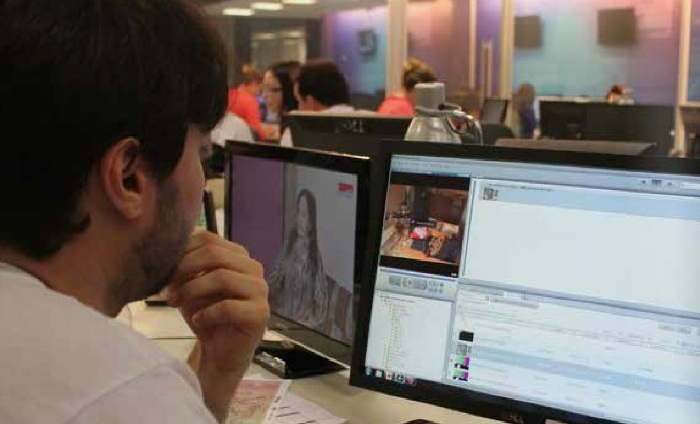
Para visualización en baja resolución y pre-edición,el antiguo software NewsFlash Preditor fue sustituido por Avid Interplay Access, además de incorporarse estaciones con Avid Interplay Assist.
Reseñar que entre las 6 y las 7 de la tarde en la redacción de SBT se llegan a concentrar 120 periodistas con 40 accesos simultáneos al Interplay Assist. Gracias a ello es posible al instante buscar, acceder a los archivos y hacer una edición completa al corte, siempre en baja resolución. Cuando la pieza está definida, una versión en alta resolución se consolida en las 16 estaciones con Avid NewsCutter y 3 Avid Media Composer, que cuentan con recursos sofisticados de edición y efectos.
Flujo
Una de las ventajas relevantes del sistema es el tiempo invertido entre la llegada de un equipo desde la calle y la disponibilidad de los archivos para edición y exhibición. “Con un simple comando, los archivos quedan listos para salir al aire”, comenta Sano.
Este cambio en los procesos de ingesta, edición y exhibición no ha supuesto ninguna dificultad para los profesionales. Los cinco programas informativos que se emiten a diario han llevado a cabo la migración en diferentes etapas, necesitando como media una semana para que todo el personal de la redacción se adapte.
La redacción cuenta con 60TB de almacenamiento en el servidor ISIS y, para evitar que se sature sin espacio en disco, el equipo del Media Center define con los editores los archivos que deben permanecer on-line o que deben eliminarse o transferirse a un archivo en discos XDCAM.
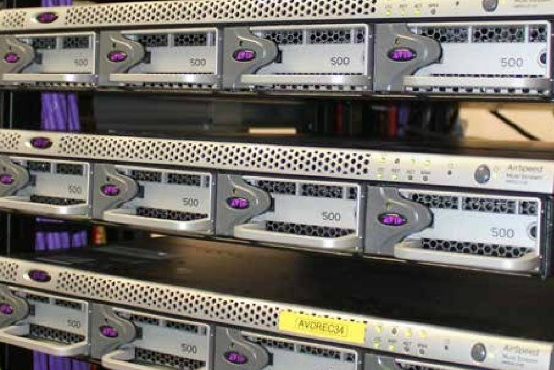
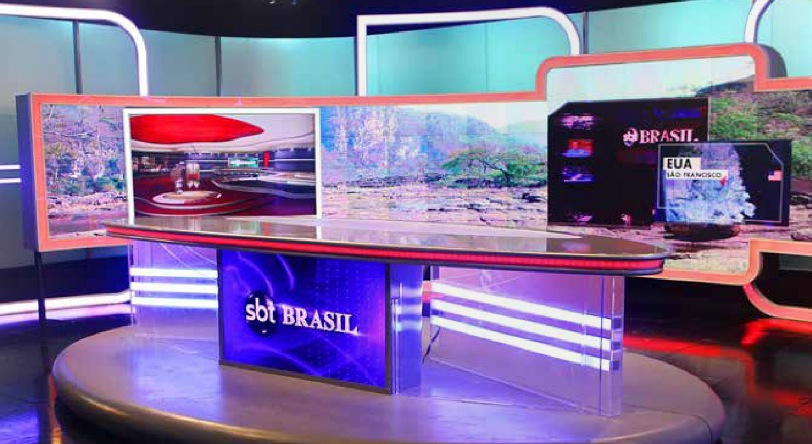
Además del almacenamiento disponible en la redacción, existe otro servidor para colocar los materiales y reportajes en el aire. Cuando se finalizan, los editores los publican en el Avid Air Speed, listo para su emisión.
Aunque todo el sistema está listo para trabajar en alta definición, esto no ocurrirá hasta finales de 2014, plazo necesario para la sustitución de cámaras y otros elementos de la cadena de producción y contribución, incluyendo los enlaces de microondas y de las afiliadas.
Did you like this article?
Subscribe to our NEWSLETTER and you won't miss anything.
Related articles
 TV3 adopts 5G remote production solutions from TVU Networks
 MwareTV adopts Akamai cloud and security solutions
 Record TV upgrades its studios with audio solutions from Avid
 Sony and TVU Networks IP Contribution Solutions Now Compatible with Avid MediaCentral Stream
 AJA adopts Jetson and Clara AGX from Nvidia to offer solutions based on Artificial Intelligence
 Tv Tem in Brazil prepares its facilities for the future with solutions from Grass Valley
 Brazil's EPTV optimizes its news production with Grass Valley solutions
 Sony embraces HDR production with complete end-to-end solutions
 Avid will present its new solutions anticipated at NAB at BIT Experience
 Avid and Sony showed complete solutions for 4K workflows at the Cartagena International Film Festival
 Avid and SVC demonstrate video and audio solutions during CAPER 2014, strengthening the vision of Avid Everywhere in the southern cone
 Sky Brasil adopts Axon's legal copy and broadcast registration system
Avid in Record Brazil with the largest installation of ISIS and Interplay in all of Latin America
Avid to market Front Porch solutions
Sky Brasil adopts Axon's legal copy and broadcast registration system
Avid in Record Brazil with the largest installation of ISIS and Interplay in all of Latin America
Avid to market Front Porch solutions