





The first prototype of a complete production chain in HDR in real time is underway
Faced with the development of Ultra High Definition, a consortium of companies is convinced that beyond having more pixels in 4K or 8K, playing with exposure and lighting can be key to achieving a hyperrealistic effect based on high dynamic range images (High Dynamic Range, HDR).
In a context in which only the resolution of the pixel seems to matter, with the development of 4K, 8K and beyond, a consortium of companies including the Spanish Vicomtech, is convinced that it is possible to achieve unimaginable levels of realism in video by playing with exposure and lighting.
Vicomtech's collaboration has been created within the action COST 1005 and the core working group of the initiative to promote HDR is made up of goHDR, SIM2 and Vicomtech itself.
Their proposal is based on high dynamic range (HDR) image processing. Initially developed for the world of photography, it now promises to make the leap to audiovisual production.
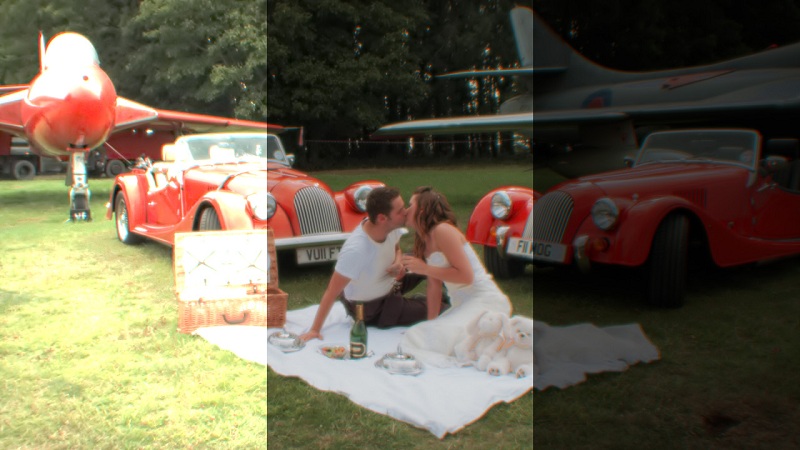
HDR is based on a series of techniques that allow a better dynamic range of luminance between the lightest and darkest areas. High dynamic range photography allows us to obtain images that are more in line with those viewed by the human eye, which when observing the world around us is able to distinguish details in areas with a lighting difference much greater than that supported by other formats such as film or compressed image formats. This wider dynamic range allows HDR images to more accurately represent the wide range of intensity levels found in real scenes, ranging from direct sunlight to faint starlight.
Optimized compression
This is the theory, but is it feasible to handle such an amount of information when it comes to moving images?
A typical 1080p HDR video scenario at 30 frames per second with 20 f-stops of light generates 42 GB of data per minute of footage – certainly a currently prohibitive rate for data management and storage.
The HDR consortium is sure that it is possible thanks to optimized compression. To demonstrate that this is possible, the consortium has launched a complete real-time production chain based on HDR.
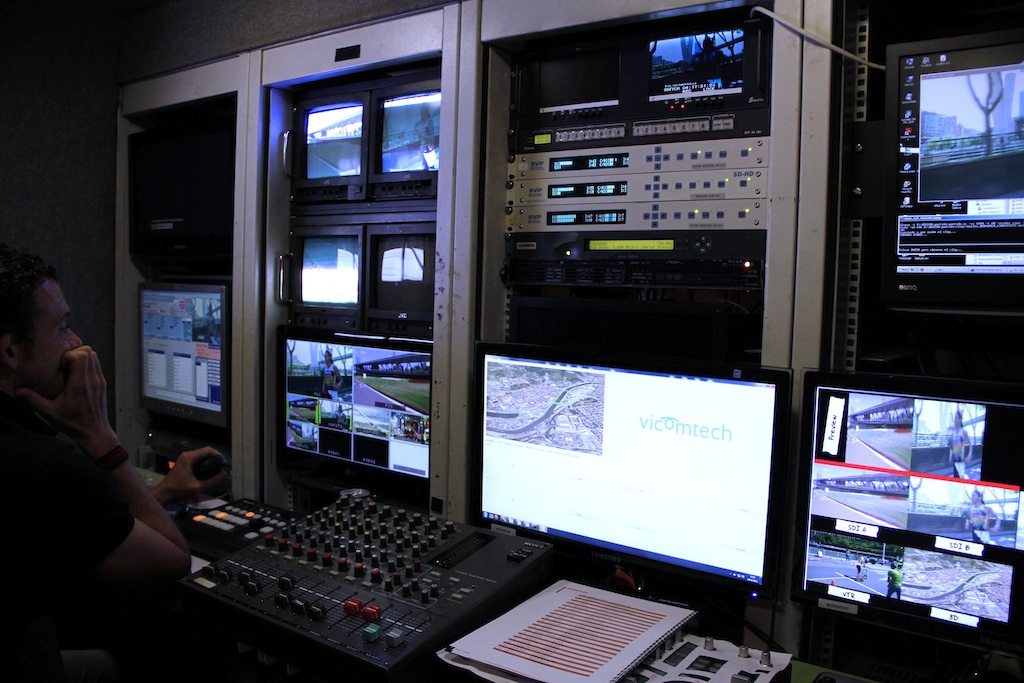
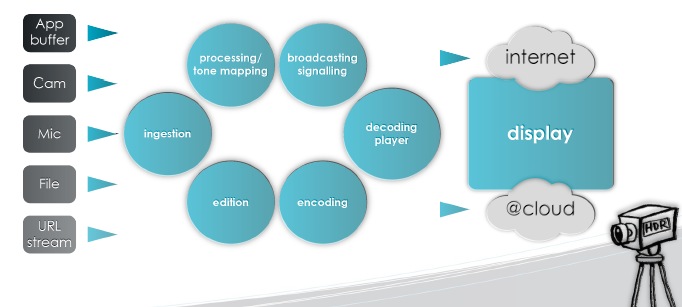
From editing, processing, visualization and rendering in real time, to the emission and contribution of signals via IP, a group of experts are now testing the real possibilities of using HDR.
In capture, the appearance of cameras with increasingly more dynamic range will facilitate HDR capture, although for the moment, as happened with stereoscopy, we will have to resort to “artisanal” methods based on rigs.
The work of the Guipuzcoan company Vicomtech, which already had its own production system, works with other companies in the consortium to cover the entire chain. In their test set they are using a rig with several Canon 5D cameras for capture, reaching 18f stops.
HDR frente al 4K-8K
Igor García Olaizola, head of the digital television and multimedia department at Vicomtech, recognizes that in an HDR environment "manipulation is relatively easy, although there would be a lack of standards for capture, editing, coding, and contribution. MPEG is working on distribution but there is no coding in contribution, for example."
Although one of the lines of work in which progress is being made is to harmonize two H264 flows, synchronization is a problem.
Regarding the evolution that HDR could experience compared to 4K-8K, García is convinced that "HDR is the next great improvement in terms of quality. 4K, compared to HD, does not seem like a revolution as such to us, beyond having more pixels. The sensors themselves are smaller and quality is not always gained in all conditions. The range of 8 bits and no more than 12 stops is far below the human eye."
Apart from the entire production and distribution chain, another barrier that will have to be overcome is found in the displays. Currently there are very few models prepared for HDR such as the SIM2 (42 inches with a double rear panel of white LEDs that manage to reach 16-17 f stops) or the Dolby Pulsar monitor that instead of white LEDs uses RGB LEDs, achieving more quality in the gammut but less dynamic range and greater consumption.
Finally, with respect to the possibility that HDR ends up being a bubble as happened with 3D, García Olaizola recognizes that "with HDR everything is being slower than in the 3D development. There is no brutal marketing action. Everything is being calmer because more work is being done in the professional field than in the consumer field. Unlike stereoscopy, the flows and the way of working in HDR is based on a classic concept without the need for a double screen and image… and that is always an advantage.”
Vicomtech intends to carry out the first live HDR broadcasts next year, for which they are already contacting broadcasters who may be interested in this experience.
Did you like this article?
Subscribe to our NEWSLETTER and you won't miss anything.
Related articles
 Brainstorm demonstrates the latest advances in virtual production, real-time 3D graphics and immersive presentations at IBC
 RTVE will adapt the Argentine format 'The great prize of cooking', the first cooking talent show in real time
 Sony launches UK's first Crystal-LED virtual production set at Pinewood
 Dazn launches its first global virtual production hub in Madrid
 Brainstorm shows real-time post-production at NAB
 'Telecinco Live', the first exposhow that will go through the history of the network
 Photorealism in real time for series and film production
 Telestream and Aspera enable remote capture and production of live video in near real time
 IBC 2016, in real time with Panorama
 Videolab launches a real 4K telecination service
 Sony democratizes access to 4K and extends the concept of real-time IP production
 The British Zest4.TV improves real-time production with ToolsOnAir
 Media Composer 7 now makes real-time production possible anywhere
 Real-time transcoding with Sencore TXS 3453