





Recorded and downloaded content and streaming already increase television and video on demand consumption to 35%
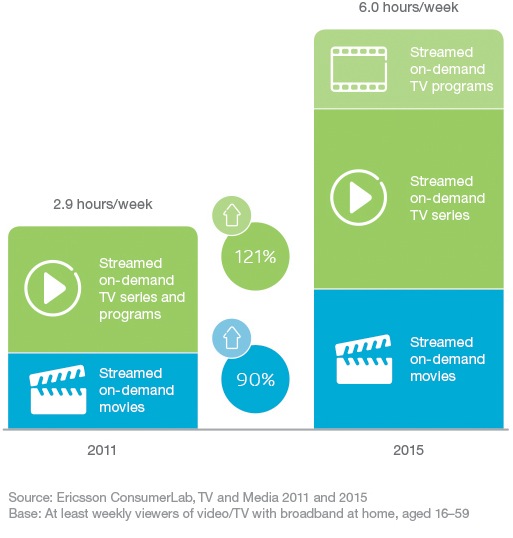
Ésta es una de las principales conclusiones del último informe anual de Ericsson ConsumerLab, que refleja los hábitos de 680 millones de consumidores. Según Ericsson, los espectadores pasan ahora seis horas a la semana (el doble respecto a 2011) viendo series de televisión, programas y películas a la carta.
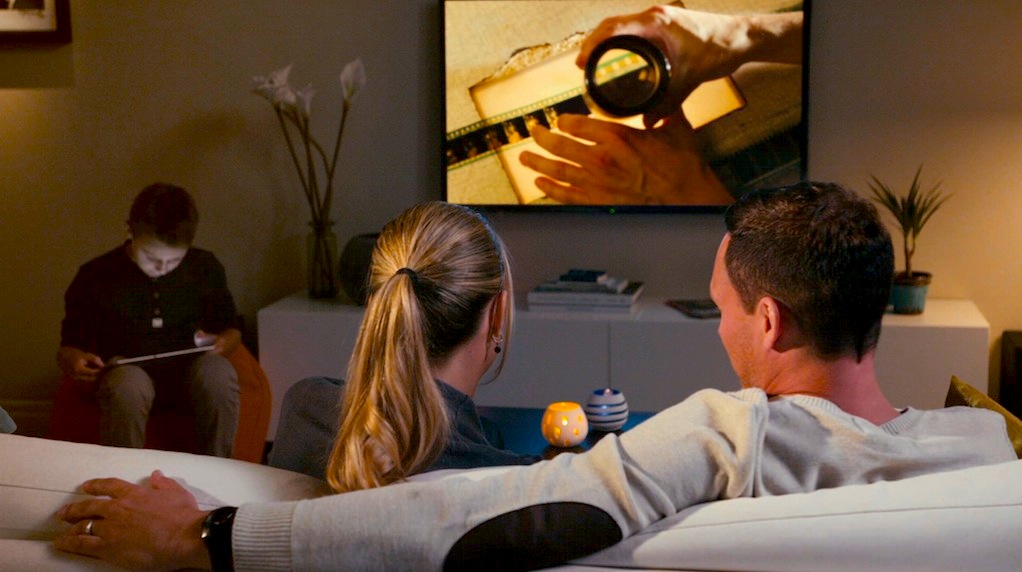
El aumento de contenidos grabados y descargados, los nuevos servicios de vídeo y el streaming han hecho incrementar hasta el 35% el consumo de televisión y vídeo bajo demanda. Esta es una de las principales conclusiones del último informe anual de Ericsson ConsumerLab sobre TV y medios, que refleja los hábitos de consumo de televisión y vídeo de 680 millones de consumidores. Según Ericsson, los servicios de vídeo a la carta (Vídeoon-Demand, VOD) están respondiendo a las necesidades del consumidor, lo que supone que los espectadores estén cambiando sus hábitos: ahora pasan seis horas a la semana viendo series de televisión, programas y películas a la carta, una cifra que se ha duplicado desde 2011.
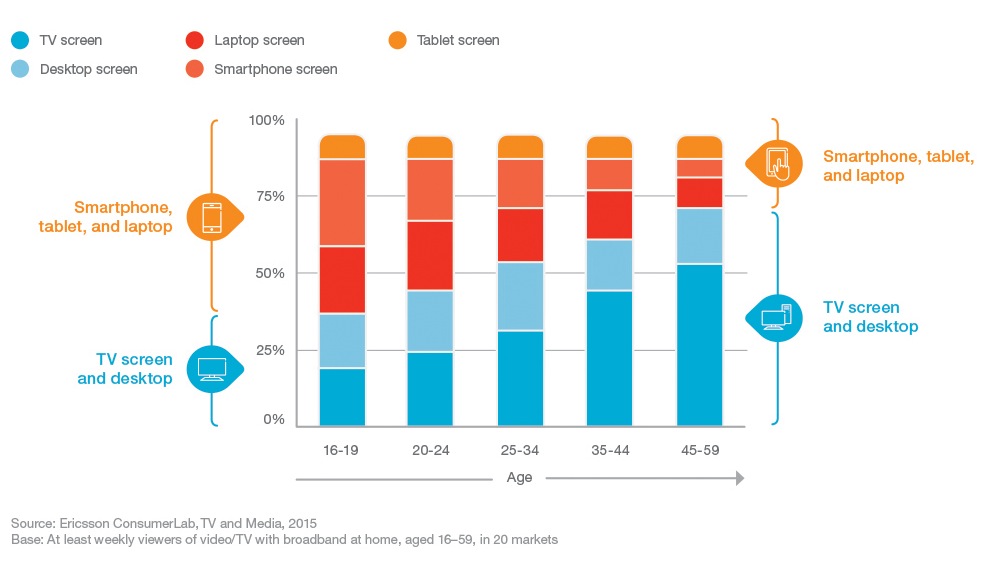
El estudio resalta también el importante incremento de los consumidores que ven vídeo en un dispositivo móvil: el 61% utiliza su smartphone, un 71% más que en 2012. Casi dos tercios del tiempo total que pasan los adolescentes viendo televisión y vídeo es con dispositivos electrónicos, incluyendo tabletas, ordenadores portátiles y smartphones.
También aumenta el número de consumidores que ven contenido generado por los usuarios (User-generated content UGC) en plataformas como YouTube. Cerca de 1 de cada 10 consumidores ven YouTube durante más de tres horas al día, y uno de cada tres cree que es muy importante poder ver este tipo de contenidos desde su televisión de casa. Además,el estudio revela que la creciente importancia de plataformas YouTube se traduce en un aumento en la popularidad de vídeos educativos y didácticos (tutoriales), con consumidores que ven un promedio de 73 minutos de este tipo de vídeos a la semana.
 Anders Erlandsson, consultor de Ericsson ConsumerLab, sostiene que “el aumento continuo de vídeo en streaming bajo demanda y contenido generado por usuarios refleja tres factores importantes para los espectadores de hoy en día: gran contenido, flexibilidad y experiencia global de alta calidad. Por eso son cruciales ahora modelos de negocio innovadores que apoyen estos tres factores para la creación de ofertas de televisión y vídeo que sean a la vez relevantes y atractivas”.
Otra de las conclusiones que se desprende del ConsumerLab TV & Media 2015 de Ericsson el bingeing (darse el “atracón” televisivo o ver más de un episodio seguido) se está convirtiendo en una parte clave de la experiencia de la televisión y el vídeo. Este hábito es prominente entre los usuarios de servicios a la carta como Netflix, Amazon Prime y HBO, de los cuales el 87% ven más de un capítulo seguido al menos una vez a la semana.
Por otro lado, la mitad de los consumidores que ven televisión convencional dicen que no encuentran nada para ver a diario. Los consumidores consideran que las funciones de recomendación no son lo suficientemente inteligentes o personalizadas.
Cabe también destacar que el 22% de los consumidores que nunca han tenido una suscripción a una televisión de pago ya están pagando por servicios de contenido over-the-top (OTT).

Tv lineal
Ericsson ConsumerLab deja patente que la popularidad de la TV lineal sigue siendo alta, principalmente debido a la posibilidad de acceso que da a la visualización de contenidos premium y contenidos en directo, como deportes, así como su valor social.
Este informe está basado en entrevistas con más de 22.500 personas y sus resultados reflejan la opinión de 680 millones de consumidores, lo que representa el mayor estudio de este tipo en la industria de la televisión hasta la fecha. Con datos de apoyo y extraídos de mediciones en dispositivos y una investigación cualitativa, el informe detalla los últimos comportamientos de consumo, actitudes y demandas en relación con la televisión y los medios de comunicación, y el posible impacto que estas tendencias pueden tener sobre los modelos de negocio actuales del sector.
Las entrevistas se han realizado a consumidores de entre 16-59 y 60-69 años de edad, pertenecientes a 20 mercados: Brasil, Canadá, China, Colombia, Francia, Alemania, Grecia, Irlanda, Italia, México, Portugal, Rusia, España, Corea del Sur, Suecia, Taiwán, Turquía, Reino Unido, Ucrania y EE.UU. Destacar, por último, que todos los entrevistados tienen una conexión de banda ancha en casa y ven televisión o vídeo al menos una vez a la semana y casi todos utilizan Internet a diario.
Descarga del informe completo.
Did you like this article?
Subscribe to our NEWSLETTER and you won't miss anything.
Related articles
 Movistar Plus+ adds 300 hours of content in Catalan to its on-demand offer
 CMM launches PlayPodcast, a free on-demand audio content environment
 CMM renews CMMPlay, its streaming and video on demand platform
 This is rlaxx TV, the new on-demand streaming platform that lands in Spain
 EFE awards Quality the event recording service and on-demand content
 The live and on-demand sports streaming platform, Dazn, lands in Spain
 La mitad del consumo de contenidos en España podría ser móvil y bajo demanda en 2020
 36% of the total time that Latin Americans watch television and video use on-demand services
 Nintendo ends its adventure of competing with TVii for the distribution of on-demand content
 The consumption of video on demand in Spain is now equal to that of conventional TV in Spain
 Streaming consumption almost equals that of conventional television
 Flumotion acude a MWC 2014 con sus soluciones de streaming multidispositivo y bajo demanda
 Canal+ and Rentrak introduce the measurement of video on demand consumption in Spain
 Ono will offer Disney content on video on demand