





Panasonic Integrated HD Cameras Bring Audiences Closer to Sound UnBound Festival
Four Panasonic AW-HE130 integrated HD cameras, with three state-of-the-art 1/2.86 type MOS sensors, captured every detail in 64 short concerts at the Barbican Center in London.
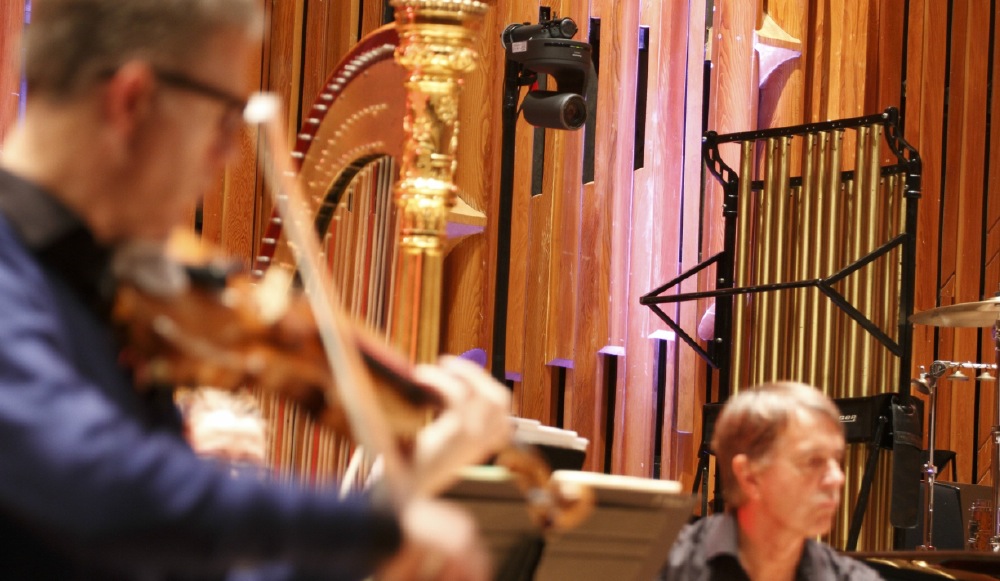
The Barbican Center in London hosted the Sound UnBound Festival in November, which freed classical music from its traditional confines and allowed visitors to attend several short sessions, participate in discussions around the genre, tweet from the concert or spend the entire night enjoying classical music.
The festival was the result of a joint project between the Barbican Center and its artistic partners: the London Symphony Orchestra, the BBC Symphony Orchestra, Britten Sonfonia, the Academy of Early Music and the Guildhall School of Music and Dramatic Arts. It included 64 short concerts over a single weekend that presented classical music from a new perspective, with a mix of established artists and emerging stars selected for their engagement with the audience.
The festival was an opportunity for audiences curious about classical music to connect with it in a different way, based on an unparalleled variety of musical styles and with special emphasis on the informal nature.
 Mark Bloxsidge, technical director of the Barbican, acknowledges that "our intention was to appeal to people who don't necessarily listen to classical music on a regular basis. The idea was to allow younger audiences to listen to classical music as well. We tried to make the atmosphere a little more relaxed than traditional classical events, with shorter sessions, very reasonable prices and diverse content. We offered a wide variety of content, from organ recitals at St Giles Church to screenings and concerts by the London Symphony Orchestra and the BBC Symphony Orchestra, and compositions from different periods from medieval to modern and from classical pieces to premieres.”
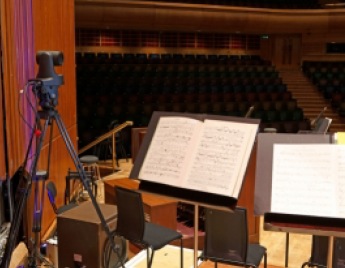
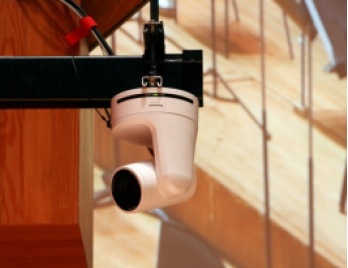
A total of four AW-HE130 integrated HD cameras from Panasonic. One camera was placed on a lighting bar aimed at the stage, a second was mounted on the proscenium arch on the side of the stage, and the remaining two were placed on the stage on tripods, with the intention of moving them between sessions to optimize the level of detail each would capture.
It is a high-sensitivity camera equipped with three state-of-the-art 1/2.86 type MOS sensors that allow high-quality recordings even in low light conditions.
The output was projected on screens of up to four meters and the images came from two 10,000 lumen Panasonic projectors, along with two others rented to broadcast the different events held at the Barbican.
"We thank Panasonic for the contribution of their camera equipment to the event, as it really enhanced the festival. Many attendees are used to attending pop festivals and concerts where the audience is brought closer to the action through the use of giant screens, and this is what they expect. The idea of Sound Unbound was to make classical music more accessible. After all, it was the pop music of the day," says Mark Bloxsidge, technical director of the Barbican Centre.
Close-ups of the performance were broadcast in HD format with maximum clarity and you can see the conductor conducting the orchestra up close. The recordings were shown in both the auditorium and the lobby, where people could watch them for free or listen to the concert before heading to another of the Sound Unbound events held throughout the weekend.
 Ease of use
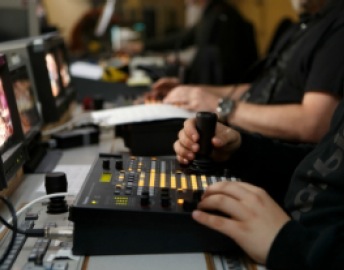
In total, three people ran the Panasonic studio system behind the scenes. Barbican Center Technical Supervisor Martin Shaw and Technician Jack Jordan were assisted by an AW-RP120 controller and managed two cameras each.
Jeremy Garside, CTO of the London Symphony Orchestra, served as conductor over the weekend with the help of an AW-HS50 switcher. As a musician he was able to follow the score and direct the cameras from one section of the orchestra to another.
"Directing camera operators during a rock concert is relatively easy, with band members almost always playing at once. However, in classical pieces, it can happen that entire sections of the orchestra don't play at all for five minutes. We needed to know when various instruments were going to be used and anticipate camera movement. The AW-HS50's multi-viewer output was great. We were surprised that such a small unit could do everything we wanted," adds Mark Bloxsidge.
"We used the AW-RP120 controller because it allowed us to use the presets to determine the shots before the sessions. Our operators pre-prepared shots of the string instruments, brass, etc. and could toggle them with a button when asked during the show. It was impressive that our technicians were able to use two cameras from a single controller very quickly despite having no experience with this model, which says a lot about the ease of use of these devices." Bloxsidge notes.
 Noise free environment
Noise is also an important element for any system installed at the Barbican. The center still has and uses a system called BTV, which was installed in the early 2000s and includes standard definition Panasonic cameras in a prototype PTZ system. It was initially installed as part of a joint partnership initiative with the BBC, but is no longer used in broadcasts due to the resolution of the cameras.
"All current devices incorporate fans, which was a concern in the past, as classical music is not amplified and often includes very quiet sections. We were delighted to find that, over a long weekend of testing, the AW-HE130's fan sound was imperceptible and there were no mechanical noises either," adds Bloxsidge.
Did you like this article?
Subscribe to our NEWSLETTER and you won't miss anything.
Related articles
 Panasonic introduces automatic framing to its PTZ cameras
 Ten Panasonic AK-UC3300 cameras land in TVG studios
 The Copa del Rey final will debut cameras integrated into the corner flags
 Gateway reinforces its equipment with Panasonic 4K PTZ and studio cameras
 JVC debuts at IBC the Connected Cam family of cameras and integrated solutions for live content production
 The documentary about Chillida, shot with Panasonic cameras, will participate in the San Sebastián Festival
 Panasonic reinforces its range of 4K cameras
 Panasonic expands its range of studio and ENG cameras
 'Utopia' chooses Panasonic remote cameras
 Panasonic installs several robotic cameras in Mexico
 New proposals from Panasonic in camcorders and integrated cameras
 Panasonic PTZ remote cameras in the new ABC reality show
 Panasonic Series 50: cameras, switchers and products with IP control
 The secrets of Ferrán Adrià through Panasonic cameras