





AEQ increases the flexibility of Forum IP digital tables with a new version in Split
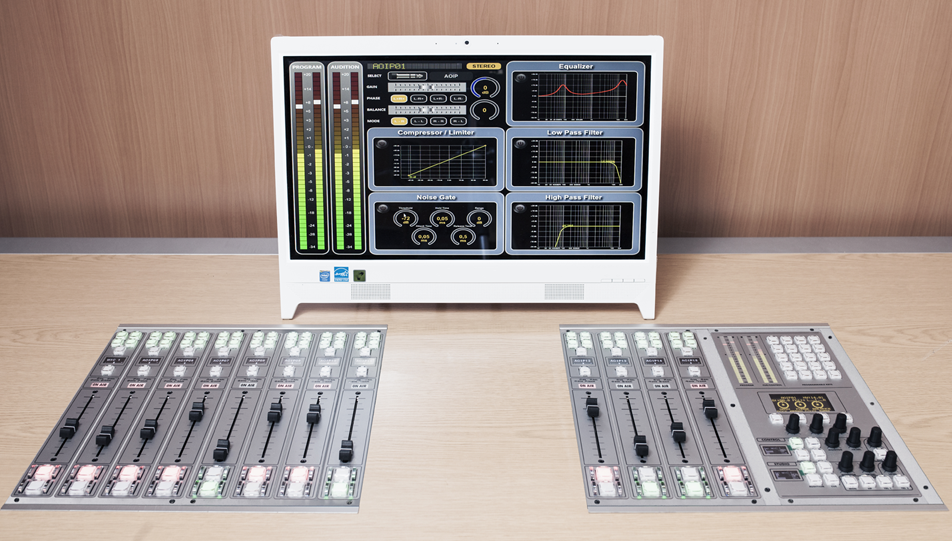
The popular digital console is available in a version with the control surface separated from the 'Engine or Core' and with the possibility of installing the control surface modules separately in Split style.
AEQ and its brand Kroma by AEQ attend IBC once again to show their new audio and video solutions developed to respond to the needs of users in their various scenarios, from radio studios to audiovisual production centers.
One of the most anticipated developments is the new version of the well-known AEQ Forum IP digital audio table, Forum IP Split. Gustavo Robles, sales director of the company, comments that "our customers' requirements for greater flexibility have led us to develop the Split version of the AEQ Forum IP console. Now, the console is available in a version with the control surface separated from the 'Engine or Core' and with the possibility of installing the control surface modules separately in the Split style."
The interconnection of the modules is carried out with standard CAT5 cables with RJ45 connectors as well as with the 'core or engine'. In addition, its fitting is very easy and comfortable.
From a configuration and operation point of view, the Forum IP Split is no different from the original self-contained version that allows the installation of up to twenty fader channels. The Set-up and configuration application remains the simplest on the market and popular SW options available, such as Virtual Forum and Forum Screen, are compatible with this new console.
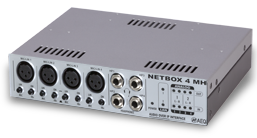 For the multichannel Audio over IP network, AEQ debuts at IBC the new Netbox 4 MH, an IP audio interface with microphone/line inputs and line + headphones outputs. This unit covers the need for microphone inputs and headphone outputs for, for example, radio and television studios, stages or multimedia installations. Multi-channel IP connectivity (Audinate DANTE protocol) makes unit inputs available at any point on the network. As a complementary feature, the unit features the same inputs and outputs as balanced analog line inputs and outputs. The 4 GPIOs for signaling are very practical when used in a studio environment.
 Intercom Explorer
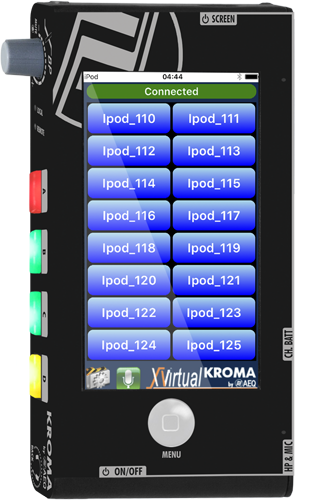
For its part, the Xplorer wireless intercom system is a step further within the range of Kroma by AEQ intercoms. On a platform with a touch screen and small size, it is possible to deploy as many packs as necessary within each user's installation. The system is based on IP, WiFi roaming and Bluetooth LP technologies, with two different formats: the 16-key “XVirtual” virtual panel with the possibility of being installed on Windows or iOS and the Xbp pocket.
The Xbp pack adds to the functionality of XVirtual 4 physical keys, a volume encoder, mute key and connectors for professional microphone headphones. In this way, Xbp allows you to create work zones, overlap them, manage transitions between zones transparently for the end user, and all this while maintaining excellent audio quality.
For audio communications, AEQ surprises us with the new version of its AEQ Phoenix Venus audiocoder, the Venus 3 stationary IP audiocodec with two Ethernet ports and two RS232 serial ports, optional 48 V DC power supplies. Additional connectivity on multi-channel IP networks using Audinate's Dante protocol makes Venus 3 available anywhere on your station.
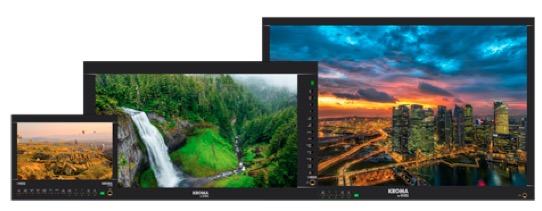
Finally, the new series of 9", 17" and 24" LM8000 broadcast monitors, recently incorporated into the Kroma by AEQ family of monitors, will also be exhibited during the fair. Their 1920 x 1080 Full HD resolution makes them the perfect solution for signal testing and measurement in video and television production centers.
Did you like this article?
Subscribe to our NEWSLETTER and you won't miss anything.
Related articles
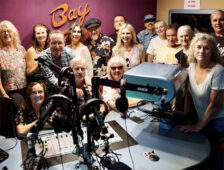 Bay-FM upgrades its main studio with AEQ's Forum IP Split console
 NDI will celebrate its 10th anniversary at IBC 2025: version 6.3, partner news, round tables...
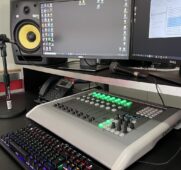 Grupo Camargo (Brazil) relies on AEQ Capitol IP digital tables in all its studios
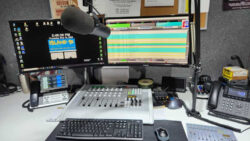 Radio Island 92 is reborn from its ashes with the AEQ Forum IP Split
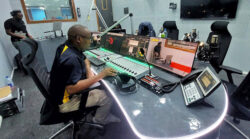 AEQ Forum IP Split console lands in Tanzania
 AEQ's Forum IP Split table lands on Radio RDS Lisboa
 The Radio Nativa radio formula is transferred to AEQ's Forum IP Split
 Radio Siljan (Sweden) installs Forum IP Split and Forum Lite (AEQ) consoles in its studios
 Emaus Radio (Poland) has AEQ's Forum IP Split and Capitol IP digital consoles
 Star FM begins a new stage with AEQ's Forum IP Split consoles
 Yamaha announces new courses on its CL and QL series digital tables
 WDR increases the flexibility and agility of its mobile units with Riedel MediorNet
 Yamaha organizes advanced YCATS courses on digital tables
 Egypt's CBC increases flexibility in transporting HD signals with Riedel