





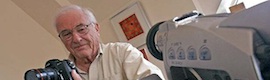
Yves Meyer, the inventor of the JPEG 2000, Abel Prize in Mathematics
Considered the “Nobel” of mathematics, this award recognizes the contribution that JPEG 2000 compression technology has made to applications such as digital cinema.
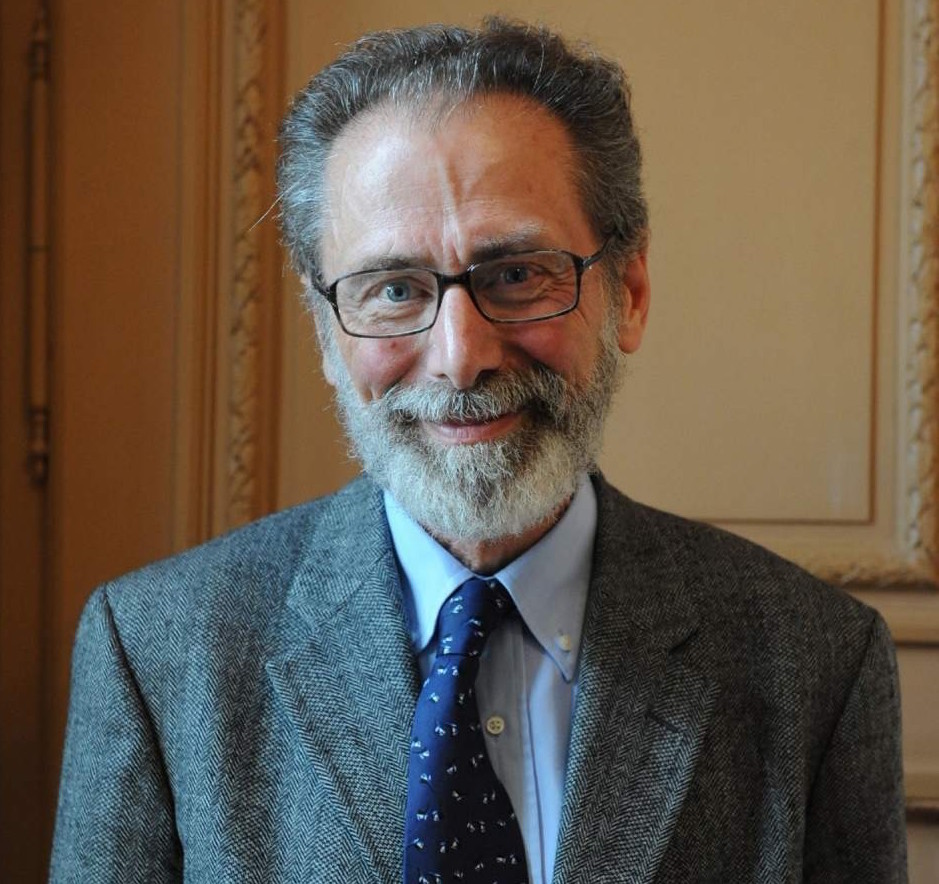
The mathematician Yves Meyer found by chance one fine day in 1984 in the photocopier of the Palaiseau Polytechnic School (Paris) a work by some physicist and mathematician colleagues who were developing, on behalf of an oil company, a new technique for decomposing complex seismic signals.
Starting from that study on the so-called “wavelet theory”, Meyer developed a complex compression standard capable of dismantling images and sounds into simpler information packages.
Yesterday, Tuesday, more than three decades after that chance discovery that gave rise to the JPEG 2000 compression standard, the Norwegian Academy of Sciences recognized Yves Meyer with the Abel Prize in Mathematics, considered the “Nobel” of the exact sciences.
The mathematician started from the idea that if those wavelets could be simplified, any wave could behave in the same way. In this way, JPEG 2000 allows optimized compression of audio and video signals. The standard uses wavelet decomposition to reduce the size of an image, achieving greater optimization than other compression formats.
JPEG 2000 can work with higher compression levels than JPEG without incurring the main defects of the previous format with high compression rates: generation of uniform blocks and blurry appearance. It is also better suited to progressive loading of images. Its main disadvantages are that it tends to blur the image more than JPEG, even for the same file size (but without forming blocks), and that it eliminates some small details and textures, which the normal JPEG format does represent.
Today there are many applications in different fields such as medicine, cartography or audiovisuals that optimize their processes based on JPEG 2000. In the case of audiovisuals, post-production or digital cinema use this compression for the management, editing, treatment and distribution of audio and video signals.
Meyer, 77 years old and attached to the École Normale Supérieure Paris-Saclay, will receive the award, worth 6 million Norwegian crowns (675,000 euros), from King Harald V of Norway on May 23 in Oslo. The Abel Prize is named in memory of the Norwegian mathematician Niels Henrik Abel (1802-1829), and was established by the Norwegian Parliament in 2002. The Abel Committee, made up of five internationally recognized mathematicians, is responsible for choosing the winner each year.
Did you like this article?
Subscribe to our NEWSLETTER and you won't miss anything.
Related articles
 Silvia Lobo and Félix Abel de la Cruz found Stendhal Films, new distribution label
 Foliascope edits stop motion film ‘The Inventor’ with DaVinci Resolve
Foliascope edits the stop motion film 'The Inventor' with DaVinci Resolve
Foliascope edits stop motion film ‘The Inventor’ with DaVinci Resolve
Foliascope edits the stop motion film 'The Inventor' with DaVinci Resolve
 Ross Video and Embrionix to demonstrate transport of JPEG 2000 over IP
 Garrett Brown, inventor of the Steadicam, nominated for the US Inventors Hall of Fame
 David Abel, new sales director at Tedial
 Petro Vlahos, the inventor of chroma key, dies
 Intopix bets heavily on JPEG 2000 at ISE 2013
 Eugene Polley, inventor of the remote control, dies
 Fraunhofer and Intopix offer DCP creation with JPEG 2000 encoding in real time
 JPEG 2000 also available for Media Links MD2000 platform
 Autodesk Inventor Publisher 2012, 3D product manuals arrive
 Alvy Ray Smith, co-founder of Pixar and inventor of the alpha channel, Mundos Digitales 2011 special award
 Goodbye to Willard Boyle, the inventor of CCDs