





Blackmagic's portfolio of solutions continues to grow and update
Blackmagic Design shows at its stand at NAB 2017 a series of interesting new features and updates to its solutions for post-production, broadcasting and cinematography.
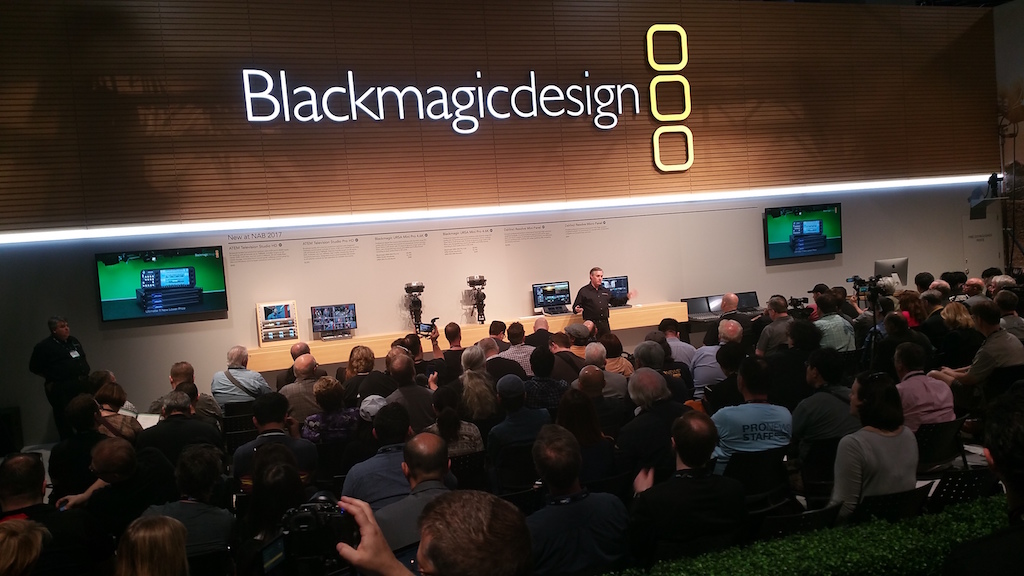
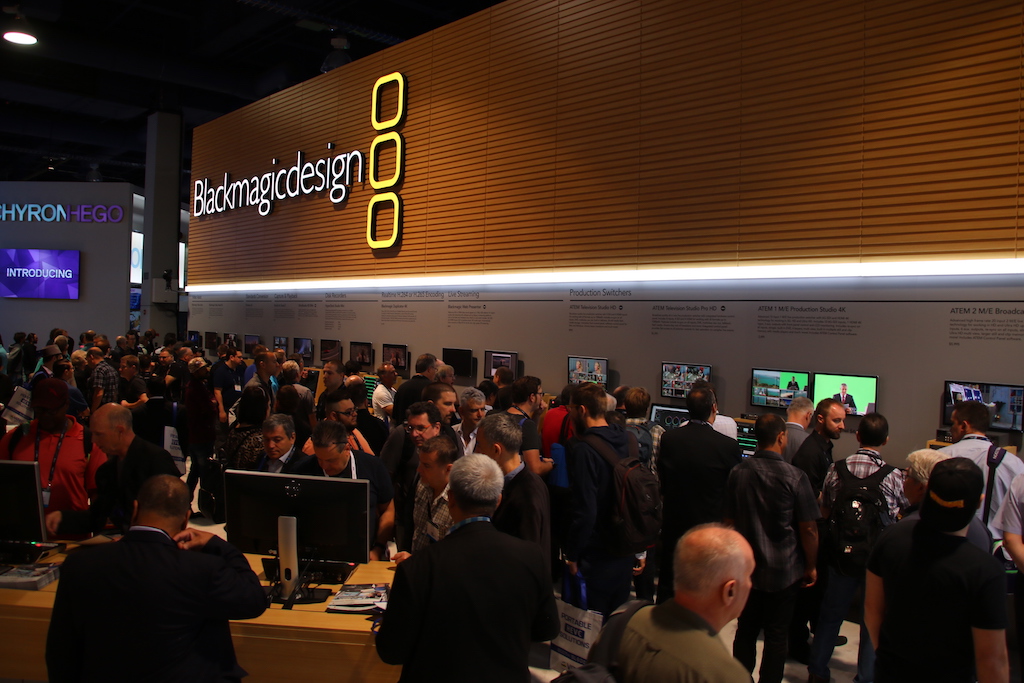
As has been evident in this NAB 2017, the portfolio of solutions of Blackmagic Design it doesn't stop growing. And although the Australian manufacturer has chosen for a few months not to concentrate its launches at fairs, the truth is that at the Las Vegas event it has once again shone for its revolutionary solutions.
In terms of post-production, DaVinci Resolve 14 is the largest release in the product's history, and an update that has been designed to be more than just an incremental software update, but a complete revolution in post-production.
New features include up to ten-fold performance improvements, a new audio post-production suite with Fairlight audio built into DaVinci Resolve, and multi-user collaboration tools that allow multiple people to edit, colorize, and mix audio from multiple systems, all in the same project at the same time. A public beta version of DaVinci Resolve 14 is now available on the Blackmagic website.
Ursa Mini Pro
For URSA Mini Pro users, Blackmagic has announced a new open protocol that will allow you to create your own remote control solutions via Bluetooth. It has also announced the Blackmagic Video Assist 2.4 update, which adds multilingual support for ten different languages. Also demonstrated at NAB 2017 are new powerful 4k pro scopes for its popular Video Assist, including waveform, RGB parade, vectorscope and histogram.
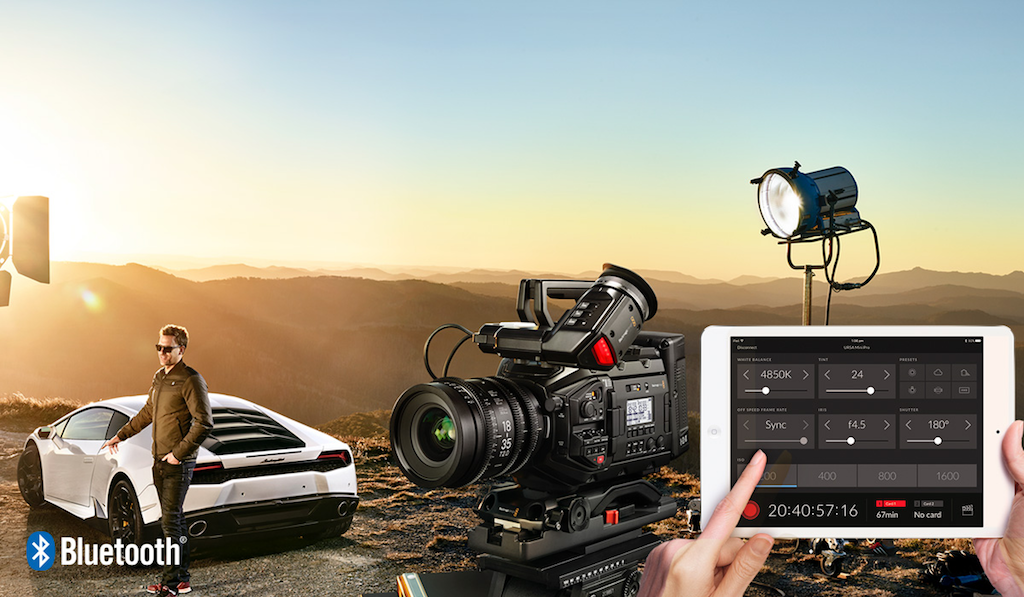 All URSA Mini Pro models include Bluetooth connectivity, but this had not yet been enabled. Thanks to this technology, users will be able to control the camera from a maximum distance of nine meters. On the other hand, with the aim of providing greater flexibility, Blackmagic Design has developed a new open protocol. Additionally, the company will make a programming interface and sample code available to developers to allow users to create their own solutions.
It should be noted that the code and application for iPads will be available for those users who wish to use this functionality in the future. The application allows you to create virtual clapperboards to send information to multiple cameras during filming, including data about the scene, the shot, the shot and even lines of dialogue. Likewise, it is possible to control various camera parameters, such as the shutter angle or the format and frame rate.
ATEM Television Studio Pro HD
As for the studio, we have already been able to see in action the new ATEM Television Studio Pro HD that Blackmagic will begin marketing next May. This live production switcher with integrated hardware control panel has been designed for both broadcast and professional users.
The mixer includes eight inputs, simultaneous display mode, main and auxiliary outputs, connections for analog audio signals, intercom system, two media players with flash memory, creative transitions, digital visual effects and a host of other features.
The ATEM Television Studio Pro HD model combines the functions of a professional control panel with an extraordinary mixer with eight inputs, four SDI and four HDMI. Thanks to the resynchronization of the signals, it offers the possibility of connecting up to eight different sources, such as computer equipment, video game consoles and all types of cameras.
Capture and playback via Thunderbolt 3
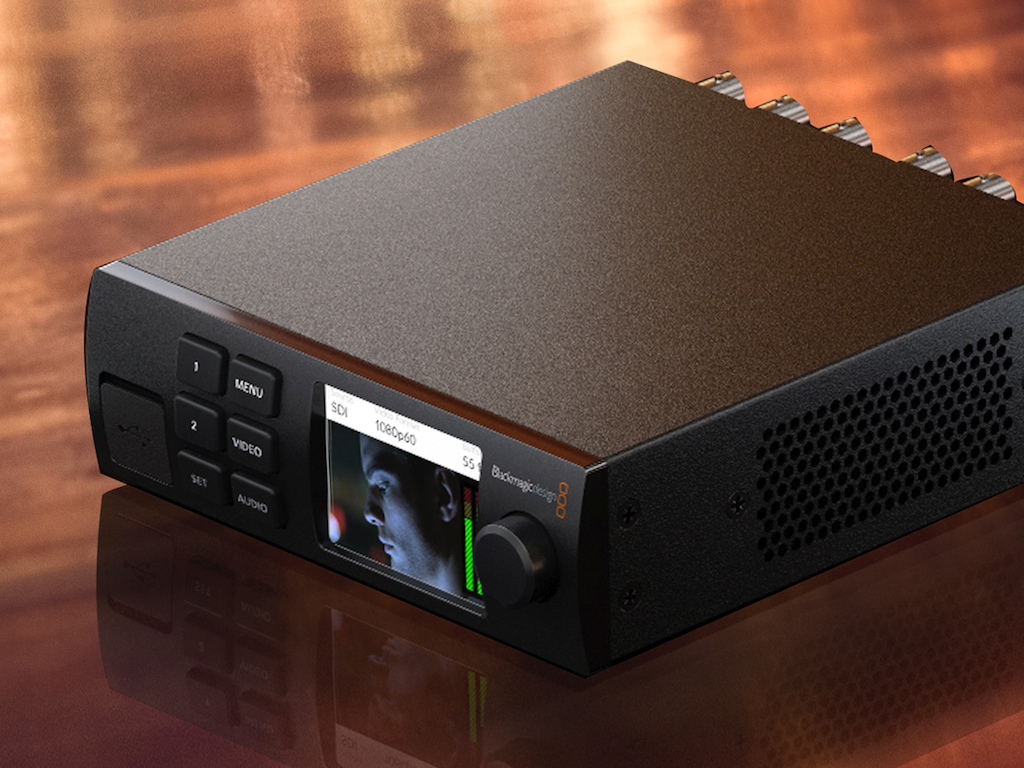
For capture and playback Blackmagic has announced UltraStudio HD Mini, the first portable Thunderbolt 3 capture and playback solution, designed specifically to allow customers to perform archiving, monitoring editing and live broadcast tasks, using the latest Thunderbolt 3-based equipment for maximum performance.
Its compact design makes it easy to transport, and its features allow it to be used in high-quality projects. Likewise, it offers the possibility of capturing and playing back content with a maximum resolution of 1080p60 in 10-bit YUV format and 1080p30 or DCI 2K in 12-bit RGB format. Additionally, it includes an HDMI output for monitoring images on large screen TVs, as well as two 3G SDI outputs for the alpha channel and main image. On the other hand, it has inputs for analog signals, in order to digitize and archive material from older analog recorders.
The manufacturer is also displaying an update to Duplicator 4K on its stand, which includes the addition of H.264 real-time encoding.
Access to the NAB 2017 SPECIAL in Panorama
Did you like this article?
Subscribe to our NEWSLETTER and you won't miss anything.
Related articles
 Pandastudio.tv launches sets for digital productions with Blackmagic solutions
 Charmex reinforces its portfolio of AV Pro solutions for broadcast, events, live and streaming
 Rooster Teeth produces for 45 million viewers with Blackmagic Design solutions
 Freaks 4U Gaming invests in Blackmagic Design solutions for eSports production
 Rob Legato uses Blackmagic Design solutions for the virtual production of 'The Lion King'
 Leyard attends IBC to show its portfolio of solutions designed for studies
 Blackmagic launches a series of solutions designed for web producers
 Moncada exhibits at BIT a huge portfolio of solutions for film and television
 Vantec will show at BIT an extensive portfolio of solutions for studio, graphics, playout and production
 Blackmagic acquires Eyeon, further expanding its extensive portfolio of solutions
 Flexible Infrastructure Solutions with Blackmagic for a 4K World
 Avid reinforces its portfolio with new solutions for audio mixing and shared storage
 Playbox will show at BVE an extensive portfolio of solutions for multichannel environments
 The EVS solutions portfolio does not stop growing