





Goodbye to Pedro Erquicia, father of 'Informe Semanal' and first director of Telemadrid
Director and presenter of emblematic Spanish Television programs, journalist Pedro Erquicia was one of the most recognized and respected faces of Spanish public television.
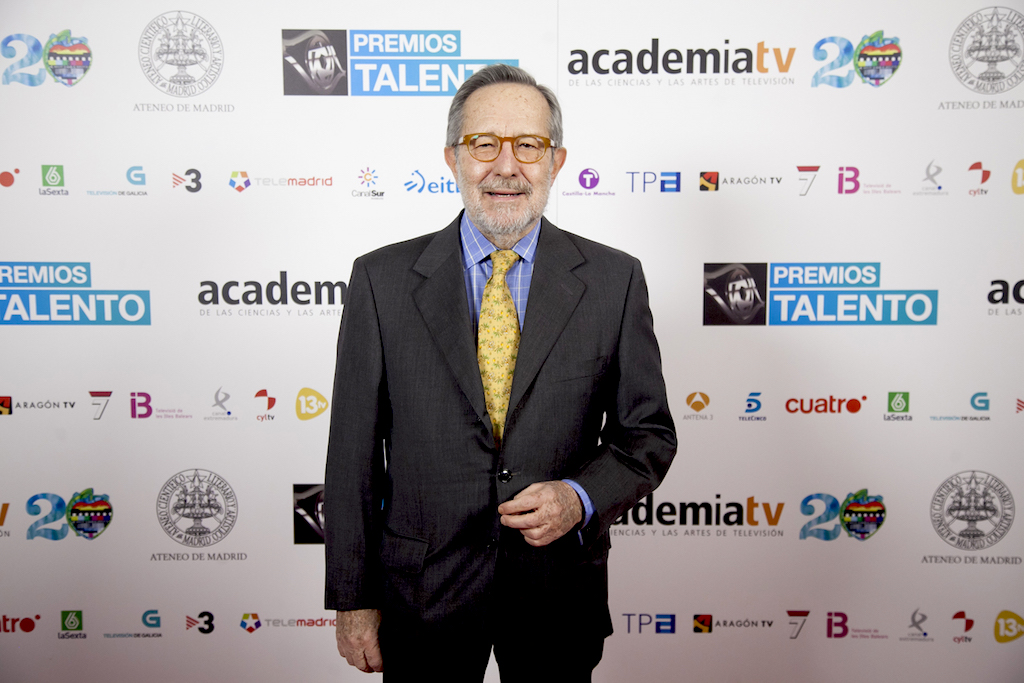
The journalist Pedro Erquicia He died today in Madrid at the age of 75. Born in San Sebastián in 1943, he was one of the most recognized and respected faces of Spanish public television until his retirement in 2008.
Erquicia graduated in Journalism from the Official School in 1967, although two years earlier he had already started working as a collaborator in the TVE studios on Madrid's Paseo de la Habana. He joined the staff of the public entity in March 1968 and held different positions and responsibilities there over the following decades: he went from councilor to reporter and editor, as well as head of different spaces, almost always linked to the information services.
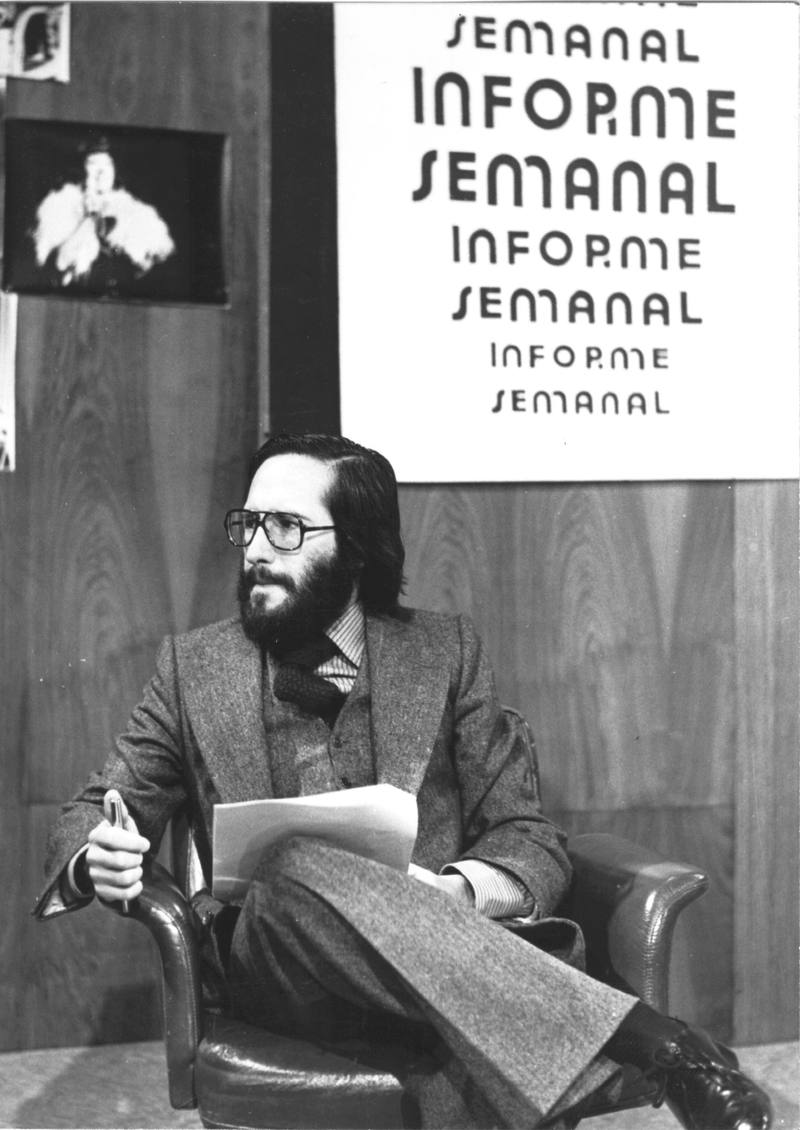
He was editor-in-chief and director of Current panorama (1968-1970) and editor-in-chief of the First Edition (1972-1973) from the Telediario. On March 31, 1973, he began his career as director and presenter of Weekly Report, the oldest news program on Spanish television that he directed and presented until 1978. From that moment on he moved to New York as a correspondent, replacing Jesús Hermida in the position.
Upon his return in early 1981, he assumed the deputy directorship of the TVE Information Services. Erquicia was precisely one of the professionals who was present at the recording of King Juan Carlos's message on the night of the attempted coup d'état on February 23, 1981.
In June 1981, the then director Fernando Castedo appointed him head of Information Services, replacing Iñaki Gabilondo, a position from which he resigned in October of that same year after the arrival of Robles Piquer to TVE. He returned to New York as a correspondent for TVE.
In October 1987 he was appointed director of the weekend news program. 48 hours, a position from which Julio de Benito dismissed him on January 7, 1988, during the Pilar Miró era. In October of that year he was appointed to the new regional television Telemadrid, a position in which he remained until 1990.
Returning to TVE, in November 1990 he took charge of the news program. TV Documents, of which he was also its presenter.
Co-founder of the Academy of Television Arts and Sciences in 1997, Pedro Erquicia received numerous awards throughout his career such as the Talent Award granted by this institution, two Golden Antennas, the National Television Award and the International Press Club Television Award in 2007.
The president of the Television Academy, Manuel Campo Vidal, has pointed out that "there has been an unexpected blow, at least for us. He was a great journalist, creator of emblematic television formats, correspondent for TVE in New York and founder of this Academy. At a certain moment, despite being at the center of the entire television hurricane, he knew how to retire with commendable dignity. He continued to support other journalists through the dinners he organized at his home, introducing them in an environment relaxed to various personalities. There they met the then Prince of Asturias and the then television presenter Letizia Ortiz. He has handled the illness that we have now known with the same dignity and discretion.
The journalist Rosa María Mateo has highlighted that "I felt great affection and professional respect for Pedro. I owe everything to him. He called me to present Informe Semanal and he made me what I am. He is one of the people who knew the most about television in this country where unfortunately the recognition of excellence and seniority does not exist. He made the most emblematic news program on TVE. He had the vision to choose teams and was never afraid to have brilliant people at his side.
The journalist and academic Fernando Ónega has declared that "Pedro has been the great master of informative journalism in this country on television. He is the man who invented the most television formats and will always deserve recognition for his great creative capacity. He always tried to look for what was beyond the news, which in those times of the birth of Informe Semanal was absolutely revolutionary."
For his part, journalist Baltasar Magro has expressed that it is "painful news because Pedro has been one of the most important characters on television in this country. He promoted eminently audiovisual journalism, something that today I miss on television. And the most prominent exponent of this approach in the audiovisual medium is the program he created: Informe Semanal."
Did you like this article?
Subscribe to our NEWSLETTER and you won't miss anything.
Related articles
 Andrew Tiffen succeeds his father as president and chief operating officer at Tiffen
 These are the objects that 'Informe Semanal' (RTVE) has introduced in its Caja de las Letras del Instituto Cervantes
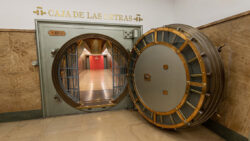 ‘Informe Semanal’ will deposit its legacy in the Caja de las Letras of the Cervantes Institute
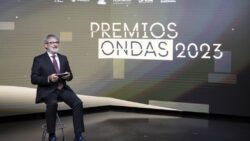 Digital, very present among the winners of the 2023 Ondas Awards: Kings League, 'La Ruta', 'Informe Semanal', 'El Faro'...
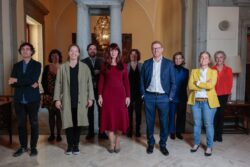 'Weekly Report', National Television Award 2023
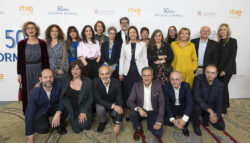 ‘Informe Semanal’, the oldest program on national television, turns 50 years old
 Vodafone launches 'This is NOT a series', the first weekly film and series talk show
 Pedro Roncal, former director of 24 Horas and professor at the RTVE Institute, dies
 Goodbye to director and director Juan Alberto Valenzuela
 Goodbye to Pedro Grima, historic director and producer of Spanish Television
 Pedro González, new general director of Videoreport
 The PP proposes José Antonio Sánchez, general director of Telemadrid, as president of RTVE
 'Weekly Report' turns forty years old
 Goodbye to Carlos Torreiro, content director of XTVL