





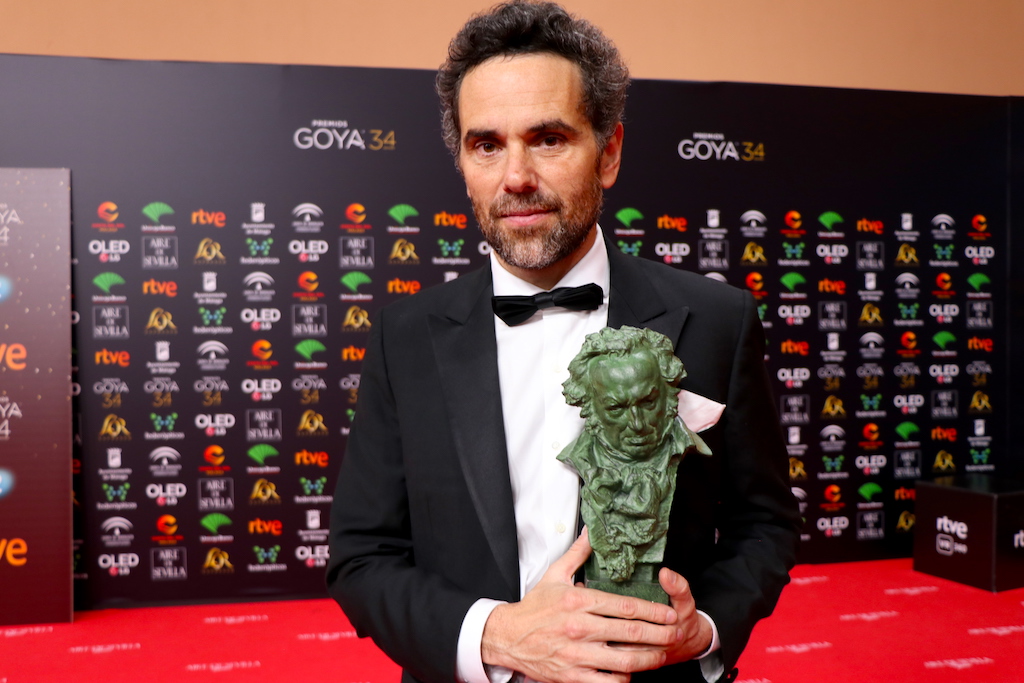
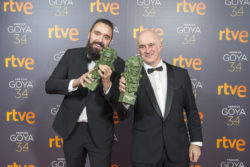
Mauro Herce recibe el Goya a la mejor fotografía por ‘Lo que arde’, rodada en fotoquímico
“Oliver no concibe filmar en algo que no sea en película y a mí me parece genial porque me encantan los colores, los contrastes, las imágenes y las texturas que da”, asegura el director de foto.
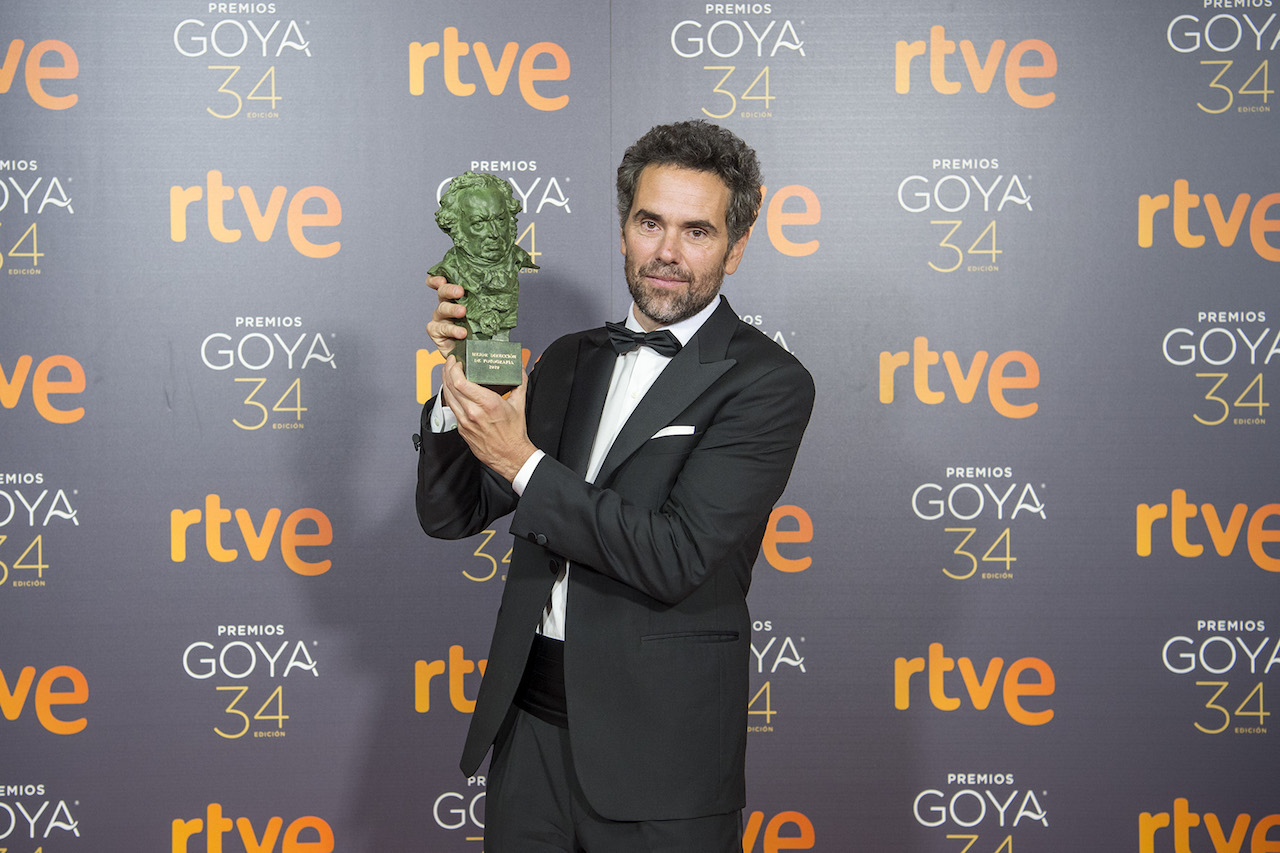
La relación de Mauro Herce con el director de la película Lo que arde, Oliver Laxe, se remonta a muchos años atrás cuando este último estudiaba cine y comunicación audiovisual en Barcelona y se encontraban en la biblioteca de la Universidad para mantener largas charlas sobre cine. Esta larga relación ha sido clave para que en este tercer trabajo de Laxe esté completamente afinado el entendimiento entre ambos.
Herce se muestra muy satisfecho de “la acogida que ha tenido esta producción, que ya venía con varios premios internacionales pero faltaba cierto reconocimiento aquí. El Gaudí de hace unas semanas y el Goya de hoy son el espaldarazo definitivo para esta película de la que nos sentimos muy orgullosos”.
 La cámara que se utilizó para el rodaje de Lo que arde fue una ARRI de 16 mm. que, como explica Herce, “Oliver no concibe filmar en algo que no sea en película y a mí me parece genial porque me encantan los colores, los contrastes, las imágenes y las texturas que da”.
Sobre el proceso de revelado y laboratorio, el máximo responsable de la fotografía de Lo que arde explica que “aunque quedan pocos laboratorios, es un proceso precioso porque es volver a lo que se ha hecho a lo largo de la historia de la fotografía y del cine. No ves el resultado final hasta mucho después, y ese tiempo de espera hasta que llegan las imágenes es algo muy excitante y bonito. Además, casi siempre te sorprende para bien. Eso sí, durante muchos días estás preocupado por si has expuesto bien o por si todo lo que habías calculado estará resuelto. Evidentemente esto no pasa con el vídeo”.
Agrega Herce asegura que “a veces se cometen pequeños errores que no han llegado a ser graves, pero nos hemos encontrado con más de un susto. Es cierto que ya no hay mucha gente que trabaje de esta forma y se ha perdido un poco la práctica. En general, no he tenido mayores preocupaciones que en otros proyectos, aunque siempre me quitan todos ellos el sueño porque abruman un poco cuando uno se imagina posibles problemas que luego seguramente no aparezcan”.
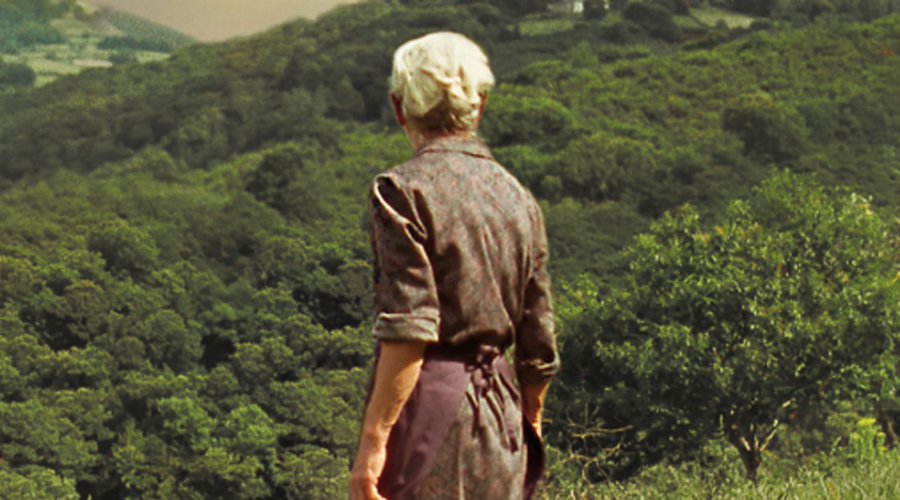 Una de las complicaciones de esta película en cuanto a fotografía era el tema de las bajas luces y los contrastes. “El fuego de por sí es muy contrastado y es difícil de filmar porque las llamas son extremadamente brillantes y en cuanto te alejas medio metro del fuego, baja la intensidad. Además, en este caso solo teníamos las linternitas de los brigadistas. Encontramos un método de trabajo con tres diafragmas de referencia en función de la cantidad de luz que hubiese y en función del giro de la cámara se compensaba”.
Mauro Herce no solo se encarga de la dirección de fotografía, sino que tiene su propia filmografía como director. Dead Slow Ahead fue su primer largometraje con el que ganó el premio especial del jurado en Locarno Film Festival de 2015, entre muchos otros reconocimientos. Lonely Rivers es su segunda producción, recién estrenada en Locarno Film Festival 2019. Está preparando un nuevo largometraje, Slaughterhouse, que se rodará en Uruguay con gran parte del equipo de Lo que arde.

Did you like this article?
Subscribe to our NEWSLETTER and you won't miss anything.
Related articles
 Pedro Luque: Goya 2024 a Mejor Fotografía con la mezcla analógica y digital de ‘La Sociedad de la Nieve’
 Rodrigo Sorogoyen achieves the dream double at the Goya 2023: best film and best direction for 'As Bestas'
 The Goya 2022 crowns Fernando León de Aranoa: Best Direction and Best Original Screenplay for 'The Good Patron'
 La crudeza de ‘Mediterráneo’, reconocida con el Goya a Mejor Fotografía para Kiko de la Rica
 Daniela Cajías, primera mujer que recibe el Goya a la Mejor Dirección de Fotografía
 'El Hoyo' receives the Goya for a perfect integration of physical and digital effects
 Josu Incháustegui, Goya for best photography, overcomes the challenge of light in very critical shots in 'The Shadow of the Law'
 'Techo y Comida', one of the revelation films at the Goya, shot with Sony CineAlta F55
 La excelente fotografía digital de Álex Catalán en ‘La isla mínima’ logra un Goya
 MultiVee receives the award for best project at the CCMA Hackathon
 'Twelve Years a Slave', once again the Oscar for best film, shot in photochemical
 Golem recibe el premio Europa Cinemas al mejor emprendedor del año
 Kiko de la Rica wins the Goya for best photography with 'Blancanieves', a film shot in 16 millimeters
 Cuenca recibe por cuarto año el mejor cine internacional de mujeres