





5 pillars that made the production of Eurovision 2021 possible


El Festival de la Canción de Eurovisión es uno de los principales eventos televisivos de Europa. Cada año, logra audiences millonarias a lo largo de todo el viejo continente. Su producción implica un gran esfuerzo tanto de planificación como de ejecución, siempre acompañada de numerosas tecnologías de vanguardia. Thurid Wagenknecht, Programme Manager Global Events y Yung-Min Lee, Senior Project Manager, de Riedel, comparten con los lectores de Panorama Audiovisual 5 pilares de la ejecución técnica de Eurovisión a través de una videoconferencia desde el propio Rotterdam Ahoy, sede de la edición 2021 del festival.
Posiblemente, esta última gala de Eurovisión ha sido una de las más celebradas en mucho tiempo. Con el impulso de NPO, NOS, Avrotros y UER, United y NEP ejercieron como responsables de la coordinación técnica del evento. Ambas compañías decidieron confiar en Riedel para múltiples labores, como las comunicaciones de radio, the gestión de señales audiovisuales para la emisión y distribución de imágenes dentro del Ahoy Arena; o el desarrollo de un complejo sistema de acreditaciones, condicionado directamente por el resultado de los 26.000 test de Covid-19 hechos a todo el staff.
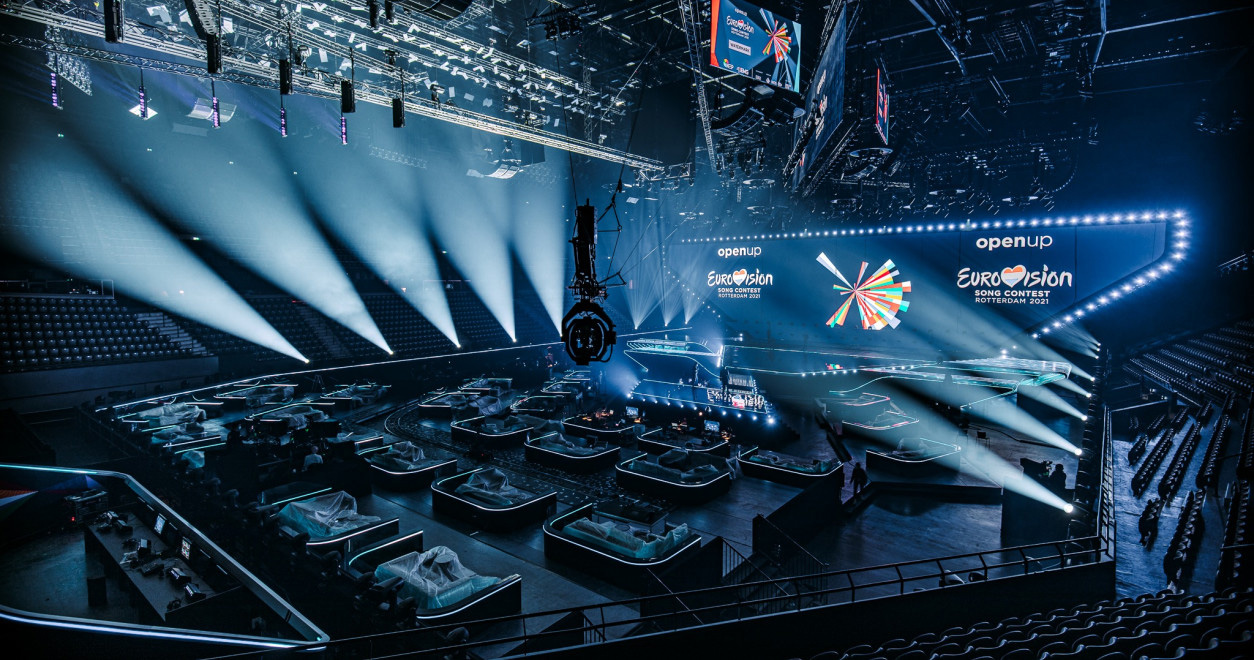
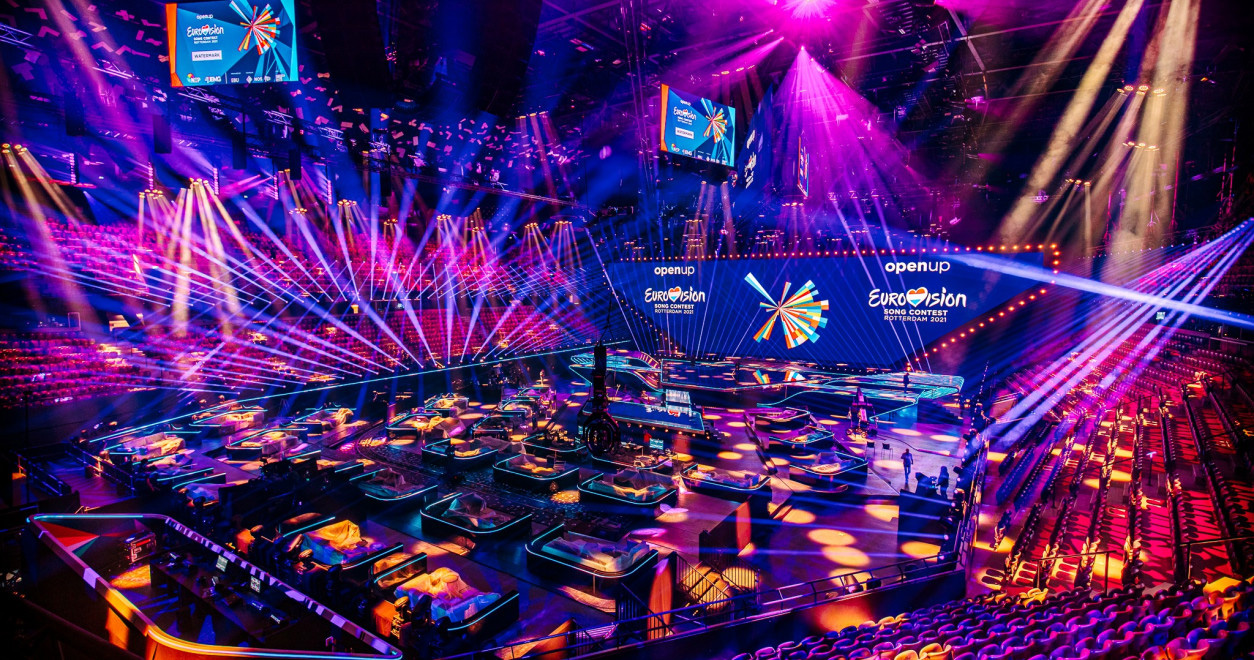
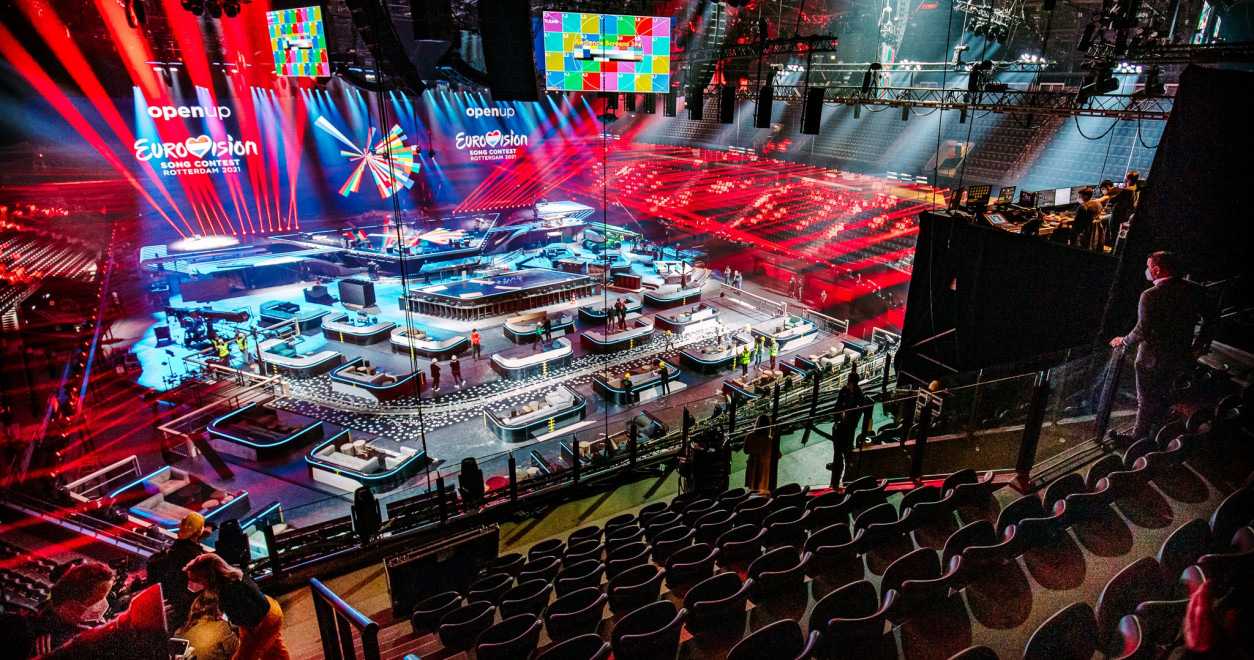
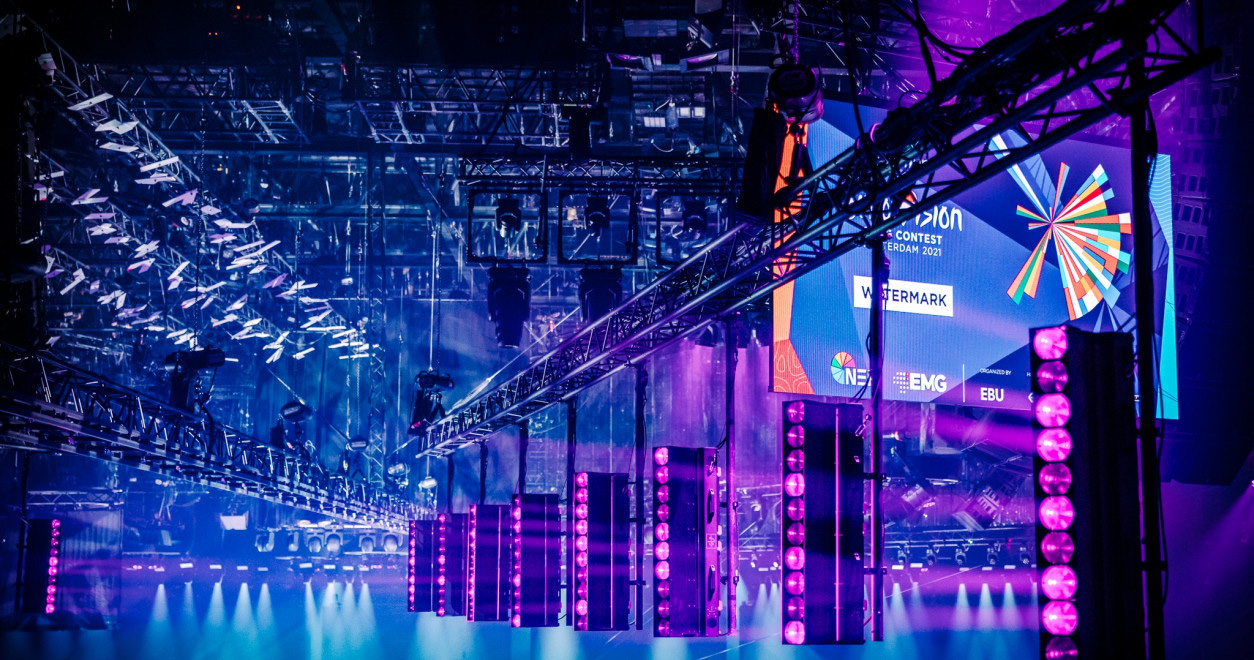
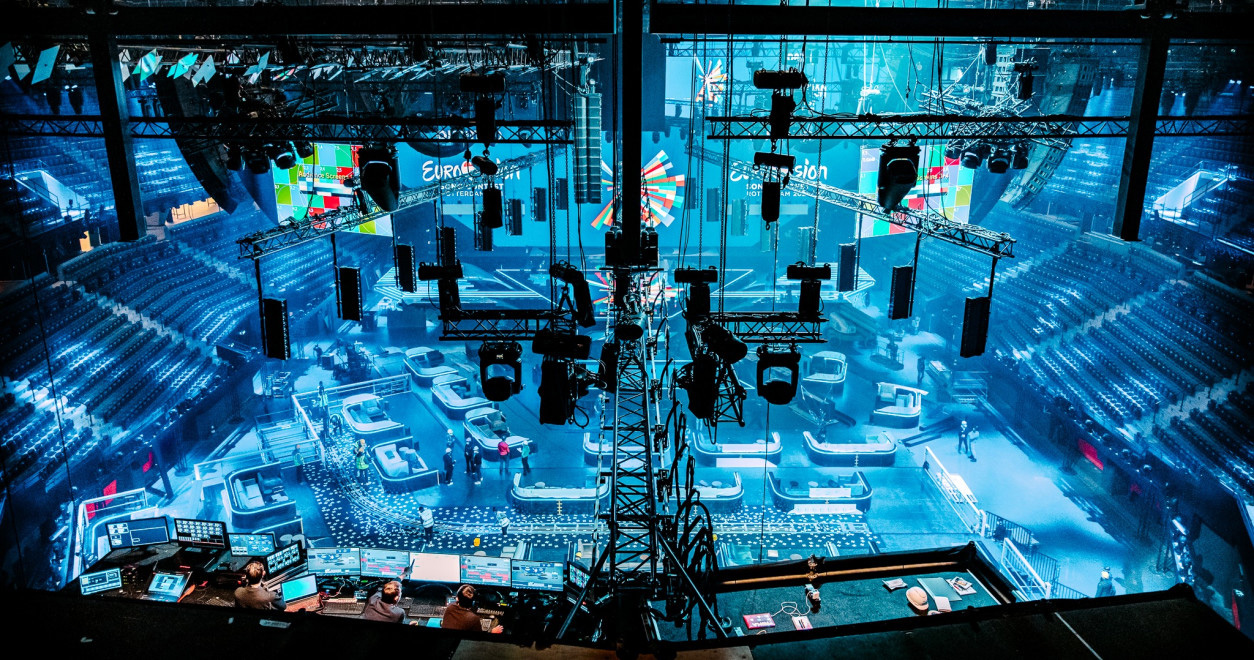
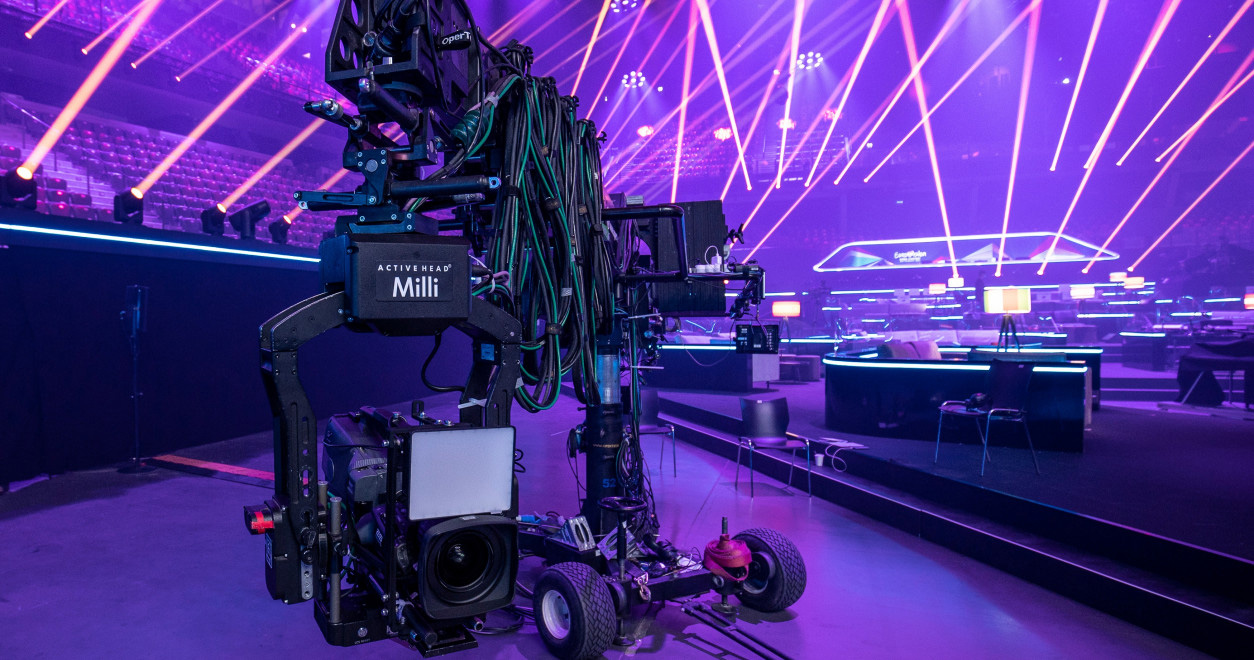
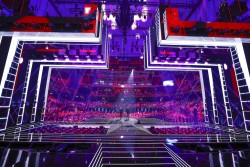
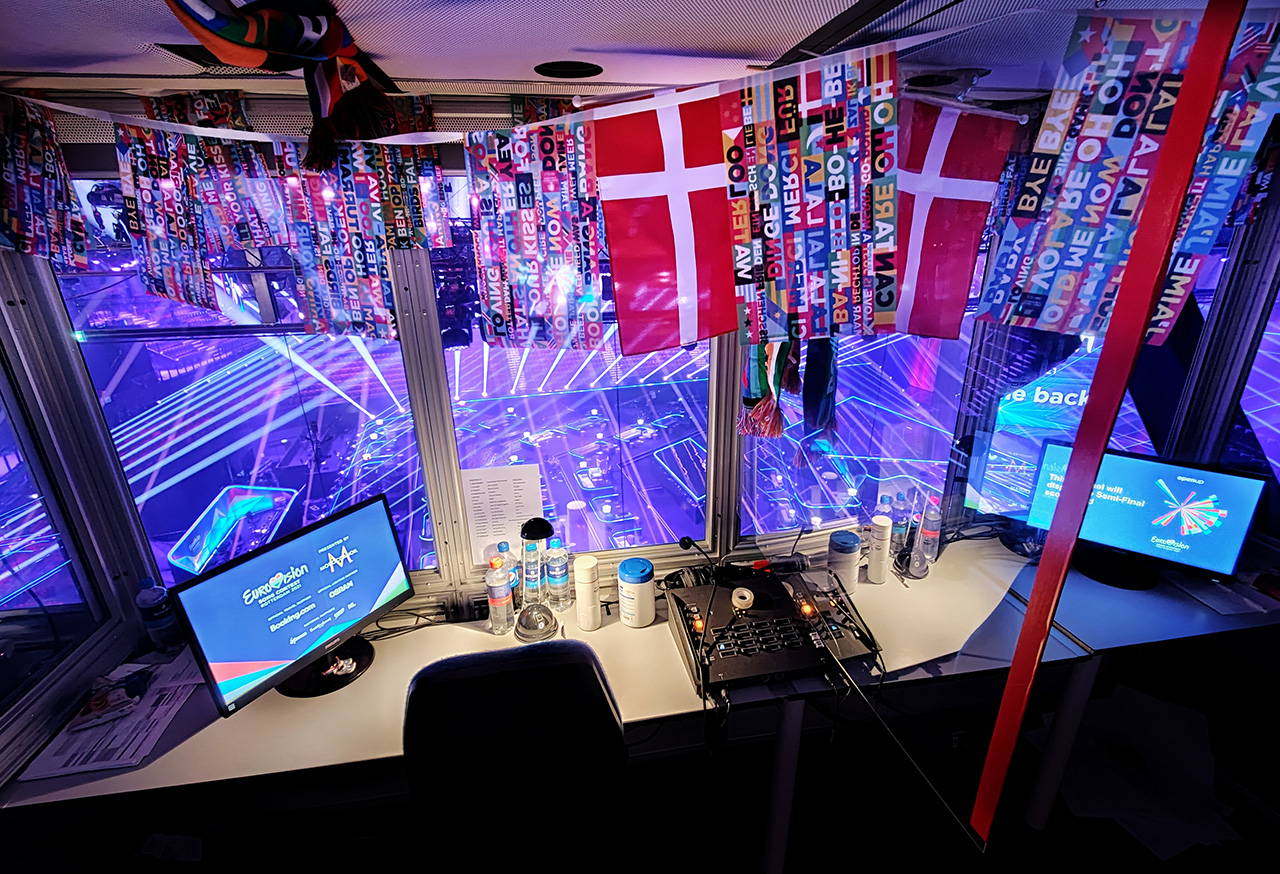 24 cámaras formaron parte de la producción: siete rodeando el escenario, un raíl frente al escenario, un carril en el techo, dos grúas, una dolly doble, una dolly simple, una 2D cable cam, una 1d cable cam, dos steadicam, 1 cabeza fija y dos camcorders de hombro. Estos dispositivos de captación, unidos a 130 señales de vídeo, 140 paneles de intercomunicación, 75 micrófonos, 1800 luminarias, cinco unidades móviles, un centro de operaciones técnicas, tres vehículos de apoyo y 60 canales of EVS, sirvieron para dar forma a una señal que se pudo ver por toda Europa, Australia y EE.UU. (a través de Peacock); y que contó con conexiones entrantes de 40 países diferentes. Llevarlo a cabo no ha sido una labor sencilla, tal y como nos cuentan Thurid Wagenknecht y Yung-Min Lee.
1. 365 días de preparación
Eurovision no se hace de la noche a la mañana. De hecho, Yung-Min Lee se atreve a afirmar que es un trabajo de “más de 365 días“. Hay una planning exhaustiva que implica pensar en qué tipo de soluciones puede necesitar el formato, incluso antes de la coordinación con las empresas de producción. Estas conversaciones se suelen dar en torno a October, ocho meses antes de la celebración del evento.
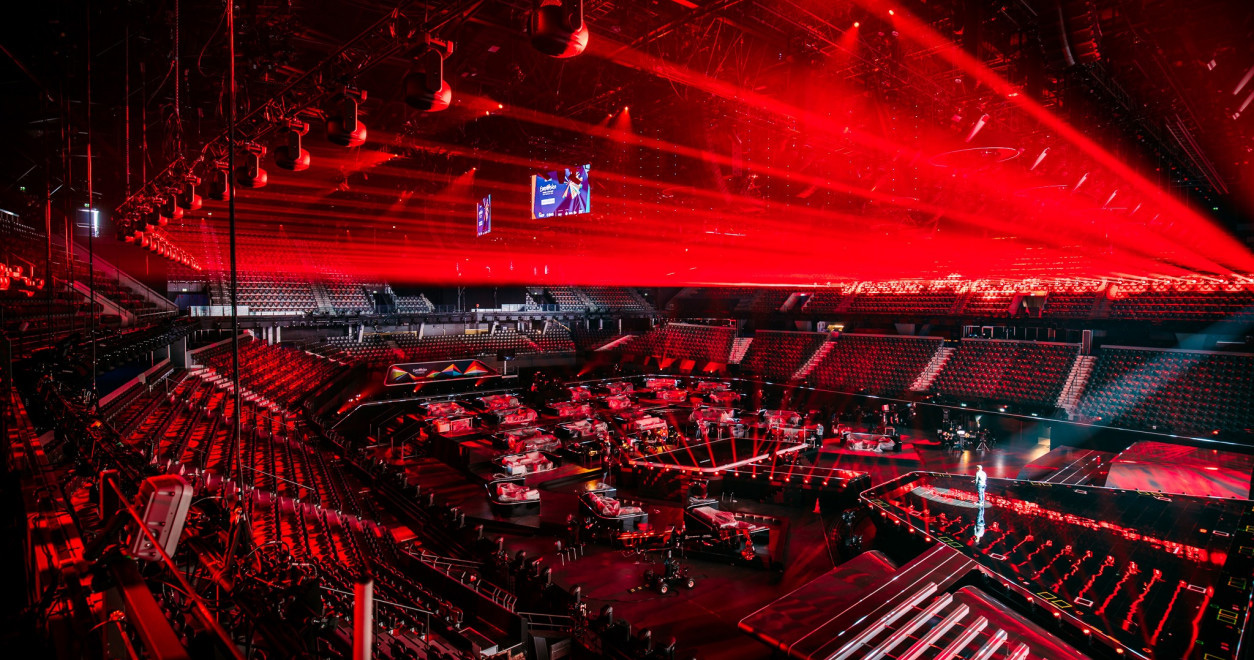
El proceso de este año ha sido incluso más largo, debido a que la edición de 2020 se pospuso debido a la situación global provocada por la pandemia. Ha implicado retos sanitarios y de prevención que han llevado a transformar la planificación técnica inicialmente planeada para el propio Rotterdam Ahoy. De esta forma, el proceso de instalación, montaje y pruebas ha acabado por extenderse mes y medio. “La producción en el Ahoy comenzó el 6 de abril”, concreta Thurid Wagenknecht.
A su llegada al pabellón, el equipo fue instalando diferentes partes de la producción en función a las necesidades que iban surgiendo en cada fase del proyecto. Wagenknecht detalla que el primer requisito fueron implementar el sistema de acreditaciones y las comunicaciones por radio, vía TETRA. Poco después, comenzó la instalación del cableado de fibra para crear toda la infraestructura de distribución de señales. El último gran paso estuvo protagonizado por el sistema de intercomunicaciones, el cuál suele esperar a poco antes de que acudan las distintas delegaciones para terminar de ejecutar las actuaciones que se verán en las semifinales y la gran final. En definitiva, la instalación se alarga entre tres y cuatro semanas; los ensayos, otras dos semanas.
2. Equipos usados por primera vez
La producción de Eurovisión 2021 evoluciona año a año. Como comenta Wagenknecht entre risas, los cambios llegan “según te vuelves más viejo y más sabio”. Trabajar en Eurovisión, en sus palabras, supone una “curva de aprendizaje infinita” que hace que cada producción sea diferente. Hay elementos que permanecen, pero otros que se replantean para así ofrecer el mejor show posible a las audiencias europeas.
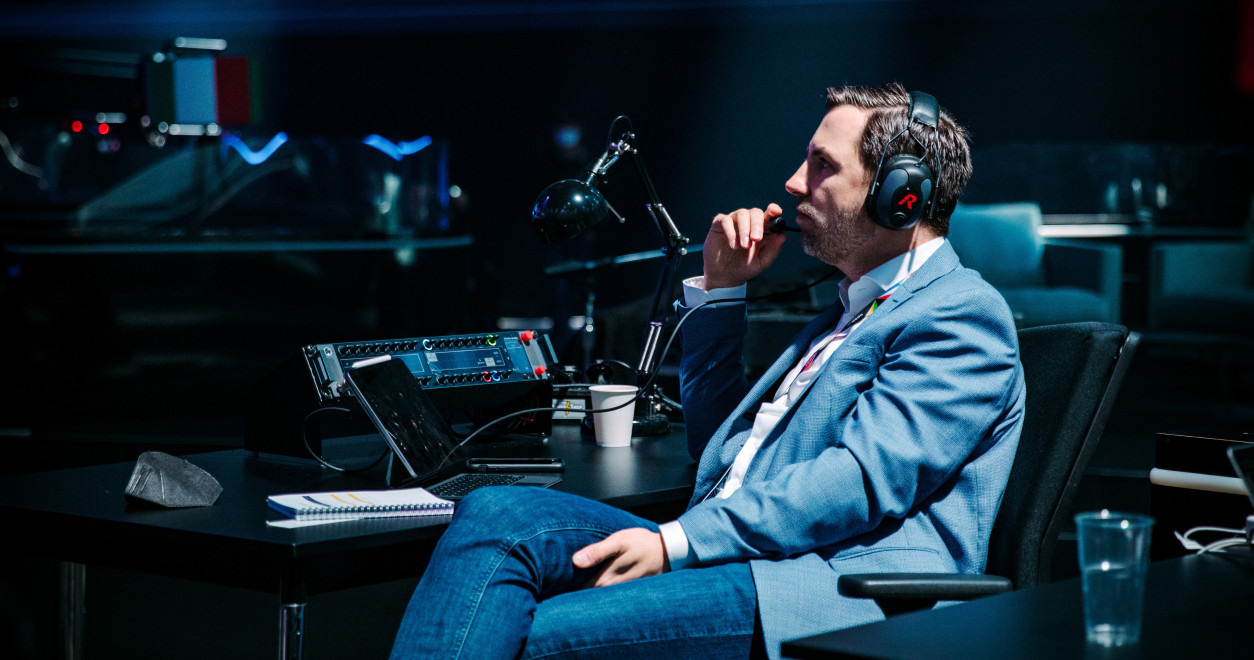
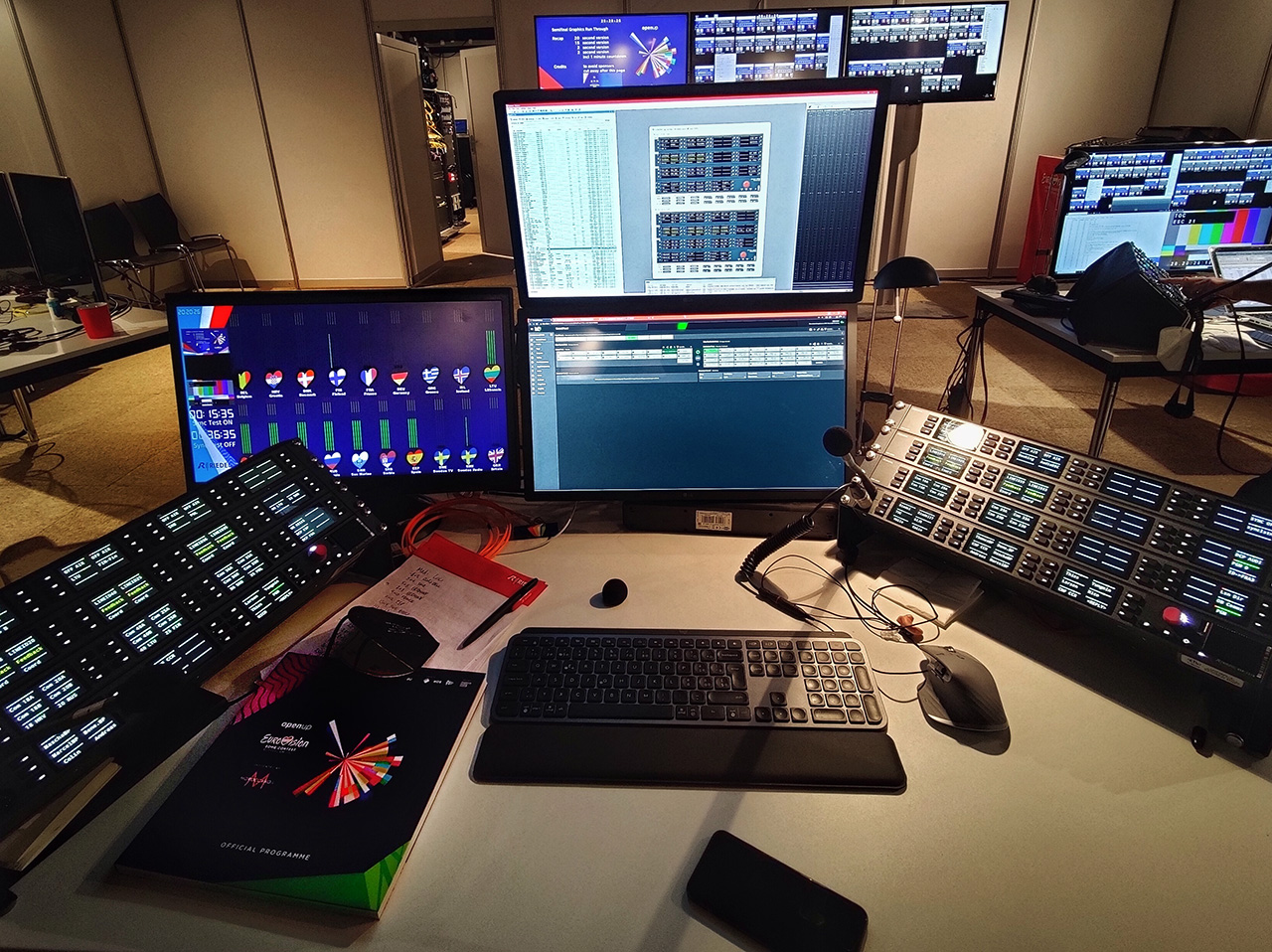
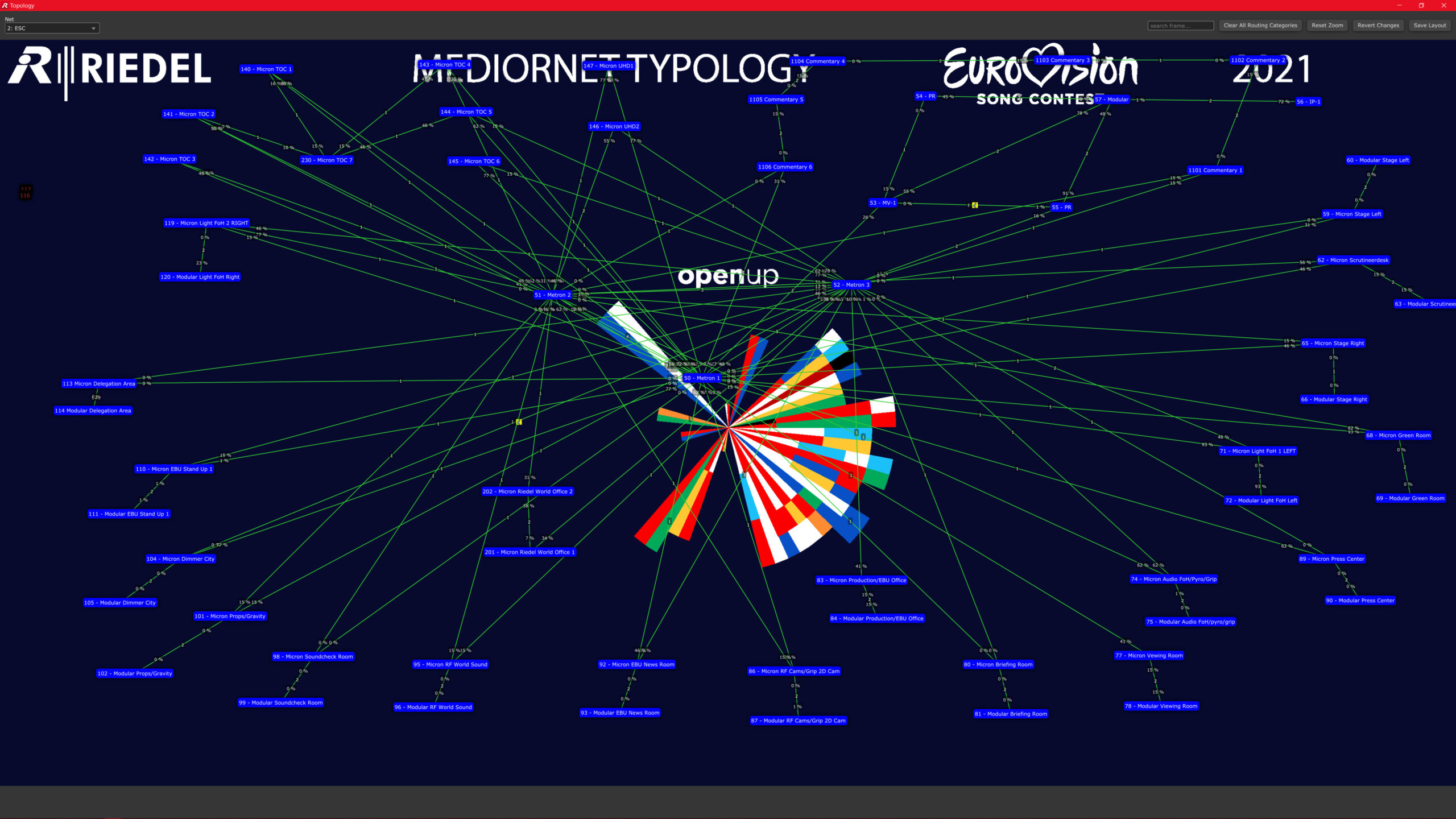
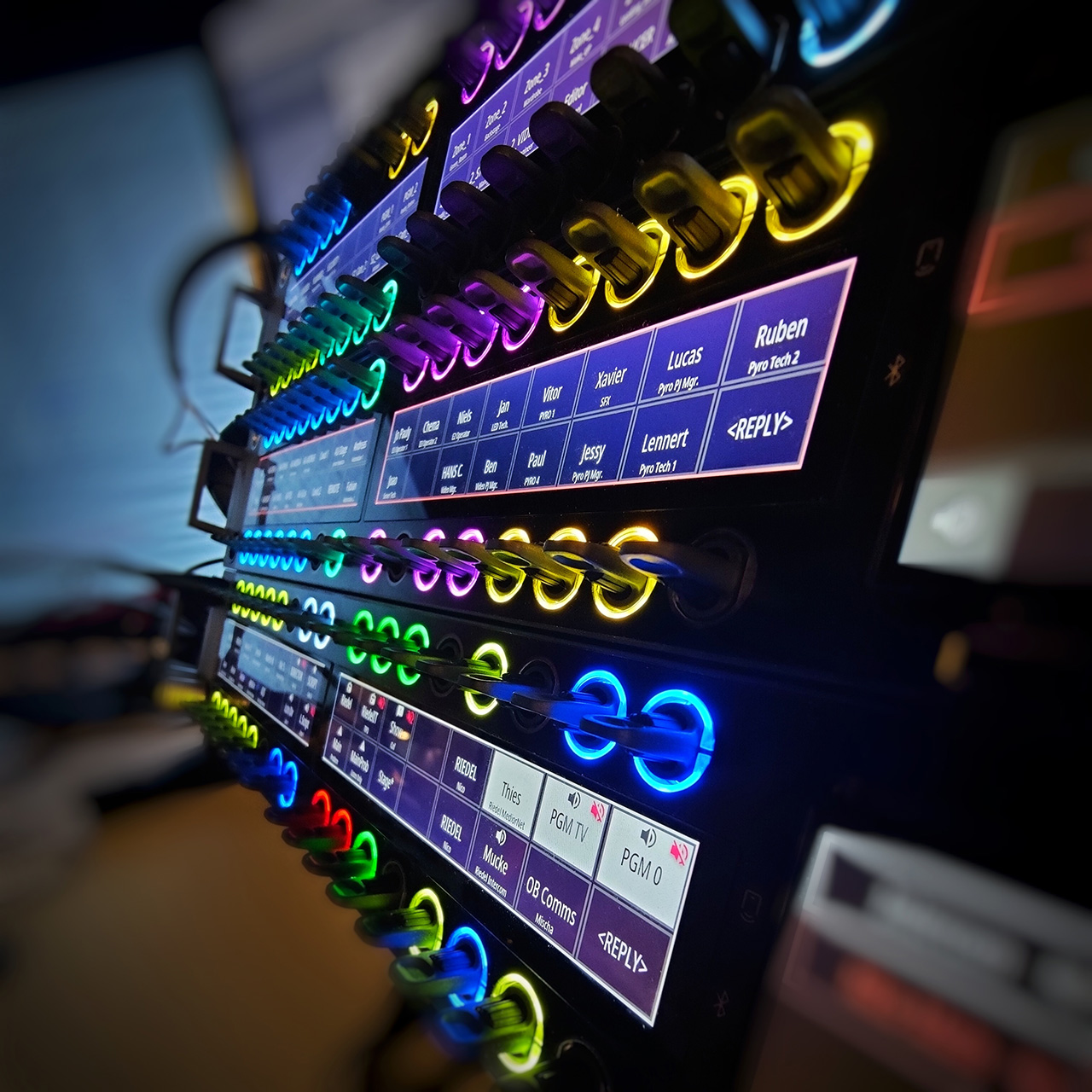 Lee nos detalla que, en comparación con la edición de Tel Aviv (2019) en la que los paneles de intercom estuvieron conectados a través de AES3 (“tal y como se venía haciendo durante los últimos 15 años”), en esta ocasión se ha establecido una red AES67. Para poder seguir usando paneles antiguos, se integraron los adaptadores de red NSA of Riedel.
Otros elementos clave que se usaron fueron los nuevos paneles de 32 keys RSP-1232, “una mejora respecto al RCP-1028” debido a sus nuevos botones, colores y anillos; nodos Artist-1024 y 60 intercom Bolero que, entre risas, Wagenknecht reconoce que constituyeron un símbolo de estatus para los miembros de la crew (a más botones e intercoms, más responsabilidades y mayor estatus); y una amplia gama de productos IP MediorNet, como los MuOn para las líneas de audio de los comentaristas o FusiOn para la distribución de vídeo en la sala de control para los comentaristas.
Riedel también ha sido responsable el equipamiento completo de los puestos de comentaristas, así como la comunicación con los controles de realización de cada uno de los países que han personalizado la retransmisión de UER.
3. Acreditaciones de 48 horas
Un punto crucial que ha gestionado el equipo liderado por Wagenknecht ha sido el de las acreditaciones. Concretamente, Riedel ha firmado el front-end de todo el sistema de gestión, basado en RFID (identificación con radiofrecuencia).
Debido a la pandemia y las medidas de protección impulsadas, los accesos tenían una limitación de tiempo de 48 horas. Esto implica que pasadas las 48 horas, si no había un nuevo test de Covid-19 que certificara un resultado negativo, el técnico, miembro de una delegación o artista no podía volver a acceder a la burbuja del recinto.
Uno de los flujos de trabajo más complejos fue habilitar que, una vez que una persona entra en el centro de test de Covid-19, se desactivara por completo toda su acreditación. De esta manera, queda en cuarentena preventiva hasta el esperado resultado negativo. Según Wagenknecht, estos procesos implican numerosos elementos de software y hardware, por lo que la coordinación fue “compleja”.
4. El reto de la Covid-19
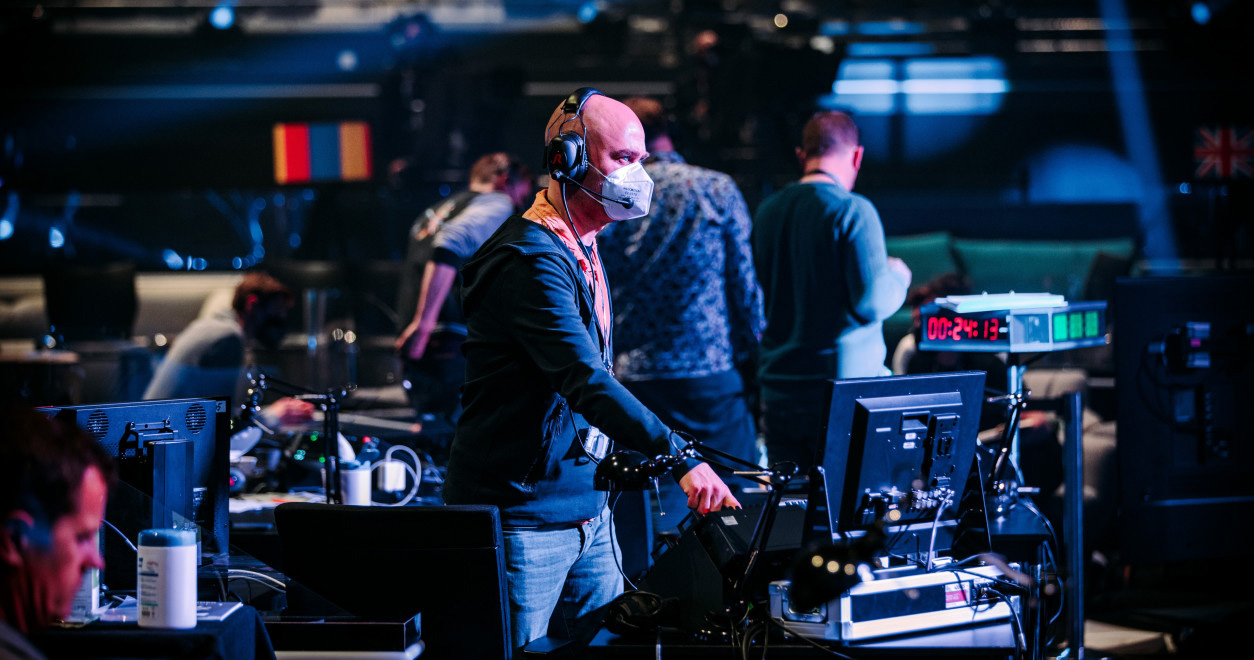
La creación de una burbuja no ha implicado que haya normalidad en el día a día de la producción. Tal y como detalla Wagenknecht, en el interior del recinto se respetan todas y cada una de las medidas recomendadas por las autoridades en materia de distanciamiento.
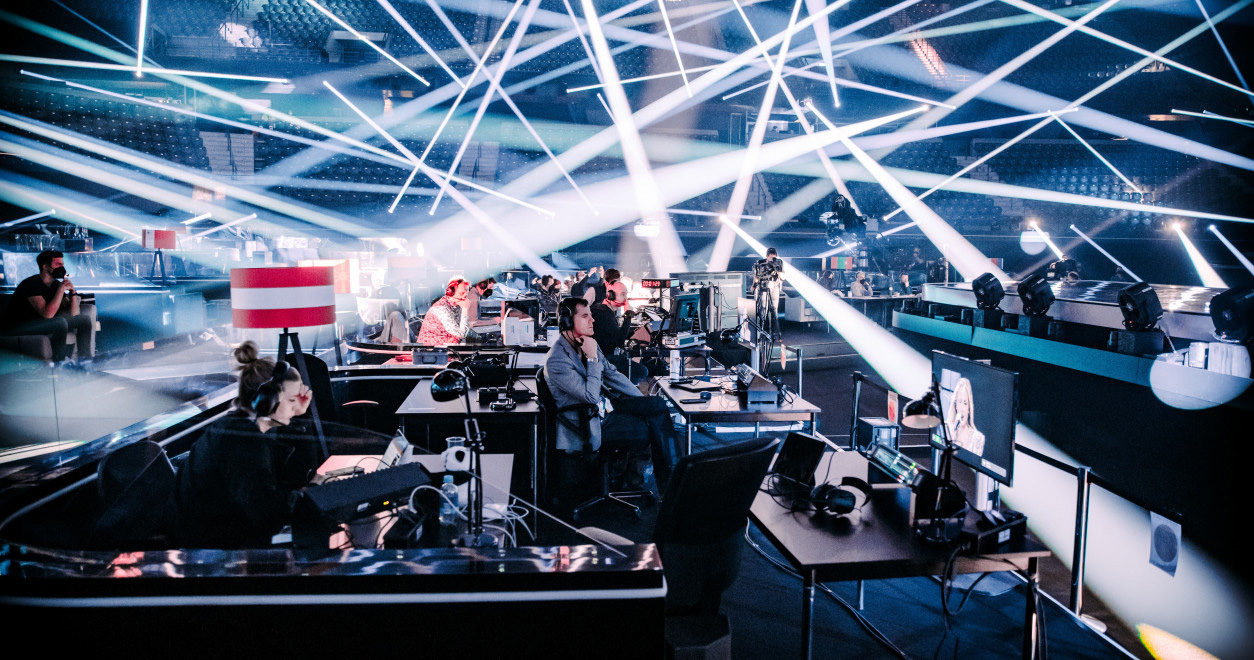
 Hay un metro y medio de separación entre cada uno de los puestos, las mascarillas FFP2 son obligatorias, un amplio equipo de seguridad se encuentra dedicado en exclusiva a asegurar que se están siguiendo las medidas y por todo el centro de operaciones se extienden puestos con desinfectante y EPIs; o más bien, como dice Wagenknecht, “cada tres metros”. Estas medidas extraordinarias han ampliado el espacio destinado para la producción, lo que a su vez ha hecho que se tuvieran que reforzar los equipos de comunicación destinados para cubrir todo el área.
Del mismo modo, la UER, los host broadcasters y los equipos de producción se han tenido que enfrentar a varios positivos, que afortunadamente se han producido fuera de la burbuja. Esta circunstancia afectó a parte de la delegación de Iceland o a Duncan Laurence, ganador de la edición 2019. Afortunadamente, pudieron grabar una toma de sus ensayos, la cual fue emitida en directo durante la gran final. También hubo positivos entre el equipo de producción en directo, cuenta Wagenknecht, si bien tanto NEP como United previeron esta posibilidad y contaron desde el comienzo con hasta dos personas para reemplazar cada puesto.
Las medidas de distanciamiento y prevención dentro de la burbuja han sido excepcionales, pero también efectivas. De los 26.000 test llevados a cabo, solo el 0,06% fueron resultados positivos.
5. Producción en continua evolución
La que es para Wagenknecht una de las “más difíciles producciones” de la televisión, dada la cantidad de personas implicadas y la complejidad de su organización, encuentra cada año varias vías para mejorar. Por parte de Riedel, Lee detalla que posiblemente se podrían integrar nuevas mejoras como MicroN UHD en el caso de que se decidiera optar a una difusión para UHD (si bien no lo ve claro dado que “muchos broadcasters no están listos para emitir bajo este formato”); o nuevos paneles extensores para los RSP of Riedel.
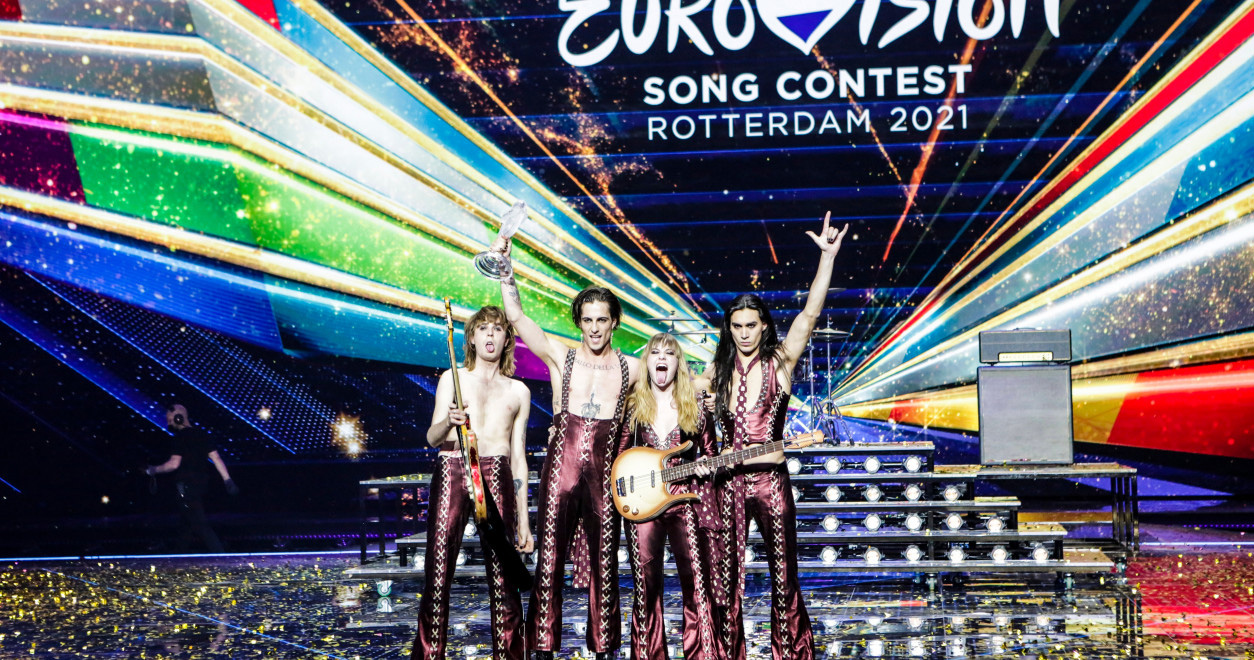
Aun así, es pronto para saber cómo será la realización técnica de 2021. Italia, país que organizará Eurovisión 2021 tras la victoria de Måneskin, tendrá que decidir qué tipo de producción quien construir y qué tipo de equipos deciden emplear. En cualquier caso, Lee se siente confiado: está seguro de que podrán adaptarse a todas las necesidades a nivel de distribución de señales o comunicación que se les presenten en el futuro.
A report by Sergio Julián Gómez
Gallery
(click on any photo to start the carousel - scroll right and left by clicking on the arrow)
Did you like this article?
Subscribe to our NEWSLETTER and you won't miss anything.
Related articles
 Independent production and platforms: the two pillars of the new Cinema Law
 Eurovision Sport adopts Blackbird cloud production to gain efficiency in its workflows
 5 key pillars that made the production of Eurovision 2021 possible
 The 2021 Eurovision Song Contest comes to life with Lawo's mc²56 and VSM Control consoles
 Eurovision will use Haivision Hub to broadcast the 2021 European Swimming Championships
 Ross Video solutions make the 2021 NFL Draft posible
Ross Video solutions make the 2021 NFL Draft possible
Ross Video solutions make the 2021 NFL Draft posible
Ross Video solutions make the 2021 NFL Draft possible
 United and NEP list Eurovision 2021 production highlights
United and NEP anticipate some keys to the production of Eurovision 2021
United and NEP list Eurovision 2021 production highlights
United and NEP anticipate some keys to the production of Eurovision 2021
 140 Sennheiser wireless microphones made the Eurovision Song Contest possible
 The Swedish SVT once again raises the bar in show production with the Eurovision Song Contest
 JVC's GY-HM650 also enables mobile production for cable networks
 Digital Bytes enables the future of 4K production with Facilis TerraBlock
 Anvato makes possible an innovative streaming production of the Incubus group