





Spaniards added 5,238 million illegal accesses to content in 2020

The Observatory of piracy and consumption habits of digital content 2020, prepared by GfK at the request of The Coalition, has been presented by the Minister of Culture and Sports at the National Archaeological Museum.
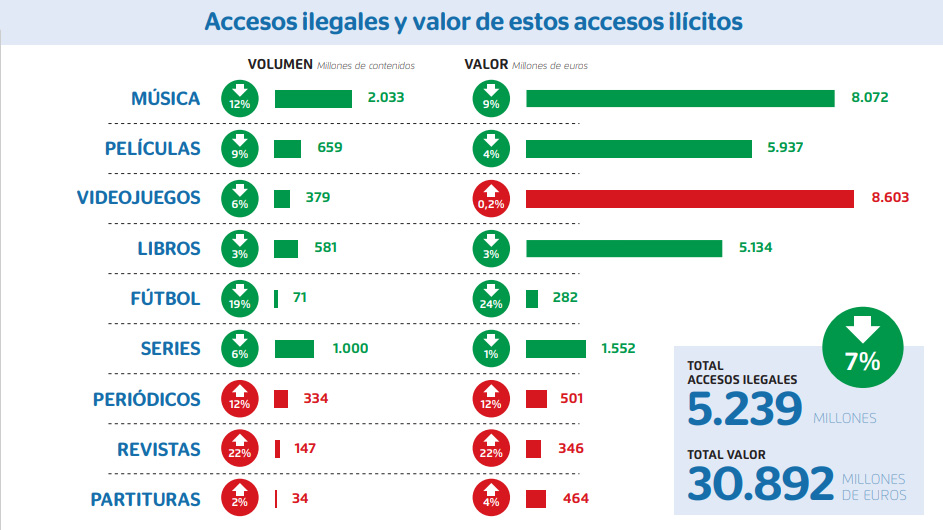
Digital piracy experiments in Spain another decline in absolute numbers, according to 2020 data, which records another 7% annual drop in access to infringing content, being 5,239 million the number of illicit contents accessed, which represents a cumulative decrease of 10% since 2018 and around 24% since 2015.
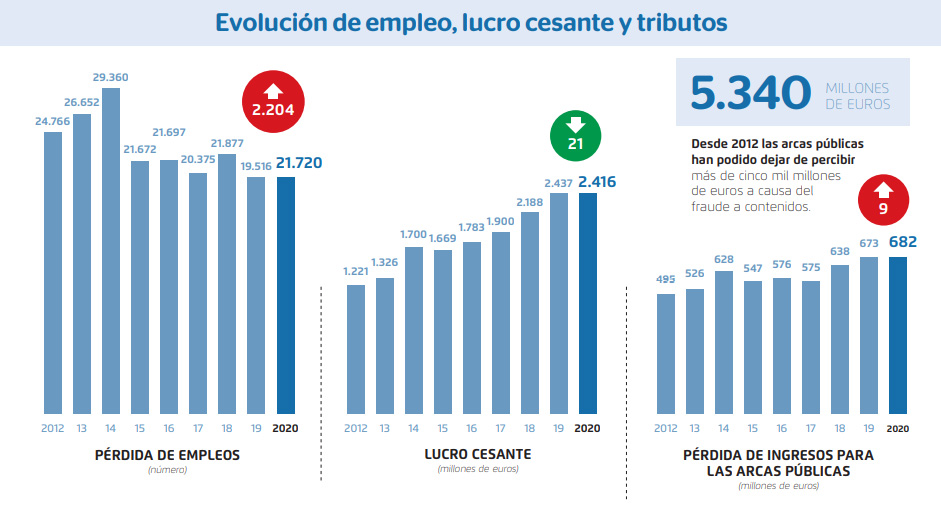
The value of said content is 30,892 million euros and the damage to the sector reached 2,416 million euros in this period. The public coffers could have received 682 million euros during 2020, a figure that rises to 5.34 billion since 2012, and could have been created 130,000 direct and indirect jobs.
Literature and cinema, industries most affected
Regarding access to content, the industry book is the most affected, with a percentage of individuals carrying out illicit accesses of 33%, followed by movies (26%), music (25%), newspapers (25%), football (23%), series (21%), video games (20%), magazines (18%) and sheet music (5%).
The total value of the contents amounts to 30,892 million euros, as previously mentioned. However, of the 2,416 million euros of damage to the entire sector caused by piracy in 2020, is the music the worst stop with 482 million euros, followed by magazines (426 million), movies (322 million), newspapers (345 million), books (240 million), football (231 million), video games (205 million), series (138 million) and sheet music (28 million).
Among the reasons that justify illicit access to content, 4 out of 10 consumers say “not knowing how to distinguish between legal/illegal platforms”, while 54% argue that they do so because they already pay for an Internet connection or pay television. Similarly, other justifications such as “to avoid paying for content that I later do not like” and “because I cannot access the content in another way, for example, original version, with subtitles…”, increase to 61% and 37%, respectively.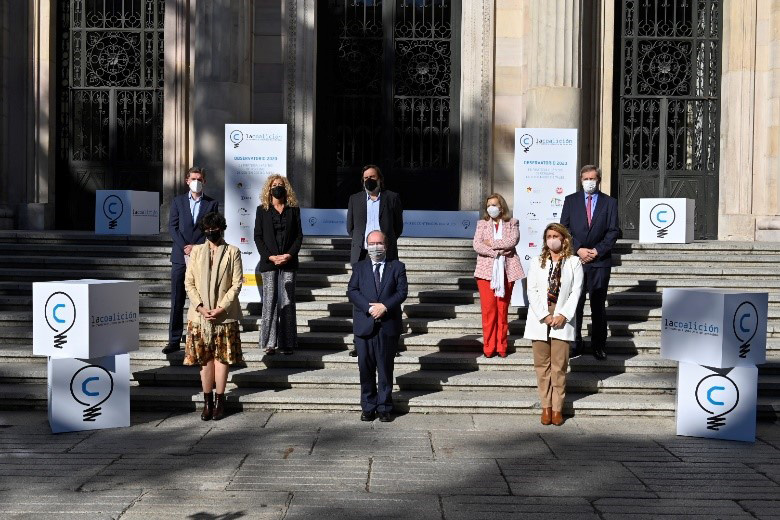
Access to piracy via social networks
El Observatorio de la piratería también señala el aumento del uso de redes sociales como medio para acceder a contenidos ilícitos (del 23% al 27% de 2020): Facebook (55%), Youtube (39%), Whatsapp (34%), Instagram (28%) Telegram (25%) o Twitter (24%). Según apunta el informe, las industrias de contenidos consideran “inaplazables” impulsar medidas para revertir esa situación”. Asimismo, crece el streaming online (del 22% en 2019 al 23% en 2020), por quinto año consecutivo. Respecto a la forma de acceso a contenidos ilegales, se evidencia un ligero descenso en el peso de los buscadores, going from 62% to 58% registered in 2019, with Google remaining the most used: 9 out of 10 accesses to pirated content occur from its search results. One of the most innovative and worrying data is regarding equipment, 28% of Internet users have a decoder IPTV and 21% have accessed a VPN for personal use.
Furthermore, the 40% of Internet users have used tutorials on how to access content. Of them, 18% have consulted guides on how to download content, 7% have sought help to obtain or use platforms and 15% have used manuals for both purposes. Regarding the type of tutorial, the most consulted are those referring to movies/series (42%), followed by music (41%), video games (31%), the use of a VPN (27%), books (23%), modifying a console (21%), the use of an IPTV (17%), football (13%) and the use of cardsharing (3%).
The percentage of websites from which illegal content was accessed that are financed by advertising remains above 90%, as in previous years. Of all this advertising, 51% corresponds to online betting and gaming sites, 41% to online sales websites or 33% to consumer products from prestigious brands, so insisting on the responsibility and collaboration of the advertising sector is essential to stop the financing models of pirate portals.
Impact on employment and state income
Another key provided by the Observatory of Piracy and Digital Content Consumption Habits 2020 is that, in a scenario without piracy, more could be created. 20,000 new direct jobs, which would mean a 24% increase, which plus the indirect ones would mean 130,318 more total jobs.
In 2020, the public coffers stopped receiving almost 424 million euros in VAT and more than 59 million euros in personal income tax, while the amount not collected by Social Security reached almost 200 million in contributions. That is, the State would have stopped earning a total of 682 million euros in 2020 for illegal access to content, adding up to a cumulative total since 2012 of 5,340 million euros.
Given this situation, Miquel Iceta, Minister of Culture and Sports, points out that it is necessary to create “more protective regulations for copyright” in order to provide “better instruments to combat piracy and create social awareness.”
Did you like this article?
Subscribe to our NEWSLETTER and you won't miss anything.
Related articles
 Spanish audiovisual content will generate 1.4 billion dollars in 2024
 Six out of ten Spanish households with Internet pay to watch audiovisual content online
 27.4 million Spaniards already consume audiovisual content via the Internet
 This is the profile of the 16.3 million Spaniards who enjoy pay TV
 Almost four out of every ten Spaniards watch audiovisual content on the Internet at least once a week
 'eSports' reach 4 million followers in Spain and the figure is expected to rise to 7 million in 2020
 Fiber optics to the home (FTTH) grow by 50% to 22.6 million installed accesses
 87.48% of digital content consumed in 2015 was illegal
 More than 2.2 million Spaniards now consume on-demand television daily
 The CAA sends a report to the Parliament and the Andalusian Government on the content of illegal religious television stations
 New generation broadband grows almost 50% to 20.17 million installed accesses
 The consumption of illegal content on the Internet decreases
 New generation broadband grows by 30% in Spain and now reaches 18.35 million accesses
 More than 11 million Spaniards listen to the radio through the Internet every month