





Broadcast and expanded color: on the threshold of a new era?

Luis Ochoa, director of image post-production at Drago (Sequoia Group), writes this forum in which he analyzes the evolution of color in capture, the nostalgia for photochemistry and the possibilities that concepts such as HDR or WCG can bring to broadcast.
Recently, we have experienced two important revolutions in it current color treatment. One is the revolution of digital cameras with curved capture logarithmic and the RAW. We have witnessed a democratization of technology caused by a general drop in prices. Thanks to these technologies, color capabilities until now limited to photochemical and film-type productions have begun to reach all types of productions. Concepts like the DCI-P3 o Rec.2020, in this way, they become key when it comes to understanding a film production and, little by little, they also jump into the world of television.
Another very interesting revolution has been the use of type light devices. RGB, which has caused an explosion in terms of the type of look that has made it to the movies. Before it could be achieved, yes, but it was not that simple. We have great examples like the series Euphoria of HBO, which has been able to take advantage of these capabilities to flood each scene with color.
In any case, a tool depends on how it is used. And unfortunately, we have examples of projects that have been logarithmically captured and are disastrously exposed. In the end, what technology is doing is deliver more colors and more grays to the painter. This may act well or badly, but having more tools is not bad news.
Deceived by our past
I recently had the pleasure of speaking with an expert in photochemical restoration closely linked to Film Archive of Catalonia. He specifically told me that in most cases The color gradient that the photochemical positive was capable of giving is less than that given by current systems. You just have to look at the amount of blue gradients that we can currently have in a sky mastered in HDR and WCG.
Right now, thanks to post-production, we have many more possibilities to work with color. But it is also true that the televisions or projectors are better. Before, although the photochemical was capable of capturing a certain color, the viewers' televisions were not capable of displaying it. Now we have televisions that frankly can match (although not in all aspects, obviously) the aesthetics of a post production grade 1 monitor television. Televisions already have gamut enlarged and are capable of producing beautiful colors.
The whole issue of photochemical emulation current is still a emulation of personal sensation that gave us in the past, a subjective nostalgia.
Recently, I was able to share a conversation with David Rivero, a colorist based in China, who told me that the whole issue of emulating the current photochemical is still a emulation of personal sensation that gave us in the past, a subjective nostalgia. There are almost as many “photochemical looks” as movies or photographs made on those supports. Sometimes a director comes to you and asks you to desaturate the color to “simulate the photochemical.” That's when I remember the movie Velvia and the super saturated colors it was capable of displaying…
Therefore, regardless of whether beautiful emulations can be made, I think it is time to get over that technical part and begin to take advantage of the technology we now have.
 The resurrection of color in the broadcast world
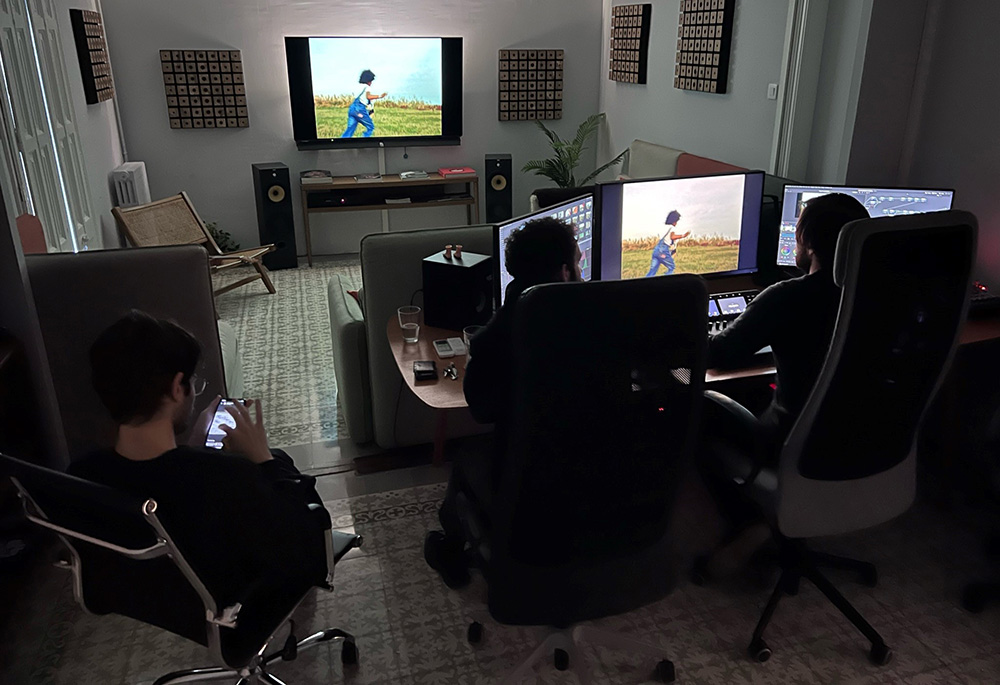
On television, they have so far benefited from expanded color treatment very sports productions concrete and, of course, some premium formats broadcast on platforms. However, more traditional linear broadcast could also benefit from a much deeper color treatment. In fact, at a technical level, the television standard Rec.2020 contemplates an increase in the dynamic range and color space for said linear television.
A scenography of a television program can have many possibilities.
There are limitations that make it difficult to achieve this goal. One of them is the complexity of the broadcast production flows. In television, times are very short, the team of professionals is very large and there are many components in the broadcast chain to be taken into account. It is difficult to propose the implementation of concepts such as HDR o WCG on the television networks, but it will be done and it is already being done. A set design for a television program can have many possibilities. For example, we had the pleasure of making a show for Netflix called Everything is Gila in which a series of comedians paid tribute to the comedian. The set had beautiful red and green LED screens, and thanks to the work of art, filmmaking, photography and our grading everyone was delighted. Teamwork!
El cambio más importante
Al margen de los retos que traen consigo los procesos tecnológicos, la cuestión más crucial para abordar la transición pasa porque los profesionales de todas las ramas que hacemos el audiovisual nos quitemos la pereza. Actualmente, se tienen que estar dando las mismas conversaciones que imagino que se dieron con la llegada del color. ¡Seguro que hay gente que pensaba que era una aberración frente al blanco y negro!
Es verdad que los estándares todavía se tienen que asentar, pero la clave para que el verdadero color llegue a las televisiones está en nosotros.
Y, ojo, que esto no solo queda entre los frikis técnicos, esos que dicen: “Ah, pero fíjate, esa pantalla tiene más profundidad de bit de color”. Los espectadores que aprecian la imagen apreciarán el efecto wow de estas producciones. De hecho, hay un programa de Netflix conducido por David Attenborough called La Vida a todo Color que se publicitó con la frase: “Mira el color de la naturaleza como nunca antes lo habías visto”.
Es verdad que los estándares todavía se tienen que asentar, pero la clave para que el verdadero color llegue a las televisiones está en nosotros. Tenemos que quitarnos la pereza, miedos y prejuicios… y empezar a jugar.
Luis Ochoa
Director de postproducción de imagen de Drago (Sequoia Group)

Did you like this article?
Subscribe to our NEWSLETTER and you won't miss anything.
Related articles
 DAMA opens the doors of its new headquarters in Barcelona
 Canon speeds up color matching with new Camera Color Matching app
 Twin Pines: the VFX factory, at the gates of the new and crucial stage of fiction
 RTP: on the verge of its most crucial broadcast transformation
 iGene Media opts for BPM for its new color grading suite in London
 5 years of augmented and extended reality in Antena 3 news: at the gates of a new era
 Riedel inaugurates its new headquarters in Madrid with an Open Day
 Ericsson opens the doors to a new era of entertainment and connectivity
 Lowel Prime Power LED 800, Tiffen's new proposal with great color accuracy
 DaVinci Resolve “full of color” ‘Frankenweenie’, Tim Burton's new film
 Zero i U carries out the color correction of the new Free Damm campaign
 SET Broadcast&Cable 2012 cierra sus puertas
 Open House with the new Canon C300
 Broadcast'09 opens its doors today at IFEMA