





Discovering Bowfinger, the hit factory of María Luisa Gutiérrez and Santiago Segura
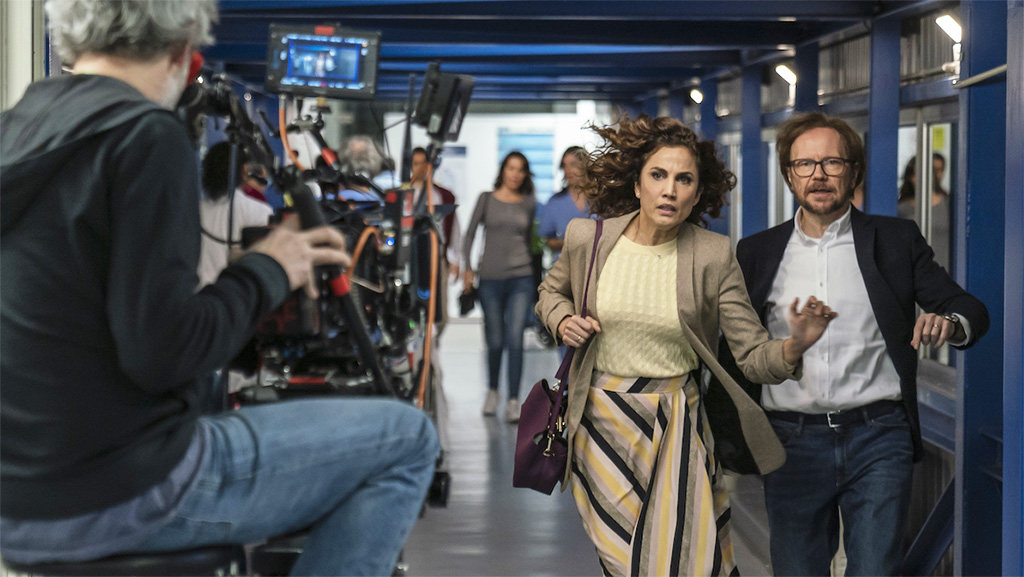

María Luisa Gutiérrez, CEO of Bowfinger, details the origins, convictions and operations of the production company that he leads together with the filmmaker Santiago Segura, an alliance that has materialized in great successes such as Father there is only one o Full train.
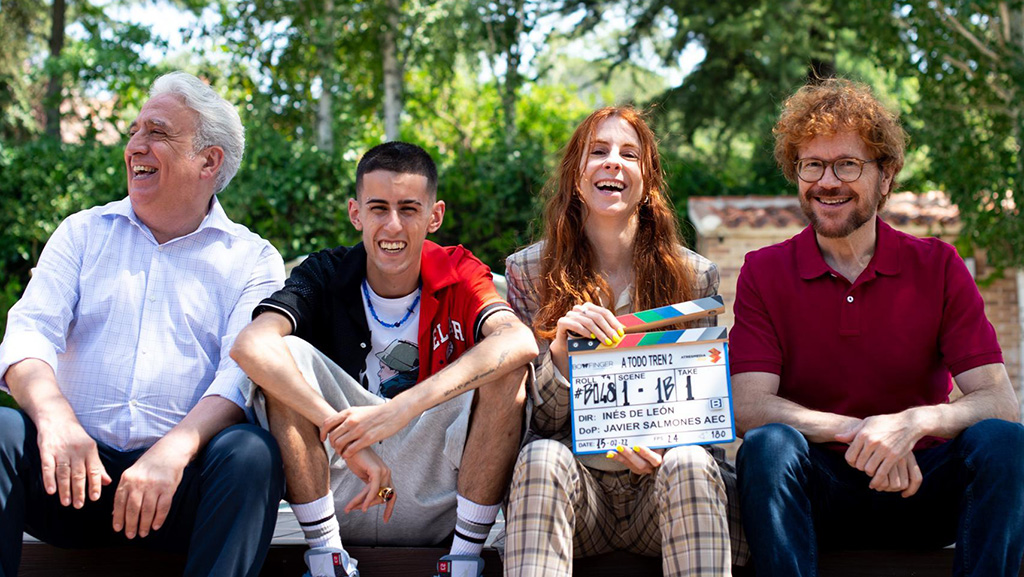
With a short lifespan, Bowfinger International Pictures has created sagas out of nothing at an extremely complex time for the industry. The (for now) trilogy Father there is only one o Full train They have revived Spanish movie theaters and, above all, created expectation among an audience that wants to know what is the next misadventure of charismatic characters in whom they can see themselves reflected.
 After Bowfinger, there is an important team led by María Luisa Gutiérrez, CEO, producer and current president of the Association of Film Producers of Spain, and the famous actor, screenwriter and film director Santiago Segura, who is responsible for providing his experience and knowledge in the most creative aspect of the production company. Together, they form a tandem which, beyond producing great family hits, expands its borders with brave titles, born from multiple alliances with other industry agents. This determined commitment, supported by great successes, materializes in an important release schedule which will add six feature film releases before the end of the year.
María Luisa Gutiérrez conveys to readers Panorama Audiovisual the whys that exist behind all of Bowfinger's identifying features: his unwavering support for the movie theaters In an era marked by the immediacy of platforms, their alliance with Santiago Segura, your model of co-production and with more immediate future. In parallel, as president of AECine, Gutiérrez also addresses the most immediate challenges of the industry, which inevitably involve ensuring the survival of the distribution channel and protecting independent production.
Cinema, cinema and more cinema
Bowfinger International Pictures has established itself as one of the most successful production companies in Spain. Has it been the result of serendipity or since the beginning of the production company were concrete steps taken to produce feature films with all the necessary requirements to succeed on the big screen?
Whenever a producer bets on a film it is with the healthy intention that it reaches the largest possible audience and be a success. But what everyone forgets is that, undoubtedly, there is always a moment of risk: that of bet. Today everyone sees Father there is only one as a successful saga, because it is. But there was a day when we bet on Santiago Segura directing and starring in a family comedy. That day all the producers, and of course Santiago himself, made a risky decision, since we did not know how the loyal public would react to a Santiago Segura so far from the familiar in films like Torrent. The first one went well and became a saga, but it could not have happened.
"Today everyone sees Father there is only one like a success saga, because it is. But there was a day when we bet because Santiago Segura directed and starred in a family comedy.”
I'm going to say the same about the premiere of Padre 2 in the summer of 2020. When the film was a success, everyone thought we had a great spot. But that gap existed because no one, starting with the Hollywood studios, wanted to compete against the most absolute of uncertainties: when the health crisis could cause cinemas to be closed the day after opening. And, of course, the producers made the decision to move forward with the premiere.
So I'm not going to say that successes are circumstantial, because all the steps are taken in the decision-making of the director, producers, etc., to achieve them. But I am going to affirm that, many times, there is a improvised factor that makes a difference that sometimes works in your favor and, in others, against you.
Bowfinger is directed by you and Santiago Segura. What is the role of each one in the production company's decision making?
Santiago and I are partners of Bowfinger. As CEO, I take care of all the business and I am the producer of the films that are produced or co-produced in the company (both those in which Santiago participates and those in which he does not). Santiago, for his part, carries all the creative weight of the films in which he is the director, screenwriter and/or actor. In addition, he contributes many times to the rest of the projects, providing creative improvements if you see possibilities for changes.
The origins: Amiguetes Entertainment
It is not his first collaboration with Segura, as they initially joined forces in Amiguetes Entertainment. However, in 2003 he separated from the production company to begin building Bowfinger International Pictures. What is the intra-history of this decision? How do paths cross again?
When I join Amiguetes Entertainment I do it as supervisor of the production direction of their films, as well as financial director of Torrent 2. At that time, Santiago had a CEO and producer named Juan Dakas.
When will it occur Torrent 3, I become not only the financial director of both the production company and its other companies, but also the producer of all the films that were made in the group: one of zombies, Torrente 3, The amazing world of Borjamari and Pocholo, The dancing machine, Torrente 4 y Torrent 5. Of course, in Amiguetes I never became a member.
“In the end, in each project that we build, each one contributes what he knows how to do best. Santiago and I are complementary.”
My vocation is the company. But what really excites me is the film production, which is important to understand my evolution. There was a moment when Santiago and I spoke. I had the concern of not depending businessly on the projects generated by him, such as Torrent. That seemed to me, because of my training, to be healthy for the company. At the same time, we both realized that he had brought the projects that were not 100% his, while I was in charge of getting the funds to cover them. This is where we decided to work with Bowfinger for those productions in which we both had things to contribute, which, of course, excludes the Torrents. In this production company, between the two of them, other projects that were healthy could come to light to give continuity to the company.
In the end, in each project we build, each one contributes what they do best. Santiago and I are complementary.
At a time when production companies are configured as content generators to generate content through all possible channels, Bowfinger decides to specialize in cinema. Where does this conviction come from?
Santiago is a cinephile, he is a “cinéfagus” and I don't know anyone with such film culture like him. He is a lover of the movie theater and I am a lover of my work as a film producer, and I am convinced that I want movie theaters to continue to exist in the future and for my children to make a habit of attending regularly. Maybe that's why I decided to run for president of the State Film Association. I think the Bowfinger's calling was clear from birth.
Co-productions, series and alliances at Bowfinger
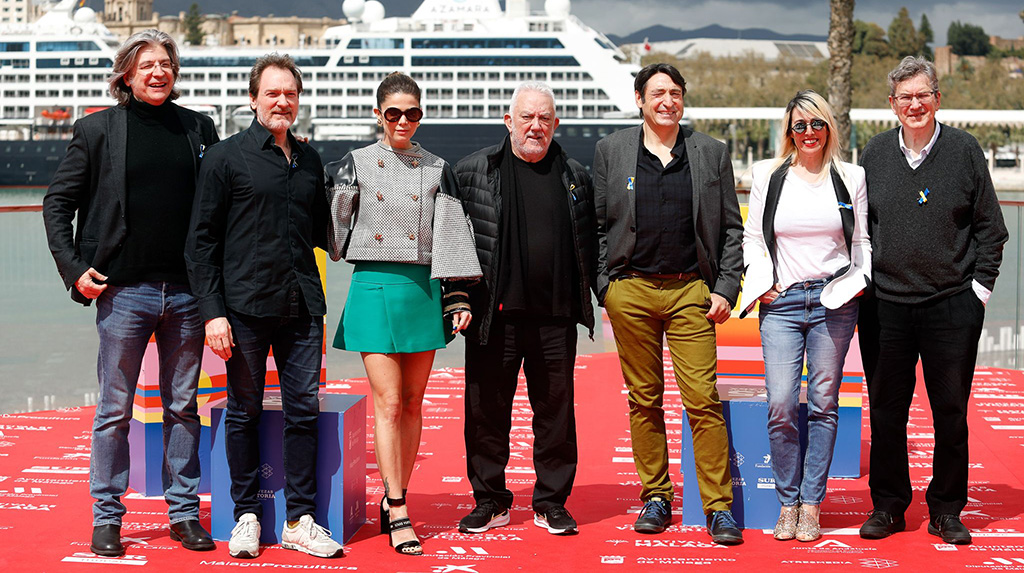
In Bowfinger, blockbusters and sagas coexist Father there is only one o Full train with projects like They arrived at night or some of your co-productions with Latin American companies, perhaps of a more humble nature. What value does this heterogeneity of projects within your film production bring to the production company?
Bowfinger, like any company, needs continuity in their productions to stay afloat. Today, we have two sagas that have been high-grossing but, as I told you before, today they are successful but when they began to take shape they had risks and could not have been. Co-productions with Latin America and with other Spanish producers provide us with business learning, to know how others work and not lock ourselves in our bubble, and they also give us the opportunity to meet new talents. It even allows us to learn about concepts that work in other countries and that we can exploit in Spain. It's a beastly business enrichment.
Beyond working with other directors (Latin American or Spanish), it makes you meet directors of photography or assistant directors who, later, begin to be part of our family. For us, each film is a form of professional and business enrichment, in addition to being a breeding ground for new talent and the discovery of great professionals and artists.
Since Bowfinger, are you considering exploring the series more deeply, whether for video-on-demand platforms or linear television?
As in any company, we will do what we have to do to carry it forward. Many workers depend on us. To this day, we have not had the need to stray from what, until now, is our know-how, but we know that, many times, one has to get out of your comfort zone to be able to continue doing, from time to time, what one really wants.
Are there common keys or strategies that define your production and resource management model during filming? Are you committed to efficiency or to consolidate alliances with third parties for the supply of material?
We have very standardized our way of production and processes. We are very loyal to our long-standing suppliers and our teams. We believe that the long term relationships They generate many synergies and, above all, efficiency.
Does Bowfinger have in-house production resources, such as post-production rooms or dedicated staff?
Have assembly rooms, and small set and specialized personnel in the coordination of post-production in house.

The great challenges of the film industry
As president of AECine, what do you identify as the main challenges facing the industry once the new General Law of Audiovisual Communication is approved?
The main challenge is to get the public returns to the rooms. To achieve this, it is very important that cinema complexes offer product diversity so that the user who wants to watch a family comedy has options, but also those who want to see a story that makes them think.
"The Audiovisual Communication Law The cinematographic product must take precedence, which is, today, the one that higher risk of survival has".
You cannot have product diversity without a clear commitment to policies that favor the independent producer and distributor, and that offer movie theaters a motivation so that they can project more risky films (or less commercial). Because cinemas are also businesses and can only survive if the profit and loss account is positive. We cannot burden them with the responsibility of offering products that, a priori, do not generate profits, but the reality is that these tapes are a product that, if offered today, will generate future benefits, beyond the cultural benefit. I think this should be a priority for the government.
Do you consider that efforts should be aimed at modifying those controversial aspects of the law, especially what is defined by “independent production”, or should they be directed towards other areas?
The Audiovisual Communication Law must be aimed at facilitating the product diversity, which is still cultural diversity. And, of course, give priority to the cinematographic product, which is, today, what higher risk of survival has. And this is only possible by supporting, as a matter of State that is committed to culture, the independent producer, to the independent distributors and to the cinemas to ensure that these private companies can afford to make, exhibit and exhibit a variety that will enrich the society of our country.

A 2023 with great premieres
Beyond continuing to offer great hits and continuing to break box office records. What is your next goal? Where does the future of Bowfinger lie?
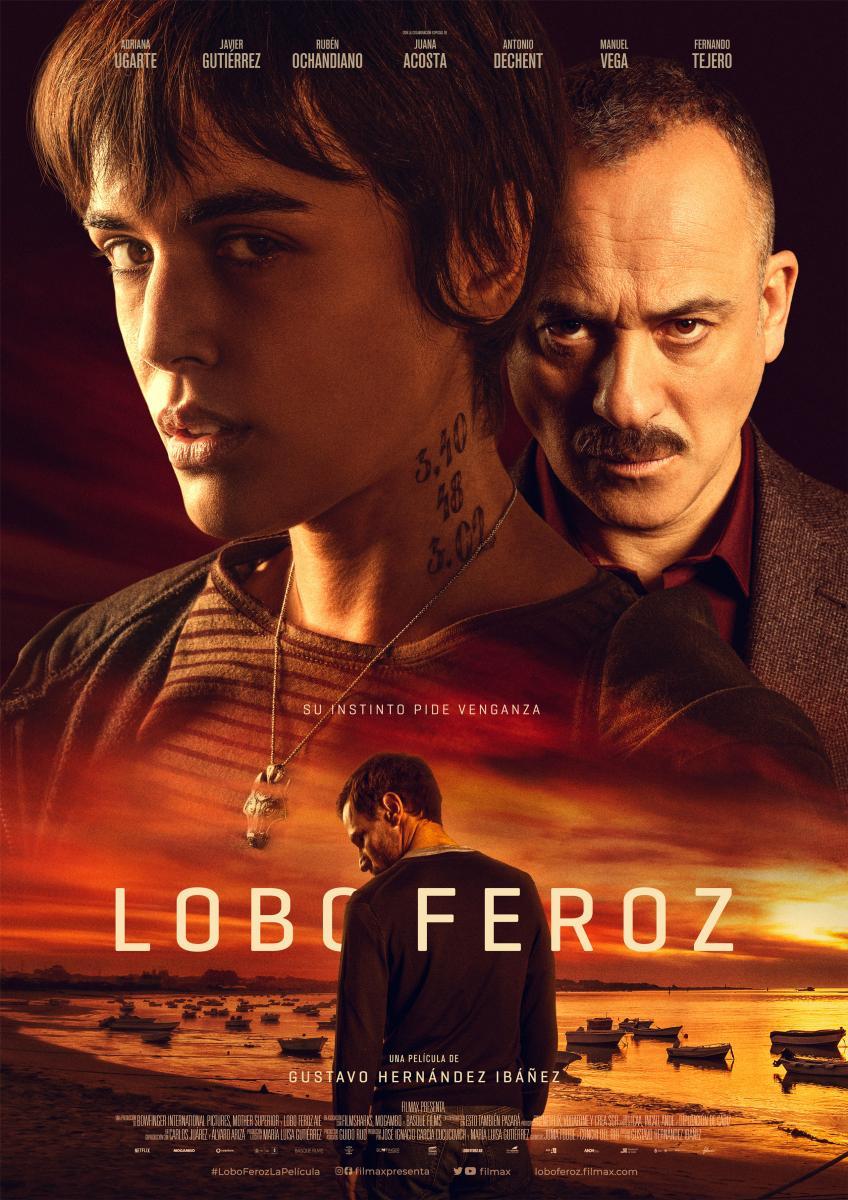
We just opened Big Bad Wolf, a film starring Adriana Ugarte, Javier Gutiérrez and Rubén Ochandiano, and directed by Uruguayan director Gustavo Hernández, whom we already co-produced You won't sleep. Soon, on April 5, we will release From Little Red Riding Hood to Wolf, a film directed by Chus Gutierrez which we co-produce and where we are committed to giving Marta González de Vega the opportunity in her first leading role.
 In July we will release the next film directed and starring Santiago Segura, summer vacation, a family comedy; in October it will hit theaters I have gone viral, a comedy directed by Jorge Coira and starring Blanca Suárez; and in December two films will arrive: we will premiere The bogeyman, a teen horror story directed by Angel Gomez that we intend for it to be the first “scary movie that children see”, and Christmas is in your hands, a Christmas comedy directed by Joaquin Mazon starring Ernesto Sevilla and Santiago Segura.
Finally, we have just announced a project that, personally, makes me very excited because we have been developing it since 2018. This will be the story of the only woman, a national police officer, who infiltrated ETA. will direct it Arantxa Echevarría and we coproduce it with Beta Spain.
An interview by Sergio Julián Gómez
Did you like this article?
Subscribe to our NEWSLETTER and you won't miss anything.
Related articles
 Bowfinger triumphs again at the box office with 'A Crazy Funeral', best Spanish premiere of the year
 Filming begins on 'A Crazy Funeral', Bowfinger's great comedy for Easter 2025
 María Luisa Gutiérrez renews as head of AECINE
 Santiago Segura and his “family” film ‘Father there is no more than one 3’
 Discovering the future of TVG: Twitch, new OTT, music platform and much more
 Santiago Segura, RNE Sant Jordi Award for Cinematography for the Industry
 Production of ‘Full Train! Destino Asturias', the new family comedy by Santiago Segura
María Luisa Gutiérrez assumes the presidency of the State Association of Filmmakers (AEC)
Production of ‘Full Train! Destino Asturias', the new family comedy by Santiago Segura
María Luisa Gutiérrez assumes the presidency of the State Association of Filmmakers (AEC)
 Santiago Segura signs with Amazon Prime Video for the new comedy show 'LOL: If you laugh, you lose'
 Santiago Segura starts filming the second part of 'Father there is no more than one'
 This is how Vantec celebrated 25 years of success
 Danmon Group will celebrate 35 years of success at IBC
 EGEDA will award its Gold Medal to Santiago Segura
 Isabel Coixet, Santiago Segura and Paco León will direct three short films that will promote energy efficiency