





The sports documentary revolution, with Wakai
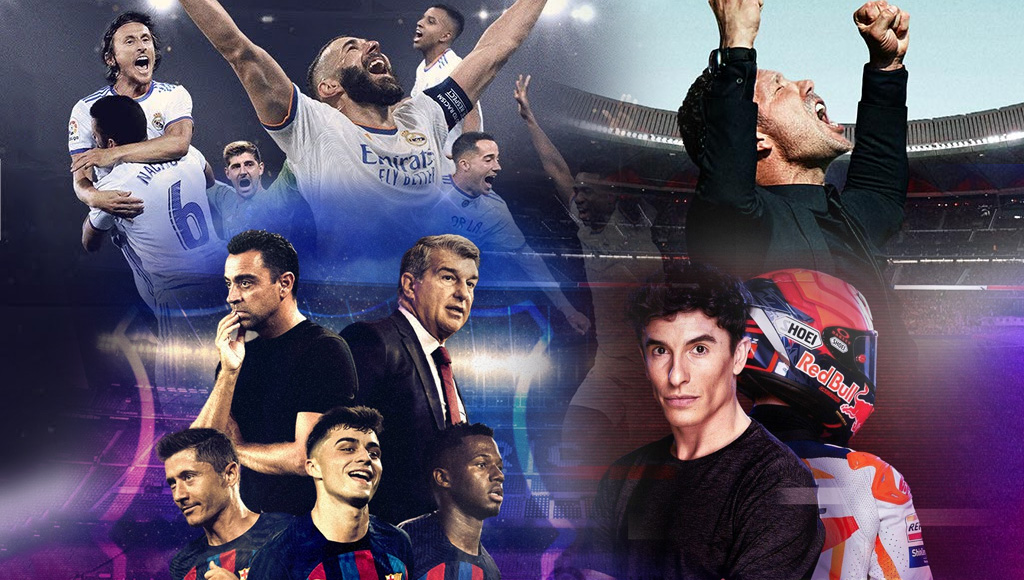

David Quintana, CEO of Wakai Media, a production company specialized in new sports documentaries, helps to understand the phenomenon around this format by transferring the keys to some of its latest works, among which collaborations with big clubs such as Real Madrid and FC Barcelona stand out, or athletes such as the pilot Marc Márquez.
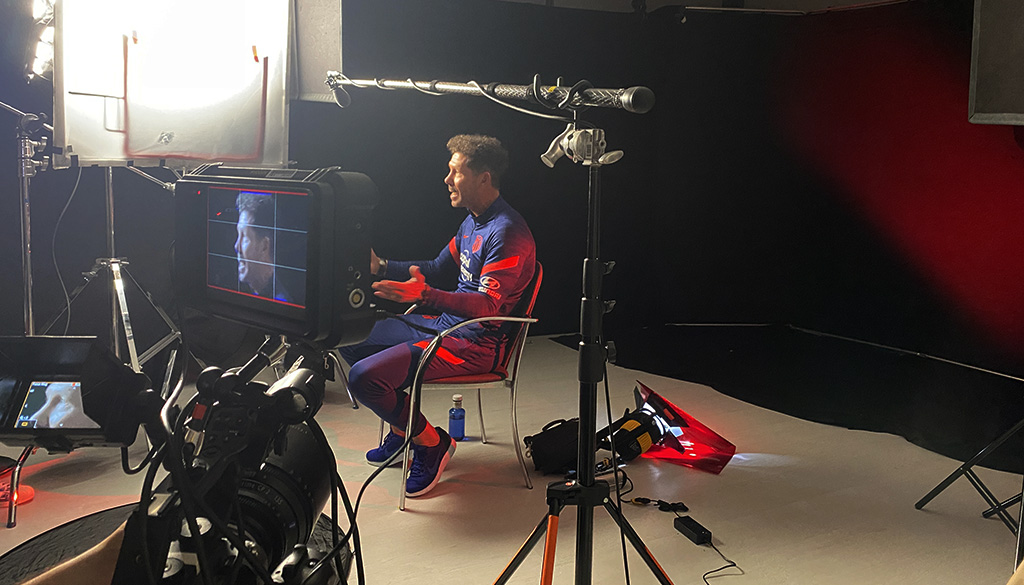
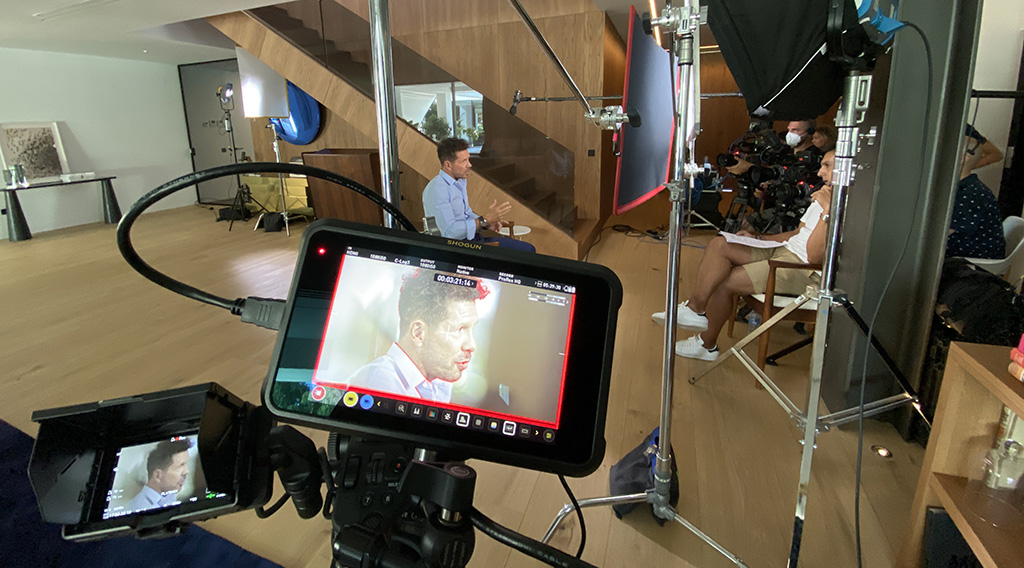
Wakai Sports, sports representation and marketing agency led by Toni Muñoz, a former player and sports director of clubs such as Atlético de Madrid, had recently dedicated himself to the creation of sports documentaries, an emerging format that in recent times has focused on the most personal perspective of the great idols of the sports scene. This effort materialized in documentaries such as Simeone: live game by game o FC Barcelona: a new era, that achieved public recognition after its premiere in Amazon Prime Video and were carried out hand in hand with companies such as Telefónica Broadcast Services (TBS) o Barça Studios.
Now, Wakai opens its own path as producer independent with the aim of continuing to explore the avenues that propose this type of documentaries, as well as factuals that will see the light along 2023 y 2024. At the head of this division, David Quintana, a professional with almost two decades linked to the production of sports content in houses such as Movistar, Mediaset, Telemadrid and more recently her own TBS.
Along the following lines, the CEO of Wakai Media Not only does it help to understand the guidelines that will accompany the production company in its journey within the audiovisual field, but it also conveys its privileged understanding of this particular revolution of sports documentary; the one who adopts new codes and forms to go where it has never been before, and that allows reduce the distance between professional sports and fans of the world of sports.
The transformation of the sports documentary
In recent years there has been a whole eye of the sports documentary. It is a genre that has always existed, generally around sporting milestones or specific personalities. They were formats encapsulated, frequently far from episodic, and generally reserved for channels distribution focused on documentaries. For some time now, everything has changed. The sports documentary has become part of the audiovisual mainstream, with growing relevance and, increasingly, more prominent names.
For Quintana, there are three keys that explain the rise of this type of content. The first is the predisposition of athletes to show your more human side, which allows “to go beyond the first layer, the one that normally reaches fans and spectators”: “It has a lot of value when the idol is willing to approach the fan.” A second pillar, for Quintana, is the growing interest of sports organizations in opening up to this type of content, assuming participation in this type of initiatives as a brilliant opportunity: "For clubs, competitions and organizations, this type of content adds value to their brands. (...) They help these organizations or professionals grow in followers and in people interested in sport. In addition, all agents are understanding that they are content that brings sports closer to a younger audience, which is interesting, relevant and complementary to the most common live broadcasts."
Platforms: the ideal window
The third pillar that the CEO of Wakai lists is emergence of platforms, which has been accompanied by a change in the audience's content consumption. This has led to a programmatic trend for platforms to bet on this genre. The dominoes continue to fall: as a result of this increased popularity, production values “have grown tremendously,” allowing for “a treatment, inversion and texture that until now could only be seen in the world of cinema.”
Quintana has nothing against the linear television, which today remains home to current affairs and live sports broadcasts. However, it recognizes that formats such as Formula 1: Drive to Survive of Netflix or Wakai's early works are consumed "very well in VOD mode, choosing whether you want to watch one, two, three or four chapters in a row." “Platforms are the most natural choice for the type of content we make,” says Quintana.
Unforeseeable productions
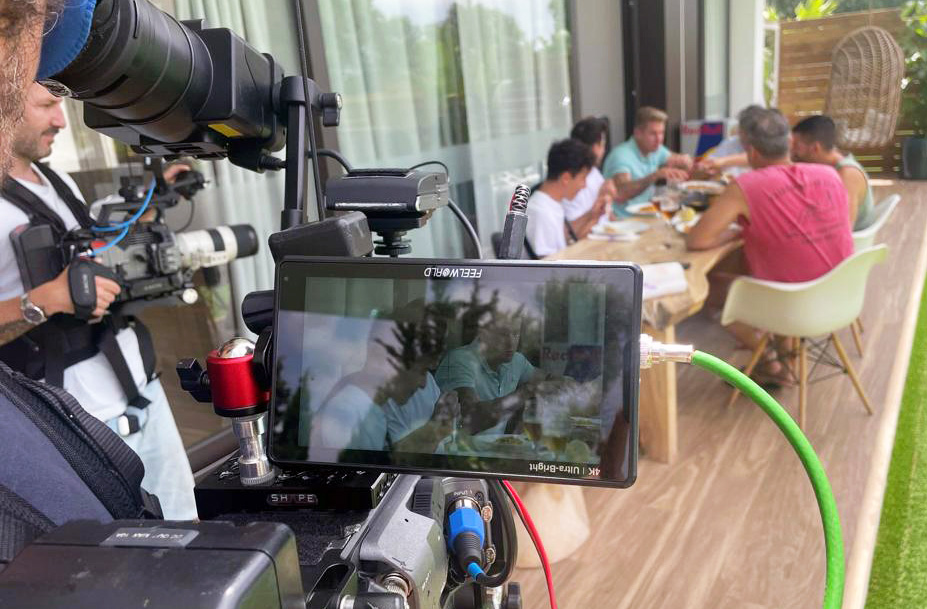
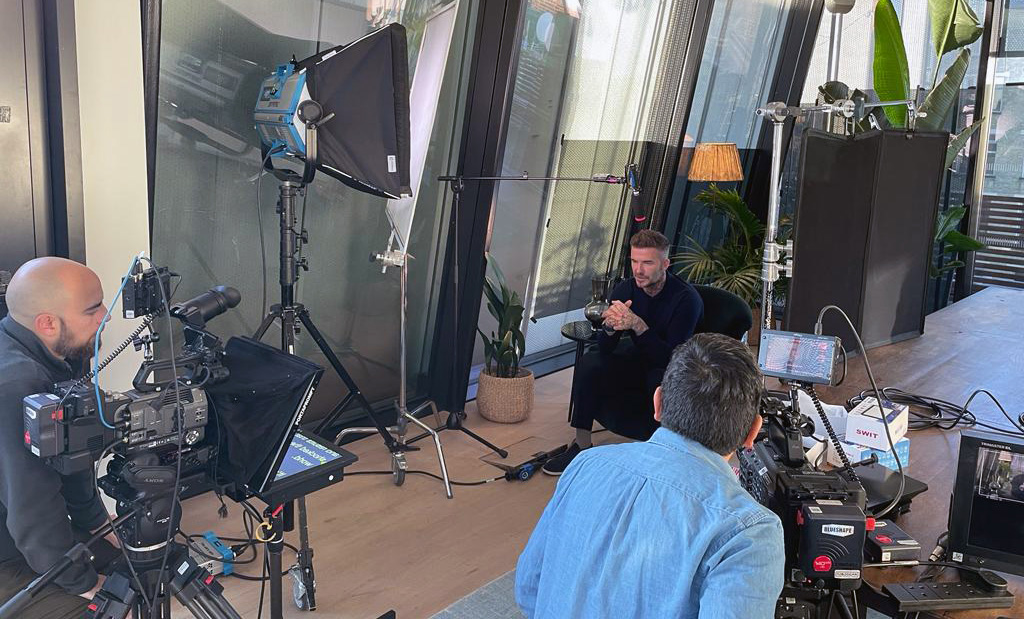
The new sports documentary moves away from (although it does not completely renounce) hackneyed structures as withdrawals, milestones o chronological biography. The camera is not placed in front of the protagonist, but is placed in profile to serve as companion.
The story, in this way, develops organically, although there is important pre-production work to find the space-time suitable and thus capture reactions, milestones and the much desired personal side of the athlete. In the words of Quintana: "The pre-production and planning of this type of project is key to success. It is true that sports documentary series cannot have a closed script when filming begins, because they depend on current events, but it is very important to have the intention worked out and where we want to go with this type of product."
Equally necessary to be able to delve deeper into the theme of the sports documentary will be the coordination with the protagonist, club or organization. Although it is popular traditional hermeticism of some prominent names in this world years ago, today the situation has changed: “We are counting on the trust of platforms and organizations, as well as the value of our expertise, to carry out these projects. In the end, when you open the doors of a house, it is essential to do it with people you trust.”
Marc Márquez: All In – When everything changes
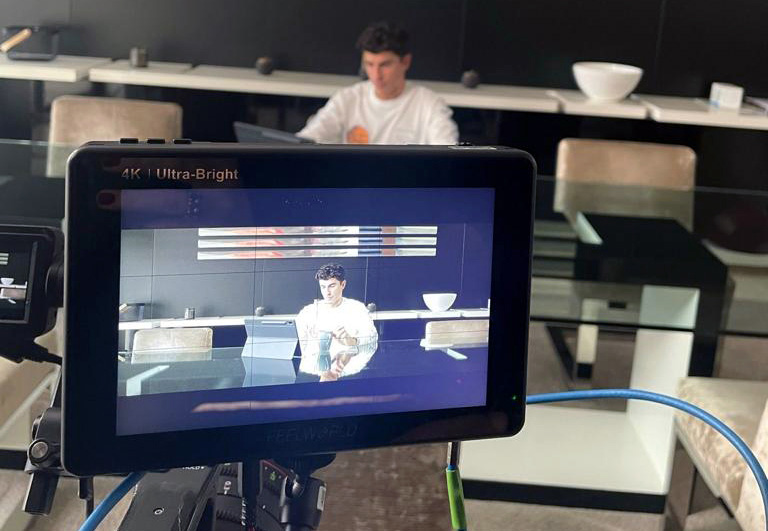
The documentary Marc Márquez: All In (Amazon Prime Video) by Wakai herself was going to illustrate the return to the ring of the famous Catalan pilot. However, what was going to be a successful return to the slopes ended up becoming new journey through the operating rooms, with everything that this implies: the risks, the search for sensations on the motorcycle or the reception of family and friends to this decision.
“Marc Marquez It is a clear example of how a production of this type evolves and changes from its design to its final execution. In the case of Marc, we find a driver who returned to compete at the highest level but began to have problems at the start of the season. At that moment, he decided to stop and undergo a complicated intervention again, which even called into question the possibility of getting back on a motorcycle,” Quintana recalls.
The focus of the production was modified, but the project with Márquez never had the main objective of showing sporting success, but rather, as the Wakai CEO highlights, “transcend beyond”: “We have found a story that goes far beyond the world of sports. (…) There is a unique human story that tells how a guy like Marc is able to remain motivated and fight every day. That has an aspirational value for the general public, not just for Marc or MotoGP fans. And that is what we look for in our projects.”
The focus boutique de Wakai
Wakai considers the technique as a way to be able convey emotion of the stories that structure his sports documentaries. Quintana defines this approach as a “concept boutique"To undertake these reports, the agility It is an unavoidable maxim (and even more so when working together with platforms). However, the core The company's goal is to never give up “important, quality productions with the highest quality standards on the market.”
These stories will be treated with reduced teams carefully chosen in which “the most important thing is talent and people”. From Wakai, Quintana explains, they work tirelessly to continue expanding a human team that can carry excellence to productions: “We contact people who have done projects that we find interesting, that we have on our radar and that we believe may be valid.” This hard core works with external professionals to end up forming the teams that shape the documentaries.
As a base of operations, Wakai has just opened a new headquarters on Orense Street in Madrid with different means of production, as post production rooms y recording equipment, although they recognize that in the short and medium term they will continue to bet on outsource the technical part “depending on the projects and needs we have.”
This space will serve as a base of operations for 2023 that arrives with initiatives that they cannot yet be revealed and that include “a very large project linked to the world of sports”, a smaller-scale sports documentary and “a factual about a personality who is not from the world of sports, but who is going to be a bombshell for Christmas.” In this way, a roadmap marked by the production of few projects each year, but of first level.
The next big project: Real Madrid
Real Madrid: Until the End It will mark a before and after in the scope of new sports documentaries. He club merengue had already promoted documentary initiatives in the past, such as Real, the movie (2005) or other formats that have been seen through Real Madrid TV or various platforms. However, the approach of the documentary Wakai Media con Apple TV, a “great production” of three chapters that will be released next March 10, provides unprecedented access to how the season was experienced 2021/2022 of the club, which, as Quintana acknowledges, “no Hollywood screenwriter could have written it.”
"It has been a very ambitious project and challenge. It is full of emotion and will not leave anyone indifferent. In this series, we have managed to bring together all the magical moments that happened last year," shares the CEO of Wakai, who also recognizes that this, his "most complex" production to date, has been "quite a challenge."
Innovation for the future
“I think we are now experiencing the moment of greatest interest in sports content that goes beyond live broadcasts,” confirms Quintana when asked how he thinks the phenomenon will evolve around the new sports documentary. He admits not knowing how this format will survive, although he clings to the reality of the industry to bet on continuity of this trend: “The platforms are betting on it, and they do it because the interest of the viewers is maintained.”
Until the change in trend arrives, which today is barely visible on the horizon, Wakai will continue betting on the new sports documentary trying to slightly modify its nature to maintain trust in all the agents (organizations, athletes, platforms and public) that orbit around this content: “We try to innovate and, above all, generate products that are unique, that have their own DNA and are adapted to the characteristics or genuineness of the character.”
"It is true that it may seem that the topics we discuss may be exhausted, but the reality is that every week new stars emerge, new rivalries, characters who decide to retire from the elite or new competitions that want to enter this type of products. For now we are very healthy and we hope it will be for a long time," says an optimistic Quintana, who is working tirelessly to outline the future of the new sports documentary.
A report by Sergio Julián Gómez
https://youtu.be/ZeRwbqClMfs
Did you like this article?
Subscribe to our NEWSLETTER and you won't miss anything.
Related articles
 NESN redefines the management of its sports content with Harmonic
 'Longevity Hackers', a documentary produced by Spaniard Rubén Figueres, lands on Amazon and Apple TV
 Sports broadcast trends for 2025: a year of consolidation
 The sports journalism of the future takes shape with Quicklink Studio
 This is Beyond Sports, Sony's latest addition to the sports world
 TBS and Wakai Sports produce 'Simeone. Live game by game', the latest Prime Video docuseries
 Telefónica O2 and Sky Deutschland will broadcast a sporting event with 5G in the first pan-European broadcast
 ChyronHego enters sports video analysis with Coach Capture
 Turner aims to launch a sports OTT service in the US next year
 The “clásico”, the first live sporting event to be broadcast in Spain on UHDTV
 César Alierta: “The digital revolution will not take place without the telecommunications sector”
 'You are also Hispanics', first sports spot in 4K
 Sky Deutschland equips its new sports studio with Vitec solutions
 The audiovisual, the digital revolution and the implementation of new technologies