





3cat integra en su red de audio e intercom equipos de AEQ bajo protocolo AoIP
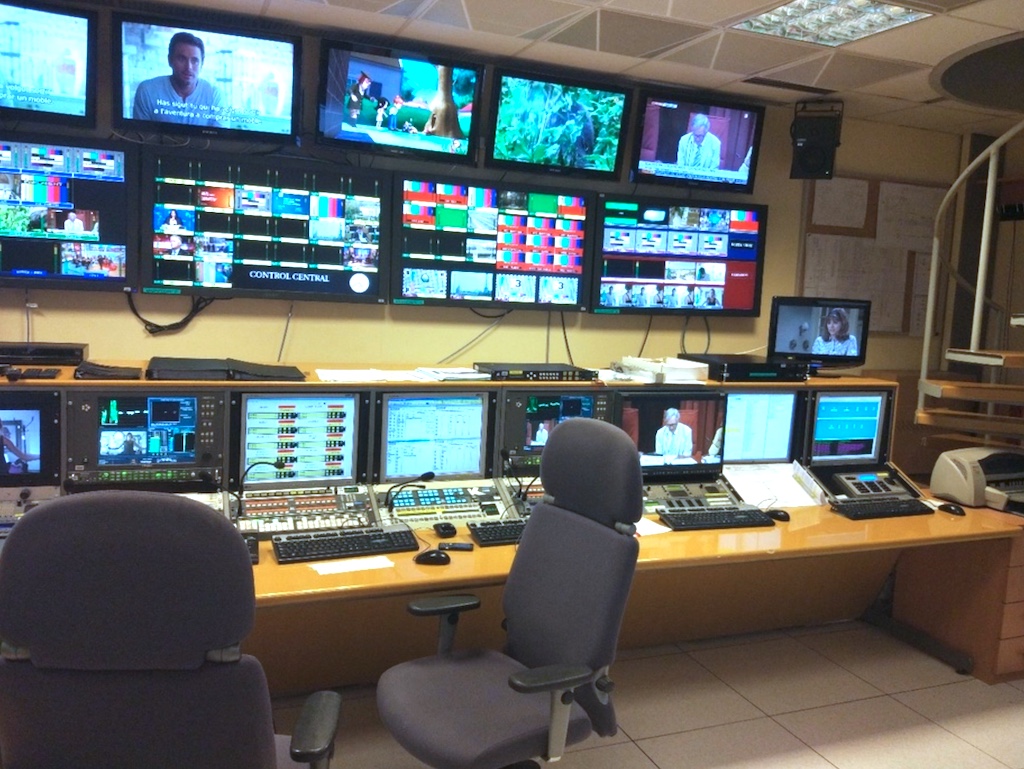
La Corporació Catalana de Mitjans Audiovisuals (CCMA) ha desarrollado sus propias aplicaciones, que utilizando los distintos protocolos de AoIP y los de control facilitados por diferentes fabricantes, permiten trabajar en un mismo sistema con equipos que trabajan sobre normas distintas.
Dentro de esta misión corporativa, el Departamento de Emisiones Técnicas se propuso sacar el mejor partido posible a los medios técnicos de que dispone la organización. Sin embargo, por razones históricas relacionadas con el avance de la tecnología y la adscripción de los fabricantes a distintas normas, algunos equipos esenciales no podían compartir recursos.
El broadcaster cuenta en un edificio con una intercom Conexia de AEQ-Kroma. Tanto los paneles TP8000 como la matriz de audio que incorpora manejan audio IP de calidad broadcast en formato Dante sobre un sistema de sincronismo PTPv1. Las consolas de audio son con audio IP en formato Ravenna sobre un sistema de sincronismo PTPv2.
En el Departamento de Control Central y Tráfico, se encargaron de ver como compatibilizar los formatos, a través de su mínimo común múltiplo, la norma AES67 que trabaja en PTPv2. Hicieron que la matriz Conexia facilitara a través de una de sus tarjetas audio Dante en formato AES67. De la misma manera, también las consolas de los demás fabricantes facilitaron audio AES67, así se puede introducir en las consolas audio listo para emitirse desde la entrada auxiliar de los paneles de intercom, o de las entradas analógicas y digitales de la matriz Conexia, al tiempo que enviar ordenes desde la consola a ciertos paneles de intercom.
En una segunda fase, AEQ facilitó las cosas para una integración más eficaz desarrollando una nueva tarjeta para el sistema Conexia, la XC 34 que trabaja en el protocolo Ravenna nativo de las consolas. Esto ha permitido un control unificado a través del protocolo NMOS. Han hecho también pruebas de sincronización, y esto les permite suscribir desde la matriz Conexia flujos AES67 desde equipos del resto de fabricantes, incluso desde otros puntos de la ciudad, sin ningún tipo de problemas. También les ha permitido integrar el sistema de intercom de AEQ por AES67 directamente con el PTPv2 de AES67 y Ravenna (ya que tienen restringido el PTPv1 de Dante por políticas de seguridad internas) y reportan que les funciona muy bien.
Otra integración puntera y más compleja ha sido la de los sistemas de intercom. Mientras que en un edificio 3cat tiene un intercom Conexia de AEQ-Kroma, en otro edificio instaló un intercom con matriz. En un principio, cada centro produce sus propios contenidos y en general no hay interacciones que coordinar. Pero con el tiempo, la optimización de recursos y las posibilidades de trabajo a distancia que llevan las nuevas tecnologías, han dado lugar a interacciones operativas entre ambos centros e incluso con las delegaciones territoriales. Había que hacer trabajar juntos dos sistemas de intercom que no se había previsto trabajaran unificados.
Para ello, 3cat tuvo que solicitar la colaboración de ambos fabricantes que facilitaron la labor: AEQ facilitó una API que interactúa con el controlador TM8000. Por su parte, otro fabricante facilitó un software que hace de pasarela y proporciona un protocolo que permite controlar el sistema de intercom.
Desarrollo de software
La Corporación Catalana ha desarrollado un software que traduce la información entre ambas herramientas interconectando de forma transparente al usuario los dos sistemas. De una parte, las matrices Conexia y y del resto de fabricantes comparten, a nivel de audio, una serie de flujos AES67 fijos. De otra, en la parte de Conexia se programan en los paneles unas teclas para hablar con esos puertos AES67. Además, el software de 3cat monitoriza el estado de los puntos de cruce que se establecen cuando se pulsan esas teclas y manda los comandos necesarios a la matriz para hacer los puntos de cruce entre el puerto AES67 y el panel destino. También manda las ordenes necesarias para señalizar en el panel la llamada.
Si la llamada es desde la matriz del resto de fabricantes hacia un panel de AEQ, el software de 3cat monitoriza las teclas de los paneles que hablan con la matriz de AEQ, y cuando se pulsan, manda la orden a la matriz del resto de fabricantes y a la matriz AEQ para hacer los puntos de cruce correspondientes. También manda la señalización a los paneles, en la Conexia no es necesario porque la señalización es automática al ser una comunicación normal.
Es de reseñar que ya que formato y contenido de la información de intercambio que proporciona cada fabricante son distintos, la aplicación se encarga de proporcionar un funcionamiento transparente dentro de estas limitaciones.
Como curiosidad respecto al nivel de conocimiento que 3cat ha adquirido sobre el funcionamiento interno de los sistemas de ambos fabricantes, ante una situación transitoria, en la que han recibido unas unidades de paneles de otros fabricantes de un nuevo modelo que aún no está integrado en el software de intercambio, cabe reseñar que han utilizado un panel AEQ sólo como botonera para seleccionar los destinos en la matriz AEQ del nuevo panel del resto de fabricantes, gestionando el audio desde el panel. Lo han hecho así porque los operadores trabajan con microcascos y así se evitan tener que cambiar de cascos según con quien hablen o tener que hacer alguna adaptación hardware para usar el mismo microcasco en ambos paneles.
¿Te gustó este artículo?
Suscríbete a nuestro NEWSLETTER y no te perderás nada.
Artículos relacionados
 LiveU presentará en ISE 2025 sus innovaciones en el ecosistema de vídeo IP bajo protocolo LRT
 El centro de producción de La 7 integra el nuevo sistema de intercom AEQ
 AEQ exhibirá en IBC sus soluciones para AoIP DANTE, intercom, multiconferencia, transporte de audio y reportaje
 El protocolo LRT de LiveU se integra en las redes de distribución de BT Media
 Broadcast Solutions integra una móvil VAR con intercom de AEQ para la AFFA
 Canal Sur integra la intercom Crossnet de AEQ de la mano de Provideo
 Pebble Control mejora la gestión de conexiones IP bajo protocolo NMOS
 ‘Operación Triunfo’ regresa a TVE el próximo 20 de mayo sin público y bajo un estricto protocolo de seguridad
 MOG integra el protocolo NDI de NewTek en MXFSpeedrail
 Toboggan integra el sistema de intercom y monitorado Kroma by AEQ en el nuevo master control de Non Stop
 La televisión finlandesa TV7 adopta la interconexión AoIP con el sistema de intercom de Kroma by AEQ
 AEQ estrena en Las Vegas nuevos equipos de comunicaciones y audio con protocolo IP
 AEQ presenta nuevos equipos de audio y comunicaciones con protocolo IP en NAB 2017
 El grupo ruso VGTRK integra el sistema de intercom Conexia de AEQ-Kroma