





The future of DTT in Spain: UHD, 5G Broadcast, hybridization with IPTV...

Adrián Nogales (director of institutional relations of the COIT) and Ramón Salat (director of strategic opportunities of Cellnex and member of the COIT) address the future of DTT in the centenary of the beginning of radio broadcasting in Spain and after the achievement of the jump to HD by the broadcast industry.
The digital terrestrial television (DTT), understood in the Spanish context as the free-to-air television model for distributing audiovisual content to citizens, continues to take steps forward despite a limiting context. As a resource that benefits a scarce good, this is the radio spectrum, has faced reformulations in recent years that have “pushed” it into a limited range; a challenge overcome to some extent by advances in the fields of coding and intelligent resource management.
To this intrinsic condition is added a technological comparative tort. The UHD option is beginning to be standardized in video and streaming on demand, with added extended audio options and color spectrum or bitrate improvements. Faced with this, Spanish televisions have just completed their transition to HD after years of delay as a result of Covid-19, with a jump to Utopian UHD while, simply, the network currently does not have the capacity for each and every one of its channels.

Adrián Nogales (left) and Ramón Salat (right)
With frequency use assured at least until 2031 by the ITU World Radiocommunication Conference 2023 (WRC-23), DTT faces unavoidable short-term challenges. The main one of them, to continue being the preferred consumption channel of a population that is progressively giving up linear television in favor of the IPTV world, as several studies have recently highlighted. And its main shield against the push of global trends, its role in the public service exercised by radio and television, could be called into question if there is an exodus of viewers due to consumer preferences, whether these are marked by the quality of broadcasting, convenience or the offer of content.
Starting from this panorama, Adrian Nogales (director of institutional relations of the Official College of Telecommunications Engineers – COIT) and Ramon Salat (director of strategic opportunities at Cellnex Telecom and member of the COIT) show an optimistic vision of the survival of DTT. Likewise, they give their vision on technological concepts closely linked to their tomorrow, such as UHD, he 5G Broadcast o to hybridization with processes from the IPTV world.
DTT in Spain vs. Europe
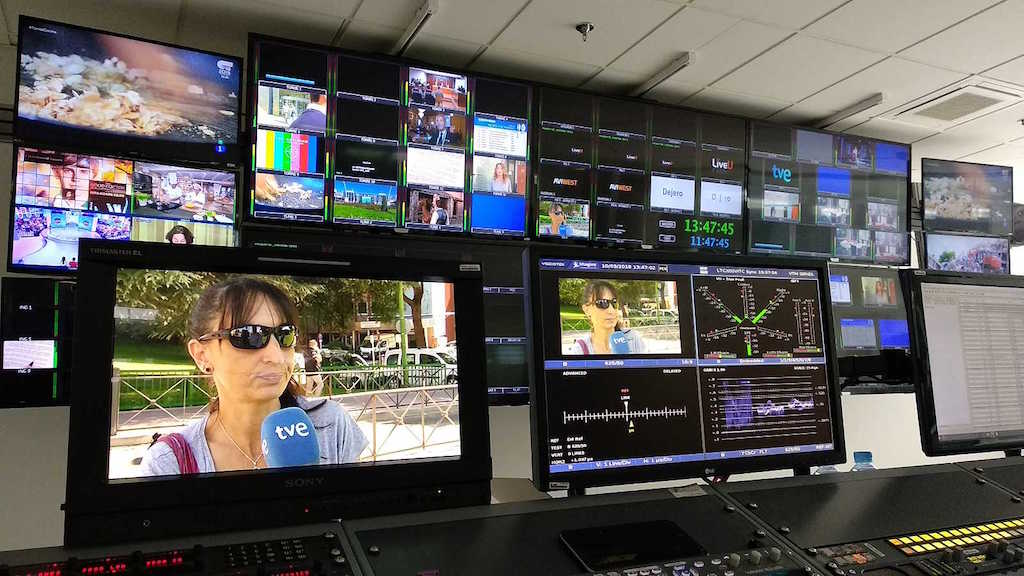
The transition from DTT to HD means for Nogales and Salat the last milestone of an extensive history of successes that have brought Spain to the European forefront in terms of digital television. “Spain was a pioneer in making the switch from analog to digital,” Salat recalls, a success that his colleague justifies in the “exemplary” development of radio broadcasting in Spain that found its origin in the 1960s: “In 1966 we had a law on collective antennas that meant that buildings could receive with pickup elements and teledistribute quality television in our homes. Then, around 1999, the common telecommunications infrastructures in buildings came into force, which required mechanisms to be able to receive DTT in newly built buildings.
Adrian Nogales: "The DTT in Spain goes for him good way. Furthermore, it is an environment that is always in continuous technological evolution”
Back to the present day, Nogales adds that Spain's model in the field of telecommunications, especially for the development of the Gigabit Infrastructure Law (GIA) that is currently being outlined in European organizations, is committed to replicate a model similar to the Spanish one. "DTT in Spain is on the right path. Furthermore, it is an environment that is always in continuous technological evolution," he says.
Does technology limit the evolution of DTT?
After limited testing periods, two of the largest broadcasters Europeans, Spanish Radio Television y France Televisions, have communicated (and executed part of their coverage) their decision to start a linear broadcasts in UHD through DTT. There is still a way to go to offer 100% native content, since the upconversion It is proposed as a resource to be able to offer the market a 4K channel, but initiatives like these seek claim the adaptability of DTT to future still to write.
Las extended options of the red and blue buttons represent the capacity of DTT to “innovate through hybridization", according to Ramon Salat.
“DTT technology is in a process of constant technological innovation. With increasingly scarce resources, it develops increasingly efficient mechanisms and algorithms to be able to send higher quality information to the citizen," Nogales explains. As the COIT member recalls, the Spanish industry is focused on evolving the set of standards. DVB-T2, which will allow further improvements in terms of “mobility and ubiquity”, among other aspects. "Digital terrestrial television is free-to-air television. We cannot forget that we have an aging population and the only connection with the world is to connect your television via DTT," he comments, justifying the need to continue making digital television evolve in Spain.
Salat, for his part and without ignoring the spectrum variable, considers that DTT “does not have technological limitations compared to other technologies that may condition it in some way.” The launch of UHD channels demonstrates the platform's ability to look face to face with other modalities, while the extended red and blue button options represent the capacity of DTT to “innovate through hybridization"Aside from this, the benefits in terms of accessibility and sustainability are worthy of relevance: does not require a subscription to an internet service provider to access television consumption, as well as offering some greater efficiencies in terms of carbon footprint compared to the IPTV world.
DTT versus the radio spectrum
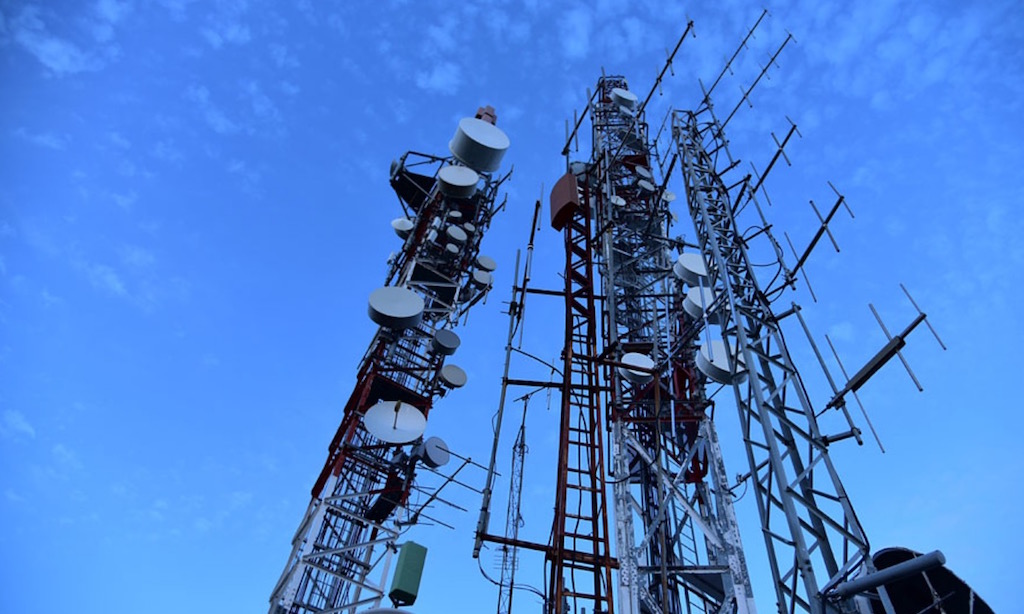
The promise of UHD as a card of resilience to continue capturing the attention of those viewers who have compatible supports in their homes (30% of the park in Salat's words) collides head-on with a radio spectrum that limit progressively the band destined for digital television services. Today, the compression standards established in broadcasters' emission systems cannot offer sufficiently efficient mechanisms to be able to transform the emission of all their channels to ultra high definition.
The evolution of mobile telephone networks will allow use of spectrum in a more “densified” way, which would translate into the possibility of DTT becoming hosted in some frequency bands in which the balance of “latency and capacity" this "better balanced”.
“Part of the DNA of the DTT platform itself is its ability to adapt to changing or technological needs,” reflects Salat, recognizing that the bands currently used for broadcasting in Spain have limitations in terms of capacity, despite having the low latency necessary for this service. Even with everything, the member of Cellnex is confident that the evolution of mobile telephone networks will allow a use of spectrum in a more “densified” way, which would translate into the possibility that DTT will be hosted in frequency bands in which the balance of “latency and capacity” is “better balanced.”
This scenario that Salat proposes could represent a logical development for DTT, but the truth is that Spain, by itself, will not be able to have the last word in this hypothetical new distribution. "This issue is subject to the radio communications regulations defined by the International Telecommunications Union; that is, it is a supranational issue," explains Nogales, who adds that Iberia is located "in Region 1, and therefore we are subject to a series of frequency assignments and attributions."
5G broadcast: interoperability with DTT?
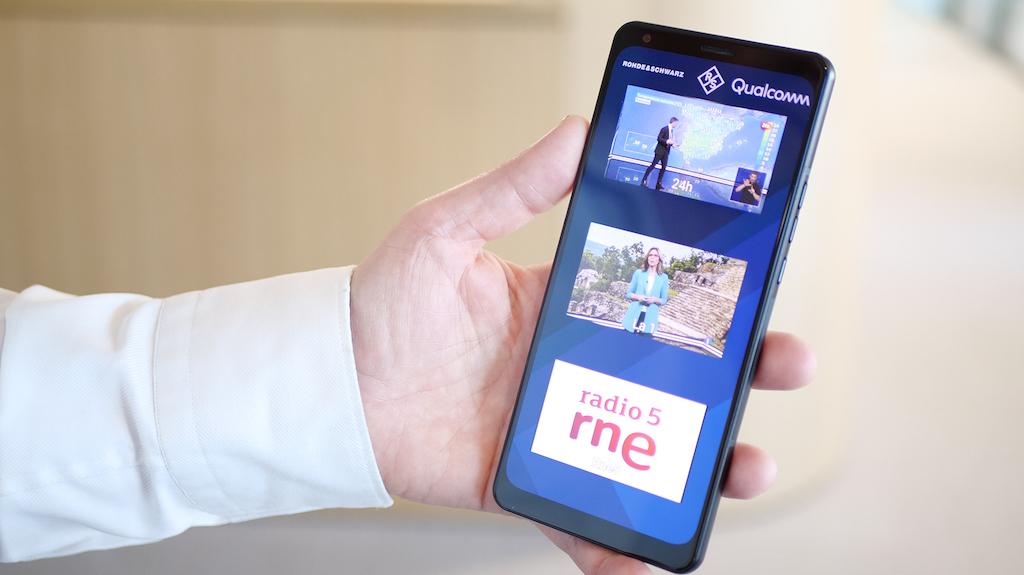
In parallel to this scenario, which will maintain relative stability until at least the year 2031, as defined at the last World Radiocommunications Conference, the 5G Broadcast, a concept developed in depth in this article and which involves the ability to use a telephony cell to transmit content directly to compatible 5G mobile devices. “I am not an expert on that specific issue, but 5G broadcast could perhaps function as a future evolution of the DTT platform itself, since the modulation scheme itself or the retransmission technology could be hybridized,” says Salat.
Adrian Nogales: “At the moment, each service has its orientation. The TDT It is intended for viewing content in front of a sofa, and the 5G Broadcast is more adapted to the consumption of content in mobility”.
In a hypothetical 5G (or 6G, 7G...) Broadcast scenario, not only mobile phones would be compatible with this technology, but televisions in every house They would have compatible "chipsets" and "demulators": "It is something that could happen. Compared to DVB-T2, it is not as efficient for the purposes of emulation scheme, but obviously the issue will be analyzed from a perspective of economy of scale, which is also part of efficiency." Another issue to be considered would be the need for a renovation of the television park (or of STB and derivatives) to adopt this technology.
Nogales is clear that 5G Broadcast could have “notable advantages”, but in this framework of “crystal balls”, it is committed to an approach in the format of a “coexistence and complementation“At the moment, each service has its own orientation. DTT is designed for watching content in front of a sofa, and 5G Broadcast is more adapted to mobile content consumption,” he explains.
TDT: delving deeper into hybridization with the IPTV world
The development of DTT is part of a period of change in the television consumption model. Television as the main support and linearity as the offer are complemented by dozens of alternatives in the form of television services supported by the world of the Internet. This transformation is not foreign to the broadcasters in Spain, some of which recognize prepare for a transition while advertising investments move to a digital model and the generational change does not develop with the same consistency as in previous decades.
Los hybrid mechanisms will continue to evolve to allow DTT to be a support that houses linearity and demand, although this situation also means regulatory challenges.
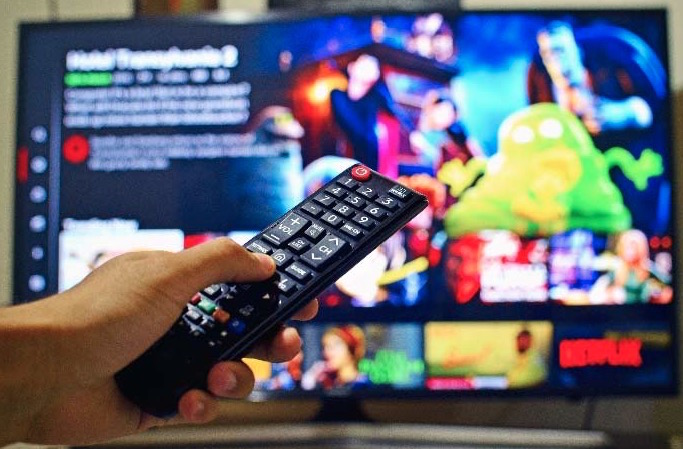
Given this situation, the hybridization It is a path “not only for the future, but for the present.” As the director of strategic opportunities at Cellnex comments: “The red button and the blue button already offer access to content live or on demand.” Nogales and Salat agree that hybrid mechanisms will continue to evolve to allow DTT to be a support that houses linearity and demand, although this situation also means regulatory challenges while the digital world does not have the “clear and defined rules” in terms of “viewer defense or advertising control” that traditional television has.
General interest, letter for DTT
The survival of DTT in the short term is assured. In the medium term, it will depend on issues that are yet to be defined. If there is a drop in digital terrestrial television consumption, will the next world telecommunications conference decide to expand the spectrum to improve the service or limit it in favor of other modalities? Are the improvements in technology core of DTT will arrive in time for the viewer to choose to watch content via terrestrial television versus the IP world? Will private broadcasters opt to continue supporting the traditional linear television model or will they shift their business model to the digital field?
Ramon Salat: “If there is a clamor among users to see content on higher quality or together with a new service, it will be necessary that there is a regulation that allows DTT to offer services along the hybridization line.”
Faced with all these unanswered unknowns, Nogales and Salat defend the “general interest” as a certainty and pillar to continue defending the defense of DTT as a platform for the future; the ability to be able to carry content in a “universal, accessible and free” way, Salat believes, is a key factor for broadcasters who do not know the future of their medium: “Deep down, they will know what their users want. They will be able to identify if there is a clamor to see content in higher quality or together with a new service, which will make it necessary for there is a regulation that allows DTT to offer these services in the hybridization line that we mentioned.”
The evolution of consumer habits, the position of the radiotelecommunications market on television, the progressive rearrangements of the spectrum, the opportunities of 5G Broadcast, the positions of the operators, or a hypothetical new National Technical Plan that contemplates an evolved nature of DTT in accordance with the social and technological reality of television... It is curious and fascinating how, even with all the experience that 100 years of broadcasting in Spain provides, It is difficult to imagine the shape this world will take in just five years.
A report by Sergio Julián Gómez
Did you like this article?
Subscribe to our NEWSLETTER and you won't miss anything.
Related articles
 Interoperability and hybridization, keys to the imminent TSL showcase at IBC 2024
 9 broadcast innovations from the NFL, MLB, NBA and NHL… with a future in football?
 FENITEL's Telcom 2023 congress concludes by addressing UHD and the hybridization of content
 Netflix Spain and virtual production: creativity, challenges and future
 AV and broadcast: a common future
 The future of DTT and DAB+ in Spain, up for debate on the last day of RTVE and UER
 What is the future of movie theaters in Spain?
 The number of pay television subscribers continues to increase in Spain thanks to the pull of IPTV
 IPTV: present and future of TV at the service of the quality of content and user experience
 Beyond broadcast: new forms of television distribution in an IPTV framework
 EVS shapes the future of broadcast at NAB 2012
 Spain will have 4.4 million IPTV subscribers in 2020
 Techex will show at Broadcast 2011 the latest in broadcast, IPTV, DS, 3D and professional video
 The future of the audiovisual sector in Spain, under debate