





Producing the 37th Copa América from Barcelona: an innovative IP 2110 and UHD deployment
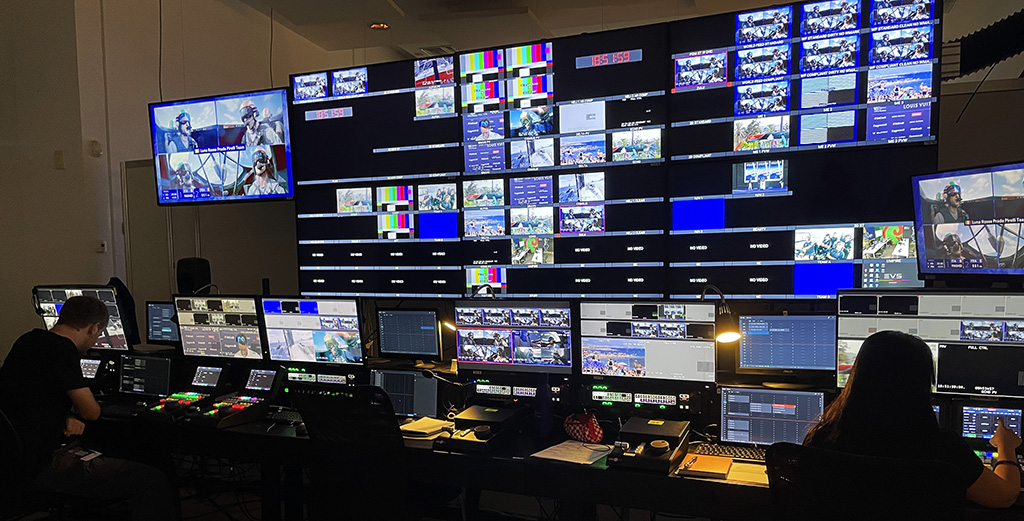
Miguel Mur, Operations Manager of Mediapro Group, exposes all the keys to its role as partner of the host broadcaster America's Cup Media in the production of the 37th edition of the Copa América, a project in which the company has tested the SMPTE ST 2110 IP standards in extensive live and UHD coverage.
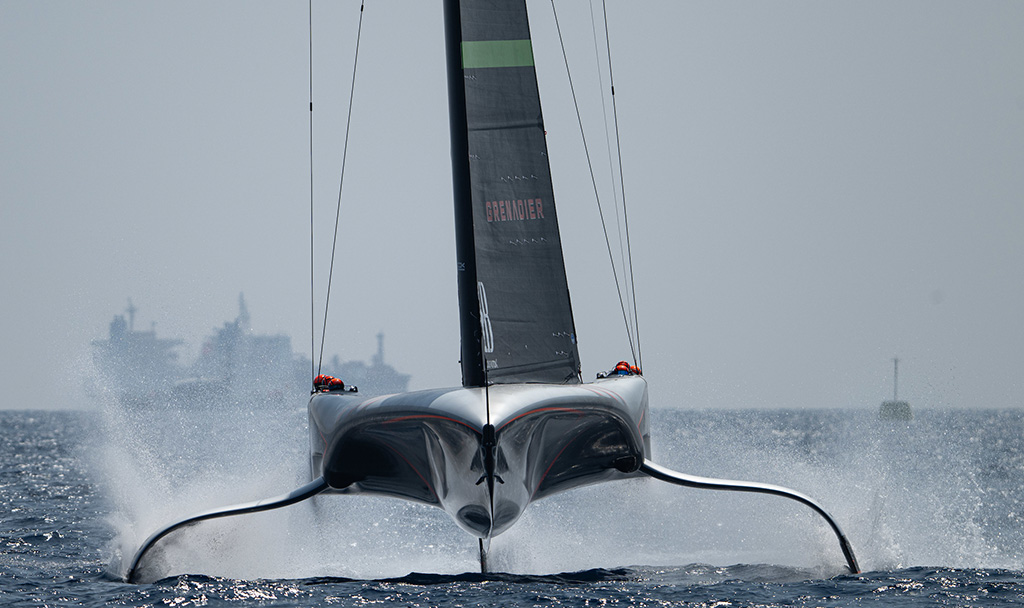
The Sailing America Cup find parallels with Olympics at different levels, but especially in its commitment to bringing innovation to its broadcast production. The competition, which pits teams from various countries every four years through different tests that culminate in the America’s Cup Match, has rethought its audiovisual production in its 37th edition to bet on visual spectacularity and for putting the technology at the disposal of storytelling in order to make a complex sport for those less familiar to the general public more understandable.
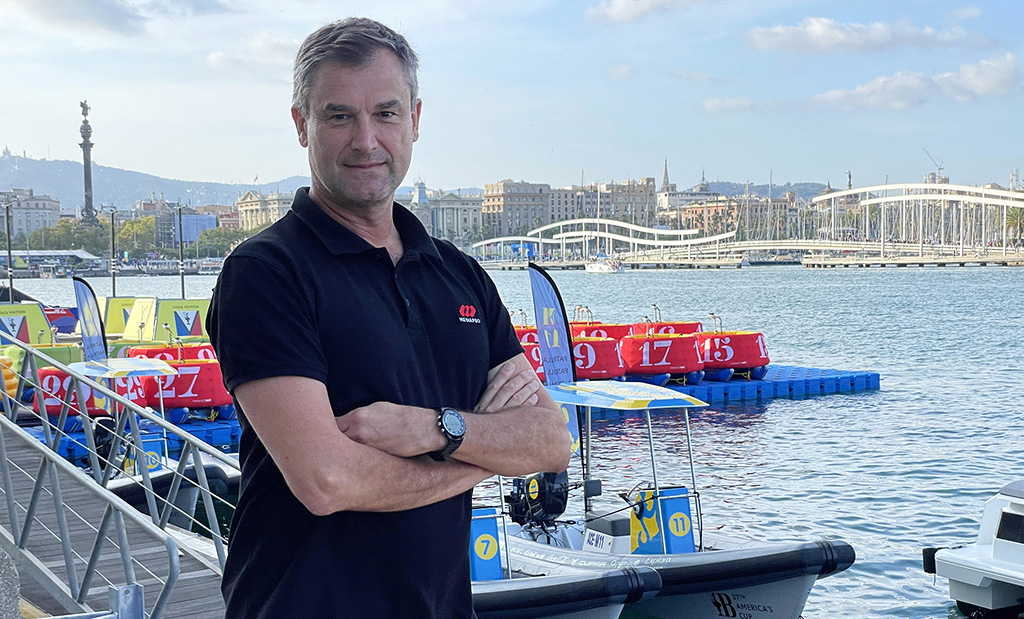
Miguel Mur – Operations Manager de Grup Mediapro
Looking ahead to the current edition of the Copa América, which has been held since August 22 to October 27 in Barcelona, America’s Cup Media has counted on partners of first level to overcome the technological challenges close to the nature of the competition. In this way, Amis Productions provides the helicopters and boats that will carry cameras for the broadcast; Animation Research / Virtual Eye is in charge of the graphics of the test; Bolt6 makes it possible to determine the position of racing boats using television feeds exclusively; Capgemini integrates the new WindSight IQ solution, which uses LiDAR sensors to measure the wind in real time and provide data for real-time analysis of production; Eurovision Services offers signal transport to 30 right holders in more than 200 territories, as well as live streaming; Little Dot Studios facilitates the tools and platforms to allow the America's Cup content team to create the best experience for viewers; Riedel provides audio communications and intercom between the AC75 and AC40 boats and shore, and Timeline Television It manages the 64 cameras located in aquatic terrain, as well as the radio connections that allow the signals to be connected to the production center.
This extensive list is completed with Mediapro Group, which participates for the first time in the production of the Copa América as a collaborator with the important mission of design and implement terrestrial broadcast infrastructure, as well as providing the professionals and technical means necessary so that the host broadcaster America’s Cup Media can shape first-class coverage. Miguel Mur, operations manager of Grup Mediapro, allows us to know how the Catalan group has put its experience at the service of the prestigious competition, resulting in coverage in 4K HDR HLG 2020 and the use of the set of standards ST 2110 of the SMPTE.
Two years of preparation, two months of production
Once he Emirates Team New Zealand chose, as winner of the 36th America's Cup, the city of Barcelona as the venue for reasons such as "the quality of the Port's facilities, the diversity of spaces for competition, the city's experience in hosting major sporting events, its love of nautical sports and its educational and leisure offer", the team America’s Cup Media He set out to carry out his usual search for collaborators in order to provide the best possible coverage of the event. Mediapro Group, as a local reference, received the call in the summer of 2022 and held several conversations with the top technical managers of the event in which he conveyed his solvency in carrying out top-level live events, backed by projects around the world, and especially in Spain with the production of the meetings of LaLiga.
“We receive and transport the signs of video and audio that come from the different fuentes: boats, helicopters, tracking boats… (…) We are in the core of broadcast action, both of the direct and post-production”
Mediapro received the final order in February 2023, when it was chosen as the winner of the public tender presented by America's Cup Media with the ambiguous name of OB facilitations (Mobile unit facilities). How do you explain Miguel Mur, the reality is that their responsibilities are broader: “They were looking for a partner with technical, operational solvency and knowledge of the facts. (…) One of our main advantages is being able to facilitate a value chain to be able to make a production ranging from engineering to complete integration, offering both live production and a production platform that could supply content to ACM, the right holders and all his stakeholders”.
 Like “executing arm” of the America’s Cup, Mediapro is “in the middle of the whole world”, in the words of Mur. All signals pass through the equipment Mediapro, which is in charge of the coordination of the media and its distribution: "We receive and transport video and audio signals that come from different sources: ships, helicopters, tracking ships... (...) We process these signals, integrate graphics, for example, and take them to international production. We are at the core of broadcast action, both live and post-production."
The assignment to Grup Mediapro covers all tests of the America's Cup in Barcelona: the preliminary regatta (August 22-25), the Louis Vuitton Cup Round Robins (August 29 – September 8), the Louis Vuitton Cup semi-finals (September 14-19), the Louis Vuitton Cup final (September 26 – October 5) and the final America’s Cup Match (October 12-21). In addition, Grup Mediapro has also collaborated in the two previous preliminary regattas: the one that took place in Vilanova i la Geltrú from September 14 to 17, 2023, and the Preliminary in Jeddah (Saudi Arabia), held between November 29 and December 2, 2023.
The Copa América, for the first time in UHD
In the preliminary meetings that Grup Mediapro held with America's Cup Media, the main visual objective of this year's competition: UHD. "They told us that they wanted to be innovative on a technical level and go into video and audio formats that they had not experienced in previous editions. In this, the group has recognized experience thanks to its experience in 4K HDR HLG 2020 productions with 5.1 sound," says Mur.
“They told us that they wanted to be innovative level technical and go to formats video and audio that they had not experienced in previous editions. In this, the group has recognized experience thanks to its experience in productions in 4K HDR HLG 2020 con 5.1 sound”.
Beyond the change in solutions catchment or in the converter integration in certain parts of the chain, Mur identifies as one of the main challenges of this deployment the management of the media. The increase in resolution led to the need to have a intake prepared to manage large files, as well as with a system PAM ready to transport and manage signs that occupy a higher bandwidth than usual.
These requirements are evident in the processes of post-production, since the company has had to integrate a PAM near-live con five TB of capacity, which only allows you to work on the equivalent of one week's worth of content. The system dumps the contents weekly into a 1.5PB deep file; In addition, it manages the organization of the files and establishes transport procedures.
Remote philosophy, local infrastructure
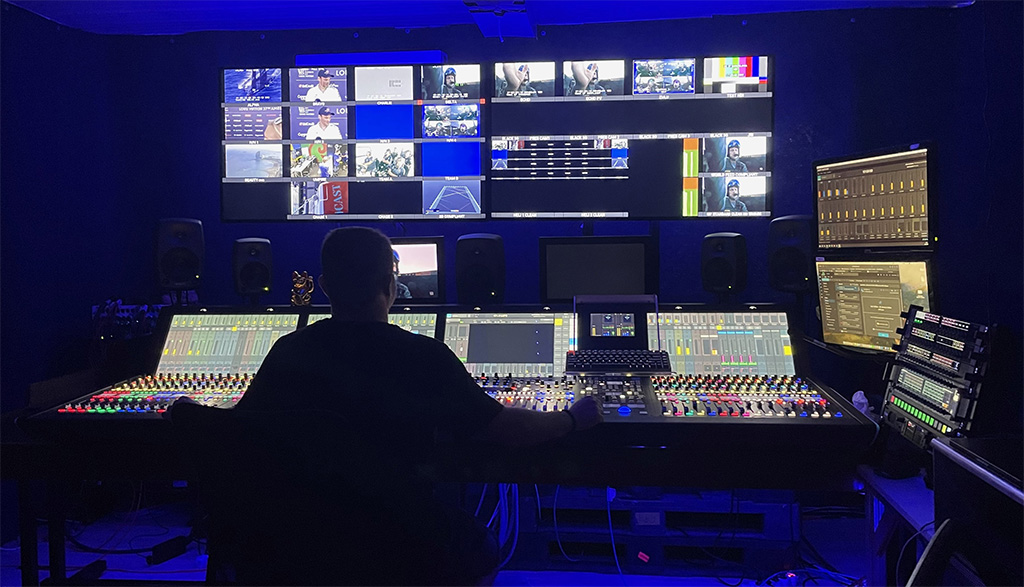
From the first moment, the team Mediapro Group It was clear that a structure of remote production It would apply perfectly to the particularities of the Copa América. In fact, the company proposed using its production center in glories to manage the signals coming from the regatta: "Our initial idea was to do remote production with a sustainable and effective proposal. All signal traffic would reach us from the port of Barcelona to 22@, and we would direct the signals already produced in the opposite direction," Mur explains.
“Las main signs they come to us by RF. The supplier set up a system Diversity with two link systems: one located at the Arts Hotel and another at the W Hotel. These signals fall within a fiber ring that the Port of Barcelona has made available to America’s Cup Media and they arrive at the production center that we have in the World Trade Center”.
For reasons internal of the organization and its work methodology, characterized by a direct and daily relationship with teams, referees and the rest of the departments of America’s Cup Events, the decision was made to establish a space in the World Trade Center for changego that remote engineering and make it “local”. However, this concept of “local” It is not such, given the nature of the Copa América: “The main signals come to us through RF. The supplier set up a system Diversity with two link systems: one located in the Arts Hotel and the other in the W Hotel. These signals enter within a fiber ring that the Port of Barcelona has made available to America's Cup Media and reach the production center that we have in the World Trade Center."
These signals are added to the cameras deployed in the Race Village located at 800 metros of the production center and that also fit within the fiber ring: "The only difference is that, if we had done it in our facilities, we would have had to add a second fiber ring that connected the Port of Barcelona with our facilities."
SMPTE ST 2110, in the heart of the Copa América
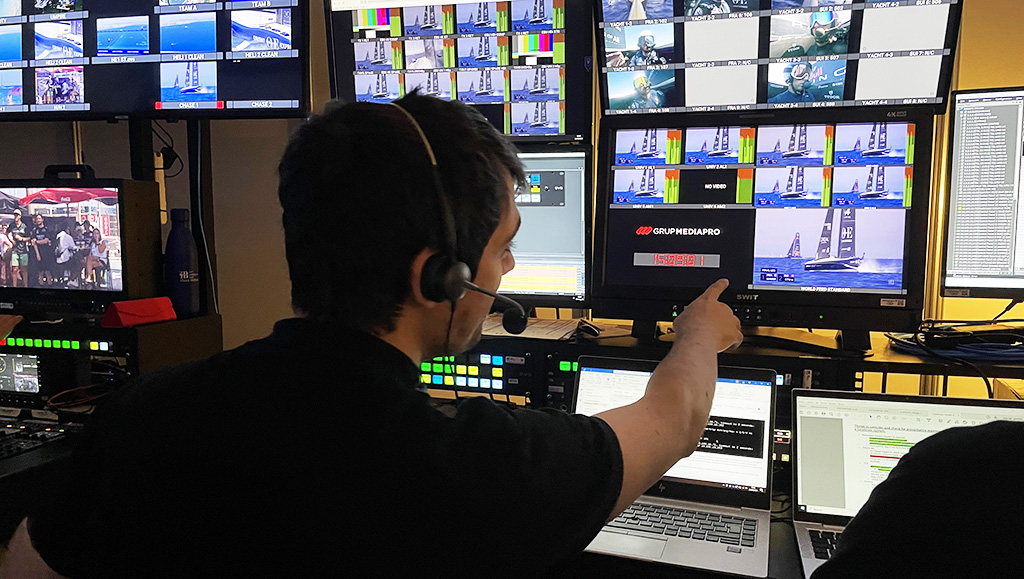
The transport and distribution of content, which covers signals from more than 70 cameras coming from land, sea and air, and all additional resources from microphones, data and graphics offered by all partners of America's Cup Media, translates into a total of about 4.000 streams video or audio that they would have required in SDI, how he transfers operations manager from Mediapro, “a fairly large matrix.” To simplify the configuration and facilitate day-to-day operations, the company decided to work with IP technologies ST 2110, which “have greatly facilitated the delivery of all requirements and have allowed us great flexibility.” “In a traditional SDI system, the management requirements for audio embedding and de-embedding, and the changing of signals and video positions of the ships in progress would have been, if not impossible, quite complicated to manage,” acknowledges Mur.
“El SMPTE ST 2110 has facilitated enormously the delivery of all requirements and they have allowed us great flexibility”.
The ST 2110 deployment has been successfully implemented, but Grup Mediapro recognizes that it has entailed some headache for the innovation involved in a first-class event. To carry it out, the Catalan company made a design that was initially deployed in its facilities in Media park in Sant Just Desvem: “We configure it until it is at 90% ready for use. A month before the Copa América celebration, we began to set it up in the World Trade Center, we completed all the infrastructure and applied the changes requested by America's Cup Media, for example, in the multi-screen system."
The signals, coming from traditional baseband, are worked and processed on a platform IP 2110, delivering them back on baseband for international distribution. Just a small part of conversiones HDR-SDR y progressive-interlaced is done directly in SDI “due to a question of equipment, parameters and quality”; the rest has been planned on IP and has allowed the production requirements of America's Cup Media to be met: "We have an engineering team that has really done an exceptional job. I won't say that without failures, because there can always be a small incident, but everything has been resolved with the options of backup and it has been perfected as the competition has progressed,” says Mur.
The experience gained in this IP deployment based on SMPTE ST 2110 will play a central role in the future of Mediapro Group. In fact, the company's production center in Argentina is located in full transformation and has received his first mixers based on this technology: "The lessons we have obtained from working in 2110 on a project as demanding as this are interesting to be able to transfer to other parts of the group. For example, here we have been able to manage virtual signal inputs and outputs within a 2110 platform, allowing us to manage video signals and coordinate macros and functions."
 At the gates of the definitive version of the Copa América
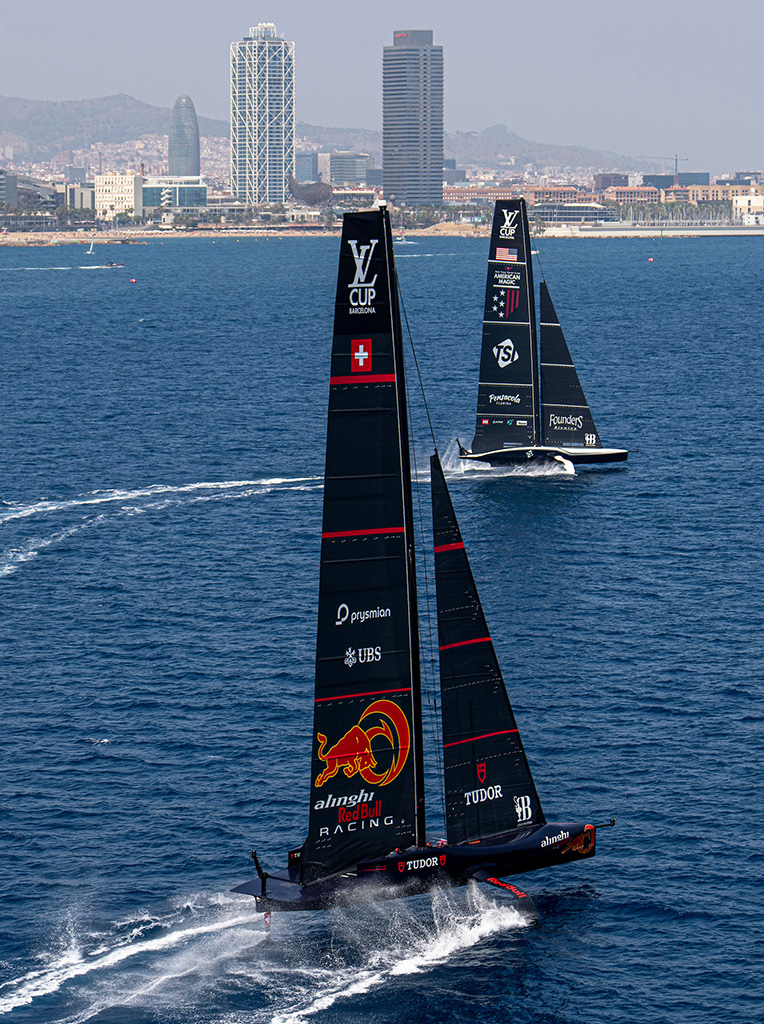
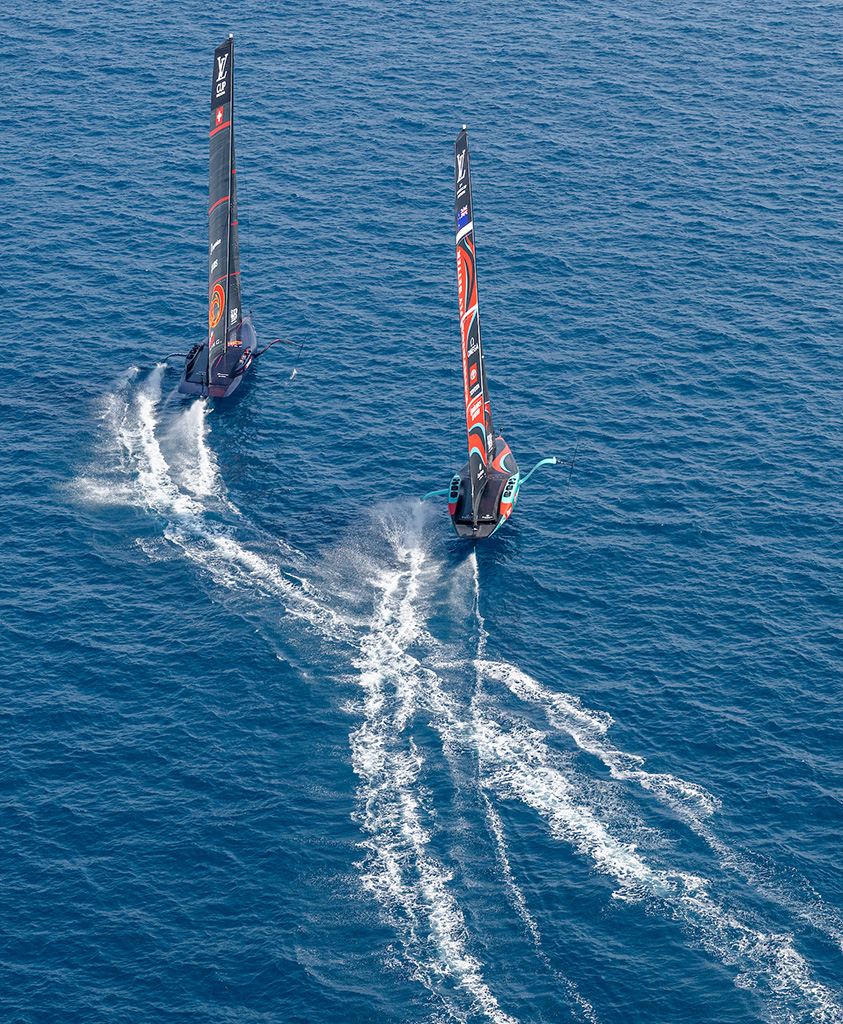
He October 12 begins the Louis Vuitton 37ª America’s Cup Match, which will face the Emirates Team New Zealand against him INEOS Britannia. During this meeting, which will be preceded for the first time in history by an opening ceremony in which Grup Mediapro will deploy a dedicated mobile unit with 16 cameras y two drones, The competition will reach its maximum audiovisual splendor thanks to a reinforced technical deployment.
"In the Round Robbins phase we had six AC75 boats and, in each of them, we installed six cameras. Now, in the America's Cup Match, we will have 12 cameras on each boat: more than in many football matches," says Mur, who also confirms that both the graphics like the data of the wind has been modified as the competition progressed to, finally, offer a final product que permitirá que la audiencia entienda las regatas “mucho mejor”.
Estos elementos, sumados al despliegue por parte de Mediapro de cámaras broadcast con fibra SMPTE, la instalación de una crane de 10 metros en Plaza del Mar o el uso de cinco cámaras in it village para enriquecer la ceremonia de entrega de los trofeos, llevan a la Copa América al máximo nivel de producción de su historia y certifican que, al margen de la decisión estratégica de emplear recursos UHD en una producción, el ST 2110 puede ofrecer grandes oportunidades a las audiovisual productions de primer nivel.
A report by Sergio Julián Gómez
https://youtu.be/HbsDNFYadKo
Did you like this article?
Subscribe to our NEWSLETTER and you won't miss anything.
Related articles
 Grup Mediapro participates together with America's Cup Media in the 4K HDR production of the Copa América
 Grup Mediapro produces the Chile Cup from one of the most remote soccer fields on the planet
 Lawo and HBS bring the advantages of the SMPTE ST 2110 to the 2023 Rugby World Cup
 The 37th America's Cup arrives in Barcelona with challenging broadcast coverage
 Manolo Romero, a reference in the technical deployment of the Olympic Games from Mexico 68, dies
 TVU produces CONIFA ‘Copa América’ with smartphones
 Riedel chooses Sennheiser solutions for the 36th America's Cup
 Riedel provides its latest technology to 360 coverage of the Copa América
 Davis Cup, an unprecedented display
 Mediapro will manage the VAR in the Copa América Brazil 2019
 Imagina US produces the Copa América Centenario for the Argentine channel TyC Sports
 RTVE collaborates with the Autonomous University of Barcelona in an innovative television accessibility service
 Datafactory enriches the 2011 Copa América
 Unique RTVE deployment for the Copa del Rey final