





Alfonso Blanco (Portocabo): “We are the production company with the largest ownership of series in Spain”
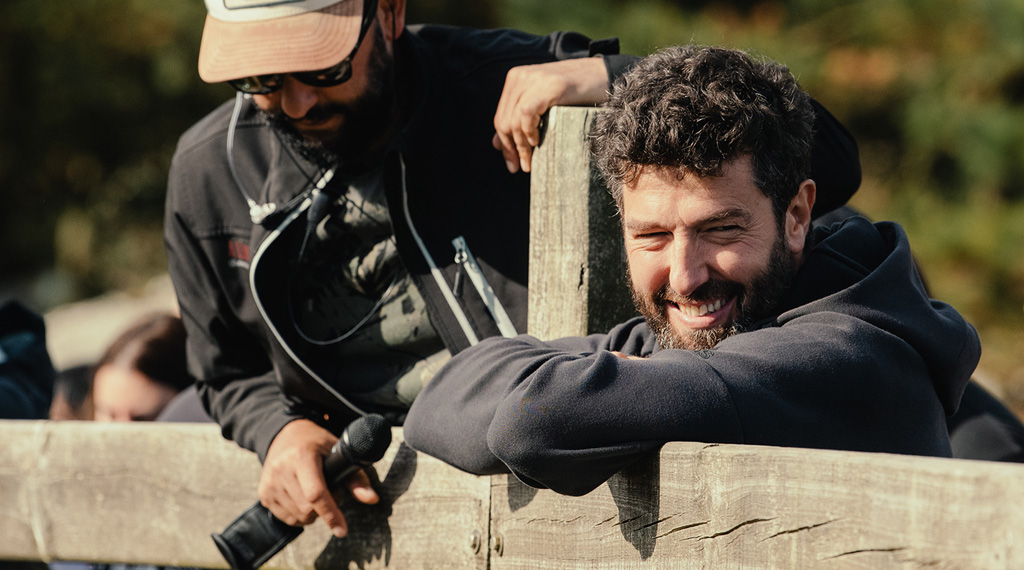

The crusade to maintain the IP of its formats, its resistance to growth to contribute to stability, the limiting impact of the Spain Audiovisual Hub on Spanish creativity and the new industrial approach to entrepreneurship originals of feature films serve as axes of a conversation in which Alfonso Blanco, general director of Portocabo ('Rapa', 'Hierro'), exposes all the news of a production company about to reach its 15th anniversary.
Hierro, Rapa, Brothers-in-law, Auga Seca, Vidago Palace, The children of the sun or the imminent Garbo o Weiss & Morales, despite their notable differences in format and genres, share guidelines in the treatment of characters, the relationship of the history with the environment and the verisimilitude of the plots. Compared to the usual Anglo-Saxon seal proposed by platforms or showrunners, the Galician production company is committed to structuring each product under the same identity.
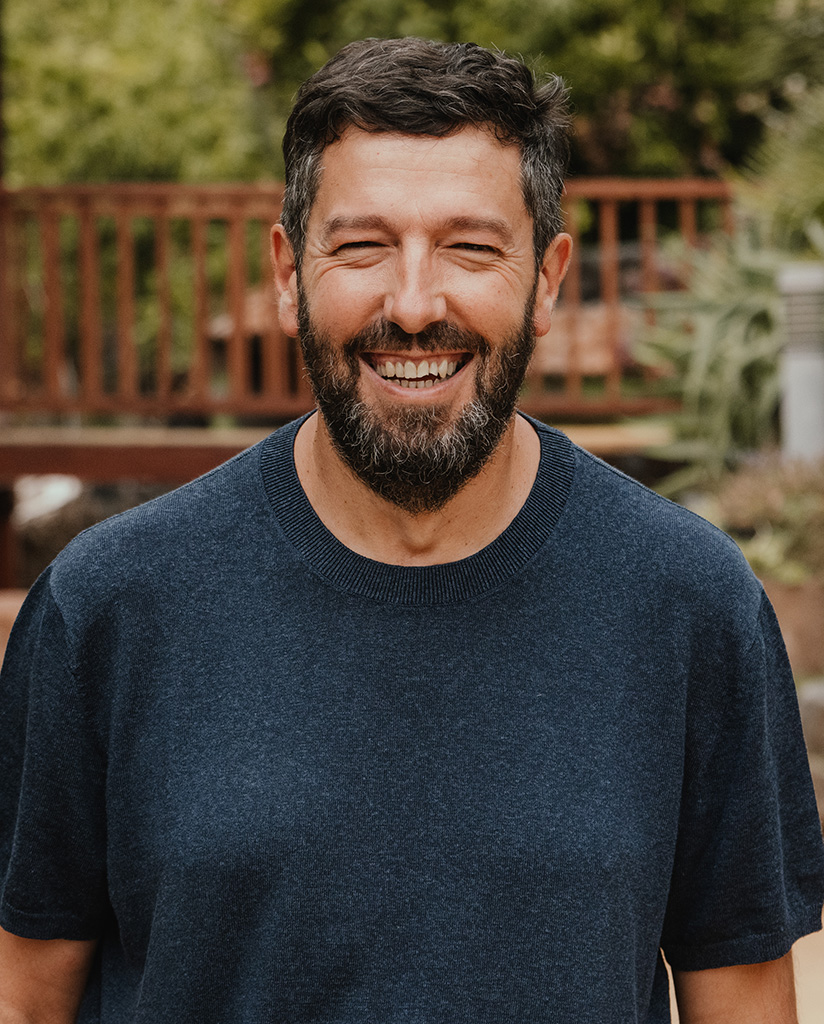 Since its beginnings in 2010, and after a first phase marked by local production close to Galician Television, Portocabo has found not only an audiovisual personality, but also an industrial one. Betting on making international co-productions and for maintaining the IP ownership In an industrial context marked largely by the unbreakable trends set by the major market players, the company achieves a calm stability establishing itself with a production of two large series per year. There are no plans to expand operations: the creative freedom and the stability of fixed costs in the face of a variable market are the foundational basis on which the future of business is decided. 13 workers that make up the permanent staff of the Galician company.
Alfonso Blanco, general director of Portocabo and president of the Galician Audiovisual Cluster, conveys a complete vision of the producer and expands on the industrial complexities of the audiovisual world, demanding a change in legislative focus on the market and assuming its position as outsider in the business model of the world of Spanish fiction.
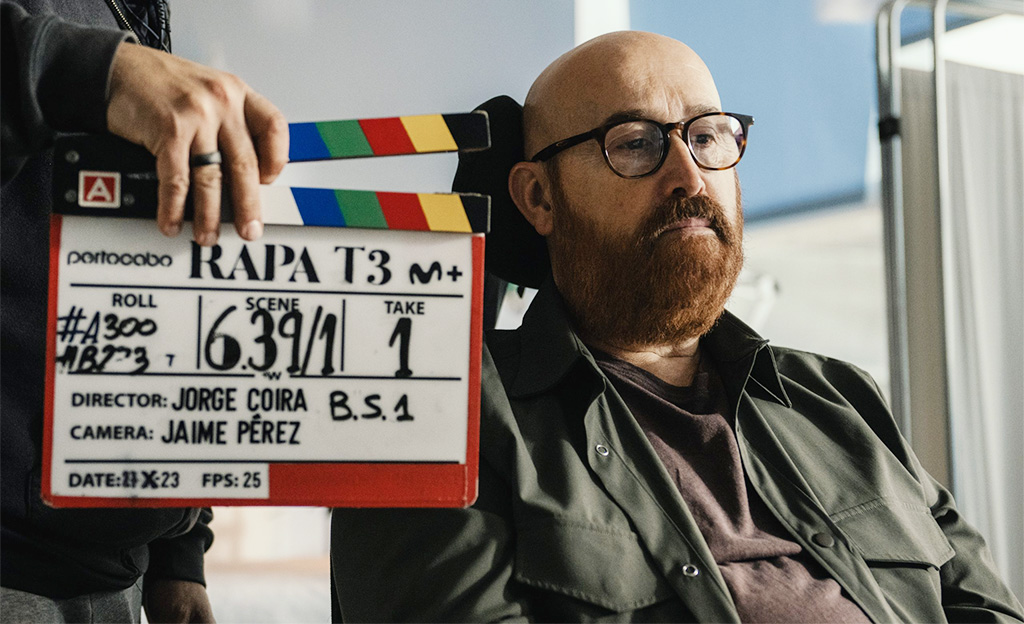
The refinement of boutique production
Portocabo has defined its financial and creative philosophy to get closer to the producer label boutique: one that is committed to creating careful and limited projects with an identifying seal. Since it consolidated itself on the state scene, the production company has remained faithful to its two annual series, with small complementary orders. There is no intention to change this way of operating: "We do not produce wild serials, nor do we seek to make large seasons or daily series. That is not our niche. We are always going to be a boutique production company with a small or medium size," explains Blanco.
“If I had 60 employees, you would have to feed the machine with many more series. Our main privilege, which I never thought I would have as a producer, is being able to choose the jobs”.
This approach, far from implying conformity with the market position, aspires to transform its annual initiatives creating better projects that offer greater circulation capacity and position in the international markets with major European co-productions and an exploration of american market. "This is the philosophy: to grow in impact, but not so much in volume. (...) We will continue making two series, but they could be enormous. It is something deliberate, sought-after and with which we are very happy," explains Blanco, who makes sure to stay with his feet on the ground and faithful to the identity of the audiovisual work itself. The success of Hierro exemplifies this approach: "It was an incredible success, but we had planned it for two seasons and we made two seasons. There was a kind of acclaim for a third, but we had not designed it that way, so we decided to be faithful to the content and avoid being blinded by success."
To Portocabo, “squeezing the golden goose is bread for today and hunger for tomorrow.” Aware that letting commercial opportunities slip away is not a common trend in an industry that seeks to achieve success that remains in the memory of viewers, Blanco explains that the company size It is key to his creative freedom: "If I had 60 employees, I would have to feed the machine with many more series. Our main privilege, which I never thought I would have as a producer, is to be able to choose the jobs. In recent years we have made the content that we really wanted creatively and that we were financially clear about."
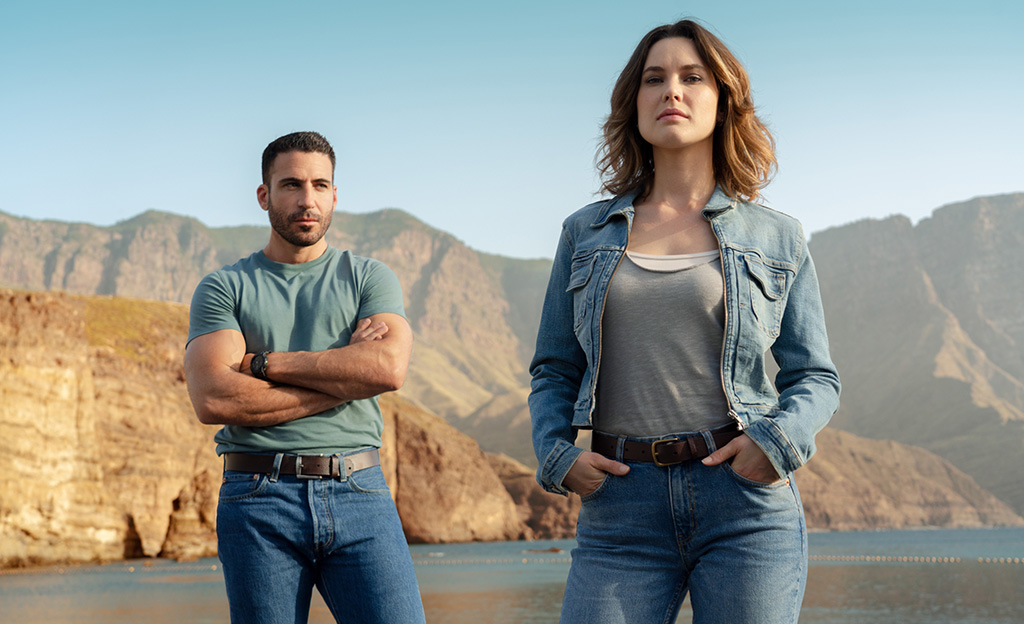
Building an identity
In order to achieve this leadership position in its operations, being able to choose at any time the most suitable projects To continue strengthening its identity, Portocabo has adopted a way of narrating which, for Blanco, has arisen in a “very natural” way. The general director of the company recognizes that they could not develop a thriller plot (“if they asked me to do it, I would recommend two or three companies that could do it great”); he rhythm, form and concept of the production company is another: "What matters is the space, how the actors interpret the characters and the verisimilitude. We create series that navigate between genres and it doesn't matter whether we have made a comedy, historical drama or thriller: the viewer can perceive truth in all of them."
This approach allows us to identify the projects of the Portocabo label, but in its beginnings it represented a headache when selling projects to television stations and platforms. In fact, Hierro, impulsada por Movistar Plus+ y creada por Pepe Coira, no encontró comprador hasta cuatro años después de que comenzara a ser presentada en diferentes reuniones: “No le gustaba a nadie. Nos decían que ya la habían visto 20 veces: “una jueza que va a un sitio, muere alguien, investiga, hay un antagonista…”. Sabíamos que el plot era ese, pero lo que proponíamos era una forma diferente de acercarnos a todo ello”.
“Hierro no gustaba a nadie. Nos decían que ya la habían visto 20 veces: “Una jueza que va a un sitio, muere alguien, investiga, hay un antagonista…”. Sabíamos que el plot era ese, pero lo que proponíamos era una forma diferente of acercarnos to all of this.”
“We were always bad at high concept", acknowledges Blanco, lamenting that the industry is easily carried away by striking premises. “And some little thing like that that gets me hooked?” It was one of the recurring questions from the executives at the meetings, to which the Portocabo team responded by highlighting the construction of the characters.
It took Portocabo "a long time" to gain its position in the market, but now it "takes its proposals out of its hands": "We have our line. Now we are recording a historical drama, which is the story of Garbo, which is neither a thriller nor a police format, but the aroma is the same. And we have the debt, although we have already done it with a couple of films, to apply this same thing to comedy: love for the characters and that the plot never eats up their verisimilitude."
Original Movies and IP Maintenance
The consolidated position of Portocabo It inevitably depends on an audiovisual industry that varies its bets and trends in the face of market variability. When just a few years ago the large platforms ruled the media ecosystem by retaining ownership of series and films, their complex economic situation has disrupted his plans and, with it, a large part of the state media ecosystem.
“Spain is the country with less capacity of retain the IP at all Europa. It's something cultural, but also legislative”.
Blanco identifies as one of the most pressing trends, which is going to have an “enormous multiplier effect”, the appetite for originals of movies of the platforms: “They have realized that this line can be very profitable, although it is not without controversy, because it is true that films can go directly to the platforms without going through theaters.” It is not something that particularly worries the person in charge of Portocabo: "As I am a TV person, I make an audiovisual product. Of course I like to make a film and have it released in theaters, but I am so disappointed if that does not happen and I also reach the viewer, which is what I want."
Another important issue is the ownership of the IP of series and movies. It is not trivial that the model of originals would resonate so well in our country, since Spain has always been the country with “the least capacity to preserve the IP of all of Europe.” In Blanco's words: "It is something cultural, but also legislative. There are countries, like France or England, that set the position of production agents. Here we do not have such favorable legislation for the industry." At least, for the industry, paradoxically, Spanish.
Spain Audiovisual Hub and 'Welcome, Mister Marshall'
According to Blanco, in Spain a path of legislation favorable to what he defines as “Welcome, Mister Marshall”, in reference to the classic by Luis García Berlanga. Just like Villar del Río was decked out for American diplomats, the Spanish industry does the same at the risk of limiting its own freedom and wealth: "We are favorable to those who come from outside and we call it Spain Audiovisual Hub. I'm not saying it's bad, it's wonderful. But it's a shame that we put so much effort into investing money and encouraging them to come to film here in Spain and we forget that more important than that, much more, is local creativity."
“If sediment and culture are generated, we obtain a multiplier effect in the industry,” explains the general director of Portocabo, inviting the industry to look beyond the immediacy of orders: "The plan offers jobs and money, which is not little, but it is just that. Legislatively, we favor international investments here much more than pampering local national productions that can travel. And it is not a question of more money, but of achieving more favorable legislation for those of us who intend to retain the IP."
“We are favorable for those who they come from outside and we call it Spain Audiovisual Hub. I'm not saying it's bad, it's wonderful. But it's a shame that we let us strive both in place money and encourage them to come to film here in Spain and let's forget that most important that that, much more, is the local creativity”.
Blanco's vision is not pessimistic. Celebrate the predisposition increasing number of platforms to transfer the IP to the producer and return to the classic windows model. But it is aware that a large part of Spanish production feels comfortable with the order model, and the most immediate industrial decisions will seek favor that model.
Portocabo's approach is different: "I think that making two good series and retaining IP, which allows you to make decisions and distribute in the market, is better than making four in which you have nothing and work only on commission. (...) If Portocabo is different, it is that we preserve the editorial line of the products we make, to a greater or lesser extent. We are the production company with the greatest ownership of series in Spain. That is my heritage. I am an owner or co-owner, and the channels and platforms are my partners, not my employers. It is a nuance very important.”
Towards legislative change: preaching in the desert
In this fight for the IP, Portocabo feels “not accompanied.” For Blanco, it is a “natural” issue: Spanish production was born and grew in a model of open television that, although they generated an economic boom, from their beginnings they had a “very lax legislation"and contrary to the European trend. "They have managed to make their sectors much more solid, because instead of accumulating volume of income and billing on platforms and chains, it has been distributed, even if it is in a smaller percentage, in the production companies," he explains.
“We are the only one film institute audiovisual of Europa what does not subsidize television. You can't be more years backwards to this.”
Given this context, and relying on European regulations relating to cultural industries, Blanco advocates legislate in this sense: "Don't expect a consensus. It's like raising the minimum wage. What will be better for the businessman in the future? If you don't legislate it, you can't expect there to be a percentage of ownership that is "gifted" to you by Telecinco or Antena 3 by divine grace."
Blanco's crusade does not involve imposition, aware that he "preaches in the desert" in a context in which "90% of production companies work to order." Its approach is to show, little by little, the benefits that a modification of legislation that puts the focus on production companies and creators; small revolutions which, in the same way, would bring great benefits to the chains and platforms.
“It seems incredible to me that the ICAA not only don't give help, but that their own regulations do not accommodate reality of the series. It's not that it is obsolete, it is that it is Jurassic”.
The person in charge of Portocabo exemplifies this reasoning in what he defines as a “historical debt”: that there is no aid from the ICAA for television. "We are the only audiovisual film institute in Europe that does not subsidize television. We cannot turn our backs on this for more years. And one thing would lead to another. If there are subsidies from the ICAA, only the producer will be able to present. Television networks may consider giving the producer 51% of the IP, having to pay 30% less in financing the series and making two series instead of one. And if it goes wrong, you would have less risk," explains Blanco, encouraging the industry to identify the great opportunities that lie in this approach.
There is work to do: “Cada vez hay más gente de acuerdo con el discurso. Aunque no se vea, el mercado de la televisión es más grande que el cine. Yo sé que la cuestión de las salas es muy importante, pero este es un temazo. Pero está costando. Y, aparte, me parece increíble que el ICAA no solo no dé ayudas, sino que sus propios reglamentos no den cabida a la realidad de las series. No es que esté obsoleto, es que está jurásico”.
A report by Sergio Julián Gómez
https://youtu.be/Pra5hJMht_g
Did you like this article?
Subscribe to our NEWSLETTER and you won't miss anything.
Related articles
 Pedralonga Estudios will manage Coruña Estudio Immersivo (CEI), the “largest virtual production set in Spain”
 The British production company Nevision opens its headquarters in Spain
 Alfonso Blanco (Portocabo), at the head of the Galician Audiovisual Cluster until 2026
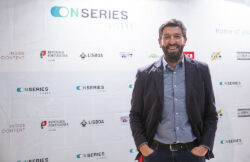 The Galician production company Portocabo reveals its Portuguese division: Portocabo Atlántico
 d&b Audiotechnik nombra Alfonso Luria Carrió nuevo director de ventas para España
 Mediaset España creates the commercial management of digital media with Alfonso Pérez Teijeiro at the helm
 Acorn TV: the new streaming platform that brings to Spain the largest selection of series from the United Kingdom, Ireland, Canada and Australia
 Orange Series: the first series channel in Spain in 4K
 Mediaset España incorporates Alfonso Pérez Teijeiro to the directorate of commercial marketing
 MIM Series announces the finalists for the awards for the best television series in Spain
 The production company Warm Springs uses Panasonic P2 HD cameras for its series
 Disney buys UTV, India's largest production company
 Murdoch arrives in Spain and Portugal with his production company Shine
 Pablo Tébar, screenwriter of ‘Tierra de Lobos’: “in fiction, in Spain, we are very conservative”