





6GStarLab: a small satellite that will function as the first European open 6G research laboratory
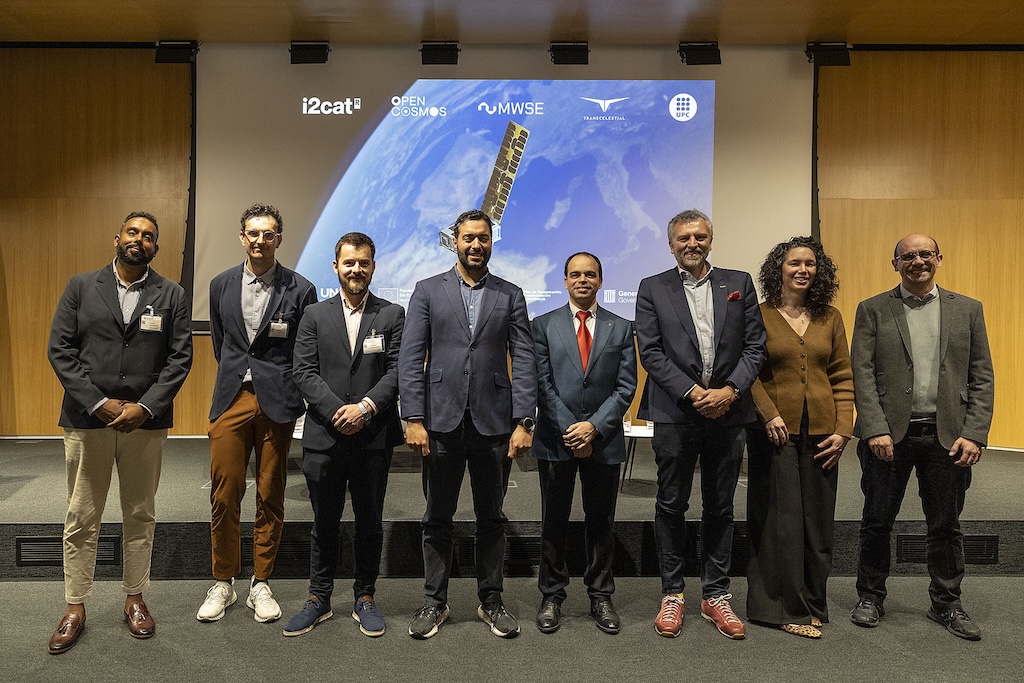
El centro de investigación i2CAT ha anunciado en el marco del Mobile World Congress Barcelona 2025 la puesta en marcha del primer laboratorio en órbita terrestre baja de Europa (LEO, por sus siglas en inglés) para la investigación y el desarrollo de redes no terrestres (NTN, por sus siglas en inglés).
Esta misión innovadora consistirá en un pequeño satélite, llamado 6GStarLab, que permitirá validar experimentalmente nuevas tecnologías de comunicación en un entorno real en el espacio y contribuirá a la estandarización de las NTN, esenciales para la evolución del 5G avanzado y el futuro 6G.
6GStarLab permitirá al personal investigador del centro catalán y a su ecosistema validar desarrollos tecnológicos en órbita, acelerando la investigación sobre redes satelitales y su integración con infraestructuras terrestres. De manera más específica, el laboratorio permitirá el estudio y la validación de técnicas de virtualización para la infraestructura satelitaria and the evaluación de frecuencias de comunicación 6G con dispositivos multifrecuencia. Además, el satélite incorporará un terminal óptico para acelerar las comunicaciones satélite-tierra en este dominio. 6GStarLab será un banco de pruebas abierto y flexible, que permitirá desplegar y ejecutar experimentos de manera remota, promoviendo la innovación en el ecosistema emergente que trabaja por la interconexión entre las redes terrestres y no terrestres.
En el acto de presentación celebrado durante el MWC 2025, el secretario de Telecomunicaciones y Transformación Digital de la Generalitat de Catalunya, Albert Tort, destacó que “con este laboratorio en órbita, Cataluña se consolida como un referente en investigación. Este proyecto no solo impulsa la innovación científica, sino que también genera oportunidades para el ecosistema tecnológico e industrial de nuestro país. Desde el Gobierno de Cataluña, continuaremos dando soporte a iniciativas como esta, que combinan investigación de vanguardia, colaboración público-privada e impacto real en la sociedad”.
Por su parte, el director de i2CAT, Sergi Figuerola, stated that "6GStarLab represents a very relevant milestone for research in non-terrestrial networks at the European level since it provides a real infrastructure in space that will allow the validation of part of the key 6G technologies. This open laboratory, financed with NextGeneration funds, will mark a before and after in our environment in the research of satellite communications and its integration with terrestrial networks."
i2CAT plans to strengthen research in the fields of artificial intelligence, cybersecurity and the extension of connectivity through non-terrestrial networks, as well as the publication of research results for the scientific community. In addition, the 6GStarLab infrastructure will be available to the scientific and technological community interested in exploring and experimenting with the communications of the future, promoting the development of innovative solutions in different sectors and following the roadmap that the European Space Agency (ESA) is drawing up in the field of 6G.
Manufacture and launch of the satellite
i2CAT has awarded a public contract for a total value of 1.65 million euros to the company Open Cosmos for the design, manufacturing, integration, launch and commissioning of the 6GStarLab satellite. At the same time, the satellite will incorporate payloads designed by i2CAT and the Catalan company Microwave Sensors and Electronics (MWSE), desarrolladas a través del 6GSatNet, así como un terminal láser de comunicación óptica espacio-tierra y la correspondiente estación terrestre de la empresa Transcelestial, con sede en Singapur. Finalmente, el conjunto de antenas para las comunicaciones de radiofrecuencia serán desarrolladas por grupo del NanoSat Lab de la Universitat Politècnica de Catalunya (UPC). El lanzamiento del satélite está previsto para octubre de este año y su puesta en funcionamiento con fines de investigación para principios de 2026.
Prior to launch, the satellite will undergo rigorous testing to ensure its correct operation in orbit. In addition, Open Cosmos will provide a representative engineering model of the satellite to i2CAT to validate laboratory experiments before its deployment in orbit.
"We are very proud to participate in the development of the 6GStarLab satellite, a project that will place Catalonia and Europe at the forefront of space communications. This project is a perfect example of how cooperation between companies, research centers and institutions can accelerate the development of 6G, placing the space segment at the center of advanced and secure communications for Earth," he said. Rafael Jordan, CEO of Open Cosmos.
The launch of this open laboratory in orbit has been possible thanks to the financing obtained by i2CAT in the call for the infrastructure and scientific-technical equipment subprogram aimed at universities and research centers, promoted by the Ministry for Digital Transformation and Public Service. This subprogram is part of the Universalization of Digital Infrastructures for Cohesion (UNICO) 6G R&D program, promoted by the Government of Spain within the Recovery, Transformation and Resilience Plan and financed with NextGenerationEU funds, with the aim of consolidating Spanish leadership in advanced 5G and 6G research. In total, i2CAT has obtained 10 million euros from the infrastructure and scientific-technical equipment subprogram for the deployment of several laboratories.
Did you like this article?
Subscribe to our NEWSLETTER and you won't miss anything.
Related articles
 MasOrange, Telefónica, Vodafone and i2CAT create the first multi-operator Open Gateway laboratory in Europe
 Canal Sur LAB, RTVA research laboratory, is born
 Eutelsat improves the free-to-air satellite reception experience on televisions connected with Sat.tv Connect
 Hispasat commemorates the 30th anniversary of the launch of its first satellite
 Viasat acquires the European satellite KA-SAT, strengthening its position in the telecommunications sector
 Successful conclusion of the European 5G-Crosshaul research project
 Wanda Film Holding and Christie create the Cinema Technology Center of Excellence (CTCE) research and development laboratory
 Telefónica chooses Segovia and Talavera de la Reina as a laboratory to test 5G
 For free-to-air television as a universal, accessible and free service
 EVS solutions make the first US Open possible in 4K
 Valencia hosts the first international animation laboratory 'Bridging The Gap'
 VSN participates in the European research project EUMSSI
 Telefónica I+D celebrates 25 years as a benchmark in the research sector
 China begins building the first Bolivian satellite