





Color for life and death: grading of 'The Room Next Door' (Pedro Almodóvar)
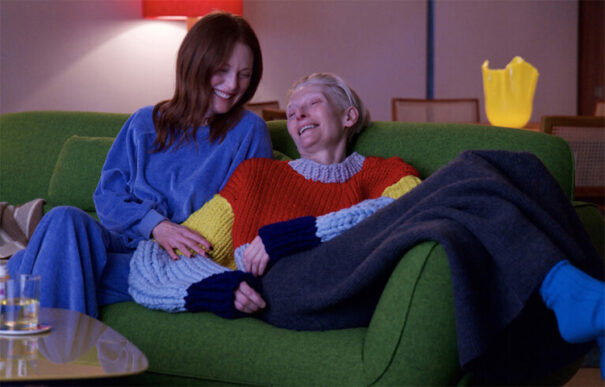

Chema Alba, director of creative services and senior colorist at Deluxe Spain, delves into his work on 'The Room Next Door', Pedro Almodóvar's first feature film in English whose grading has been done with DaVinci Resolve (Blackmagic Design).
After testing the waters of the always complex leap to filmmaking in English with the shorts The human voice (2020) y strange way of life (2023), Pedro Almodóvar, once again with the help of He Desire, he felt prepared to give life to The next room (2024). The work, vitalist within its dramatic context, has earned him global recognition, such as the Golden Lion in it Venice Film Festival and two Goyas for Best Adapted Screenplay, Best Photography and Best Soundtrack.
The film has been the culmination of a growing concern of the filmmaker from La Mancha, who in 2022 backed down on the realization of Manual for cleaning women and in 2011, in statements to The Daily Telegraph, admitted “feeling older” to adapt to the usual dynamics hollywoodienses in which the director “is a part of the team, not the main creator.” “For me, filming in English was almost like entering a new genre, but with this film I have lost all fear,” he declared to Elsa Fernández-Santos (El País) at the end of August of last year, giving an account of a cycle change Who knows if it will materialize in the short term in new works in the Anglo-Saxon language.
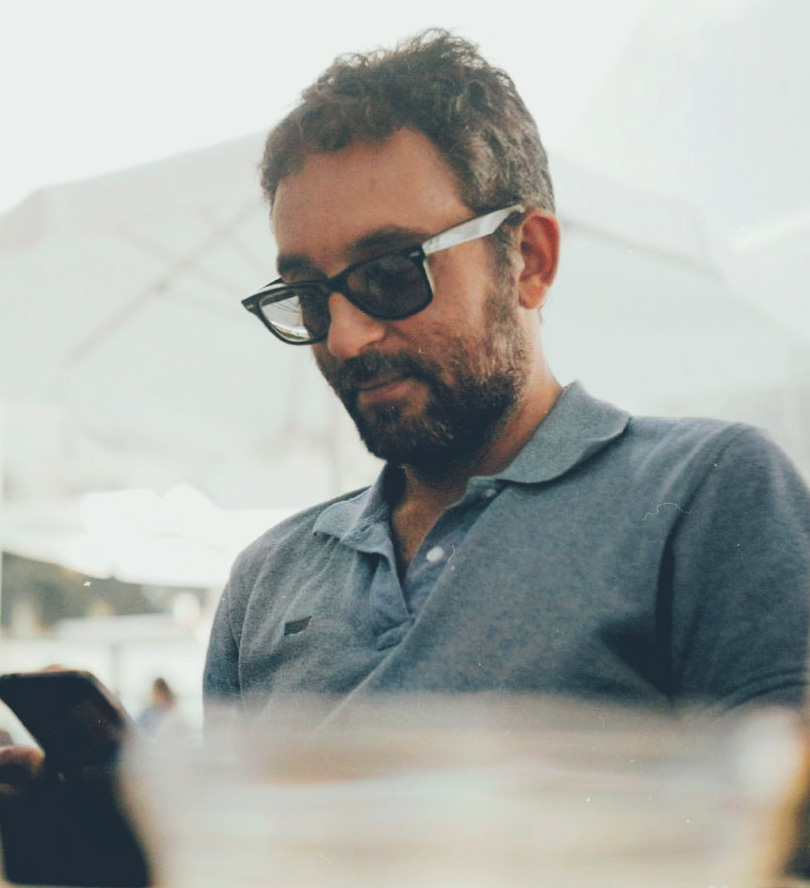
Chema Alba (Deluxe Spain)
To shape this feature film, Almodóvar has once again trusted Chema Alba (Deluxe Spain) for color correction work, who has been accompanying him since The skin I live in (2011) participating in The passing lovers (2013), Juliet (2016), pain and glory (2019), Parallel Mothers (2021) and the short film The human voice (2020). An expert in his work, since he was in charge of the color restoration of the vast majority of the director's feature films between 2015 and 2017, he has collaborated with a debutant in the direction of photography on Almodóvar's land: Eduard Grau, from Barcelona with an extensive career in the United States.
The duo of Alba and Grau, always under the tutelage of a creator known for his creative and artistic control At all levels, it has given shape to a film whose color treatment respects Almodóvar's work, but is differentiated by its nature as a “first feature film in English.” The director of creative services and senior colorist at Deluxe Spain expands on his relationship with the director, analyzes the color treatment of the work and explains the technical solutions that have helped The next room to mark a before and after in the filmmaker's work.
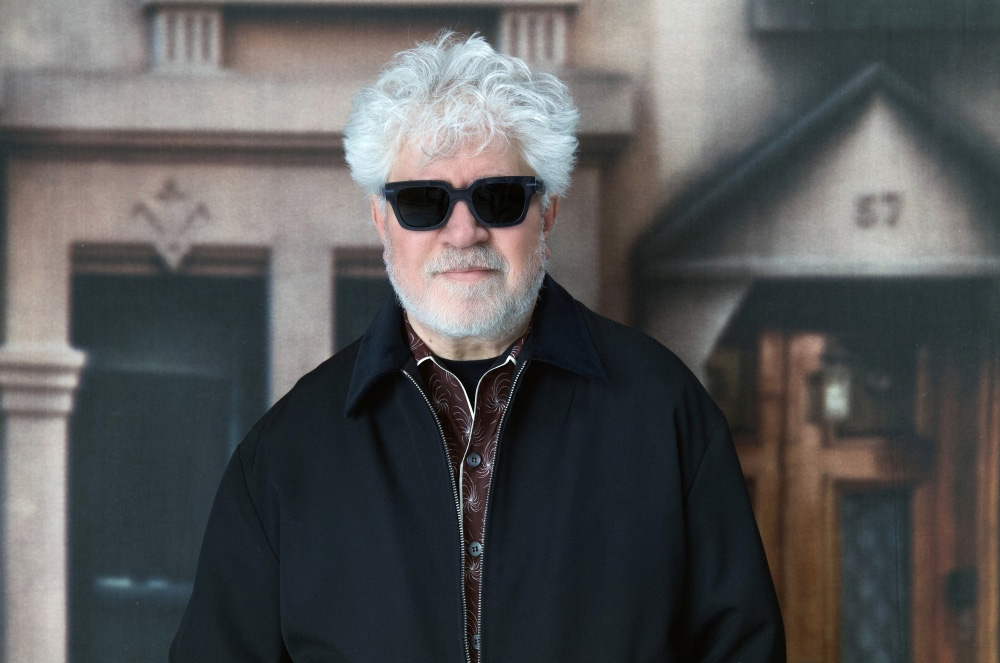
The relationship with Pedro Almodóvar
Chema Alba began his collaboration with José Luis Alcaine in 2007. Just three years later, the director of photography was appointed head of The skin I live in, a job that the director of creative services at Deluxe Spain considers that, at that time, “It was a little big for him.” The grader had not participated in a project of such dimensions, but he acknowledges that from the first moment he felt “very comfortable” working with El Deseo: "It has been a very collaborative process and I have always felt very listened to. I never thought we would have such a long professional relationship."
“It has been a very collaborative and I have always felt very heard. I never thought we would have one professional relationship "so long."
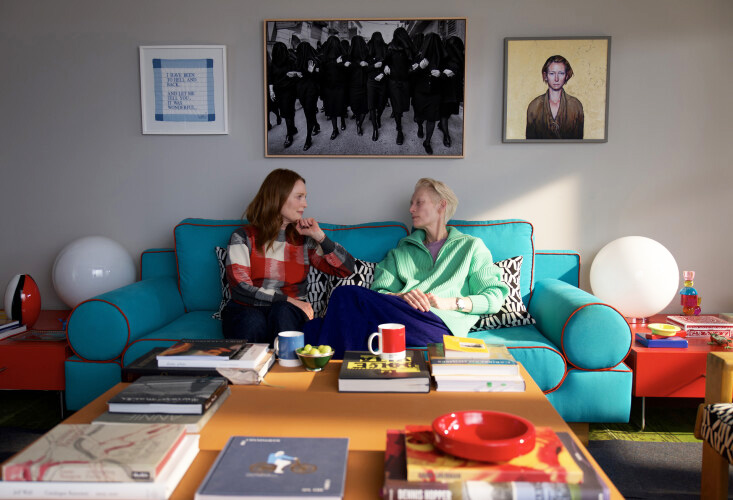
For Alba, the color It is the identifying element of Pedro Almodóvar's cinema. Therefore, from the first moment he was clear that his work would be essential to make the creative vision of the director. In his own words: “Being a colorist for a director who is internationally recognized for how he uses color, how it is part of the narrative and how it relates to the characters, I take it with great responsibility.”
However, far from what it might seem, the colorist considers that Almodóvar's films are among the simpler projects those he faces in his daily life, given that the creative approach is taken beforehand: "Pedro has already made the decisions and you accompany him to get to that place. Dress an actress or choose a part of the decoration of a house with some intentions." It is at that point that the grader must “contribute to fidelity”: “You don't create a color from scratch or generate something in post-production. In Pedro's cinema everything makes sense and you can ask him. I really like working with him, because he is very descriptive about why he has made a decision.”
Pedro's American film
The debut of Eduard Grau At the head of photography direction with Pedro Almodóvar he has greatly influenced the creative work in the treatment of color. To work in the most efficient way, Alba and Grau kept many previous conversations to find an approach in photography that could be extended efficient and natural to the post-production process, always under the filmmaker's criteria.
“Grau was analyzing case by case, considering why was it taken certain decision and, in the process, looking for arguments to go building your own image”.
In a natural way, they came to a same conclusion: "We both agreed that we were going to make a Pedro Almodóvar film, but also Pedro's first American film. We played with that phrase all the time. We are going to make it Almdóvar, but trying to give it a twist," explains Alba, who was based on an important “research” work about the creator's work by analyzing his previous work and the restorations he made of his filmography.
Conceptual agreements were followed by shared technical concepts. Grau began a process to understand what kind of lenses They were used by Almodóvar and his photography team in each decade. The format scope, las lentes anamórficas… De esta forma, teniendo en cuenta que en The next room existen varias escenas con muchos interiores de hospitales y camas, por ejemplo, se buscaron equivalentes en otras películas, como Hable con ella: “Grau fue analizando caso a caso, planteándose por qué se tomó determinada decisión y, en el proceso, buscando argumentos para ir construyendo su propia imagen”.
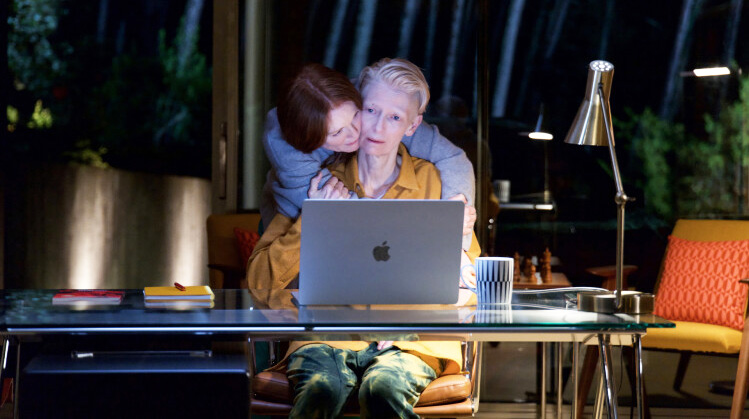
El color en The next room
The next room trata de dos amigas que se reencuentran décadas después de que una de ellas fuera diagnosticada con una enfermedad terminal. Esta circunstancia no impide a Almodóvar crear una película que, en palabras de Alba, es optimistic: “It's a film about life and how you want to resolve it at a time when you can't prolong it much longer.”
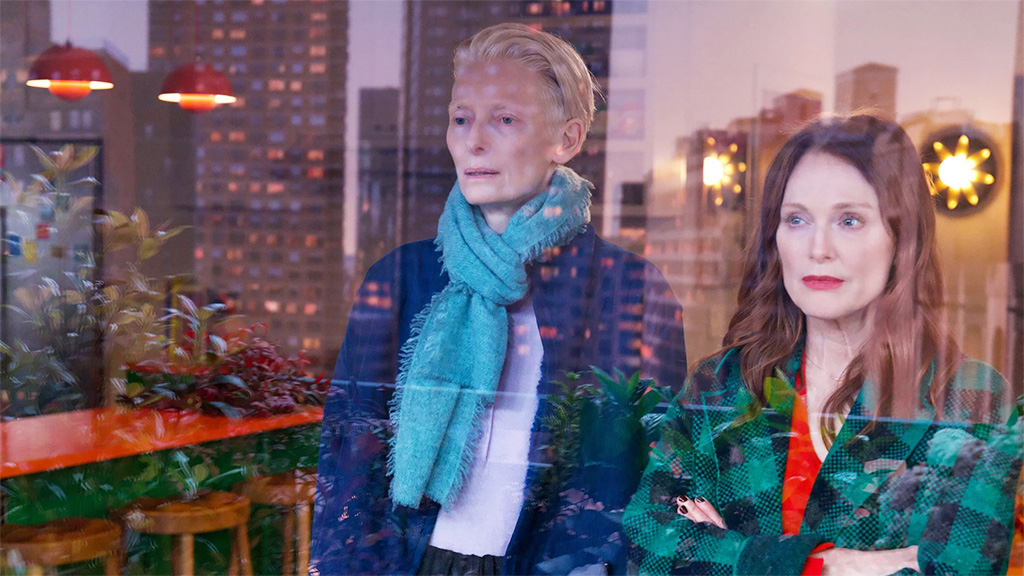
“Only the plans of Julianne Moore listening, any of them, to stopped frame, son precious”.
In this context it is reproduce contradictions that are resolved without disregarding the aesthetic resources of Almodóvar's imagination: "In his films the women always come out absolutely perfect. In this case it had to be that way, but the illness also had to be noticeable," Alba explains, referring to a scene in which the character played by Tilda Swinton is makeup in a critical moment of the feature film: "That scene couldn't have more colors or be more beautiful. There are yellows, she paints her lips red, the background is green... That moment defines a life, not what will happen next."
Another key was to maintain the aesthetics of the American painter Edward Hopper in different scenes, which comes to compose some frames of great plastic impact. “It seems to me that only the shots of Julianne Moore listening, any of them, in still frame, are beautiful,” adds Alba.
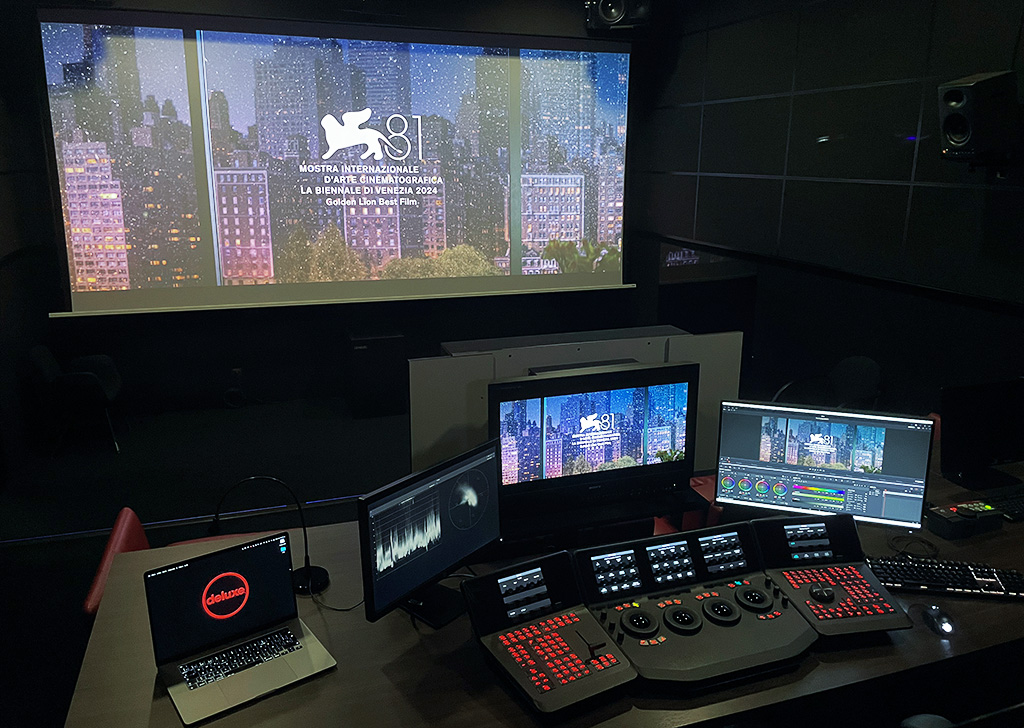
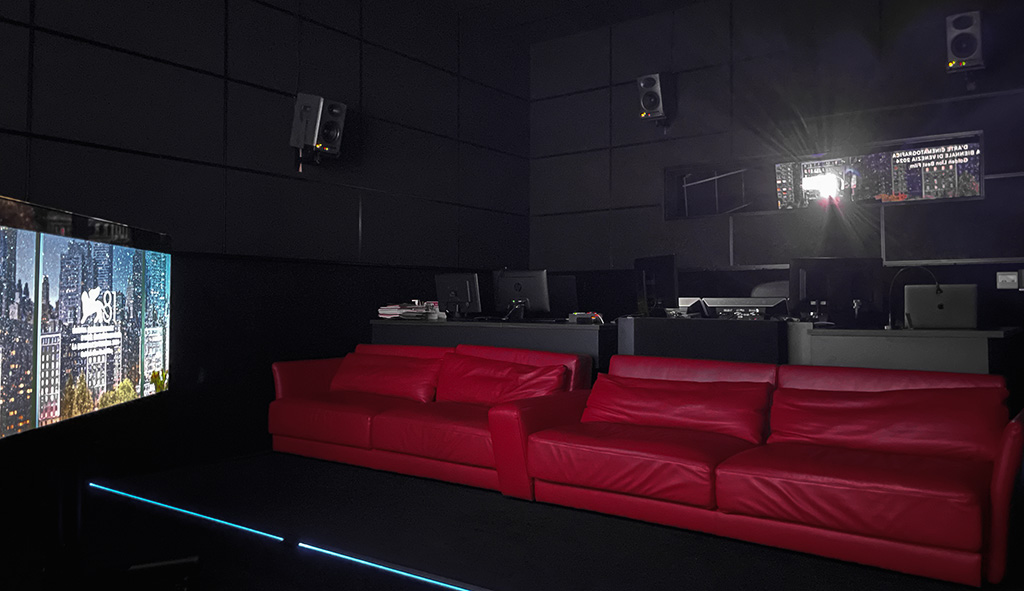
Technique and sensitivity
To address the grading process, Chema Alba has once again turned to software DaVinci Resolve of Blackmagic Design, a tool with which he has been working for more than a decade: “With DaVinci you can only worry about the creative and artistic part, since the technique is solved very easily.” This perspective is very important when dealing with the cinema of Pedro Almodóvar, given that this color accuracy es fundamental para hacer realidad la visión del autor: “El matiz de un color se puede marcar de una manera muy sensible. Almodóvar te lo dice: no sabe explicarte técnica o matemáticamente lo que quiere, pero sí te describe con emociones cómo le gustaría que fueran los colores. Que nosotros, los coloristas, podamos traducir esa emoción rápidamente y con precisión dice mucho de la herramienta”.
 Utilizando el DaVinci Resolve Advanced Panel, Alba ha podido resolver de una forma ágil los diferentes retos que iba trayendo la producción. Si bien las rotoscopias, enmascaraciones o cambios de color fueron sencillos por lo estático de los planos, se dieron otras escenas que obligaron a trabajar la luz en profundidad: “En The next room There are sequences with curtains, a fabric behind a 2D window to which we can add depth. To do this, we use the tool Depth Map from DaVinci, which gives us all the precision we can ask for to make masks, looks or manage the light that reaches the eyes.”
In this project, which lasted three weeks, always leaving aside all previous conversations, Alba was the main grader. However, taking advantage of the collaborative capabilities of the tool, was able to work in parallel with other professionals for processes such as effects shots or deliveries: "DaVinci is a tool that centralizes many processes. In this particular project I am the one who sat down with the director of photography, but in other films we can share this work."
AI and the progress of grading tools
When questioned about the evolution of the grading tools and process, Alba inevitably directs his gaze towards the IA. The Deluxe Spain grader defines itself as “very little catastrophic” in this area, considering it a “very powerful” tool that will be progressively integrated into the day-to-day life of post-production services, providing efficiency and agility: "Many integrations will occur if a specific shot is missing or if you want, instead of deleting an object, you can modify the action of a character for a few frames. It is possible that these generative tools will arrive in the medium term."
“We are going to have a intervention capacity much higher [with AI]. And the more improveWe'll see what we can come up with. narratively, creatively and artistically to get a biggest match to the image.”
Imminently, Alba expects the evolution of tools such as Relight of DaVinci Resolve, which has “infinite functionality” if developed with the perspective of artificial intelligence. "Relight separates each element that the frame contains so that you can modify it later. This gives great creative possibilities for cinematographers," he says.
It is very possible that, if the collaboration between Alba and Almodóvar extends, we will find progressively more and more color elements that have been fine-tuned using artificial intelligence processes. It is not a paradigm shift, but a evolution of current tools. La visión autoral es el corazón de todo producto creativo, y la técnica, usada adecuadamente, el camino más directo a ella: “Vamos a tener una capacidad de intervención mucho mayor. Y cuanto más mejore, veremos qué se nos ocurre narrativa, creativa y artísticamente para sacarle un mayor partido a la imagen”.
A report by Sergio Julián Gómez
https://youtu.be/FLHSOFsZICk
Did you like this article?
Subscribe to our NEWSLETTER and you won't miss anything.
Related articles
 Pedro Almodóvar begins filming 'Bitter Christmas'
 'Pedro x Javis': Movistar Plus+ pays tribute to Pedro Almodóvar under the magnifying glass of Javier Calvo and Javier Ambrossi
 Alberto Iglesias continues to expand his legend with his 12th Goya Award for Best Soundtrack for 'The Room Next Door'
 Almodóvar's film photography, recognized for the first time at the Goya through the work of Edu Grau in 'The Room Next Door'
 'The Room Next Door', 'They Shot the Pianist' and 'The Sultana's Dream', nominated for Best European Film
 DaVinci Resolve, chosen for grading of 'Reality' (HBO Max)
 SensaCine records its last interview with Pedro Almodóvar with Blackmagic cameras
 Alberto Iglesias, Goya for best original music: “Pedro Almodóvar's cinema has made me freer”
 Pigment switches to DaVinci Resolve for HDR and IMF grading
 The Contraluz room is born that will offer grading services and advice on color management and workflows
 Pedro Almodóvar, Doctor Honoris Causa from the University of Oxford
 MPC supports the use of the Christie CP2210 in color grading
 The science of color: color grading with Jaime Climent
 'The Skin I Live In', by Pedro Almodóvar, enters post-production