





More cinemas but fewer seats according to the latest AIMC census
AIMC, la Asociación para la Investigación de Medios de Comunicación, elabora un nuevo censo de salas de cine, en el que se constata un aumento en el número de locales de cine (el más alto desde 2011), mientras que el número de salas se mantiene estable y el de butacas desciende ligeramente.
Para su realización, AIMC ha contado con la colaboración de los dos mayores exclusivistas y distribuidores publicitarios del medio cine, como son 014 DS y Moviedis (integración de Movierecord y Discine). Este estudio, que proporciona una de las visiones más detalladas del panorama de la exhibición cinematográfica en España, toma como base el censo anterior, del 1 de abril de 2024, y ha sido completado mediante un importante trabajo de investigación en torno a las unidades básicas de análisis, que son locales de exhibición, pantallas/salas y butacas, estableciéndose como referencia la situación en España a 1 de mayo de 2025.
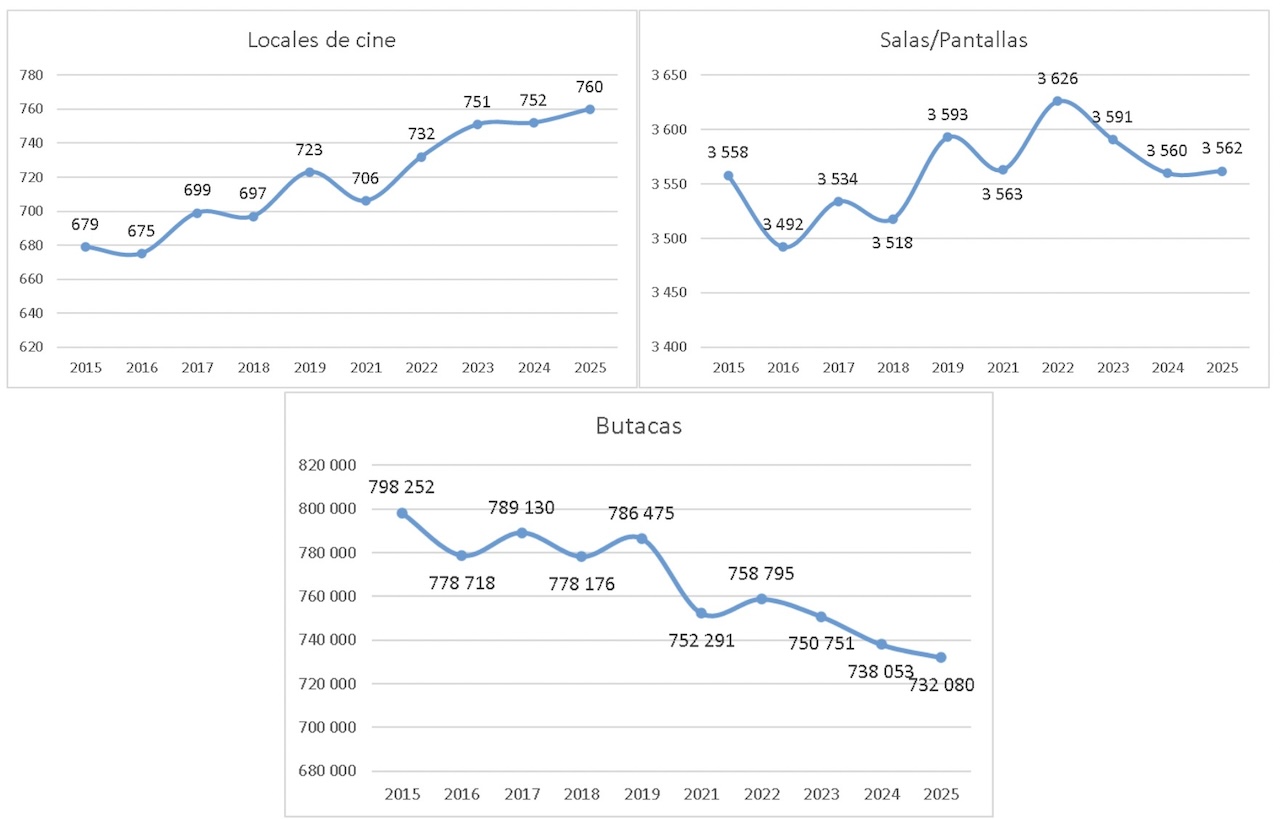
El nuevo Censo de AIMC muestra que el número de locales de exhibición de cine en España ha aumentado un 1,1% respecto al año anterior, pasando de 752 a 760, alcanzando un nivel que no se veía desde 2011. Por otra parte, el número de salas/pantallas se sitúa en 3.562, prácticamente las mismas que en el anterior censo (+2 pantallas, con un aumento del +0,1%), con 71 altas y 69 bajas. La cifra es similar en los últimos años y se puede observar cómo desde 2019 su número se ha estabilizado, con pequeños altibajos, en torno a las 3.600 unidades.
En lo que respecta al número butacas, la cifra se fija en 732.080, que supone un descenso de 5.973 (-0,8%) respecto al estudio de 2024. Si lo comparamos con el dato registrado en 2015, el descenso acumulado es algo mayor, con la desaparición de 66.172 butacas (-8,3%) en los últimos 10 años.
Cines con menos pantallas
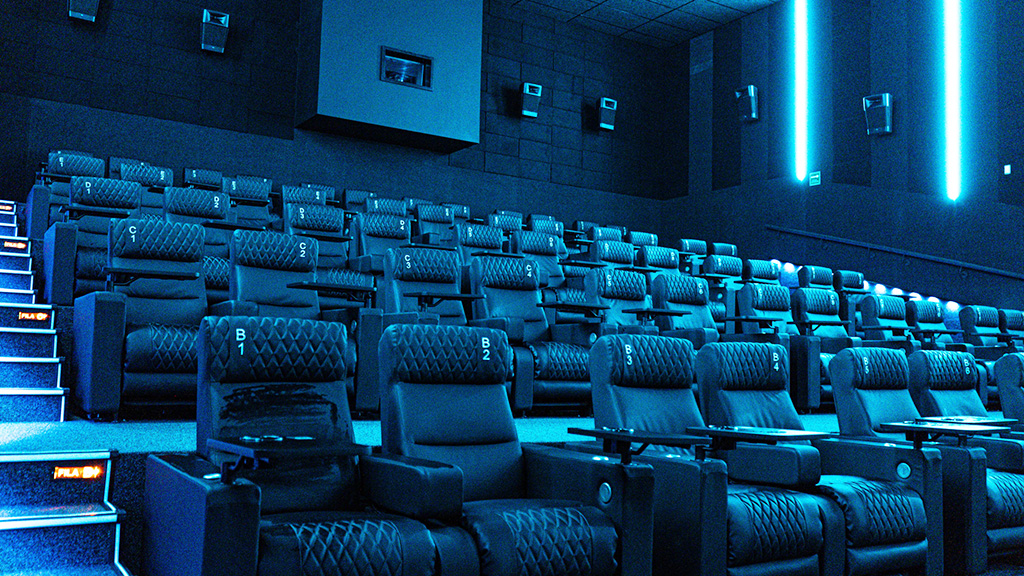
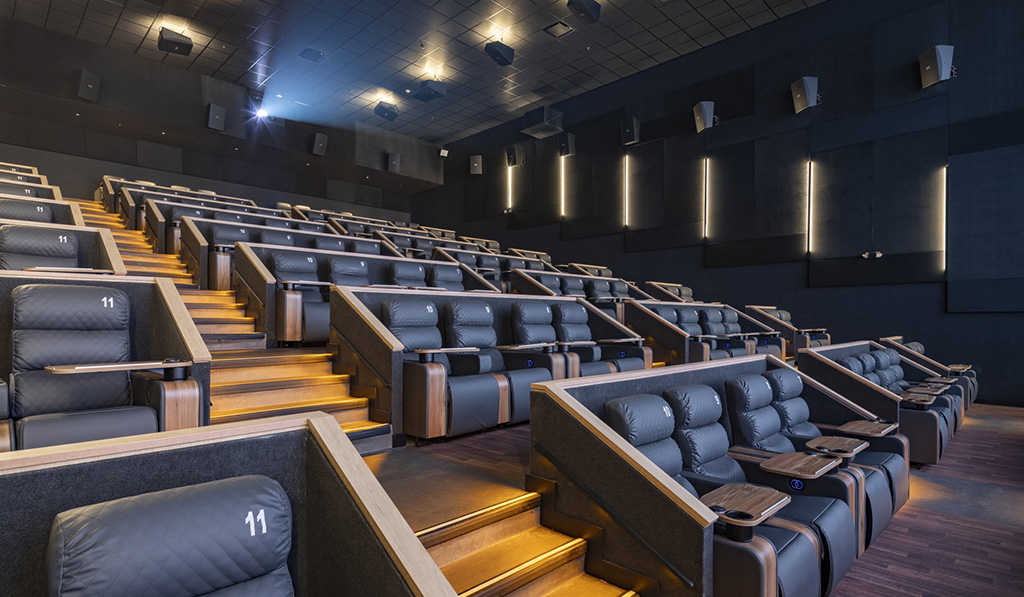
En los últimos años, se aprecia una ligera pero constante tendencia hacia la existencia de cines con menos pantallas y, sobre todo, que cuentan cada vez con menos butacas en cada sala, aunque en contrapartida, los asientos suelen ser más grandes y confortables. En el caso extremo de la comodidad, existe alguna sala donde incluso una parte de las tradicionales butacas han sido directamente reemplazadas por camas.
The media de butacas por sala/pantalla es de 206 unidades (dos menos que en 2024 y 19 menos que en 2014) y cada local tiene en promedio 4,7 salas (seis décimas menos que en 2014). En consecuencia, el promedio del total de butacas por local de cine (incluyendo todas las salas) también ha descendido, desde las 1.203 butacas de 2014 a las 970 actuales. En el caso de los cines de verano, el aforo por pantalla suele ser mayor, con 537 butacas de media frente a las 197 de los convencionales. Sin embargo, el promedio de salas por local en este tipo de cines es inferior: 1,1 salas frente a las 5,2 de los convencionales.
Un 51,2% de los locales (es decir, un total de 389), cuentan con más de una sala/pantalla, apreciándose descensos de 0,7 puntos en comparación con 2024 y de 8,7 puntos respecto a 2014. Otro dato relevante es que prácticamente la mitad de las salas/pantallas (48,4%) se encuentran en locales de 10 o más salas, y una de cada cuatro (26,0%) en locales de 7 a 9 pantallas.
Perfil poblacional
El Censo de Salas de Cine de AIMC muestra también un incremento paulatino en los últimos años de la población que reside en municipios con cine. Prácticamente dos de cada tres españoles (63,8%, +2,6 puntos en relación con 2016) reside en una localidad que cuenta con, al menos, un cine. Asimismo, el número de municipios con cine también se ha visto incrementado hasta los 496 (5 más que en 2024 y 59 más que en 2016), lo que supone un 6,1% respecto al total. Esto ha hecho que tanto el número de municipios con cine, como la población que reside en ellos, alcancen máximos desde 2006. En promedio, existen aproximadamente 1,5 locales y 7 salas por municipio con cine.
Por otro lado, el 69,4% de las salas (2.471) se localizan en poblaciones de más de 50.000 habitantes. Además, el 94,7% de las personas que viven en estos municipios tienen cine en su localidad, frente a los individuos de poblaciones menores de 50.000 habitantes, donde sólo el 28,5% dispone de él.
Las comunidades con mayor número de salas son Andalucía (647), Cataluña (576) y Madrid (544), y juntas aglutinan prácticamente la mitad de las existentes en España. El ranking por provincias está liderado por Madrid (544 salas), seguida de Barcelona (379), Valencia (216), Alicante (165), Sevilla (151), Málaga (132), Murcia (126) y Cádiz (118).
En España, existen aproximadamente 73 salas de cine por cada millón de habitantes, una menos que en la anterior entrega del Censo y 3 inferior a la cifra de hace diez años. Las comunidades con mayor densidad de salas, con 78 o más por millón de habitantes, son: La Rioja (114), País Vasco (89), Murcia (80), Comunidad Valenciana (78) y Madrid (78). En cuanto a las provincias con mayor densidad de salas son, por orden, La Rioja, Salamanca, Tarragona, Soria, Guipúzcoa y Ciudad Real, que igualan o superan las 95 salas por millón de habitantes. En el lado opuesto, se encuentran las ciudades autónomas de Ceuta y Melilla (47) y las comunidades de Canarias (56), Extremadura (62), Asturias (64) y Galicia (65). Por otro lado, las provincias que cuentan con una menor concentración de salas por millón de habitantes son Melilla, Zamora, Teruel, Segovia, Ourense y Toledo, donde ninguna supera las 50.
Comparando con otros países de nuestro entorno y tomando como referencia el año 2024, España, con sus 74 salas por millón de habitantes, se sitúa en la parte alta de la tabla, por encima de países como Reino Unido (66), Italia (60) o Alemania (58). España sólo es superada por Irlanda (104), Francia (93), que se caracteriza por la importancia de su cine, y los países escandinavos: Suecia (90), Noruega (86), Dinamarca (83) e Islandia (81).
Did you like this article?
Subscribe to our NEWSLETTER and you won't miss anything.
Related articles
 More cinemas, but fewer seats: this is the latest Cinema Theater Census (AIMC)
 Pay TV in 2026: 64% more subscribers, but fewer users on leading platforms
 Miguel Ángel Fontán, new general director of AIMC
 5G will transform content production according to ABI Research
 AIMC suspends the start of the second wave of the EGM
 El consumo de contenidos televisivos, según el EGM, ya no es exclusivo del televisor convencional
 Las pantallas virtuales podrían sustituir a televisores y cines en menos de un año
 David Shing, at MABS2017: “you have to concentrate on the story and less on how to tell it: more story and less telling”
 UHD sí… pero sin prisas
 El cine español recauda más pero rueda menos
 The hyperpersonalization of content, a future trend according to Irdeto
 ‘Melbourne’ y ‘Life Feels Good’ se alzan ambas con 2 ‘butacas’ en el FICX52
 Informe sectorial de la CMT: seguimos en rojo… pero menos
 Television, according to a study by Ocendi, is little liked by young people