





The San Sebastián Festival will award its Donostia Award to producer Esther García
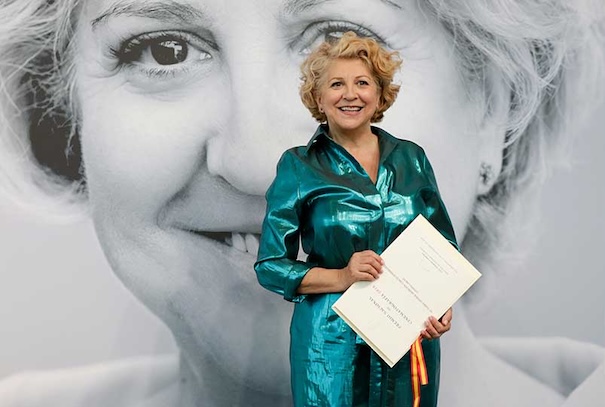
Justo cuando se cumplen cuatro décadas de la creación de The Desire, de la que es productora, Esther García será reconocida con el premio Donostia en la 73ª edición del Festival Internacional de Cine de San Sebastián.
Figura clave en la internacionalización del cine español y latinoamericano, Esther García (Cedillo de la Torre, Segovia, 1956) ha trabajado en más de un centenar de producciones. En 1986 se enroló en la productora El Deseo, creada un año antes por los hermanos Pedro y Agustín Almodóvar, pero antes había participado como secretaria, ayudante o jefa de producción en películas como Pim, pam, pum… ¡Fuego! (Pedro Olea, 1975), que compitió en la Sección Oficial de San Sebastián; Siete chicas peligrosas (Pedro Lazaga, 1979), Sé infiel y no mires con quién (Fernando Trueba, 1985), El año de las luces (Fernando Trueba, 1986), La vida alegre (Fernando Colomo, 1987) o El juego más divertido (Emilio Martínez Lázaro, 1988). También colaboró en series como Curro Jiménez, que contó con directores como Mario Camus, Pilar Miró o los hermanos Romero Marchent, y Los pazos de Ulloa (Gonzalo Suárez), además de en gran parte de la obra de Mariano Ozores.
Pero a partir de su primera colaboración con Pedro Almodóvar en la película Matador (1986) ha sido una pieza fundamental en todos los proyectos posteriores del director manchego, que en la pasada edición del Festival de San Sebastián recibió también el Premio Donostia. Su nombre aparece asociado al de los Almodóvar en películas como La ley del deseo (1987), que dio nombre a la productora, o Mujeres al borde de un ataque de nervios (1988), que optó al Oscar a la mejor película extranjera; un galardón que logró una década después con Todo sobre mi madre (1999). Además de La flor de mi secreto (1995), proyectada en la Sección Oficial de San Sebastián fuera de concurso, otros títulos en común son Hable con ella (2002), que brindó a Pedro Almodóvar el Oscar al mejor guion original; La mala educación (2004), que inauguró Cannes; y Volver (2006), que consiguió en el festival galo los premios al mejor guion y a la mejor interpretación femenina para todo el reparto antes de conseguir cerca de un centenar de galardones, entre ellos el FIPRESCI en San Sebastián.
Regresaron a Cannes con Los abrazos rotos (2009), La piel que habito (2011), Juliet (2016) y Dolor y gloria (2019), con la que Antonio Banderas conquistó el Premio al mejor actor. Penélope Cruz ganó el galardón a la mejor actriz con Madres paralelas (2021) en Venecia, donde La habitación de al lado (2024) se hizo con el León de Oro, máximo galardón del festival italiano. Tras esta película, que fue la Proyección Premio Donostia programada tras la gala dedicada el año pasado a Almodóvar, llegará Amarga navidad, actualmente en desarrollo y que será el vigésimo largometraje producido por Esther García para Pedro Almodóvar. También ha producido sus cortometrajes La voz humana (2020) y Extraña forma de vida (2023).
El Deseo se ha caracterizado siempre por dar oportunidad a cineastas en su día emergentes como Álex de la Iglesia, Isabel Coixet, Daniel Calparsoro, Mónica Laguna, Dunia Ayaso y Félix Sabroso o Belén Macías. Además, también ha apoyado las carreras de importantes nombres del cine iberoamericano como Guillermo del Toro, Lucrecia Martel, Damián Szifron, Pablo Trapero, Julia Solomonoff, Luis Ortega, Andrés Wood o Miguel Gonçalves Mendes. Entre sus últimas producciones destaca Sirāt (2025), con la que Oliver Laxe obtuvo el Premio del Jurado en Cannes.
Entre los numerosos galardones conseguidos por García se cuentan el Premio Nacional de Cinematografía, recogido en San Sebastián en 2018, el Fotogramas de Plata 2019 y seis Premios Goya: tres como directora de producción por Acción mutante (Álex de la Iglesia, 1993), Todo sobre mi madre (Pedro Almodóvar, 1999) y La vida secreta de las palabras (Isabel Coixet, 2005), y tres como productora por Volver (Pedro Almodóvar, 2006), Relatos salvajes (Damián Szifron, 2014) y Dolor y gloria (Pedro Almodóvar, 2019).
También se ha destacado por su compromiso feminista: es integrante de CIMA (Asociación de mujeres cineastas y de medios audiovisuales), impulsó junto a un amplio grupo de realizadoras españolas el documental colectivo Yo decido. El tren de la libertad (Made in Spain, 2014) y produjo, entre otras, no ficciones como Con la pata quebrada (Made in Spain, 2013) y Manda huevos (Sección Oficial Proyecciones especiales, 2016), ambas dirigidas por Diego Galán, o El silencio de los otros (2018), de Almudena Carracedo y Robert Bahar.
 Marisa Paredes, imagen del festival
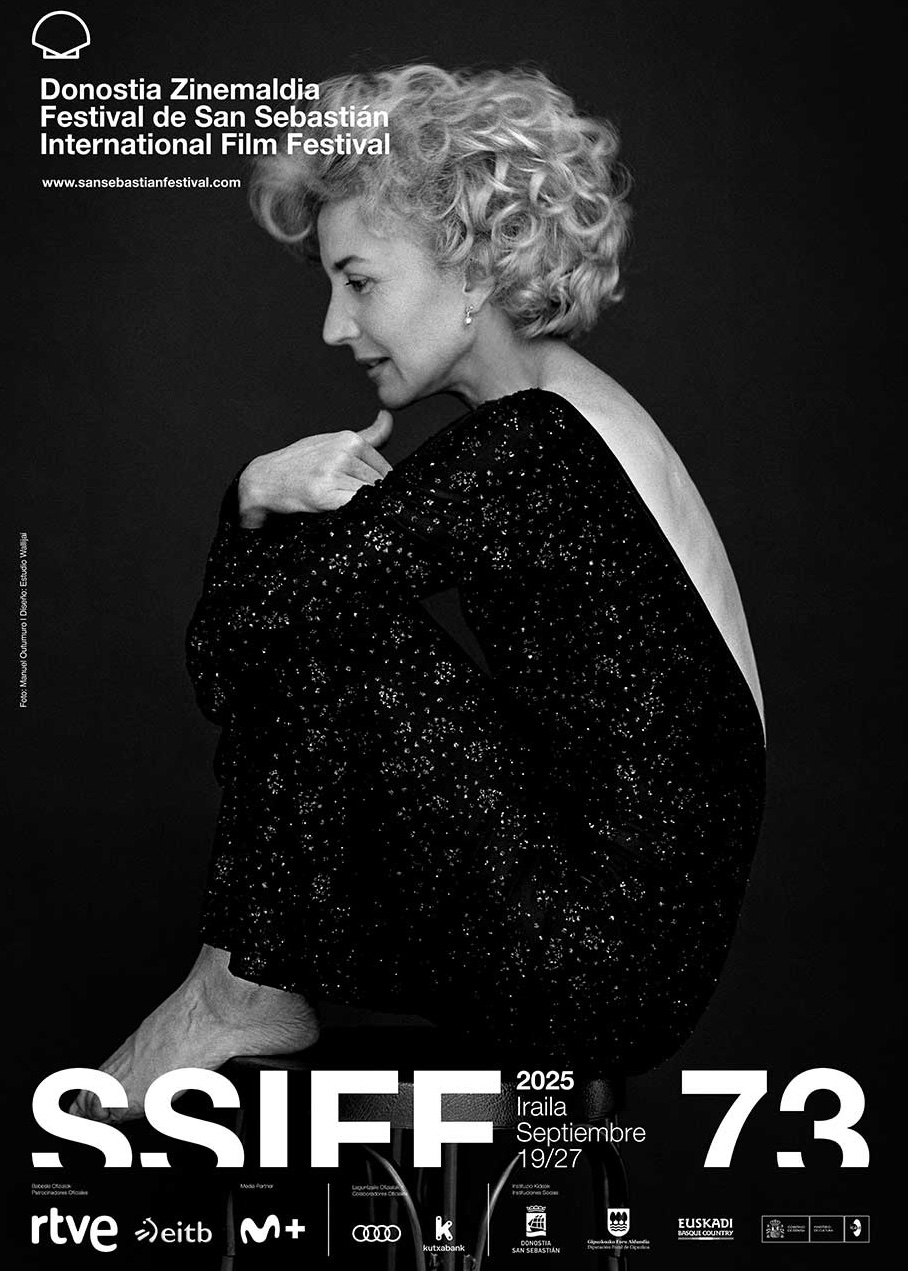
Por octavo año consecutivo, una gran figura de la cinematografía contemporánea protagoniza un cartel que desde 2018 ha estado presidido por los retratos de Isabelle Huppert, Penélope Cruz, Willem Dafoe, Sigourney Weaver, Juliette Binoche, Javier Bardem y Cate Blanchett. El póster de este año con la imagen de Marisa Paredes ha sido diseñado por el estudio donostiarra Wallijai a partir de una instantánea tomada por el fotógrafo Manuel Outumuro en Madrid en el año 2000.
Wallijai también ha confeccionado los carteles del resto de secciones, que como es habitual, mezclan fotografía e ilustración, y esta vez juegan con la idea de que todas y todos llevamos distintas películas en nuestro interior. Asimismo, cada póster incluye referencias más o menos expresas a diferentes géneros: al drama (New Directors), al cine bélico (Horizontes Latinos), al romántico y al musical (Zabaltegi-Tabakalera), a la ciencia ficción (Perlak), al anime (Nest), al terror (Culinary Zinema), a las historias de aventuras (Zinemira) y al western (Made in Spain).
A estos carteles se sumarán próximamente los tres de la iniciativa Klasikoak, que desde 2024 agrupa bajo la misma marca tres propuestas: la retrospectiva Klasikoak, que este año estará dedicada a la guionista estadounidense Lillian Hellman; la sección Klasikoak del Festival, y el ciclo de la Filmoteca Vasca que se desarrolla entre octubre y diciembre en Bilbao, Donostia, Pamplona, San Juan de Luz y Vitoria.
Dotada de una singular elegancia y presencia escénica, Marisa Paredes (Madrid, 1946-2024) trabajó en más de 75 largometrajes durante una carrera repleta de personajes complejos y de gran fuerza dramática. Su carrera está asociada a directores como Fernando Trueba, Montxo Armendáriz, Jaime Chávarri, Agustí Villaronga y, sobre todo, Pedro Almodóvar, para quien trabajó en Entre tinieblas (1983), Tacones lejanos (1991), La flor de mi secreto (1995), Todo sobre mi madre (1999), Hable con ella (2002) y La piel que habito (2011). Fuera del ámbito español, Paredes también actuó a las órdenes de cineastas como los mexicanos Arturo Ripstein y Guillermo del Toro, el chileno Raúl Ruiz, el italiano Roberto Benigni y el portugués Manoel de Oliveira.
Por tanto, tal y como ha señalado el director del festival, José Luis Rebordinos, será la segunda vez que Marisa Paredes protagonice el cartel. “En 2006 fue representada como La dama de Shanghai y ahora, 19 años después, en una imagen bellísima que nos recuerda su grandeza como actriz y como persona. Y todo ello en una edición en la que uno de los Premios Donostia será para una mujer igualmente talentosa y valiente con quien Marisa trabajó en varias ocasiones, Esther García, una productora sin la que no se puede entender el cine español y latinoamericano de los últimos 40 años. Por ambos motivos, por este cartel y por este galardón, no podemos estar hoy más felices”.
Did you like this article?
Subscribe to our NEWSLETTER and you won't miss anything.
Related articles
 The producer Marina García López, awarded the “El Ojo Crítico” 2025 Award
 Esther García vindicates the role of women in the film profession as winner of the Donostia Award
 The Film Academy awards the Elías Querejeta Prize to Esther García
 Víctor Erice, Donostia Award at the 71st San Sebastián Film Festival
 La sección Made in Spain y el Premio Dunia Ayaso vuelven al 69º Festival de San Sebastián de la mano de Fundación SGAE
 Thirteen titles from the San Sebastián Festival will compete for the Irizar Basque Cinema Award
 Woody Allen will open the San Sebastián Festival with 'Rifkin's Festival'
 Seven films will compete for the XII RTVE-Otra Mirada Award at the San Sebastián International Film Festival
 Esther García receives a more than well-deserved National Cinematography Award 2018
 Esther García, 2018 National Cinematography Award
 Hirokazu Kore-eda, Donostia Award at the 66th edition of the San Sebastián Festival
 'Paulina', a co-production from Argentina, Brazil and France, wins the Horizontes Latinos Award at the San Sebastián Festival
 The Malaga Festival will award the Retrospective Prize to Isabel Coixet
 Fomento de San Sebastián convoca el ‘VII Premio Ciudad de San Sebastián Film Commission’