





Brazil replaces the ISDB-T digital television standard with ATSC 3.0
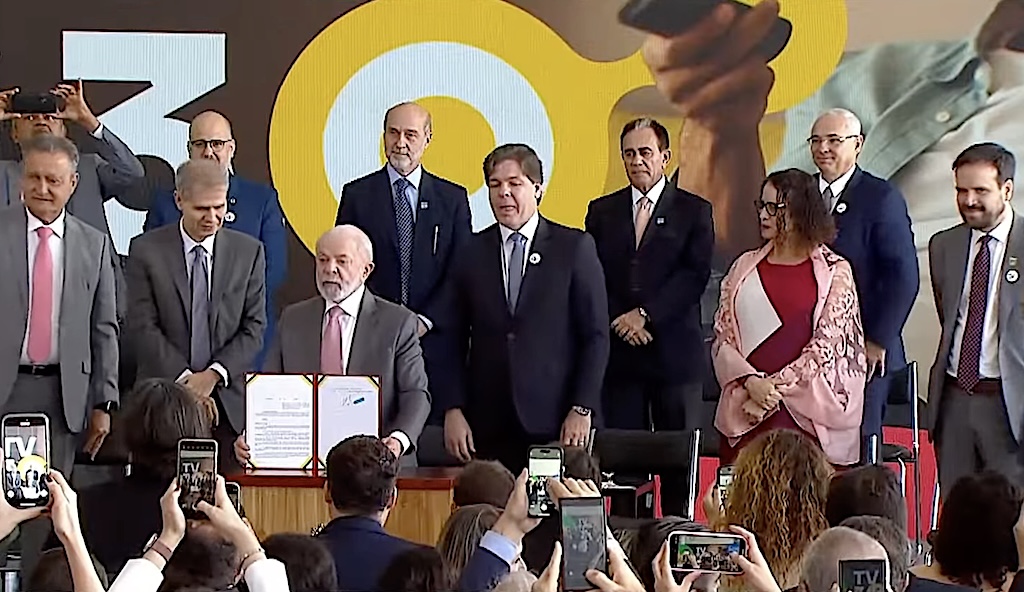
The Brazilian president, Luiz Inácio Lula da Silva, signs a decree by which the country adopts the ATSC 3.0 standard as the physical layer of its new television standard, thus replacing the ISDB-T that Brazil developed together with Japan.
In the same way that the European DVB-T standard is already being replaced by DVB-T2 in many European, Asian, African and South American markets, bringing many technological improvements, the ATSC 1.0, promoted by the United States, takes a leap forward towards a more advanced DTT standard.
The so-called DTV+ system in Brazil will mark an important milestone in America's transition to next-generation broadcasting, according to ATSC, The Broadcast Standards Association, the international standards development organization behind the set of standards known as ATSC 3.0.
ATSC 3.0 is now in operation with experimental emissions in Rio de Janeiro and São Paulo, and the country plans to launch a broadcast in Brasilia later this year. Commercial services are expected to begin in time for the 2026 FIFA World Cup. The expansion process to nationwide coverage may take up to 15 years. The greater transmission efficiency of the service will allow the entry of new broadcasters, which will make the sector more democratic and accessible. With the use of the Internet, the TV 3.0 will have the potential to serve as access point to digital public services and as a tool for inclusion and social participation.
It should be noted that ATSC 3.0 technology is used in the physical and transport layers of the Brazilian DTV+ format, as well as in the video, audio, subtitles and emergency alerts systems.
According to the president of ATSC, Madeleine Noland, Brazil's adoption of ATSC 3.0 technologies is especially significant because terrestrial television broadcasting remains the most popular platform for television consumption in Brazil, where it is used by around 80% of the population.
“Brazil's decision is further evidence that international ATSC 3.0 standards are cutting-edge and underlines their flexibility to meet the needs of a large, diverse country with such a high dependence on terrestrial television,” Noland said.
Luiz Fausto, ATSC Vice President of Standards Development, who was actively involved in testing the new Brazilian standard, highlighted that “broadcasters across Brazil take very seriously decisions about the best way to reach almost 200 million viewers, and the decree is the culmination of a long process in which various cutting-edge broadcasting technologies were evaluated to select the ‘best of the best’ that will serve broadcasters and viewers for decades to come.”
The Brazilian DTV+ system, previously called TV 3.0 by its developers, uses many elements of ATSC 3.0, the set of television standards used in the United States for Nextgent TV and in South Korea for UHD Broadcast. ATSC 3.0 has also already been adopted by Jamaica and Trinidad and Tobago, and is currently being studied and tested by other countries, including Canada, India and Mexico.
Did you like this article?
Subscribe to our NEWSLETTER and you won't miss anything.
Related articles
 ETB ON: this is the new EITB digital television platform that replaces Nahieran
 Spain adopts the DVB-T2 standard with UHD in its new National Technical Plan for Digital Terrestrial Television
 Six out of ten young people replace traditional television with streaming
 Sapec supplies a new Digital Terrestrial Television headend with ATSC standard in Mexico
 Sapec will exhibit new equipment for the ISDB-Tb standard at NAB 2018
 Ateme tests the possibilities of the new American standard ATSC 3.0 at the PyeongChang Olympic Games
 The United States approves the ATSC 3.0 standard
 Ecuador begins DTT technical tests under ISDB-T standard
 Philippines opts for ISDB standard
 Honduras adopts the Japanese-Brazilian digital television standard
 Costa Rica carries out its first DTT transmission under the ISDB-Tb standard
 Colombia finally adopts the DVB-T digital terrestrial television standard
SADIBA compares between DVB-T and ISDB-T, recommending the European standard
Colombia finally adopts the DVB-T digital terrestrial television standard
SADIBA compares between DVB-T and ISDB-T, recommending the European standard
 Chile begins digital emissions in tests under the ISDB-Tb standard