





James Cameron predicts a collapse of cinema if Netflix stays with Warner
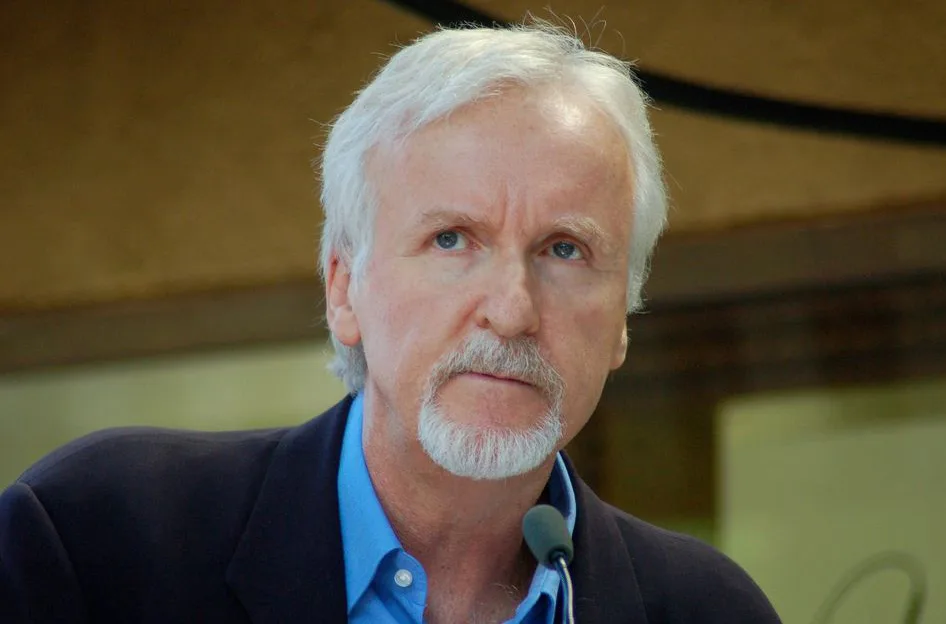
In a time of uncertainty when Paramount continues to improve its acquisition offer Warner Bros. Discovery, con Netflix Waiting for his initial agreement to come to fruition, director James Cameron has written a letter to Senator Mike Lee (chairman of the US Senate antitrust subcommittee) showing his deep rejection of the video-on-demand platform taking over the historic film company.
The senator Mike Lee, in a statement, made public that actors, directors and “other interested parties” had contacted him to convey their concerns. Therefore, he launched a series of hearings with the different parties to understand to a greater extent the implications that this decision could have not only in terms of competition, but in the exhibition business itself cinematic.
Cameron, who was not part of those conversations, has addressed the senator through a letter with the aim that his vision and experience be part of the final decision by the competition committee. In his letter, he states the model of Netflix is “intrinsically hostile” to traditional film exhibition. In fact, some media have already confirmed that the new company would only bring its biggest releases to theaters. for 17 days, which the director believes would cause the “massive closure of cinemas” and an “unprecedented loss of jobs” for the industry.
As of today, there is no guarantee that Netflix's offer will be the winner in the bid for Warner Bros.. Paramount, with close ties to the Trump administration in its last stage led by David Ellison, continues improving your offer adding incentives such as covering 2.8 billion dollars of the termination clause of the agreement with Netflix, as well as a all cash offer. Some of Warner Bros. Discovery's shareholders, such as the funds Still y Pentwater Capital, have requested to reopen negotiations with Paramount, several American business newspapers report.
Full letter from James Cameron to Mike Lee about the possible purchase of Warner Bros. by Netflix
“Dear President Lee,
Thank you for holding last week's hearing titled “Examining the Competitive Impact of the Proposed Transaction between Netflix and Warner Brothers.” I am writing to offer my perspective and request that it be included in the hearing record.
I am a filmmaker whose films have grossed over $10 billion in the global film market throughout my career as a writer, director and producer. I wrote and directed the first two films of Terminator, Aliens, The Abyss, True Lies, Titanic and the three films of Avatar.
My 44-year career as a director has focused on making movies for theatrical release, and I firmly believe that watching movies in theaters is an important pillar of our culture, not to mention one of our greatest exports in purely economic terms. But the film market has contracted sharply in recent years, by around 30%, due to changing media consumption patterns as a result of the Covid pandemic and the simultaneous rise of streaming.
I firmly believe that the proposed sale of Warner Brothers Discovery to Netflix will be disastrous for the theatrical film business to which I have dedicated my entire life's work. Of course, my films also play in subsequent video markets, but my first love is cinema. I have been among the pioneers in improving the movie experience by creating 3D digital production systems, advanced visual effects technologies and pioneering high frame rate displays. Exhibition in theaters is a fundamental part of my creative vision. I believe in the big screen.
Netflix co-CEO Ted Sarandos has called cinemas “an outdated concept” and an “outdated idea.” He also commented, in a recent earnings conference: “Taking people to a movie theater is simply not our business.” Netflix's business model is directly at odds with the business of theatrical film production and exhibition, which employs hundreds of thousands of Americans. Therefore, it is directly confronted with the business model of the film division of Warner Brothers, one of the few major film studios left. “Warners” releases approximately 15 films a year in theaters, and the beleaguered film exhibition community desperately depends on that production.
It will be a blow to the exhibition community (theater owners and their tens of thousands of employees) at a critical time for this production to be redirected to streaming. Mr. Sarandos is a good person and an astute business leader and innovator, but his company's goals are directly opposed to the health of the film market. This merger will eliminate consumer choice by reducing the number of feature films produced. It will restrict the options of filmmakers looking for studios to invest in their projects, which in turn will reduce jobs.
In a movie Avatar I employ more than 3,000 people, many of them for up to four years. The type of cinema I make, which dominates the global box office (action, science fiction and fantasy blockbusters), is expensive to produce and relies heavily on a healthy exhibition community. If these types of films stop getting the green light because the market contracts further, something that Netflix's acquisition of Warner Brothers will undoubtedly accelerate, many jobs will be lost. Cinemas will close. Fewer movies will be made. Service providers, such as visual effects (VFX) companies, will go out of business. Job losses will spiral.
At a time when the US trade deficit is a major concern, one of America's largest export sectors will be negatively affected. Not to mention the cost to our greatest cultural export: movies. The US may no longer be the leader in automobile or steel manufacturing, but it is still the world leader in film. That will change for the worse.
Mr. Sarandos has committed to maintaining a 17-day theatrical release window. This involves three problems.
First of all, 17 days is ridiculously short. Big movies can run profitably in theaters for months. The three films of Avatar, y Titanic Before them, they generated their enormous income thanks to long stays in cinemas. Titanic was the number one movie in theaters for 16 weeks, and Avatar for 10 weeks. Avatar was successfully screened in theaters for more than 4 months.
Most people in the feature film business believe the minimum window should be 45 days; many advocate 60 days. So 17 days is a symbolic and grotesquely insufficient window. Secondly, a promise of any number of days means nothing unless there is a concomitant commitment on the number of rooms. A major film release is typically released in more than 3,000 theaters simultaneously in the domestic market.
Netflix has only made a handful of theatrical releases, and only under pressure from prestigious filmmakers. But these are usually in a symbolic number of theaters and are made mainly to qualify for the Academy Awards (Oscars). These premieres do not represent the sustenance of the exhibition business.
Third, even if there is now a promise of a theatrical window to calm critics of this ill-conceived merger, there is no guarantee of how Netflix can conduct its business in the years to come. Its promise to support theatrical releases (a business fundamentally at odds with its core business model) is likely to evaporate within a few years. What are the real guarantees of the agreement? What administrative body will hold them accountable if they gradually eliminate their supposed commitment to theatrical releases? But once they own a big movie studio, that's irrevocable. That ship has already sailed (as I like to say, considering I directed Titanic. I am very familiar not only with ships that sail, but also with those that sink. And the cinematic experience of movies could become a sinking ship.)
There are many issues on the streaming and broadcasting side that should concern this Subcommittee, such as the enormous market share that will be added under a single corporate entity (well beyond the limits, under current antitrust law, I am advised). But this is not my area of expertise.
I am nothing more than a humble movie farmer. And I see my future creativity and productivity directly threatened by this sales pitch. I'm sure there are many in the film community...writers, producers, directors, exhibitors, craft guilds, filming employees and service providers who agree with me. Many will choose not to position themselves like me, because Netflix is a major employer for the foreseeable future.
But I know I speak for many. From a great general clamor, in fact.
“I hope you will consider my concerns as you continue to investigate this proposed transaction.”
Did you like this article?
Subscribe to our NEWSLETTER and you won't miss anything.
Related articles
 Paramount derails the Netflix-Warner Bros. deal with a hostile takeover bid of $108.4 billion
Paramount blows up the Netflix-Warner Bros. deal with a $108.4 billion hostile takeover bid
Paramount derails the Netflix-Warner Bros. deal with a hostile takeover bid of $108.4 billion
Paramount blows up the Netflix-Warner Bros. deal with a $108.4 billion hostile takeover bid
 Netflix buys Warner Bros. for $82.7 Billion
Netflix buys Warner Bros. for $82.7 billion
Netflix buys Warner Bros. for $82.7 Billion
Netflix buys Warner Bros. for $82.7 billion
 James Cameron's Lightstorm Entertainment uses Blackmagic equipment in 'Avatar' sequels
 Secuoya hires former ambassador James Costos as executive president of the film and fiction area
 Netflix reinforces its leadership among television and film apps
 James Cameron to shoot 'Avatar' sequels with Sony's Venice camera
 Mediaset España, Warner Bros España and Netflix will produce the series 'Brigada Costa del Sol'
 James Cameron renews exclusive technology collaboration agreement with Christie
 James Cameron films the Mariana Trench with RED Epic 5K
 James Cameron's strategic agreement with Christie
 James Cameron and Vince Pace join forces with Grass Valley to promote 3D
 Panasonic teams up with James Cameron to promote its line of Full HD 3D televisions