





One thousand servers to create a new VP concept: the case of Dawa Studio
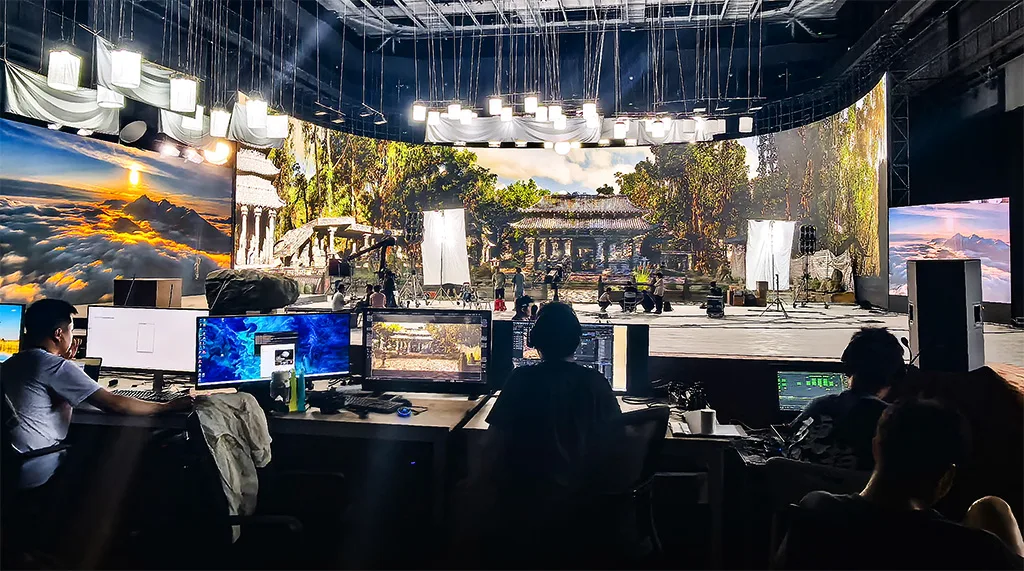
Dawa Studio's virtual production studio in Yongchuan, Chongqing, China, seeks to set new standards in content generation for its giant LED screen by deploying more than a thousand servers and Tessera video processing solutions from Brompton.
Located in the urban area of the district of Yongchuan, next to a high-speed train station and an important communications hub, the virtual production studio Medicine Studio continues a process of consolidation and expansion of its possibilities to position itself as a reference in the VP contexts of the Asian country. While its first phase, completed and commissioned in May 2023, had a total constructed area of 20.000 m², including a 3,000 m² virtual production studio, the second phase has expanded its dimensions to 5 sets: in total, 32.800 m² of filming space that allows simultaneous service to more than three production teams.
Focused on technology virtual production, the studio implements integrated systems that include XR, VP and motion capture, along with a second virtual production workflow based on real-time green screen processes. The facilities also include a platform digital human applications and a center rendering real-time and intelligent on-site computing with 1,000 servers. The project has more than 200 patents, and to date it has been invested 1 billion RMB (almost £109 million).
Aoto and Brompton, key technologies of Dawa Studio
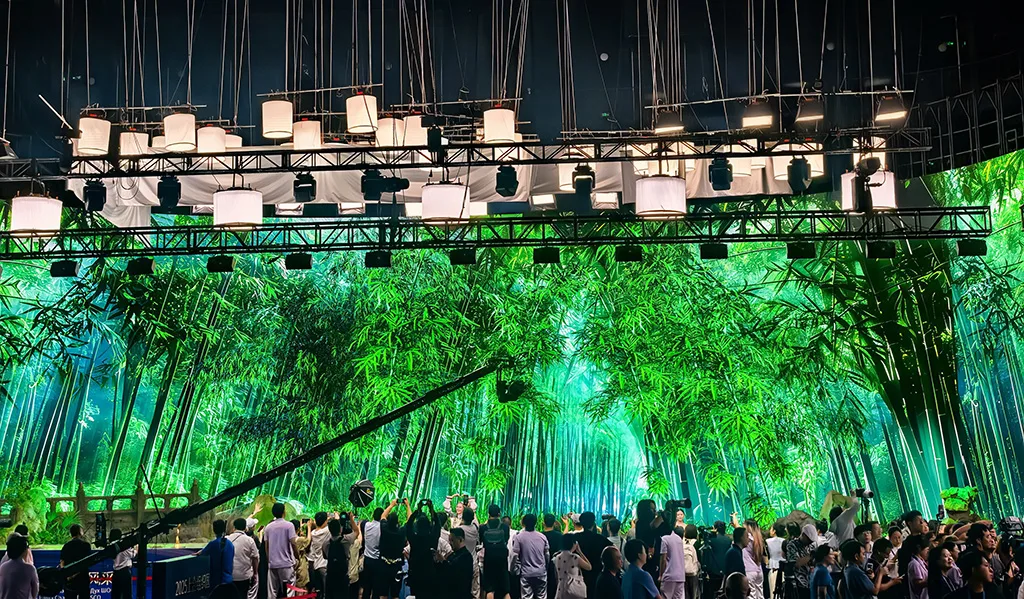 The virtual production environment technique is built around RM1.9 LED display series from Aoto, supported by the platform Card of Brompton. The base configuration includes a Curved LED screen 60 meters wide by 10 meters high, complemented by four 7 meters × 4.5 meters mobile extension screens each, allowing for quick scene changes and highly flexible on-set filming.
To process and distribute content through the LED volume, Brompton has supplied 30 LED video processors 4K Tessera SX40 y 60 units data distribution XD 10G card. For the team Medicine Studio, the value of Tessera lies in ensuring that the LED image captured by the camera is completely free of visual defects such as Flickers, scan lines, or artifacts, which, as pointed out Tiezheng Yang, production director of Dawa, is “and fundamental requirement for high-end virtual production.
In this process, technology is key ShutterSync, which synchronizes the LED refresh rate with the camera shutter to eliminate visual artifacts, while the function Extended Bit Depth Significantly improves dynamic range in shadow areas, allowing cameras to capture much more detail in low-light areas. In the words of Which: "We needed a processing platform that would give us confidence in clean capture from the camera, especially when productions require complex lighting and shutter settings. Brompton Technology is the processor of choice for many of the world's leading virtual production stages, both domestically and internationally. This broad and proven global adoption gives us great confidence and security in our technology decisions. Software features such as ShutterSync and the ability to retain detail in the darkest areas were key reasons for choosing LED processors Tessera.”
Beyond the integrity of the image, Card admits a advanced color management to meet the requirements of a wide range of productions. The platform supports professional color spaces, including ACEScg, DCI-P3 y BT.2020, and allows color adjustment in real time through on-set grading systems such as Pomfort Livegrade. In multi-camera setups, Frame Remapping allows cameras operating at different frame rates to simultaneously capture the correct image from a single LED volume, expanding creative flexibility and improving filming efficiency.
Dawa Studio has a roadmap that will get you started end of 2026 new implementations techniques, aimed at continuing to expand the possibilities of virtual production environments.
Did you like this article?
Subscribe to our NEWSLETTER and you won't miss anything.
Related articles
 Disguise launches X1, a portable version of Designer that allows you to create 4K content without media servers
 Blackmagic cloud ecosystem allows RKM Studio to create a collaborative workflow for filming video clips
 How Creative uses DaVinci Resolve Studio to create a glamorous look in 'Selling Sunset' (Netflix)
 Young One Studio relies on a Blackmagic workflow to create films, video clips and advertisements
 Orange and MásMóvil seal their alliance to create the new Spanish telecommunications giant
 Greater freedom to create, greater operational efficiency and better integration with the new TouchDrive from Ross
 Tedial will unveil at NAB 2016, Version Factory, a new workflow concept for media
 Dolby Cinema, a new concept in exhibition halls
 Hitachi to show new concept for DSNG at IBC 2014
 Towards a new concept in SNG contribution
 EVS will present its new Sports 360º concept at IBC
 LandscapeHD develops a new “cloud” channel concept
 Harris Platinum: a new concept in digital matrices
 Telestream Pipeline: a new transcoding concept