





The unique film ‘Something in the Dirt’, graded with DaVinci Resolve
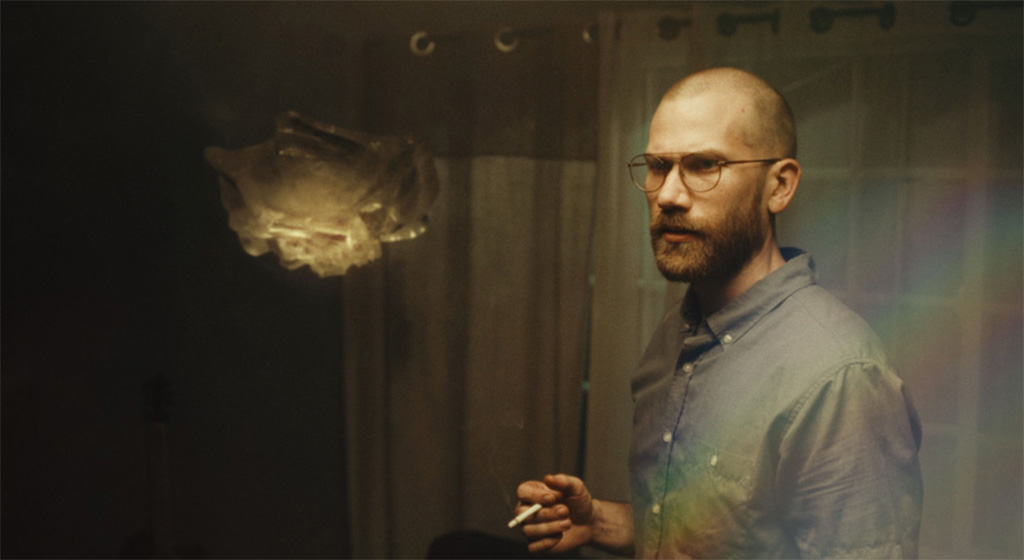
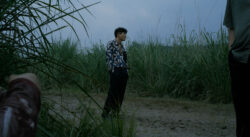
Blackmagic Design’s DaVinci Resolve Studio software was used to grade the independent feature film Something in the Dirt, which won the NEXT Innovation Award at Sundance 2022.
Something in the Dirt tells the story of two neighbours, John and Levi. Both, after witnessing supernatural occurrences in their Los Angeles flat, realise that documenting paranormal events could bring fame and fortune to their wasted lives. Thus, a deeper hole opens up, a more entangled labyrinth, and their friendship falters as they discover the dangers that these phenomena, the city and themselves bring. Directed by and starring Aaron Moorhead and Justin Benson, the film is a testament to Moorhead and Benson’s friendship, as well as their passion for singular and unusual narratives.
Benson and Moorhead are no strangers to film directing, having both served in that role on a wide variety of projects, including episodes of both Moon Knight (Disney) and Archive 81 (Netflix). “For years we have been asked to pitch on maybe a dozen different haunted house franchises,” said Moorhead. “They would ask us to give our strangest, wildest, most left of center ideas, which in the end was usually too left of center for them. Something in the Dirt is essentially an omnibus film of all our wildest ideas of a ‘haunting’ that we dug up from that graveyard.”
Although Moorhead doesn’t identify himself as a colourist, he received formal colour training early in his career, which gave him the confidence to do the colour grading on this film: “I brushed up on DaVinci Resolve in about a week of watching and trying online tutorials, and I felt confident with the program as I dove in. That’s not a pat on my back, it’s a testament to the unbelievably friendly engineering of Resolve. I used a ton of programs in my job as an indie filmmaker and Resolve is by far the smartest application I’ve ever used.”
A complex shoot
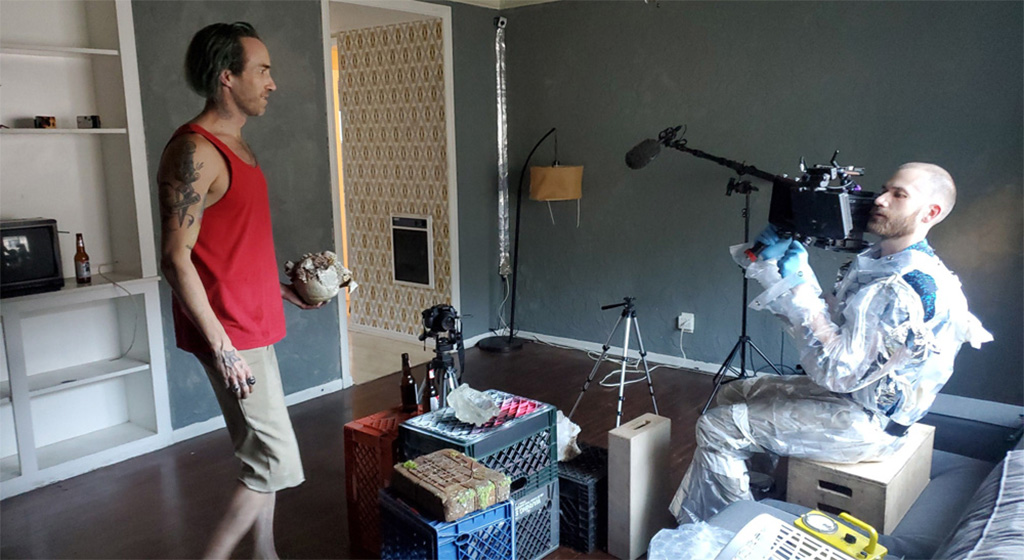
Shooting the film wasn’t particularly straightforward either, requiring a combination of traditional cinematography with archival and original footage, shot with a wide variety of professional and digital cameras, including mobile phone and security cameras. “We tried to develop a look beforehand, something akin to our other films, such as The Endless, but we always wanted to push it further. We find that degrading the footage is instinctually a great way to mold our films into a single experience, especially if we have as much mixed media as this film does, ”he stresses.
While the film is about supernatural events, Moorhead’s favourite scene is a much simpler one. In it, the two have a conversation on a rooftop: “I loved just having a heart to heart chat as a performer, loved shooting it in a beautiful sunset as a director and cinematographer, and loved leaning heavily into a strong, luscious sunset grade as a colorist. Plus, the score during that scene is some of the best music in the film.”
Keys to colour grading with DaVinci Resolve
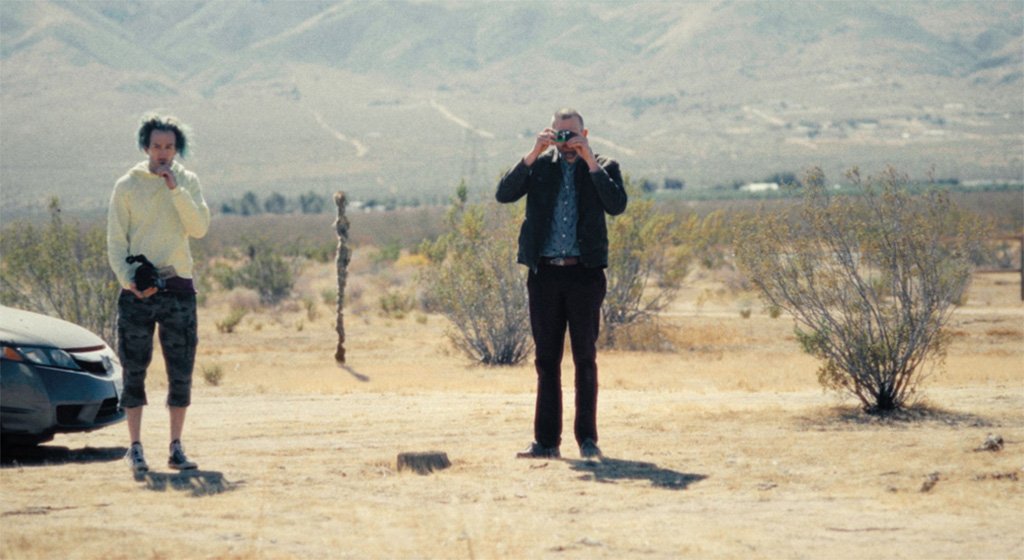
Given the vast heterogeneity of the material used, Benson and Moorhead knew that the look would need to be unified, but they couldn’t make a decision before the end of the shoot. Instead, they committed to developing it during post-production and were inclined to create an aged aesthetic, similar to those of their previous films. To achieve the visual style of Something in the Dirt, Moorhead used DaVinci Resolve in combination with the OFX Dehancer plug-in to emulate celluloid quality.
The node editing began with a slight blurring of the entire image, which softened the sharp edges, emulsified the different types of material and helped the graininess of the film look more natural afterwards. The second step was to balance the image: “We didn’t want the movie to look like it had any kind of color or density wash on it. If it looked affected, it feels a bit dishonest to the story that we’re trying to tell: that this is a bit of a ‘documentary’ that actually happened. We often used the ‘versus curves,’ including Hue vs Sat, Sat vs Sat, etc., to get our look,” adds Moorhead.
The actor, director and colourist made extensive use of the Dehancer plug-in when working on the next node: “We used a very home brew setup of the Dehancer plugin to add grain, subtractive color, a print stock look, gate weave, halation, almost everything that Dehancer offers for film emulation,” he continued. “But besides the grain, it was all dialed very low, for just the most subtle possible version of it. It was a powerful effect and had to be put late in the node structure, but it was always applied before we would even start balancing.”
https://youtu.be/RAYhQx0CjVg
この記事は気に入りましたか?
購読してください ニュースレター 何も見逃すことはありません。
関連記事
 Tribeca contender ‘Sealed Off’, graded with DaVinci Resolve
 La insólita película ‘Something in the Dirt’, etalonada con DaVinci Resolve
 The sadistic Santa Claus of ‘Violent Night’, graded with DaVinci Resolve Studio
 Oscar-winner ‘Drive My Car’, graded with DaVinci Resolve Studio
 ‘Don’t Call It Mystery’ (Fuji Tv), graded with DaVinci Resolve Studio
 ‘Leonor will never die’, graded with DaVinci Resolve (Blackmagic)
 Sky Deutschland’s ‘Pagan Peak’ graded with DaVinci Resolve Studio
 “Don’t look up” (Netflix), graded with DaVinci Resolve Studio
 ‘Red Notice’ (Netflix), graded with DaVinci Resolve Studio
 The Green Knight was graded with DaVinci Resolve Studio (Blackmagic Design)
 The third season of ‘Brassic’ (Sky) was graded with DaVinci Resolve Studio
 ‘Gaey Wa’r’, graded with Blackmagic Design’s DaVinci Resolve Studio
 カンヌ審査員大賞受賞作「コンパートメント No. 6」、DaVinci Resolve でグレーディング
 ‘Chaogtu with Sarula’, graded with Blackmagic Design’s DaVinci Resolve