





David Shing, at MABS2017: “you have to concentrate on the story and less on how to tell it: more story and less telling”
El líder de pensamiento australiano y autoproclamado “Profeta Digital”, durante su ponencia en el MABS2017, organizado por Atresmedia, asegura que “la tecnología cambia el comportamiento, pero no las necesidades. Entender las necesidades no es fácil”.
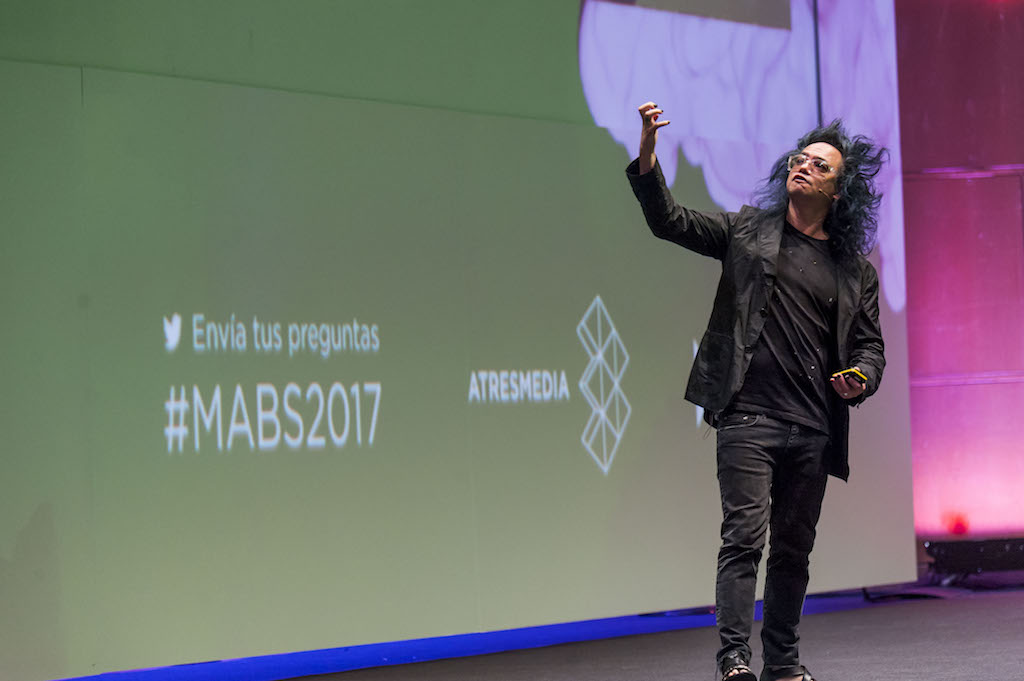
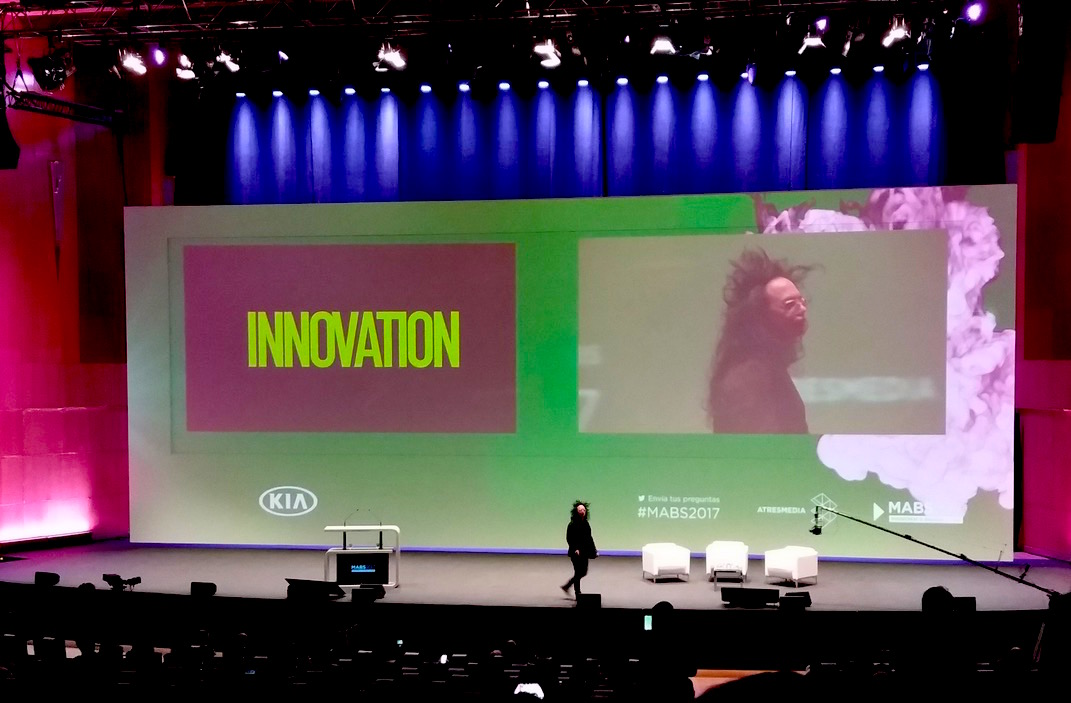
Management & Business Summit, #MABS2017, el evento líder entre directivos y personalidades mundiales organizado por Atresmedia, ha arrancado este miércoles su convocatoria de 2017. El consejero delegado de Atresmedia, Silvio González, ha abierto la jornada inaugural en un acto conducido por las presentadoras Mónica Carrillo y Mamen Mendizábal, de Antena 3 y LaSexta, respectivamente. El líder de pensamiento australiano y autoproclamado “Profeta Digital”, David Shing, conocido como ‘Shingy’, ha abierto las ponencias vespertinas con una intervención salpicada de ejemplos memorables de marcas e innovaciones, casos prácticos y experiencias de ayer y de mañana para dar las mejores claves ante los retos de hoy.
“Los ordenadores no sirven para nada, no te dan respuestas, lo dijo Pablo Picasso y me encanta. La innovación es cambio, la invención es creatividad”, ha arrancado ‘Shingy’ su dinámica intervención, no sin antes expresar la alegría que sentía por poder participar en este foro en particular y por poder estar en España en general: “De España me llama la atención su cultura, alucino con vosotros, bebéis, salís, sois unos fiesteros y, al día siguiente, ¡reuniones a las 8 de la mañana! Me gusta cuando la cultura permanece local”.
El creativo ha continuado deteniéndose en los emoticonos: “el diccionario de Oxford introdujo la palabra ‘emoji’ en 2015. Ahora vivimos una cultura totalmente diferente. Ahora utilizamos la palabra disrupción, todo el mundo habla de la disrupción y no es la tecnología la que va a ser disruptiva, sino el modelo de negocio”.
“Einstein descubrió la teoría cuántica, era un violinista con una gran formación, podría ser científico o artista y eso es lo que tenéis que hacer vosotros”, ha asegurado para adelantar a los asistentes que lo que le interesaba es transmitirles “la parte artística”.
Jerarquía de Maslow
Recordando la ‘Jerarquía de Maslow’, el líder australiano ha manifestado que “cuando pensamos en esto, la tecnología cambia el comportamiento, pero no las necesidades. Entender las necesidades es importante, pero no es tan fácil”.
“Cuando hablamos de conectar a seres humanos todo el mundo habla de realidad virtual, cuando llevas un minuto con las gafas es increíble, la realidad virtual no es algo nuevo, la diferencia hoy es que si vamos a ver una película tu ríes y yo lloro, con las gafas tu eres protagonista de tu propia experiencia”, ha asegurado sobre las últimas novedades en este sentido, para añadir: “La realidad virtual me interesa mucho. En China están estudiando mucho, para pasar lo real a lo físico, pero la realidad a veces es mucho mejor que la ficción”.
“La experiencia física es muy importante y eso es lo que nos tenemos que plantear con nuestra marca: el internet de las emociones”, ha manifestado para enumerar seguidamente la cantidad de inventos existentes y que vendrán: “igual no tenéis una pantalla en el futuro y lo que tenéis es un tatuaje, estamos viendo dispositivos portátiles, hay muchísimos”.
En este sentido ha mostrado a los asistentes, a través de videos, desde aparatos para pagar con un chip en la manga de la camisa, a técnicas para sentir el mismo impacto que un jugador de fútbol americano, un traje en 3D que cambia y evoluciona cuando miras a alguien.
“¿Y qué, tenemos todas estas oportunidades, y qué?”, se ha preguntado, para responder: “Ahora estamos en el negocio de las emociones, el 75% de las decisiones que tomamos a día de hoy son emocionales y ya no nos vale el modelo de las 4 ‘Ps’ que aprendimos en Marketing”.
“El público que tenéis a día de hoy tiene sus propios públicos, su propia audiencia. Lo que publiques tú, luego lo van a compartir y va a tener su propia experiencia”, ha señalado.
“Los jóvenes tienen formas de expresarse completamente diferentes, quieren estar entretenidos, la palabra aburrimiento está muy presente, los chavales crecen con una pantalla, se debe redefinir la palabra creatividad”, ha añadido.
“Tenéis que simpatizar y lo que más importa a día de hoy es el compartir. No hablamos de vender a tiempo real, sino de conectar con otros humanos, tenemos que volver a la experimentación”, ha sugerido al auditorio.
“El 70% de la gente solo prueba las aplicaciones una sola vez, tenemos que conseguir formas de conectar a la gente, que se enamoren de tu aplicación”, ha continuado, al tiempo que subrayaba que “en un mundo del boca a boca podremos conectar con esas personas, hay que estar siempre dentro de los medios de comunicación, podéis inventaos formas pero, por favor, sed sencillos, la simplicidad es la máxima sofisticación, ya lo dijo Da Vinci”, ha remarcado ‘Shingy’.
“Queremos lealtad tribal, es increíble lo que puedes conseguir cuando lo consigues con tu marca”, ha dicho poniendo el ejemplo de Ray Ban, que “nunca anuncia sus gafas sin una leyenda que las lleve”.
En este sentido ha asegurado que es esencial “conectar con el ADN de tu marca”, porque es así como “puedes tener la oportunidad de reinventar el producto”, ha dicho poniendo como ejemplo las cerveza Carlsberg, que vio cómo sus ingredientes funcionan muy bien como tónico facial o cómo Coca cola ha cambiado en Vietnam los tapones para que no se conviertan en basura y sean productos útiles. O también el caso de Nike con Pokemon Go, que “en lugar de poner una experiencia digital hizo un rango de zapatillas que reflejaran la cultura de Nike, un guiño con los personajes de Pókemon”.
“Tenemos un problema con la autenticidad, hay que ser fidedigno con el ADN de la marca”, ha subrayado. También ha querido hacer hincapié entre los asistentes sobre la práctica del ‘hacking’, algo que considera “muy interesante” y que no siempre tiene por qué ser negativo; “muchas marcas se quejan de ser hackeadas”, pero el líder digital ha expuesto a los asistentes casos concretos de cómo revertir esta situación para crear una campaña en positivo.
“El mensaje principal es que el contenido importa, hay que generar buen contenido. Mi consejo es que hay que concentrase en la historia y menos en como contarla, más story y menos telling”, ha concluido poniendo entre otros ejemplos el del anuncio de John Lewis para la campaña de Navidad de 2016.
Did you like this article?
Subscribe to our NEWSLETTER and you won't miss anything.
Related articles
 David Lynch, revolutionary of television fiction and one of the most influential directors in history, dies
 The Tokyo 2020 Olympic Games, the least watched in the history of television in Spain
 'Veneno' sweeps its final chapter as the most viewed in the history of Atresplayer Premium
 David Cierco: “the story of 5G in Spain will be a success story”
 'Parasites' makes history and is crowned the great winner of the Oscars
 Gol closes 2019 as the best year in its history
 'The Cathedral of the Sea' comes to an end as the most watched Spanish series in recorded history
 'El Hormiguero 3.0' closes 2017 as the best year in its history
 The Mediapro group closes 2016 as the best year in its history
 History imagines through augmented reality what the end of the world would be like
 How to create a love story between the MAM and the MCR
 RTVE and Story Producciones co-produce the documentary 'The Secret History of the Mummies'
 Spain's victory against Italy breaks record as the most watched match in history
 Zinkia or the story of how Pocoyo hypnotized millions of children