





Panasonic da a conocer las especificaciones para su cámara AG-3DA1
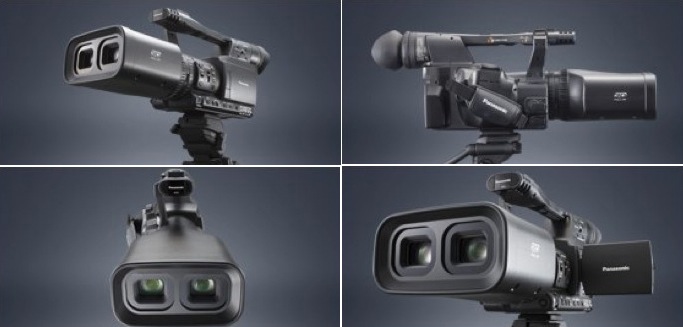
Panasonic ha desvelado las especificaciones técnicas de la cámara AG-3DA1, la primera compacta en el mundo capaz de grabar 3D con calidad Full HD que ofrece también grabación sobre tarjetas SD. Con menos de tres kilos, está equipada con doble lente y dos sensores 3-MOS con resolución de 1920 x 1080 de 2.07 megapixels, para grabar en 1080/60i 50i, 30p, 25p y 24p (nativo) y 720/60p y 50p en AVCHD.
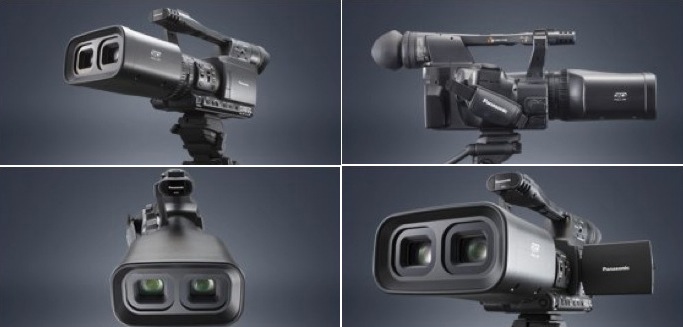
Panasonic ha desvelado por fin las características técnicas de la cámara que más expectación ha levantado desde que conociéramos los primeros apuntes hace ahora casi un año durante NAB’09. La AG-3DA1, la primera cámara estereoscópica del mundo capaz de grabar en estereoscópico con calidad Full HD, está equipada con doble lente y dos sensores 3-MOS con resolución de 1920 x 1080 de 2.07 megapixels, para grabar en 1080/60i 50i, 30p, 25p y 24p (nativo) y 720/60p y 50p en AVCHD.
Pensada para facilitar la operativa estereoscópica al máximo, puede grabar más de 180 minutos en tarjetas SD duales de 32GB en modo profesional AVCHD PH de Panasonic, y ofrece interfaces profesionales que incluyen doble salida HD-SDI, HDMI (versión1.4), dos conectores XLR, un micrófono estéreo incorporado y lentes gemelas.
Un aspecto importante es que la cámara ajusta automáticamente el punto de convergencia corrigiendo precisamente el eje horizontal y vertical. Mientras que otras soluciones requieren llevar a cabo estos ajustes con ayuda de un pc o un procesador externo de vídeo, la nueva AG-3DA1 los lleva a cabo internamente recalibrándose de forma automática. Esta función otorga una gran agilidad a la hora de afrontar una producción 3D.
 Flexibilidad
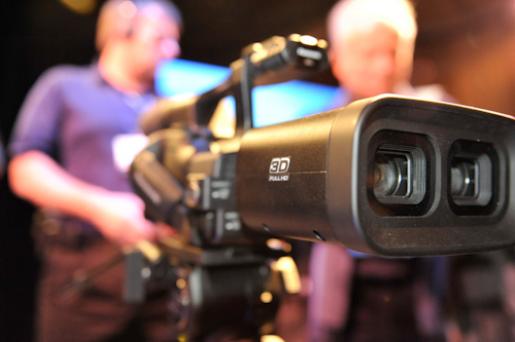
La grabación en memorias de estado sólido basada en ficheros ofrece una mayor flexibilidad para producir vídeos Full HD en 3D de manera fiable en entornos en los que se precisa grabar sin posibilidad de llevar a cabo preparativos. La AG-3DA1 es más ligera y pequeña que las actuales plataformas en 3D, mientras que proporciona la flexibilidad de un camcorder de mano. Al simplificarse al máximo la instalación y el transporte,la convierten en una opción ideal para deportes, documentales y proyectos de cine.
Workflow
Las secuencias de vídeo correspondientes a la lente derecha e izquierda pueden grabarse y distribuirse como archivos en tarjetas SDHC/SD, garantizando, como argumenta Panasonic, una mayor fiabilidad que la cinta, disco óptico, HDD o mecánico. Además, el estado sólido de esta propuesta 3D ayudará a reducir significativamente los costos de mantenimiento.
Los usuarios podrán implementar un flujo de trabajo rápido y con acceso instantáneo y aleatorio al material grabado, plug-in para Mac y PC y una mayor capacidad de grabación. Además, este nuevo camcorder consume apenas 16 W.
Aunque el principio de la estereoscopía es relativamente sencillo, basándose en dos cámaras instaladas sobre rigs en horizontal y de lado a lado a una distancia de unos 6,5 cm -equivalente a la distancia entre los ojos humanos- para crear el paralaje binocular, el problema es que esto no es viable en grandes camcorders por la dimensión de sus cuerpos y lentes, necesitando así complejos sistemas de espejoes y primas. Esto resulta en un sistema de voluminosos que deben ajustarse cuidadosamente para evitar que la cámara derecha e izquierda estén perfectamente alineadas para capturar la imagen. Además, si se mueve el sistema, o debido a golpes o vibraciones, inevitablemente las cámaras se desalinean teniendo que reajustarlas continuamente.
En la AG-3DA1 que Panasonic ha desarrollado, las dos lentes, el cuerpo de la cámara y la grabadora de tarjeta de memoria se incorporan en una carcasa compacta permitiendo la grabación de vídeo con una mayor movilidad y desde todos los ángulos, reduciendo significativamente el tiempo necesario para crear y ajustes, dejando así más tiempo para actividades creativas.
En cuanto al punto de convergencia, el punto en el que los ejes ópticos de las cámaras de la izquierda y la derecha convergen para producir imágenes en 3D, para tener un aspecto natural de vídeo 3D debe ajustarse para que coincida con la de los ojos de un ser humano, cuyo punto de convergencia varía en función de la cercanía de los objetos que está mirando. La nueva cámara Full HD 3D de Panasonic otorga un control total del punto de convergencia con su diseño integrado.
Did you like this article?
Subscribe to our NEWSLETTER and you won't miss anything.
Related articles
 Panasonic desplegará 150 sistemas de cámara y 31 mezcladores para producir París 2024 con menos hardware que nunca
 Netflix homologa la Panasonic Lumix S1H como cámara para sus producciones
 El Sony FX9 Tour recala en Madrid para dar a conocer la nueva cámara Full-Frame
 Panasonic da a conocer las especificaciones técnicas de la nueva cámara compacta AU-EVA1
 Panasonic sorprende en IBC con el potencial de su nueva cámara 4K para estudio
 NCAM dará a conocer en IBC su nueva cámara PTZ para tracking
 Alessandro Beltrame elige una cámara Panasonic y el trípode FSB 6:2 D de Sachtler para su último trabajo en la Antártida
 A camera for every need, with Panasonic
 Panasonic en misión espacial con la 3D AG-3DA1
 Acuerdo de especificaciones mínimas para la emisión por satélite 3D
 El DVB hace públicas sus especificaciones comerciales para 3D
 La AG-3DA1, la compacta 3D de Panasonic, se estrena en directo en Roland Garros
 Specifications for DRM receivers approved
 Panasonic's first Full HD stereoscopic 3D camera, ready