





DVB makes public its commercial specifications for 3D
The DVB brings together in a document around twenty recommendations for the development of 3D in a side-by-side format. One of the key points is the need to have left and right images located in a 'spatial multiplex' that will allow a decoder to process the resulting signal in the same way as it does with a conventional high definition signal.
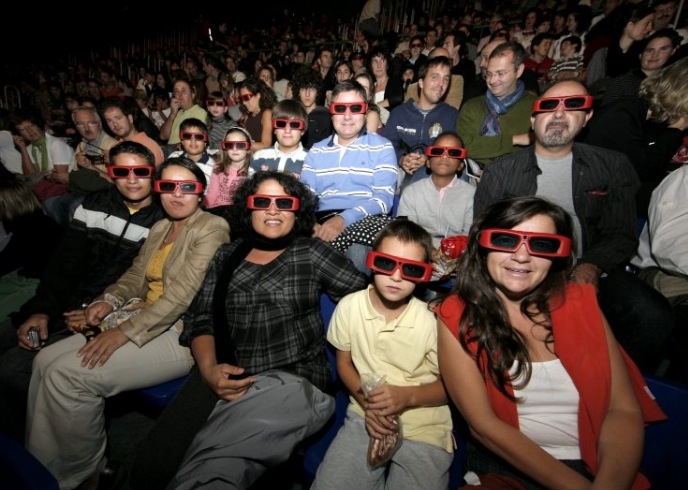
The DVB has approved the commercial specifications for the development of 3D in a side-by-side format. The DVB working group has started from a 3DTV service provision scheme using the same infrastructure used by payment operators for the introduction of high definition services.
Far from being closed specifications, DVB has chosen to leave the door open to the development of new systems and although its intention from the first moment was the compatibility of 2D-3D receivers and televisions, it has finally become clear that it will not be possible.
In general terms, those first experiences being carried out by Canal+ in Spain or France or Sky in the United Kingdom would adapt to the twenty recommendations put on the table by the DVB.
One of the key points established in the document is the need to have left and right images located in a 'spatial multiplex' that will allow a decoder to process the resulting signal in the same way as it does with a conventional high definition signal. That is, according to ITU terminology, a 'Frame Compatible' format.
The DVB document, although it addresses 3DTV services up to the point of reception and decoding by a digital receiver, does not go into determining how the content has been received and decoded on the screen.
Access to the DVB document on 3DTV.
Did you like this article?
Subscribe to our NEWSLETTER and you won't miss anything.
Related articles
 FORTA and RTVE will promote new policies to promote equality in public radio and television
 DVB publishes the first specifications for the provision of 8K UHD video services
 DVB updates three of its specifications
 Rohde&Schwarz plantea en BIT Experience soluciones para contribución profesional AV sobre redes públicas IP
 Producers from all over Spain seek commercial agreements for their projects in the Pitching 'I+P Ideas to produce'
Public Infrastructure Management of the Principality of Asturias (GIT) uses Volicon to supervise the FTTH network
Producers from all over Spain seek commercial agreements for their projects in the Pitching 'I+P Ideas to produce'
Public Infrastructure Management of the Principality of Asturias (GIT) uses Volicon to supervise the FTTH network
 Solid commercial results anticipate a good MIPTV for Spanish content
The audiovisual industry agrees on the bases for the provision of commercial services on connected TV
The ITU publishes its recommendations for Ultra High Definition
Solid commercial results anticipate a good MIPTV for Spanish content
The audiovisual industry agrees on the bases for the provision of commercial services on connected TV
The ITU publishes its recommendations for Ultra High Definition
 ITU establishes new technical specifications for UHDTV
 Agreement on minimum specifications for 3D satellite broadcasting
 Specifications for DRM receivers approved
 Panasonic releases specifications for its AG-3DA1 camera
 Agreed specifications for pay DTT and HD receivers