





Laser Phosphor Displays (LPD): higher image quality and lower power consumption
La Pantalla de Fósforo Láser (LPD) es una forma revolucionaria de crear imágenes desarrollada por la compañía estadounidense Prysm. Esta innovadora tecnología permite crear grandes pantallas con alta calidad de imagen y un 75% menos de consumo. Prysm ha plasmado su avanzada tecnología de fósforo láser en los nuevos módulos TD1 que permiten conseguir imágenes claras y brillantes en cualquier ambiente.
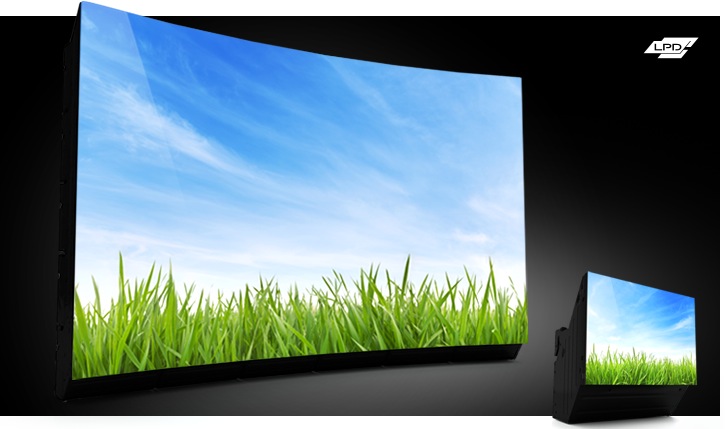
La Pantalla de Fósforo Láser (LPD) es una forma revolucionaria de crear imágenes desarrollada por la compañía estadounidense Prysm. Esta innovadora tecnología permite crear grandes pantallas con alta calidad de imagen y un 75% menos de consumo.
Prysm LPD utiliza un motor láser que lanzar un haz de rayos modulados en una pantalla de fósforo. Estos diodos láser utilizan, al igual que en las unidades ópticas, pequeños espejos para distribuir el haz de láser en toda la pantalla. La superficie de proyección es una capa de fósforo que se inserta en una estructura estable de vidrio y polímeros que emiten luminosidad de color rojo, verde o azul claro respondiendo rápidamente al láser.
A diferencia de otras tecnologías que pierden luminosidad con filtros y capas, LPD utiliza la patente de láser y panel de fósforo para crear imágenes de alta resolución y brillo.
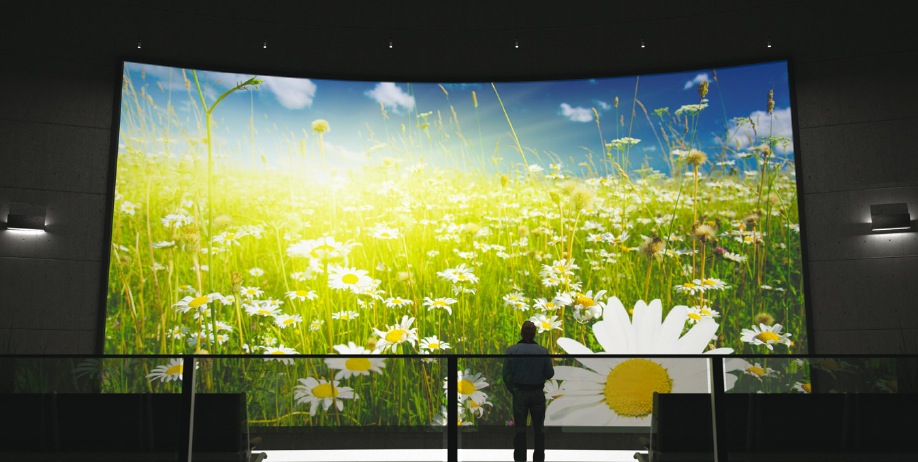
 TD1, la solución modular
Prysm ha plasmado su avanzada tecnología de fósforo láser en los nuevos módulos TD1. Esta solución modular TD1 está basada en cinco componentes clave para conseguir imágenes claras y brillantes en cualquier ambiente. El módulo TD1 es el corazón del sistema. Consta de tres partes: el panel de fósforo, el motor láser, y el procesador del láser. Está diseñado para ser ligero y fácil de instalar y configurar. Con una resolución de 320×240 píxeles y 25” de diagonal, los módulos TD1 generan magníficas imágenes dinámicas, que nos permiten una perfecta visión para casi cualquier distancia y ángulo de visión.
La dificultad de calibrar las pantallas de gran formato requiere horas de ajuste caro tanto en la instalación como en el mantenimiento del sistema. La solución de Prysm a este reto es el procesador de imagen IP1. Éste soporta todas las señales de vídeo y formatos gráficos, envía el contenido a la pantalla además de ofrecer el control, monitorización y calibración. Además, pueden enlazarse multiples procesadores de imagen, para crear grandes pantalas.
En cuanto al software de control de pantalla que incorpora esta solución de Prysm, permite crear de forma rápida una configuración de la señal que recibe, a través del ajuste de parámetros como la reducción del ruido, ajuste de bordes, brillo dinámico, temperatura de color…
Una ventaja adicional de esta propuesta de Prysm es que esta tecnología disminuye de tal manera la salida de calor del equipo que no necesita ventilación. Al contrario de otros dispositivos, el requerimiento de potencia es muy bajo, manteniendo una baja temperatura de uso, lo que se traduce en un gran ahorro de energía. Asimismo, su robusto sistema eléctrico permite alimentar en forma de lazo desde la primera PSU hasta 4 PSUs adicionales (configurando así hasta 5) desde la primera toma de corriente.
Desde el punto de vista estético, los módulos TD1 pueden fabricarse con un marco personalizable, ajustándose de forma rápida a la configuración elegida.
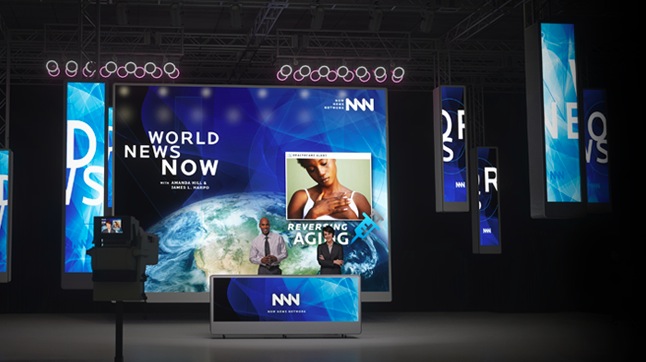 Tecnología ecoeficiente
La nueva tecnología ecoeficiente LPD, que está detrás de los módulos TD1 de Prysm, combina bajo consumo con imágenes vivas de gran calidad y claridad desde cualquier ángulo de visión.
Su panel de fósforo en el que se basa elsistema es un diseño de capas sobre un cristal rígido o una estruictura de polímero. Cuando se estimula a través del motor láser, el fósforo emite píxeles verdes, rojos y azules, muy cerca de la superficie, sin ningún filtro de imagen que consuma electricidad. La tecnología de emisión de pantalla, ofrece el mejor ángulo de visión (normalmente el doble de los LCDs y plasmas), sin fallos de quemado de píxel.
Por su parte, el motor láser, creado a partir de un sistema de diodos láser de estado sólido (similar al Blu-ray), genera una serie de rayos láser modulados que estimulan el panel de fósforo. Para cubrir completamente con los rayos el área de la pantalla, son dirigidos a través de espejos, para crear el número de líneas de imagen. Combinando la frecuencia de refresco de 240Hz, el resultado ofrece una gran calidad, sin fliqueo de la imagen ni efecto motion blur.
El cerebro del sistema es un procesador láser de tecnología inteligente que maneja el motor láser con la precisión de encendido y apagado, así como su intensidad. Además, incrementa la eficiencia del sistema al apagar el láser cuando la pantalla está en negro, define el color y coloca cada píexel. Gracias al bajo consumo de motor láser, este dispositivo posibilita la larga duración de la pantalla.
Por último, reseñar que estas soluciones de Prysm basadas en tecnología LPD están distribuidas en España por Crambo Visuales.
[youtube]http://www.youtube.com/watch?v=icaoTxNxoyA[/youtube]
Did you like this article?
Subscribe to our NEWSLETTER and you won't miss anything.
Related articles
 Audiovisual advertising production in 2025: “Greater demands and lower budget”
 La1, audience leader in the June with the lowest television consumption in history
 Linear television falls: March 2023 marks the lowest consumption in history
 Velvet Evo 2×2: more light power with lower energy consumption
 Velvet launches its new range of EVO luminaires with more lighting power and lower consumption
 Christie Debuts Crimson Series of Laser Phosphor 3DLP Projectors
 Christie expands its range of laser phosphor projectors with the new CP2208-LP
 Christie presents its new laser phosphor projector for the first time in EMEA
 Christie's laser phosphor projection achieves a futuristic look on TVE's 'Tvemos'
 Christie previews 22,000 lumen laser phosphor film projector at BIRTV 2015
 The Panasonic AK-HC1800 allows for higher quality at lower cost in aerial shots
 Haivision expands its Makito series to offer lower latency and higher quality
 New GoPro Hero3+, now smaller and with greater autonomy
 NEC MultiSync EA222WMe: minimum power consumption