





UTECA pide la asignación definitiva del múltiplex digital
El presidente de UTECA, Alejandro Echevarría, en la jornada anual de la patronal de las televisiones privadas, ha pedido la asignación definitiva del múltiplex digital “cuyos costes debe asumir íntegramente la Administración”. Además, ha solicitado la incorporación obligatoria de claúsulas de garantía de protección contra las interferencias a los canales adyacentes de televisión en la banda 790-862 MHz.
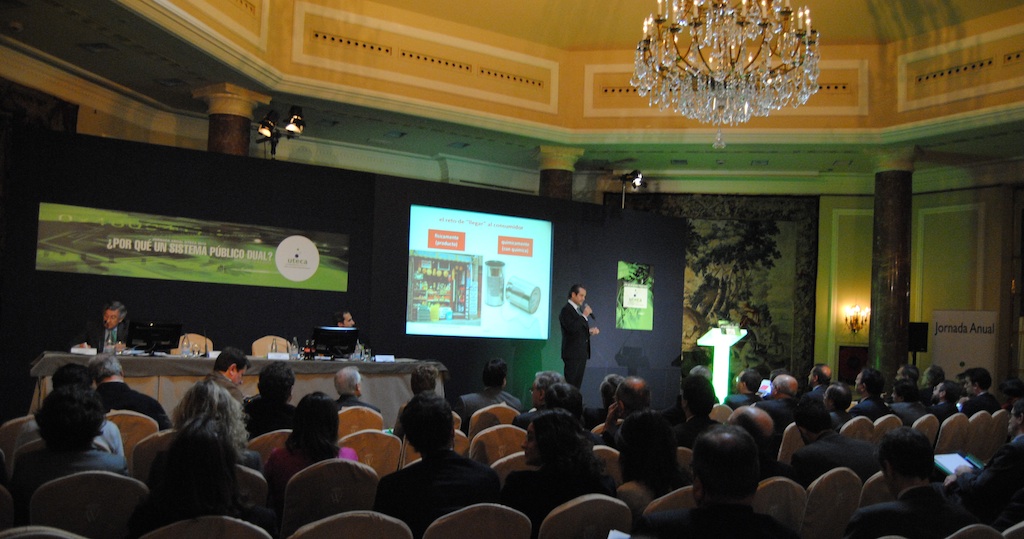
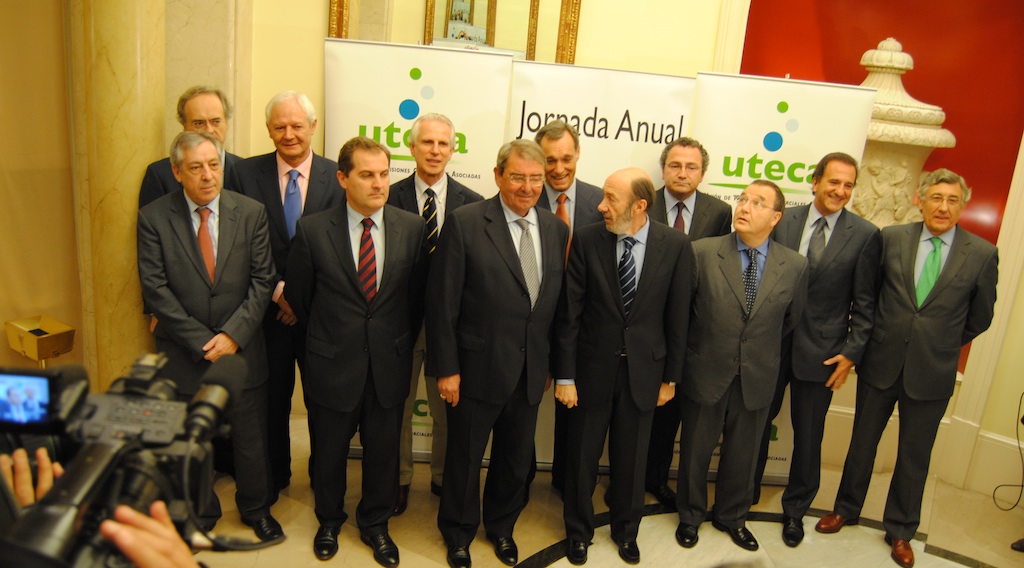
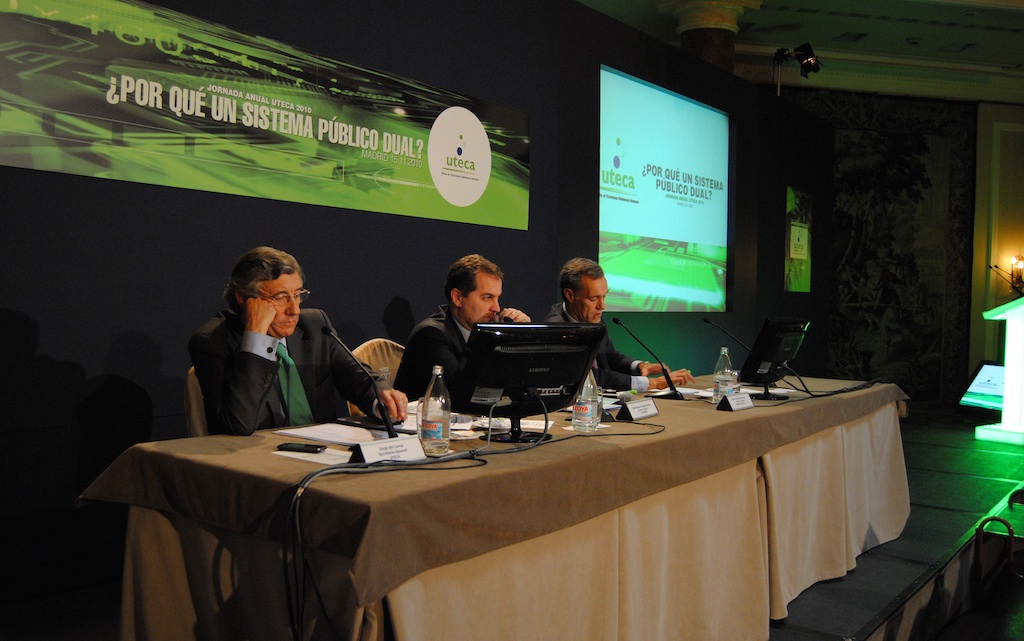
El presidente de UTECA, Alejandro Echevarría, ha declarado que tras la fusión de Telecinco y Cuatro no hay que descartar nuevos acuerdos de concentración. En su discurso en la Jornada Anual UTECA 2010 celebrada este lunes en Madrid, pronunciado ante el vicepresidente primero del Gobierno y ministro del Interior, Al fredo Pérez Rubalcaba, el presidente de la patronal de las televisiones privadas ha calificado de “verdadero hito histórico” la eliminación de la publicidad en RTVE y ha añadido que ha sido “la gran noticia para el sector audiovisual español, tanto público como privado”.
A juicio de Echevarría, “esta modificación sustancial de la oferta publicitaria es televisión ha supuesto para el sector privado que la recuperación de resultados en los primeros meses de 2010 haya sido positiva para las compañías, ayudadas también por el cambio de tendencia en la evolución de la inversión publicitaria. Y es que se ha eliminado la distorsión que producía en el mercado la competencia del operador público, que en los últimos años había marcado una tendencia a la baja del coste/GRP. A partir de 2011, los costes/GRP se han situado progresivamente en niveles más acordes con otros países del entorno”.
Echevarría ha afirmado que sería necesario que las públicas autonómicas “salieran de los presupuestos públicos y se financiaran con una tasa. No se entiende que se haya establecido un canon digital para subvencionar a las entidades privadas de gestión de derechos de autor y, por el contrario, que los políticos no se atrevan a crear el que financie la televisión pública”.
El presidente de UTECA ha declarado que “nos encontramos en un momento convulso en la economía española. La incertidumbre sobre los plazos en los que la recuperación se instalará en nuestro país supone, entre otros aspectos, una extraordinaria volatilidad en los mercados que valoran las compañías y, en especial, en los que operan las empresas con intereses en el sector de la televisión”. “Un dato ilustra mejor lo que quiero decir: las empresas de televisión valen hoy en Bolsa la mitad de lo que valían hace poco más de tres años. En todo caso, los miembros de UTECA creemos que los peores momentos para el sector se han superado. Por vez primera desde hace tres años, las principales compañías presentan, en términos generales, mejores resultados en los primeros resultados en los primeros nueve meses del año, lo que se refleja en la mejora en casi un 50% de los resultados combinados de las empresas de televisión cotizadas”, ha asegurado.
Dividendo digital
Para Alejandro Echevarría, “el sector audiovisual tiene un gran número de retos por delante”, entre los que ha citado la estabilización y consolidación del sector de la producción audiovisual, a su juicio atomizado y poco internacionalizado; el fin de la inversión obligatoria en cine y la mejora, por la vía de la autoregulación, del apoyo a la producción cinematográfica; la definitiva racionalización de la gestión de los derechos de autor, tanto en costes como operativamente; la ampliación de las medidas aplicadas en la televisión pública nacional a las autonómicas y municipales de titularidad pública; y la racionalización de la oferta de canales, que ayudará a que la implantación de la TDT tenga el impacto tecnologico esperado y una mejora de la experiencia de la audiencia gracias a la HD y el 3D.
Por último, Echevarría ha pedido la asignación definitiva del múltiplex digital “cuyos costes debe asumir íntegramente la Administración, sin que Bruselas pueda argumentar que son ayudas de Estado”. Además, ha solicitado “la incorporación obligatoria de claúsulas de garantía de protección contra las interferencias a los canales adyacentes de televisión en los concursos de adjudicación de la banda 790-862 MHz para servicios de comunicaciones electrónicas; la defensa a ultranza del espectro radioeléctrico de las televisiones hertzianas, amenazado por las compañías de telecomunicaciones, y acabar con la limitación publicitaria que impone la UE al sector privado, algo inexplicable en el Siglo XXI, con infinidad de sistemas y canales de televisión”.
Autonómicas y locales
Luis Jiménez, socio de Deloitte, responsable de la Industria de Medios de Comunicación de España y Europa, en la presentación del IV Informe Económico sobre la Tv pública en España con motivo de esta jornada, ha destacado que “a pesar de reducir los costes de explotación en un 4%, en el año 2009, el coste neto por hogar de la televisión pública en España ascendió a 144 euros, un 11% más que el año anterior, resultado de la profunda caída de la publicidad”.
Por su parte, Silvio González, consejero delegado de Antena 3, ha centrado su intervención en esta jornada sobre la situación de las televisiones públicas que, a su juicio acuden al mercado publicitario y de derechos,”distorsionando el mercado y cerrando un círculo absurdo”. El conjunto de las autonómicas supone un presupuesto por encima de los 1.860 millones de euros, con una deuda acumulada de 1.480 millones de euros y un monto de ayudas y subvenciones que asciende a 814 millones de euros. Ante estas cifras, González ha asegurado que “ya que todos nos hemos apretado en esta situación económica, también lo hagan las autonómicas. Ha llegado de momento de actuar. La tv pública ha perdido demasiadas oportunidades para adaptarse a la realidad con una línea de actuación claramente comercial, y distorsionando el mercado. Ahora toca solucionar esta distorsión, como ha ocurrido en RTVE, tanto en el ámbito autonómico como local. Su problema no son sus ingresos, sino la falta de medidas de eficiencia y control del gasto”.
González, ha reconocido que pese a los avances experimentados en el mercado, se ha desandado una parte del camino, por lo que hay que acabar con un modelo ineficaz y distorsionador, para lo que estamos dispuestos a abrir las vías de colaboración que sean necesarias”.
Silvio González, ha señalado con respecto a las fusiones en el sector que la única operación que se ha producido en España de momento es la de Telecinco y Cuatro, “por lo que todo lo demás es ficción”. Sobre la decisión de la Comisión Nacional de Competencia (CNCcon respecto a la fusión de Telecinco y Cuatro y la entrada de la cadena de Mediaset y Telefónica en Digital+, González la ha calificado de “sorprendente” anticipando que el grupo resultante va a tener una “posible posición de abuso de contenidos”.
El consejero delegado de Vocento, José Manuel Vargas, ha reflexionado sobre el nuevo entorno de la televisión digital que está convirtiendo a los operadores de televisión en plataformas de distribución multicanal y multiplataforma. Esto se está produciendo al mismo tiempo que los medios tradicionales, como la radio o la prensa escrita, están entrando en el negocio de los contenidos audiovisuales. “Aparecen nuevos competidores fuera o en paralelo a los tradicionales grupos de comunicación. Y además, irrumpen con fuerza los contenidos generados por el usuario y la aparición de nuevos dispositivos y servicios como el vídeo on demand para acceder a contenidos. Ante esto, el sector de la televisión, que viene tradicionalmente de un oligopolio basado en licencias, deberá evolucionar hacia un entorno de libre competencia con nuevos actores que entran en casa gracias a la eclosión de la banda ancha”, ha asegurado Vargas.
Las claves, según José Manuel Vargas, pasan por asumir que el futuro es audiovisual para todos los medios, con la consecuente competencia; sacar la máxima ventaja a la marca; y conocer a los usuarios definiendo estrategias y modelos de negocio. “Hay que revisar los modelos de negocio ante la caída de las barreras de entrada con estrategias multisoporte”, ha concluido.
Did you like this article?
Subscribe to our NEWSLETTER and you won't miss anything.
Related articles
 La CNMC pide ajustes para reforzar la competencia y la calidad en la radio digital DAB+
 Transición del SD al HD en televisión: la guía definitiva
 Movistar+ pop-up channels: The definitive editorialization of the platform
 The president of UTECA asks the platforms for “responsibility towards the society in which they operate”
 Alejandro Echevarría pide el fin del canon del cine y compensaciones por el segundo dividendo digital
 The sector asks Jean-Claude Juncker to review the digital single market
 “We work to protect and defend DTT in the face of spectrum allocation to mobile service,” Elena Puigrefaut
 UTECA confía en que la liberalización del dividendo digital se complete sin costes
 Harmonic launches Iris 2.0 in response to better streaming bandwidth allocation
 Barco en el primer multiplex brasileño 100% digital
Contreras pide un freno legal a la compra por TVE de producto americano
Barco en el primer multiplex brasileño 100% digital
Contreras pide un freno legal a la compra por TVE de producto americano
 La CMT inaugura su sede definitiva en Barcelona
 El CAC pide a las locales que no emitan en digital que devuelvan las licencias
ASIMELEC pide al Gobierno que adelante la puesta en marcha del dividendo digital
El CAC pide a las locales que no emitan en digital que devuelvan las licencias
ASIMELEC pide al Gobierno que adelante la puesta en marcha del dividendo digital