





Vega, la solución de enrutado asimétrico más flexible de Snell
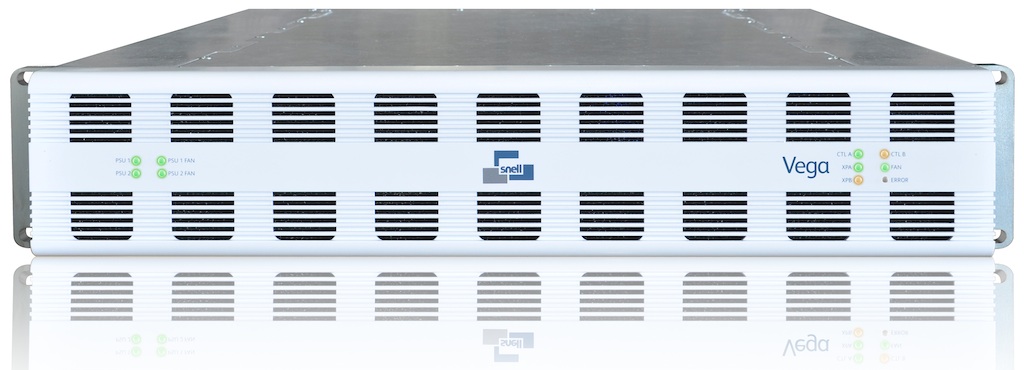
Snell ha desvelado en IBC 2011 su nueva plataforma de enrutado, Vega, que permite a los usuarios configurar cualquier puerto señal para conectividad de fibra o coaxial de forma independiente.
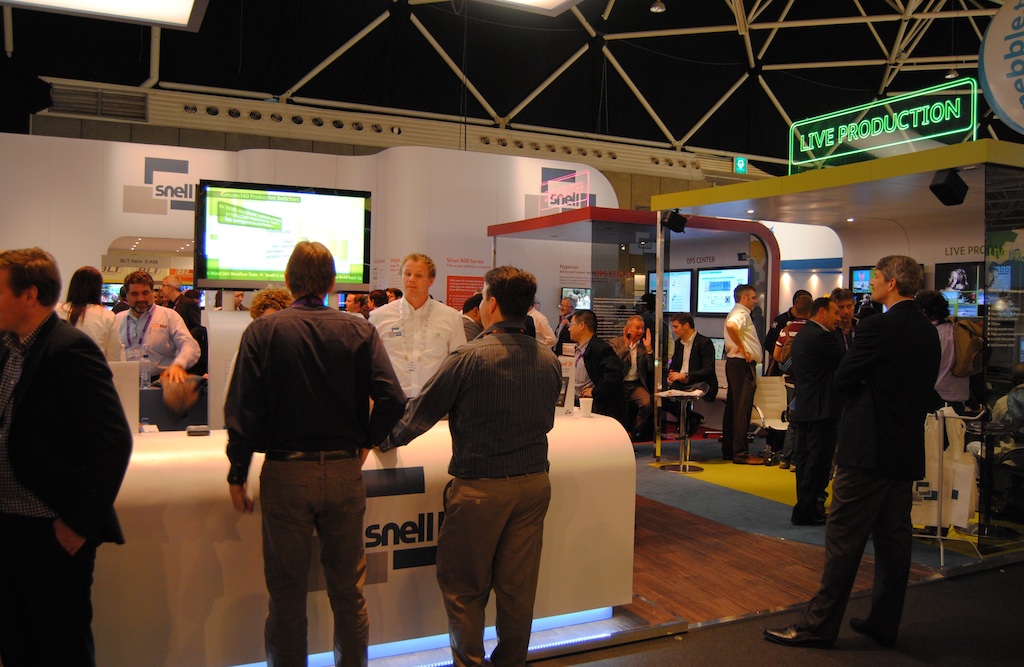
Snell ha desvelado en IBC 2011 su nueva plataforma de enrutado, Vega, que permite a los usuarios configurar cualquier puerto señal para conectividad de fibra o coaxial de forma independiente.
Este diseño exclusivo también permite configurar cualquier puerto como entrada o salida, proporcionando así al sector la solución de enrutado asimétrico más flexible dentro de un enrutador de 96 puertos.
“Los switches de enrutado de video se utilizan en prácticamente todas las instalaciones de broadcast y muy pocas de estas instalaciones requieren exactamente el mismo numero de entradas y salidas de enrutador”, ha comentado Kim Francis, director de producto en Snell.
“Tradicionalmente, las compañías de broadcast y medios han obtenido las entradas y salidas adicionales que necesitan comprando un enrutador más grande. Este modelo es poco económico por el número de puertos que quedan sin usar, el coste adicional y por la cantidad de espacio que requiere. Vega elimina este desperdicio al permitir que los usuarios puedan configurar cualquier entrada que no se esté utilizando como salida adicional o, al revés, de acuerdo con los requerimientos de la aplicación, y sus módulos plug-in mantienen el coste y la complejidad del enrutado de fibra a un mínimo. Vega simplemente ha cambiado las reglas del juego”.
Vega cuenta con 96 puertos señal en su panel trasero. La designación completamente asimétrica de puerto de entrada y salida de la plataforma permite al usuario configurar el enrutador con una sola entrada y 95 salidas, 95 entradas y una salida o cualquier combinación de entradas y salidas. Uso de pequeños módulos plug-in de fibra y/o tipos de conector coaxial en miniatura también significa que este diseño innovador proporciona un 50% más de puertos señal que un enrutador tradicional con la misma altura de bastidor.
Cada par de puertos consiste en un receptáculo que acepta un modulo plug-in muy pequeño, soportando conectividad de fibra (tipo LC o SFP) o coaxial (HD BNC y/o DIN 1.0/2.3). Como los puertos del Vega se pueden configurar de forma sencilla y rápida, los broadcasters y productoras pueden elegir el medio de conexión que mas les conviene en cada momento. El soporte para conectividad de fibra sin necesidad de adaptadores externos asegura que mantener altas tasas de datos sobre enlaces de larga distancia sea sencillo y económico. También esta disponible un modulo trasero de 12 puertos, solo coaxial, que ofrece una solución de nivel de entrada cuando la conectividad de fibra aún no es necesaria.
Las opciones de redundancia ampliada del enrutador incluyen puntos de cruce redundantes, controladores de frame, fuentes de alimentación y ventiladores. Un conjunto integral de opciones de control “blando” y “duro” también está disponible.
 ICE
ICE
Snell ha aprovechado su presencia en Ámsterdam para anunciar también importantes gráficos nuevos y prestaciones de generación de caracteres en versión 2.2 del motor de contenido integrado (ICE) de la compañía.
ICE Versión 2.2 incorpora herramientas de desarrollo de marca para la mejora de canales HD y/o SD, además de inserción VANC personalizada que establece el nuevo estándar para soluciones de emisión canal-en-una-caja. Todas juntas, estas prestaciones permiten al usuario reducir el coste y complejidad de la emisión, a la vez que mantiene o mejora el nivel de sofisticación de las emisiones.
ICE combina un servidor de video, gráficos, switchers, desarrollo de marca de canal y subtitulación en un paquete 3-RU, y todo gestionado por automatización Morpheus. ICE ofrece una solución de bajo coste para canales que empiezan su andadura y sirve como bloque de construcción económico para operaciones distribuidas, soportando actividades como gestión de programación regional y recuperación remota de desastres. El sistema funciona sin fisuras con material de fuente SD o HD, gestionando todos los procesos necesarios para preparar imágenes, sonido y datos auxiliares para una emisión HD de la más alta calidad.
La versión 2.2 de ICE ofrece a los operadores la capacidad de generar crawls verticales y horizontales por medio de ingesta automatizada URL o RSS, o desde información de fuente que ha sido manualmente creada. Los crawls se pueden crear y codificar por un operador o de forma automatizada por medio de Morpheus. Ahora ICE también ofrece múltiples DVEs para efectos de mezcla, permitiendo así que los usuarios puedan incluir numerosos programas a la vez que insertan gráficos y efectos de audio (como crawls generados por ICE, tickers de noticias, tercios bajos animados y voz en off para programas específicos).
Ahora que ICE ofrece más keyers, los usuarios podrán apalancar la integración con el Morpheus MediaBall para creación dinámica e inserción de gráficos y texto para los créditos finales, marcaje de promos y otras acciones comunes. Ahora se podrán programar estos gráficos por medio de un sistema de tráfico, manipulado por un operador o insertado automáticamente por Morpheus con información obtenida de otras fuentes. Este procedimiento elimina la necesidad de renderización previa de páginas finales avanzadas, a la vez que proporciona a los usuarios con flexibilidad para programar y reprogramar sin tener que manipular el material promocional que indica dónde y cuándo pueden ver sus programas favoritos los espectadores.
Para poder cumplir con todos los requerimientos de cabecera de red, ICE también viene preparado para establecer paquetes VANC específicos (como el SCTE-104) en el camino continuo para cada canal. Como el ICE gestiona esta función de forma interna, además de la inserción AFD, conversión de ratio, inserción de subtítulos, inserción TC y inserción de subtítulos en directo (protocolo A de control), la necesidad de potencia, espacio de bastidor y mantenimiento del hardware de bajada convencional dentro del camino de transmisión es mucho menor.
Did you like this article?
Subscribe to our NEWSLETTER and you won't miss anything.
Related articles
 Harmonic y Hitron Technologies crean una solución de fibra flexible y sostenible
 AEQ dará las claves en un webinar sobre el enrutado mixto de audio
 Fastly proporciona a Atresmedia una solución flexible y escalable para el live streaming en Atresplayer
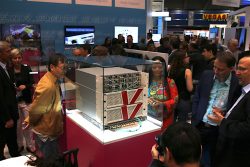 Lawo lanza la plataforma para enrutado basada en software V Matrix
 Snell acudirá a IBC 2014 con su nueva generación de soluciones para enrutado IP y un Kahuna totalmente configurable
 Snell y Cisco se alían para facilitar el enrutado de señales en tiempo real sobre IP
 Connectivity, routing, conversion or monitoring… in 4K, is no longer a problem with Miranda
 Studer OnAir 1500, una solución flexible para radiodifusión y producción
 Snell simplifica el enrutado de señales con Centra Vite
 Sapec Video IPxPoint, enrutado IP inteligente
 Distribución y enrutado MediorNet en las unidades de Alfacam en el Mundial
 Pesa mostrará en NAB sus últimas propuestas para enrutado de señales
 Soluciones ingeniosas para cableado y enrutado de Percon
 Orad Morpho 3D: una solución para gráficos on-air 2D y 3D flexible, potente y de fácil manejo