





Sony presents its most innovative proposals at IFEMA
Broadcast IT 2011 será una excelente oportunidad para conocer de cerca el nuevo camcorder PMW-F3, con sensor CMOS EXMOR Super 35, el próximo lanzamiento F-65 (Super 35 mm 8K CMOS de 20,4 millones de píxeles), la cámara 3D PMW-TD300, el grabador SR-R1000, y el mezclador multiformato MSC-8M.
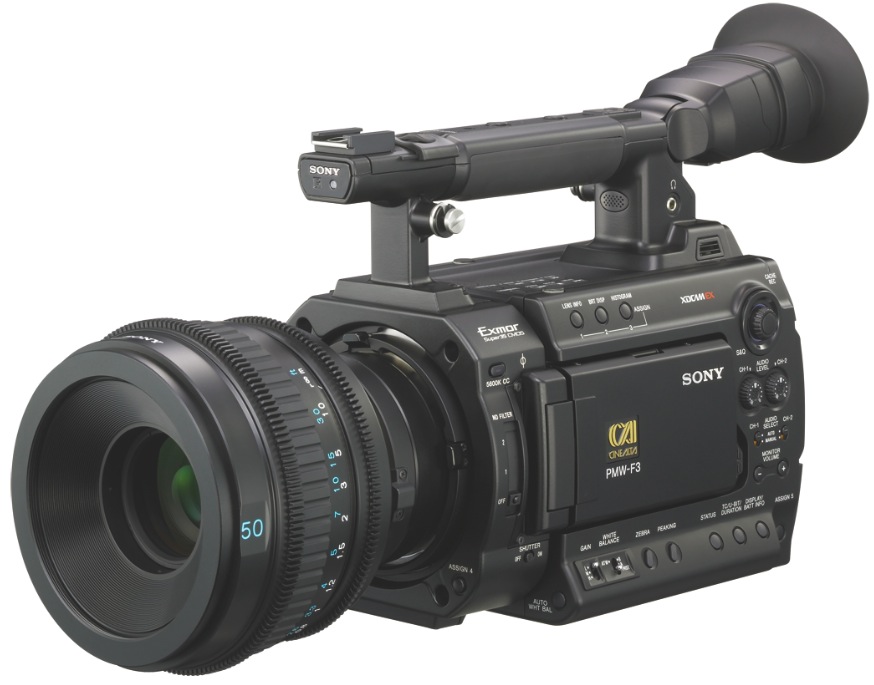 Entre las muchas novedades que veremos en Broadcast en IFEMA del 25 al 28 de octubre por parte de Sony destaca el PMW-F3, un camcorder con bajo consumo energético que está equipado con un sensor CMOS EXMOR Super 35, una montura para lentes PL y una tarjeta de memoria SxS para grabar en Full HD 1920×1080. Esta cámara permite grabar en condiciones de baja iluminación utilizando sólo la luz ambiental. Cuenta con un conector de salida HD-SDI Dual-Link para dispositivos de grabación externa. La cámara se suministra con tres lentes PL de longitud local fija (35/50/85 mm. T2.0). Graba en XDCAM EX y cuenta con una operativa muy intuitiva y perfecta para la integración con las principales aplicaciones de edición no lineal.
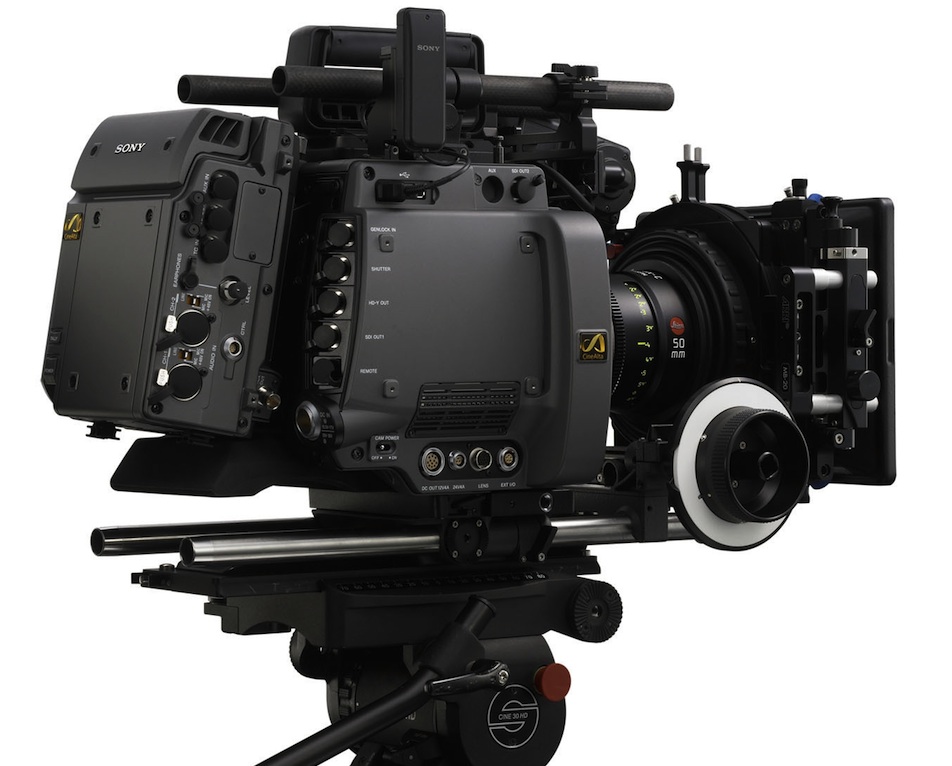
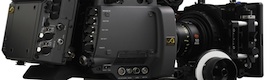
Broadcast IT 2011 será una buena oportunidad para conocer más destalles del próximo lanzamiento de Sony: la nueva F-65. Esta cámara para cinematografía digital se caracteriza por su sensor Super 35 mm 8K CMOS de 20,4 millones de píxeles, capaz de producir imágenes de 4K reales con un amplio espacio de color, rango dinámico y sensibilidad, además de una excelente relación de señal-ruido y posibilidad de trabajar a cuadro variable entre 1 y 120 frames por segundo.
Su extraordinaria calidad de imagen, puede ser capturada en las nuevas tarjetas SRMemory, mediante el nuevo grabador externo SR-R4 de la serie SRMaster, a una tasa sostenida de 5 Gbps, almacenando aproximadamente una hora en 4K 16-bit RAW a 24 fps en una única tarjeta de 1 TB de capacidad. Cuenta con un sistema de resolución múltiple, HD (1-120p), 2K y 4K (1-60p), lo que permite cubrir cualquier tipo de producción cinematográfica y de televisión.
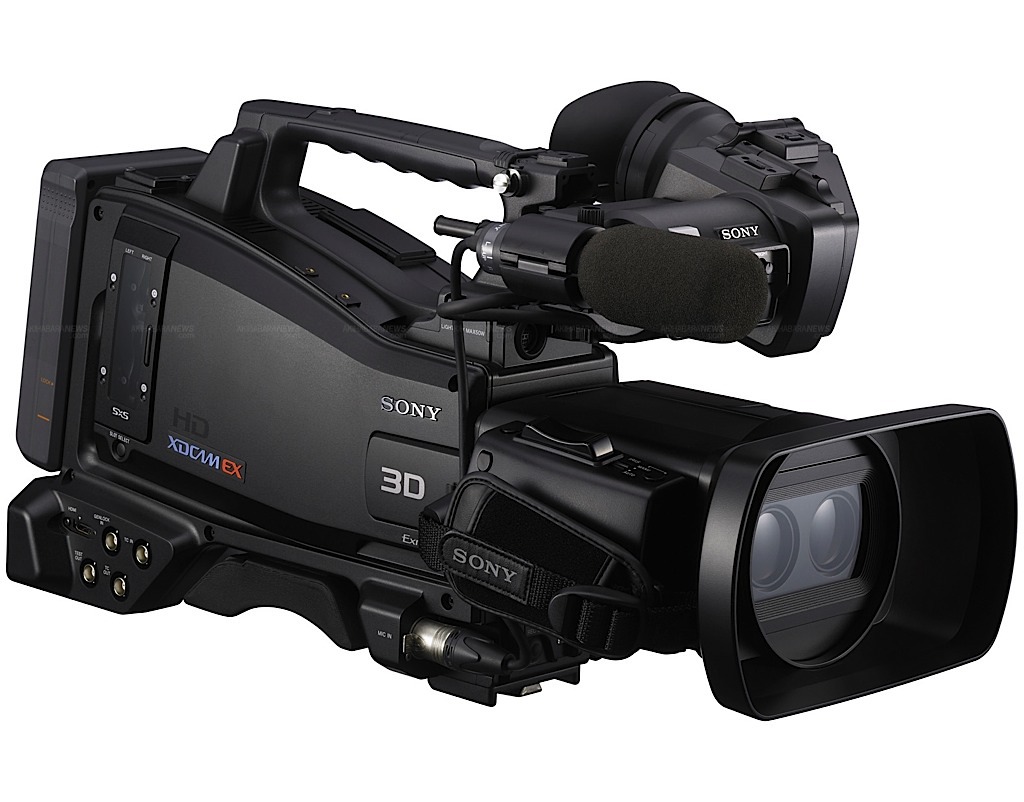
 En Broadcast 2011 podremos ver la primera videocámara 3D de hombro de Sony, la PMW-TD300. Enmarcada en la línea XDCAM EX, cuenta con dos lentes y dos pares de sensores CMOS de 1/2. Graba en dos tarjetas SxS simultáneamente usando el mismo formato MPEG-2 HD 4:2:0 con un “wrapper” MP4 con una tasa de bits de hasta 35 Mbps. Esto permite a editores profesionales incorporar los archivos directamente en el flujo de trabajo.
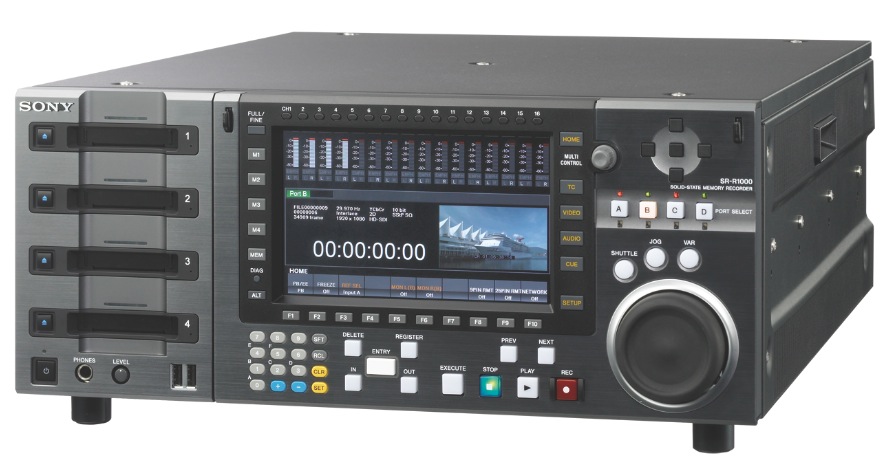 SR-R1000
Otra novedad a destacar es el grabador SR Master HDCAM SR diseñado para grabar en HD y 3D. Puede utilizar hasta 4 tarjetas de memoria SR y cada una de ellas es capaz de grabar dos entradas simutáneas HD-SDI 1080p.
Con grabación multicanal en estado sólido removible, cuenta con cuatro puertos de entradas y salidas HD, 3D, 4K y hasta 8 canales de grabación y reproducción multicámara. Su formato de grabación es MPEG-4 SStP a 220 Mbps, 440 Mbps y 800 Mbps. Además, puede grabar sin compresión DPX, 16 canales de audio PCM de 24 bits y cada canal de video de alta definición tiene capacidad de 3G SDI dual-link, 1080/60p 3D. Cuenta también con alta velocidad de medios extraíble con memoria interna fija (máximo de 8 TB) y con capacidad de material SR Lite (12 TB, con unas cien horas).
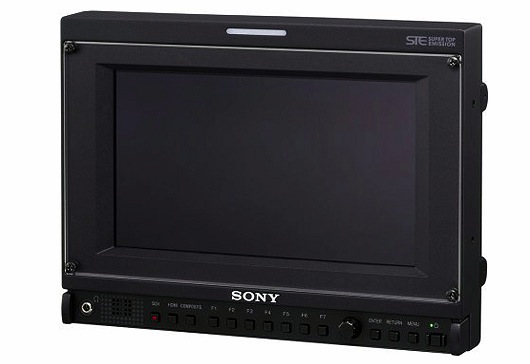 Monitores OLED
En monitores, destacar la nueva serie PVM de monitores OLED con tecnología Super Top Emission (STE). Estos diodos emiten una luz orgánica que permite llevar a las pantallas planas para entornos de producción y postproducción a un rendimiento nunca visto. El color negro se ve comparado con los CRT con una profundidad inigualable. De hecho, tanto en NAB como en IBC se mostraba esta gama con el monitor apagado y encendido en negros sin apreciar ninguna diferencia… oscuridad total.
Destacar también que el desenfoque de libre movimiento es equivalente a un CRT, el espacio de color está más allá de las capacidades de CRT, provee SMPTE/EBU en SD y la gama de colores nativos supera las especificaciones ITU-RBT.709 para la reproducción de colores máa vivos.
Los drivers de 10 bits en los paneles OLED aseguran una excelente uniformidad de pantalla a pantalla permitiendo una reproducción precisa del color en un panel de múltiples entornos de estudio y difusión móvil.
Los PVM-1741 y PV:2541 vienen equipados con un avanzado monitor en forma de onda, medidores de alto nivel de audio y muestreo de código de tiempo. Los nuevos monitores disponen de dos entradas SDI (3G/H/SD) y una salida, una entrada y salida compuesta entrada y salida de audio RCA, puertos paralelos y serie y, además, el 1714 también incluye DC para aplicaciones remotas. Todas estas funciones son controladas bajo un panel de control integrado.
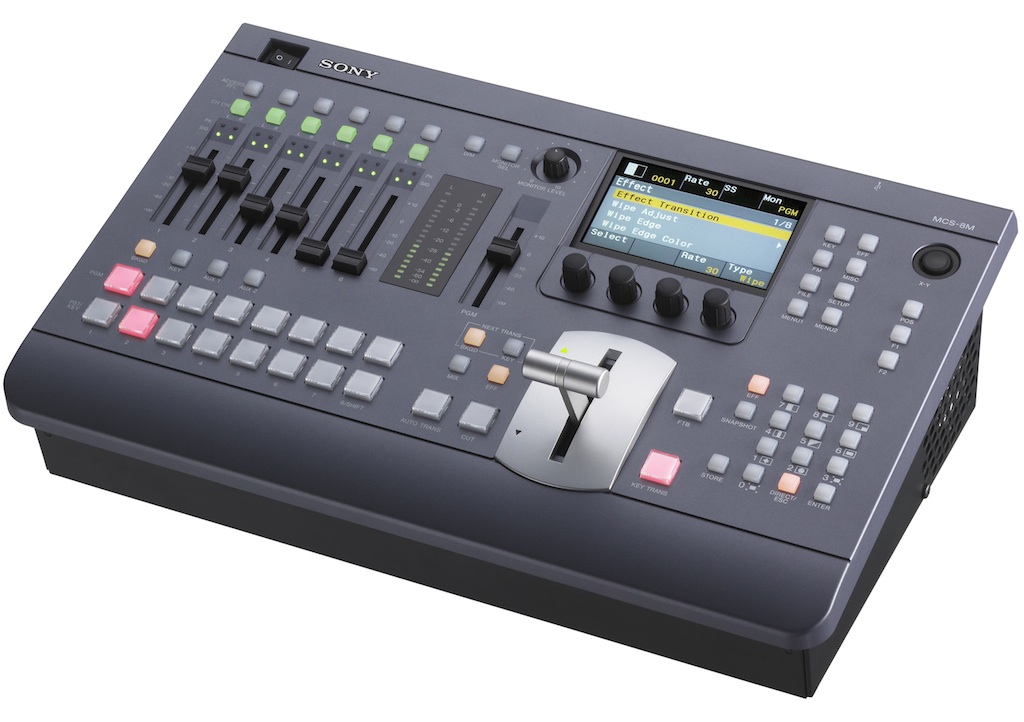 MCS-8M
Otra novedad en Broadcast 2011 será el mezclador multiformato con sincronizador de cuadro para cada entrada y mezclador de audio de seis canales. Está diseñado pensando en su fácil uso y cuenta con una gran variedad de patrones predefinidos de transición de efectos digitales DME, salida directa a monitor con multipantalla, un canal de memoria de cuadro, función de congelación de entrada para cada fuente, capacidad para importar imágenes fijas a través del puerto USB, modo de operación para producción estereoscópica…
Did you like this article?
Subscribe to our NEWSLETTER and you won't miss anything.
Related articles
 Sony previews its latest cloud and IP proposals at NAB Amplify
 Aicox presents Aveco's proposals for an automated, stress-free and error-free issuance
 Akamai presenta en IBC nuevas propuestas dirigidas al sector de OTT
 Sony exhibits its latest proposals for content creation, production and management at the Technology Days
 Ceproma exhibits interesting proposals from Canon, Sony, Ovide, Cmotion or Easyrig at BIT
 Cellnex Telecom presents its latest proposals to enrich viewer interactivity
 Sony advances its proposals for 4K, IP and HDR
 Blackmagic presents its latest proposals in its mobile demonstration unit
 Clearcom presents the latest Vidigo proposals for multi-camera and automated production
 Secuoya presents its two proposals for the allocation of new DTT licenses
 EMC presents in La Coruña, together with Cisco, Intel and VMware, its Cloud Computing proposals
 Sony will present new proposals in the XDCAM HD range at NAB
 Sony will exhibit its latest proposals at CAPER 2011
 Egatel presents its new designs for DTT at IFEMA