





Perfilando el futuro de la radio… en digital
Representantes de la Administración y operadores públicos y privados se han dado cita este miércoles en Broadcast IT 2011 para debatir sobre el futuro de la radio en España y el impacto que la digitalización tendrá en el medio.
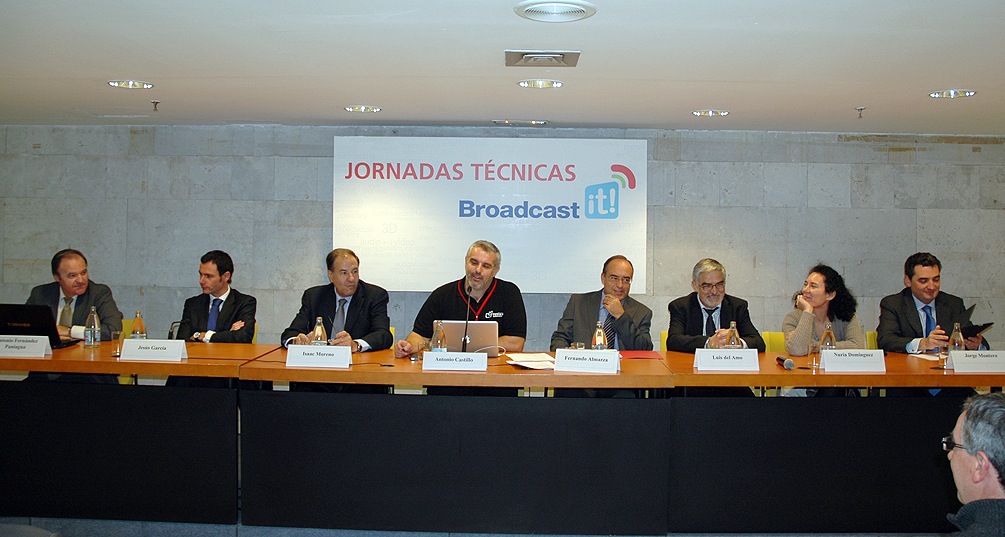
IFEMA ha acogido este miércoles en el marco de Broadcast IT 2011 una interesante mesa redonda moderada por Antonio Castillo, director de Panorama Audiovisual, en la que se ha debatido sobre el presente y futuro de la radio en España.
Antonio Fernández Paniagua, subdirector general de Planificación y Gestión del Espectro (MITYC), ha abierto la mesa redonda dedicada a la radio asegurando que solo las actuaciones conjuntas globales a nivel de la Unión Europea asegurarán la viabilidad del desarrollo de la radio digital como ha acontecido con la tv digital terrestre. En esta línea, el Consejo de Ministros aprobó el pasado 10 de junio el nuevo Plan de Digitalización de la Radiodifusión Sonora Terrestre en España (Real Decreto 802/2011) partiendo del principio de la neutralidad tecnológica para que se pueda realizar la migración a la tecnología DAB+ en línea con los acuerdos adoptados por los agentes del sector en España, así como las iniciativas que se están llevando a cabo en otros países de la Unión Europea. Este Plan venía a modificar el Plan Técnico Nacional de 1999.
Como ha destacado Fernández Paniagua, la Secretaria de Estado estudiará las propuestas de las operadores de cara a la posible redistribución de los programas en cada uno de los múltiples actuales. El Plan establece también diferentes actividades de promoción e impulso de la radio digital de cara a incrementar la oferta de aparatos receptores y la generalización de una programación diferenciada en digtal así como la realización de un estudio sobre las condiciones y requisitos necesarios para el establecimiento de una fecha para el apagón analógico.
Fernando Almarza, subdirector técnico administrativo de RNE, ha centrado su intervención en lo que supone la irrupción del DAB+ como revitalizador de la radio digital con una mejor optimización de la codificación, triplicando o, incluso cuadruplicando, el número de programas dentro de un múltiplex. Almarza ha destacado que ya se están llevando pruebas coexistiendo DAB con DAB+. Almarza se ha preguntado qué no hicimos con el DAB que deberíamos hacer en esta ocasión ya que “la digitalización es irreversible y la radio es la asignatura pendiente, con unos costes de transición bajos”. “En esta ocasión deberíamos aprovechar más las ventajas que aporta la digitalización y contar con una red de mejor cobertura, ya que no es suficiente poner en el aire y esperar…”, ha asegurado.
Isaac Moreno, director técnico de la Cadena COPE, ha asegurado que “la radio no puede enfrentarse al mundo actual si no se digitaliza, aunque ésta no ‘progresa adecuadamente’. ¿Por qué? ¿Por el modelo?, ¿por falta de coordinación entre los diferentes países?… quizás un poco de todo. El Real Decreto es la constatación de un fracaso ya que no hemos sido capaces de echar adelante la radio digital”. “Quizás deslumbrados por el éxito de la digitalización de la televisión y a pesar del tiempo transcurrido, no parece que estemos al final del camino”, ha añadido Moreno. El director técnico de COPE ha remarcado el caso de Reino Unido que, pese a estar en la avanzadilla en la digitalización de radio, sólo el 20% de los 8,5 millones de receptores vendidos el último año incluye un sintonizador DAB y la cobertura de los múltiples nacionales alcanza el 84,5% dejando amplias zonas de sombra aún.
“No obstante, la radio no puede quedarse fuera del mundo digital. La radio debe estar presente en las comunicaciones de banda ancha. Sin olvidar, que los ‘nativos digitales’ han desbordado la etapa de los teenagers”, ha afirmado. Con respecto a Internet, ha asegurado que la radio híbrida sumará las ventajas de la distribución punto-multipunto de la radio tradicional y los servicios de valor añadido y contenidos sincronizados que la Red puede aportar. El uso de estándares como Radio VIS, Radio TAG y Radio EPG permitiría una convergencia más fluida y sencilla para presentar contenidos en radio convencional e Internet a “coste prácticamente cero”.
Jesús García, director gerente de Radio Marca, ha afirmado que si bien la digitalización es necesario no hay que olvidar que a día de hoy la radio analógica sigue estando muy viva. García ha recordado que “cerca del 40% de las frecuencias que se convocaron en 2006 aún no han sido asignadas”.
Luis del Amo, director técnico de la Cadena SER, ha hecho un repaso a las diferentes familias de codificadores de audio aplicadas a la radio. Del Amo ha hecho un repaso a los diferentes estándares empleados en los últimos años en contribución, distribución entre estudios y difusión, destacando que la arquitectura AAC-H· v2 sería la codificación de más alta eficiencia con la ventaja de incorporar estéreo paramétrico. DAB+, DRB, DRM+, DMB, HD Radio, ISDB, DAB-IP y DVB-H han normalizado este patrón.
Jorge Montero, director técnico de ABC Radio (Punto Radio), ha hecho un repaso sobre las posibilidades que el uso de las redes IP otorga a la contribución y difusión de señales, haciendo un llamamiento a una armonización de estándares y sistemas entre los diferentes fabricantes.
Por último, Nuria Domínguez, directora técnica de Onda Cero, ha centrado su ponencia sobre las posibilidades que la Radio 3.0 otorgará al modelo de negocio con un gran protagonismo de las redes sociales como un canal de participación que aportan notoriedad y, por lo tanto, audiencia. “Las redes sociales aportan notoriedad de marca, que se convierte en audiencia. La web es una extensión del producto y permite el desarrollo de nuevas formas publicitarias y la captación de nuevos ingresos”, ha comentado.
Did you like this article?
Subscribe to our NEWSLETTER and you won't miss anything.
Related articles
 Radio Kalaritana encara su futuro con la Capitol IP de AEQ
 El futuro de la radio: tecnologías (y consumo) en redefinición
 Clamor for a new Digital Radio Technical Plan at the DAB+ Digital Radio conference of RTVE and WorldDAB
 Rádio Escola forma al futuro de la radiodifusión con AEQ Forum IP Split
 La oferta digital, clave para el futuro de CRTVG
 Radio visual en Atresmedia: ¿El futuro del medio o un presente efímero?
 La Asamblea Anual WorldDAB toma el pulso al presente y futuro de la radio digital
 Radio Aalsmeer pone en marcha su estudio digital con soluciones de radio virtual de Lawo
 Jóvenes y nuevas tendencias de futuro en el consumo de radio y televisión
 El VI Seminario ‘Radio y Red’ de Aragón Radio analizará la tecnología digital al servicio de los medios de comunicación
 Tuning into the future: Radio and sound production in the 21st century
 Radio corporativa: la radio del futuro
 Radio Tunisienne Chaine installed a digital Radio-Assist system from Netia
 Cine digital: el futuro en el presente