





Panasonic convinces at the first 3D Olympic Games
Si el color o la alta definición irrumpieron en citas olímpicas anteriores, el boom de la estereoscopía, como no podía ser de otro modo, se está produciendo también coincidiendo con unos Juegos Olímpicos.
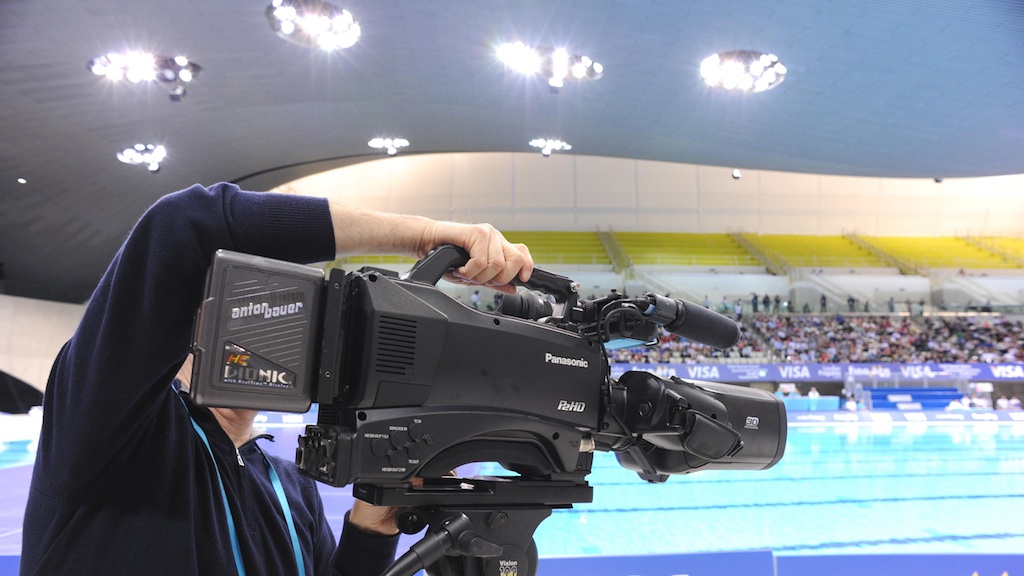
Londres 2012 se ha convertido ya en el evento mundial con mayor número de horas producidas en estereoscópico de la historia y la tecnología de Panasonic tiene mucho que decir.
Panasonic siempre ha acompañado al olimpismo a la vanguardia tecnológica. En los juegos de Barcelona en 1992, por ejemplo, se introducía por vez primera la grabación en 1/2” digital D3; en los juegos del 96, verían las primeras imágenes Super Slor Motion, se introducía el DVCPRO 1/4 y se montó por vez primera sobre laptop; cuatro años más tarde, en los olímpicos del 2000 en Sidney, se adoptaba el DVCPRO 50 como formato oficial de grabación; en 2004, se introducían por vez primera las tarjetas P2 y ya en 2008, los juegos de Pekín se grabaron en DVCPRO HD y P2 HD, jugando un papel determinante los camcorders con tarjetas P2.
Ahora, le toca le turno a Londres para volver a hacer historia en esta ocasión con la irrupción del 3D gracias a las cámaras AG-3DP1 y AG-3DA1.
Tanto Olympic Broadcast Services como NBC Olympics están trabajando mano a mano con el fabricante nipón para llevar a miles de hogares en todo el mundo una experiencia audiovisual única en tres dimensiones.
Como asegura el director de tecnología de Panasonic, Eisuke Tsuyuzaki Mashable, “la tecnología estereoscópica ha llegado muy madura a Londres ya que la probamos durante los Juegos de Beijing y los Olímpicos de Invierno de Vancouver así como en numerosos eventos deportivos en todo el mundo. Pero, sin duda, éste es nuestro mayor esfuerzo hasta la fecha”.
Junto a las más de 300 cámaras que cubren los Juegos en alta definición 2D, Londres 2012 cuenta con una treintena de cámaras ENG en 3D, una veintena de rigs estereoscópicos y hasta tres unidades móviles 3D que OBS ha desplegado para llevar a todo el mundo este acontecimiento en tres dimensiones.
Los camcorders que se utilizarán serán los P2HD AG-3DP1, de doble lente y grabación sobre tarjetas de memoria de estado sólido. Dando a poyo a estas cámaras encontramos también las ligeras AG-3DA1 que están permitiendo ofrecer imágenes en 3D con total flexibilidad y agilidad en la captación.
En EE.UU., las más de 300 horas de contenidos en 3D se están transmitiendo desde el IBC de Londres al Comcast Media Center en Colorado distribuyendo desde ahí la señal a redes como DirecTV, Time Warner Cable o Cablevision.
Lo mismo está ocurriendo en las regiones en todo el mundo, de Europa y Asia a América del Sur. Cerca de 12 horas de programación en 3D se están produciendo a diario, con las pruebas más destacadas y resúmenes con los mejores momentos.
Pero la 3Dmanía no sólo está invadiendo los hogares ya que en numerosos lugares, principalmente en Reino Unido, los Juegos en 3D están siguiéndose desde establecimientos públicos. Incluso, podemos encontrar bares que regalan la preceptiva gafa 3D al consumir varias pintas de cerveza…
Según estimaciones de Panasonic, alrededor de un millón de personas están siguiendo los juegos en 3D en todo el mundo.
Did you like this article?
Subscribe to our NEWSLETTER and you won't miss anything.
Related articles
 The Paris 2024 Olympic Games showcase the latest advances in broadcast technology
 Samsung, together with the IOC and OBS, aims to revolutionize the experience of the Paris Olympic Games
 940 Panasonic broadcast cameras, at the service of the Tokyo 2020 Olympic Games
 Panasonic heads into the final stretch ahead of the Tokyo 2020 Olympic Games
 Panasonic celebrates three decades as TOP sponsor of the Olympic Games in PyeongChang 2018
 PyeongChang 2018: first Olympic Games 100% in the cloud
 Eurosport redefines the broadcast of the Olympic Games at the 4K Summit
 Discovery and Eurosport present their coverage for the PyeongChang 2018 Olympic Games at the COE
 This will be the technical deployment of RTVE at the Rio 2016 Olympic Games
 The Rio Olympic Games will feature important technological innovations
 Panasonic will carry out a major technological display at the Sochi Olympic Games
 Coding with Sapec at the Olympic Games
 Anton/Bauer will collaborate hand in hand with Panasonic during the Olympic Games
 Panasonic: countdown at IBC for the first 3D Olympic Games