





This will be the technical deployment of RTVE at the Rio 2016 Olympic Games
For the first time in the Olympic Games, the Corporation proposes an operation based on a centralized editorial office; joint production for all radio, television and Internet services; remote realization; and auto metadata of content.
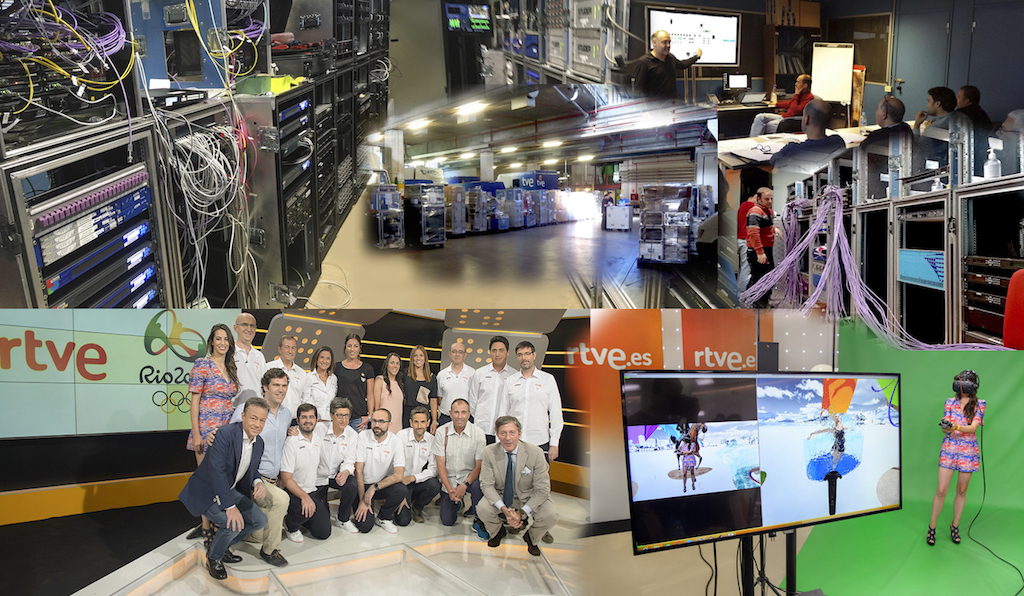
The director of TVE, Eladio Jareño, assured this week that “we will make a great display in Rio, we will be on all the channels, with more than 5,000 hours live.” A team of 273 people between Rio and Spain, the international production of two sports (“recognition and trust in our professionals”), and the “digital and social media” Games are three of the characteristics of this event, in which “RTVE wants to be at the forefront of innovation.”
To achieve this, over the last two years, a team from the Spanish Radio Television Corporation headed by David Valcarce, operational technical director; Víctor Sánchez, technical manager; Jesús García Romero, deputy director of support and maintenance of studies and mobile units; Manuel González, MCR coordinator; and Juan Carlos Blanco, head of the Digital Editorial Support Unit, has been working hard to get everything ready on August 5 to bring the excitement of the XXXI Olympic Games in Rio de Janeiro to the viewers and listeners of public radio and television.
More than a hundred RTVE professionals make up the team that will travel to Brazil for the Games. Specifically, 129 people will travel (6 will return after the initial assembly). They will be joined by the RTVE correspondent in Rio (3 people), and the technical commentators of some of the disciplines. A large team of 141 people will work from Spain in this operation.
In addition to transmitting and personalizing the official signal for Spain, the organization of the Rio Games has once again trusted RTVE for the international production of the track and mountain bike cycling events. An international recognition of the professional level of RTVE, which in London was recognized by the IOC with the 'Silver Rings'.
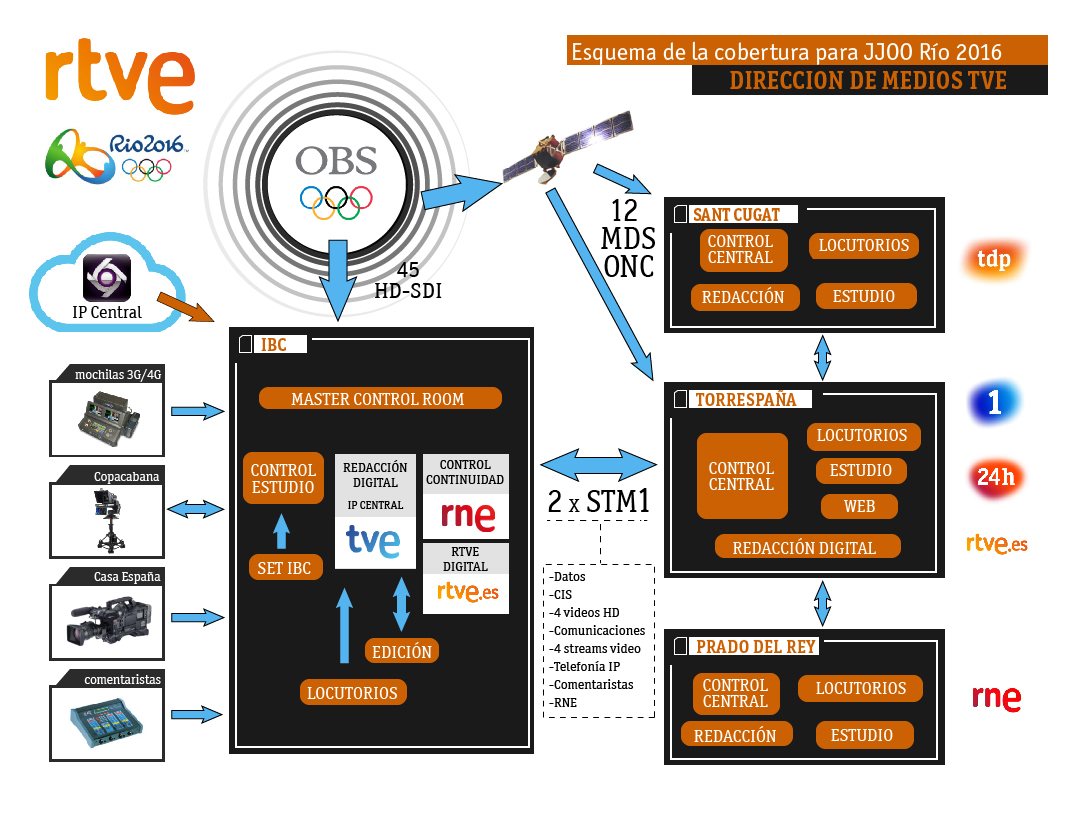
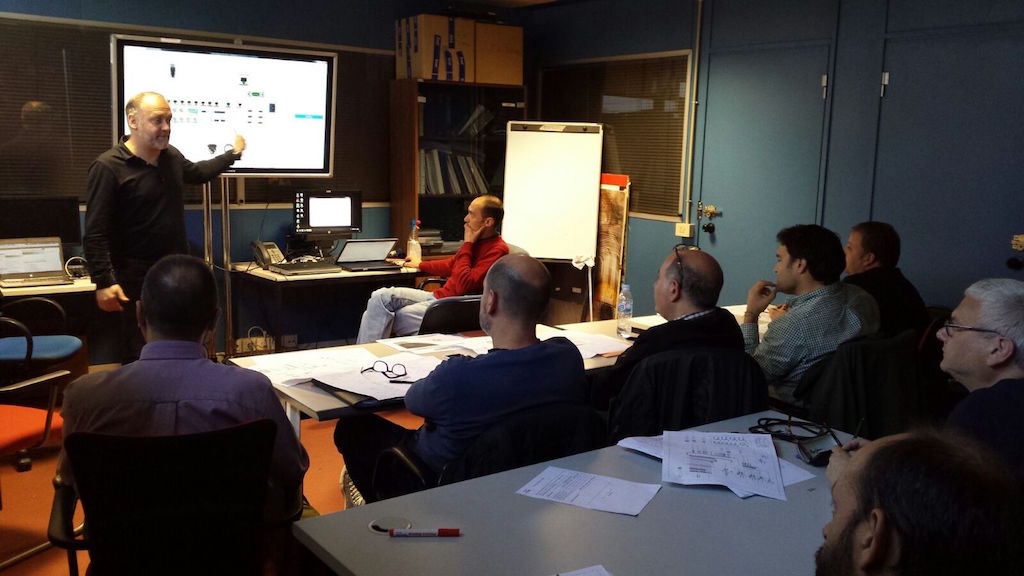 RTVE will have a 400 m² space in the IBC (International Broadcasting Center) for the technical means of recording and distribution of signals, digital writing, interview area, work spaces and radio studio. In the IBC located in the Barra Olympic Park (west of Rio de Janeiro), Spanish Television has centralized an important technical operation composed of a master control; a production control that will serve both the set that TVE will install in the heart of Copacabana Beach and the one that will be deployed at the IBC itself; a continuity control for Radio Nacional; and several editorial positions for TVE and RTVE.es; in addition to editing and voiceover.
In addition to the signals coming from the studio in Copacabana (with remote realization from the IBC under JPEG 2000 standard and Ethernet connection) and the set in IBC (for flash interviews), TVE will manage from Barra a series of 3G/4G backpacks (Ikusnet with between 6-8 SIMs from various operators), several ENG teams deployed to the hottest spots and eight commentator positions (AEQ).
All of these signals, along with the 45 institutional feeds that Olympic Broadcast Services (OBS) will provide in HD, will be selected and packaged to be sent to Spain through 12 MDS ONC (managed by OBS itself). These satellite signals will be received both at the RTVE Center in Sant Cugat (Barcelona) and in Torrespaña (Madrid), from whose controls and studies the continuity of Teledeporte (Sant Cugat), La1, 24Horas and RTVE.es (Torrespaña) will be carried out. The information generated by Radio Nacional will be produced as usual from the Radio House in Prado del Rey (Madrid) using the contribution network currently operational in the Corporation.
It is noteworthy that from the IBC itself, TVE will directly produce a large part of the programming of La1 and the 24 Hours connections.
All content generated in Rio will be stored on a server Avid Isis with immediate access and on disk for deep archive or documentary collection that will return to Madrid with all the material once the Games are over. The entire cataloging and indexing process will be carried out using auto-metadata software developed by the Corporation itself that will allow the use of the metadata provided by OBS and those marked by TVE's documentarians. OBS will offer production metadata (Data Broadcast Feed, DBF), which will include information on athletes, times, baskets... and which TVE will use in its Avid feed, adding to the metadata included by the Corporation's documentary filmmakers.
In parallel with the satellite connection, RTVE will have two STM1 via fiber that will link both Atlantic coasts to bidirectionally transport data, CIS, 4 HD video signals, communications, 4 video streams, IP telephony, signals from commentary stations and RNE signals. In this case, Nimbra technology plays a decisive role, an advanced network for transporting video, 5.1 audio and data.
 With integrated video interfaces for IP/Ethernet and SDH/Sonet, Nimbra has allowed RTVE to deploy a large-scale multi-service network with a significant reduction in its operational costs. Among the advantages of this solution is an exclusive video and multiservice transport over IP using the Nimbra technique with lossless routing and an additional mechanism to resolve problems inherent to QoS in the IP transport used.
It should be noted that the work format adopted in Brazil is the “American” 59.97, so it was not possible to bring all the signals or do a completely remote production because it would mean a complex network of converters and format changes adding layers of complexity. For this reason, RTVE chose to carry out the bulk of the production from the Olympic venue itself, converting only those signals that will finally be transported to Sant Cugat and Madrid.
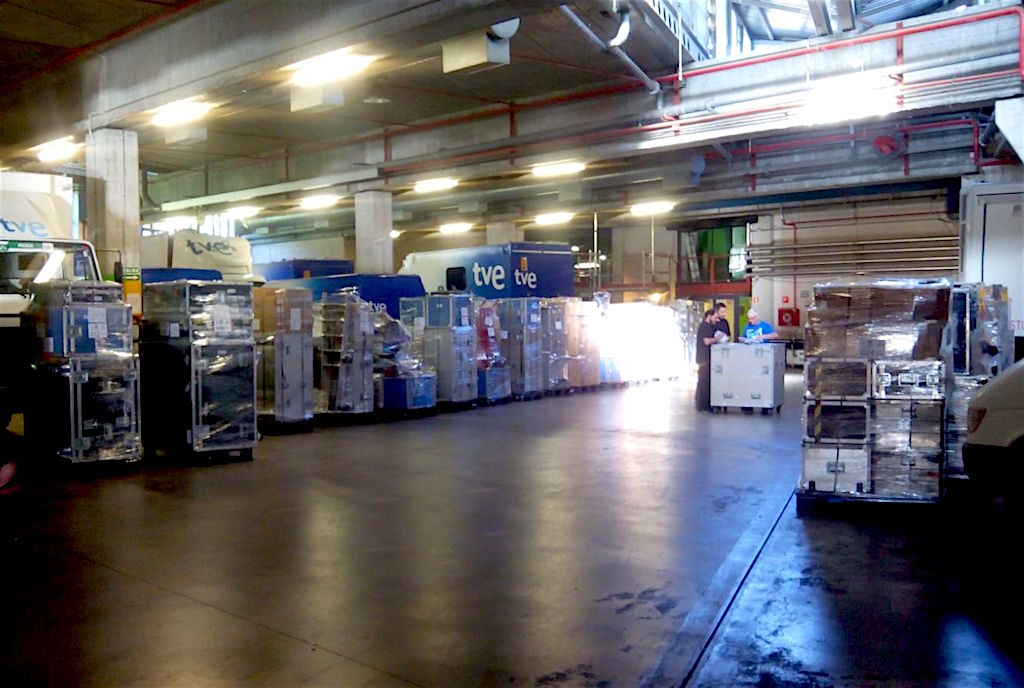
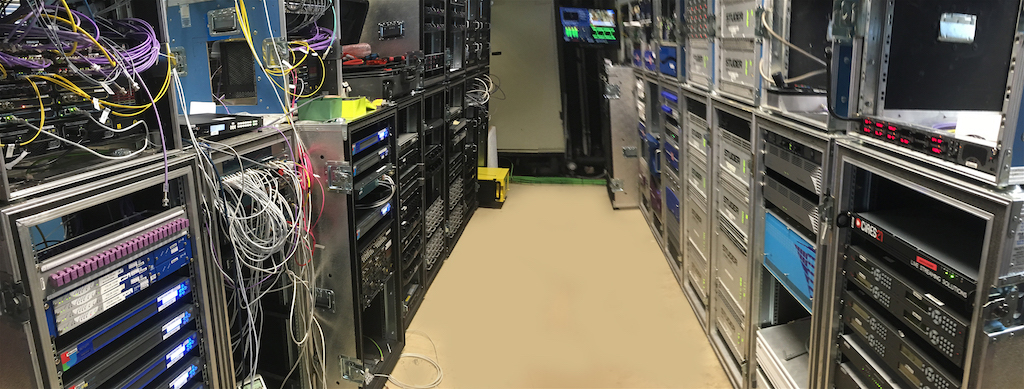
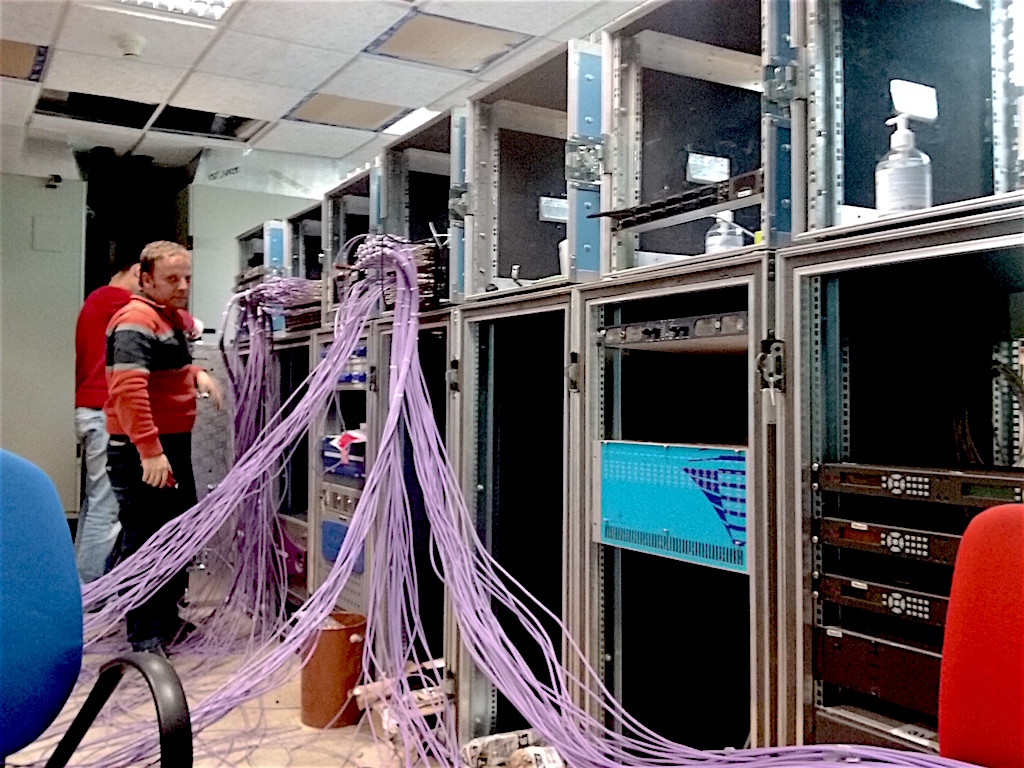
This aspect, along with other issues such as the frequency of the electrical grid used in Brazil, were analyzed thanks to the deployment in Prado del Rey of a pilot in which all the equipment that would travel to Rio was thoroughly tested in different working conditions. This fully operational model was shipped a few weeks ago to Brazil in two containers with all the equipment already “racked” and wired, ready for deployment at the IBC where it arrived a few days ago.
The encoding will be carried out with Sapec equipment in MPEG-2 and MPEG-4 since MPEG-2 generates less delay (below half a second of delay) thus facilitating live performances in different programs.
Studio in Copacabana
TVE will have a studio in the privileged enclave of Copacabana from which all Olympic information will be broadcast. RTVE professionals will also be able to report from any place where the news occurs thanks to the use of backpacks and ENG equipment.
The study will be carried out remotely from the IBC itself in which matrices have been installed. Utah Scientific, titrators and augmented reality set with technology ChyronHego, converters SAM y Albalá Engineers (optical-optical), two audio consoles Studer Vista, a Kaleido multi-screen Grass Valley and a Kahuna Mixer (SAM). For intercommunication, a digital matrix has been chosen Riedel Artist integrating with the system already deployed in TVE's central studios so it will be possible to have fluid communication between Sant Cugat, Torrespaña and Río as if they were in the same enclave.
In the graphic part, ChyronHego's BlueNet solution will play a decisive role, which includes a powerful Camio server that will coordinate the communication between the Avid editorial system and the ChyronHego broadcast devices with Lyric Pro, allowing the journalist to very easily update graphic templates within their iNews client using the ChyronHego LUCI plugin and include them in the schedule, and Camio will then send all the graphics to the broadcast devices and keep them synchronized with the schedule. from iNews. The control of the graphics will be managed by the ChyronHego ISQ system with a custom keyboard that will allow control of all the graphics in the air.
Augmented reality graphics will also be obtained thanks to Lyric Pro by sending the 3D graphics in real time to ChyronHego's Virtual Graphics system, including it in the scene as another element.
Open, collaborative and offshore workflow
For the first time, RTVE faces the Olympic Games based on a joint production scheme on television, radio and the Internet with an editorial team that can work remotely. Reporters from the stadiums or venues themselves will thus be able to produce news in record time.
One of the key pillars in this technical development of Spanish Television is found in the Avid Interplay Central platform, a cloud solution that extends the audiovisual production environment to mobile and web-based devices. This platform simplifies production by allowing professionals to create, edit, distribute and manage content easily.
Whether creating new packages, cataloging footage, editing, and submitting video for review and approval, users save multiple steps with a unified view based on a standard browser and from any location.
Interplay Central allows you to search, browse and transfer audiovisual content between multiple workgroups even if they are in different locations, and share links to provide direct access to the content. In addition, it includes functions to create, view, export and delete text markers and video subclips or live feeds, making it easy to find relevant content.
The system is so agile that journalists in the field with the sole help of their tablet or laptop will be able to create, review and edit iNews stories and review Interplay video sequences from wherever they are working.
More than 600 hours of Olympic coverage
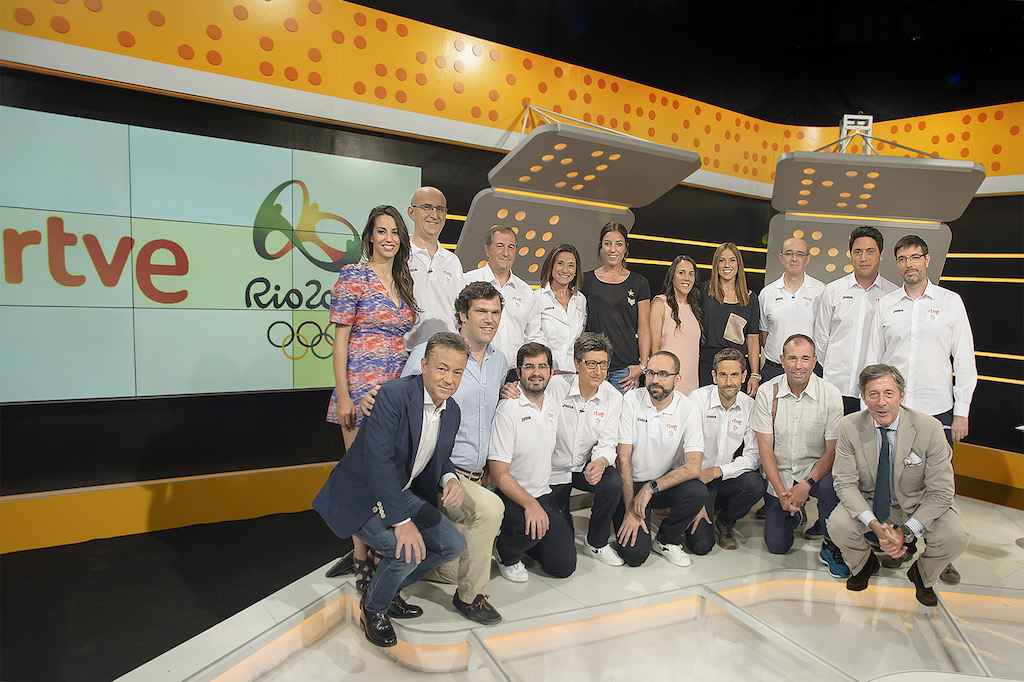
Spanish Television will broadcast more than 600 hours of Olympic programming. On La 1, in two slots: from 4:00 p.m. to 9:00 p.m., and from 10:00 p.m. to 4:00 a.m.; and on Teledeporte in continuous broadcast with live tests and highlights every day.
The day will start at 3:00 p.m. in the Sports block of the Telediario from Brazil, with Sergio Sauca (TD1) and Jesús Álvarez (TD2). In the afternoon, Jesús Cebrián and David Figueira take charge of the programming: from 4:00 p.m. to 5:00 p.m., with a summary and preview program of the day and, from 5:00 p.m. to 9:00 p.m., with connections to different competitions. At night, after TD2, María Escario and Juan Carlos Rivero take over with the preview of broadcasts and the main live tests. La 1 will also broadcast the opening and closing ceremonies, which will be narrated by Paloma del Río and Amat Carceller.
Teledeporte will become the Olympic channel par excellence and will entirely dedicate its programming to what is happening in Brazil. From 2:00 p.m. to 5:00 a.m., live tests and continuity from the set with Rogeli Vázquez and África de Miquel, and in the morning rebroadcasts of the most notable tests. Also, from day 2, Connection TDP-Rio from Copacabana.
Canal 24 Horas will make live connections every day, while La 2 will include test broadcasts sporadically in case important events coincide.
Direct, cross-platform and virtual reality
RTVE.es is committed to a large deployment that will include 4,500 hours of live programming and 6,000 of Video On Demand (VOD) in up to 19 live channels so that users do not miss anything and choose what to watch at any given time. In addition, video meetings with the protagonists, tests that are not included on television and exclusive content prepared by RTVE Digital's special envoys.
For the first time, all signals will be available from any device: web, mobile phone, tablet and through the Red Button on connected televisions. Another new feature that is being incorporated is a smartwatch application with the latest news and the competition medal table. Users will also be able to follow everything that happens in Rio through social networks with extensive following and exclusive content.
The live broadcast will be completed with chronicles, interviews, reports, minute by minute of the star tests, last minute information, videos of all the tests and a complete data board, statistics and medal table.
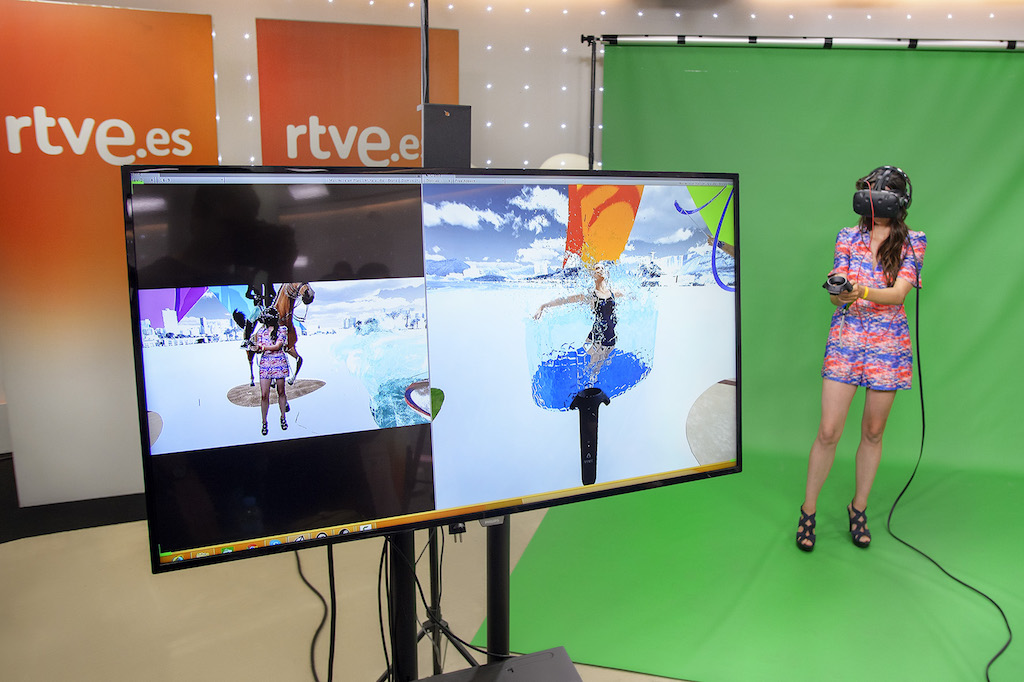
RTVE.es is committed to virtual reality to bring the Olympic spirit closer with Heroines: Live Rio, an app with five reports to experience first-hand the training of some of the great Spanish talents in Rio. Athletes of the level of Gemma Mengual and Ona Carbonell dive alongside the users in the pool to explain how they feel and train for the great event in world sport. Maialen Chorraut, bronze in London; Beatriz Ferrer Salat, in her sixth Olympic participation; the Spanish rhythmic gymnastics team, which has stood on an Olympic podium for the first time in 17 years; and the national rugby team, a sport that returns 80 years later, are the other protagonists of this series of immersive reports. The videos, recorded in 360º and with Virtual Reality graphics that explain the keys to each sport, bring the user closer to the intimacy of these heroines' training.
Alejandro Vega, director of RTVE Digital, has highlighted the 4,500 hours live and the more than 6,000 on VOD. The multiplatform, the Red Button and virtual reality are the three characteristics of RTVE.es' commitment: "they are the most social Games. In addition, we will transfer the other River outside of the competition through an immersive experience. Our objective was to create a narrative that combines information, dissemination and emotion."
National Radio
RNE will once again become a reference to follow the Olympic event on the radio. The public broadcaster will keep its programming open during the Games with more than 120 hours of live programming so that listeners do not miss the most important events. Daily, RNE mornings will include a summary and progress of the day; in Diary of two, a direct block from Rio; and entries in the bulletins from 3:00 p.m. to 4:00 a.m.
Manu Martínez and Jorge Duato take charge of the Rio 2016 Special which, from 8:00 p.m. to 10:00 p.m., will bring the current events of the day to Radio Nacional listeners. On Radio 5, Rio 2016 Special, from 6:00 p.m. to 6:30 p.m., and on Radio Exterior, within The locker room, from 1:00 p.m. to 2:00 p.m.
There will be no shortage of live broadcasts of the most notable Spanish participation, relevant events from the rest of the disciplines, as well as the opening and closing ceremonies.
Did you like this article?
Subscribe to our NEWSLETTER and you won't miss anything.
Related articles
 Almost 70% of the Spanish population followed the Paris Olympic Games on RTVE at some point
 Manolo Romero, a reference in the technical deployment of the Olympic Games from Mexico 68, dies
 Atos Live Sports Results improved the experience of fans who followed the Olympic Games on RTVE
 The Olympic Games and virtual reality will be two of the pillars of debate at the 4K-UHD Summit 2016
 Data Media integrates a transcoding system for TVE's coverage of the Olympic Games
 RTVE will reinforce coverage of the Rio 2016 Paralympic Games
 The Youth Olympic Games had a great display of virtual graphics with Ventuz technology
 Great technical display by TVE on the night of the Goya
 Panasonic will carry out a major technological display at the Sochi Olympic Games
 Great technical deployment of TVE, with state-of-the-art media, in the Swimming World Cups
 Olympic Games on TVE, RNE, RTVE.ES, on mobile, tablet and connected television
 Great technical display by TVE on the night of the Goya
 The San Fermines start on TVE with a great technical display
 RTVE acquires the broadcasting rights in Spain for the 2016 Olympic Games