





Sony encourages reinventing the audiovisual business in its roadshow 'The future is in your hands'
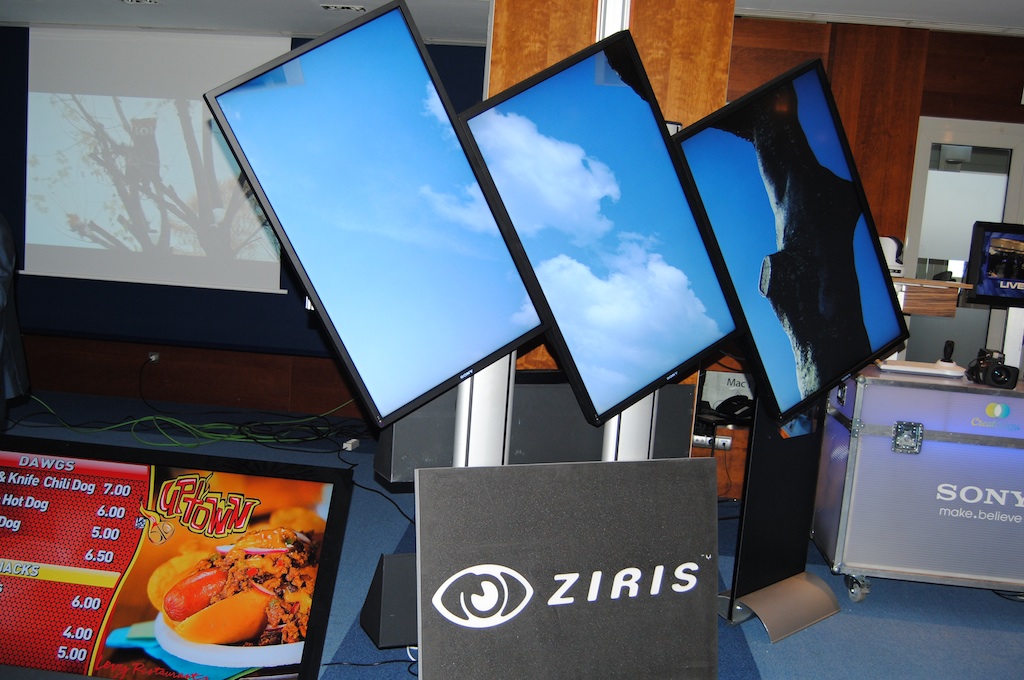
In the roadshow 'The future is in your hands' Sony shows its latest innovations presented at IBC. But beyond specific equipment, these sessions are serving to exchange impressions between professionals and collect the ideas that Sony offers them to rethink workflows and new production environments in times of economic difficulties.
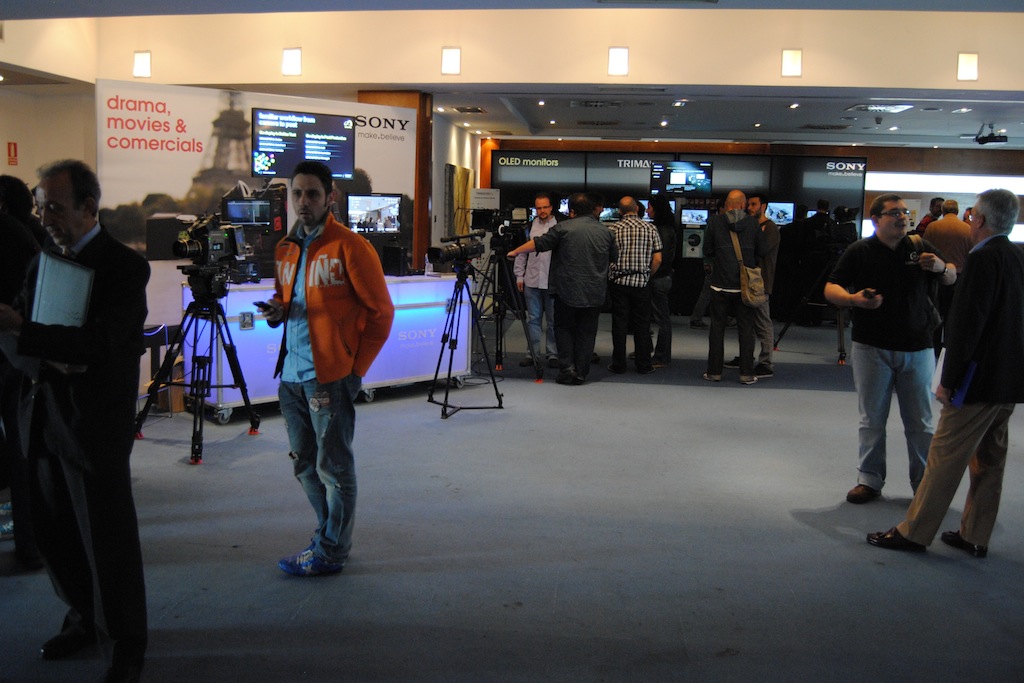
Madrid and Barcelona host the roadshow this week The future is in your hands which shows the latest news presented at IBC. But beyond concrete solutions, this roadshow is serving to exchange impressions between professionals and collect the ideas that Sony It allows them to rethink workflows and production environments in times of economic difficulties.
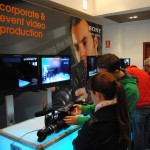
The equipment exhibition includes solutions for event production, an area in which Sony is making a strong presence with the NXCAM and
For live events, the new PMW-320 in triax studio configuration, the HXC-D70 with fiber optic adapter, and the possibility of IP configuration control for BRC-Z700 and BRC-Z330 and even 3D with the PMW-TD300 draw attention.
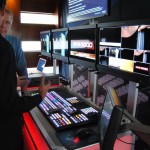
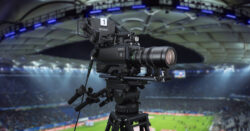
In terms of sports or live concert production, the new HDC-1700 camera system, the IP configuration control for BRC-H900 and the MVS-3000 mixer stand out.
For those who work in information environments and require a fast and efficient workflow, you will find the XDCAM HD422 PMW-500 and PMW-200 camcorders an efficient answer.
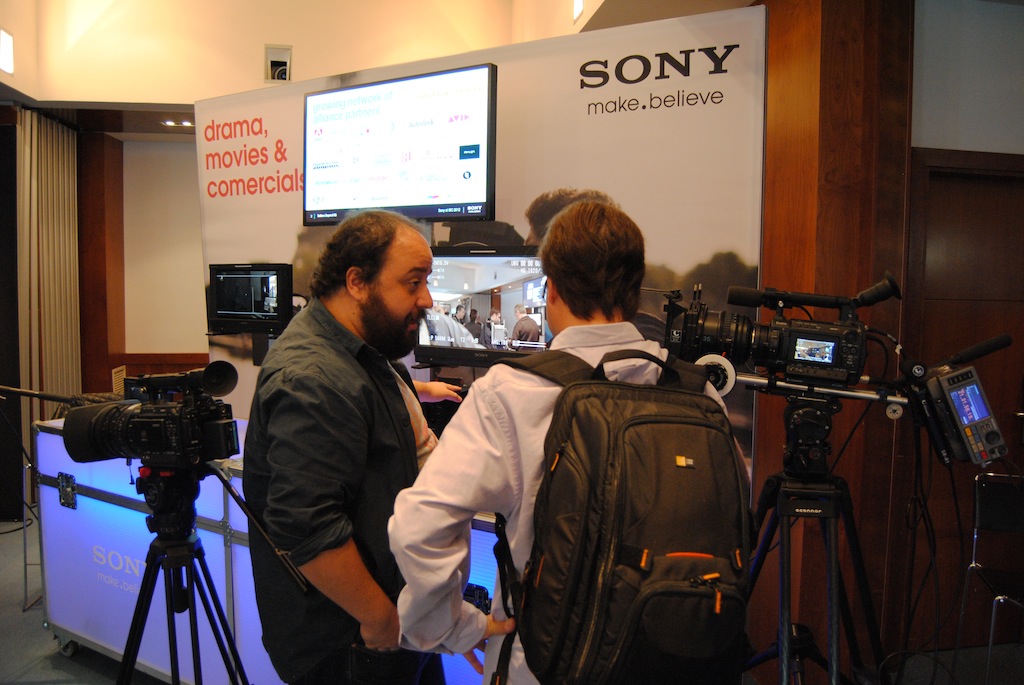
But perhaps one of the areas that is attracting the most attention is that dedicated to the new 35mm camcorders with the NEX-FS700, PMW-F3 and F65, designed for advertising and fiction production.
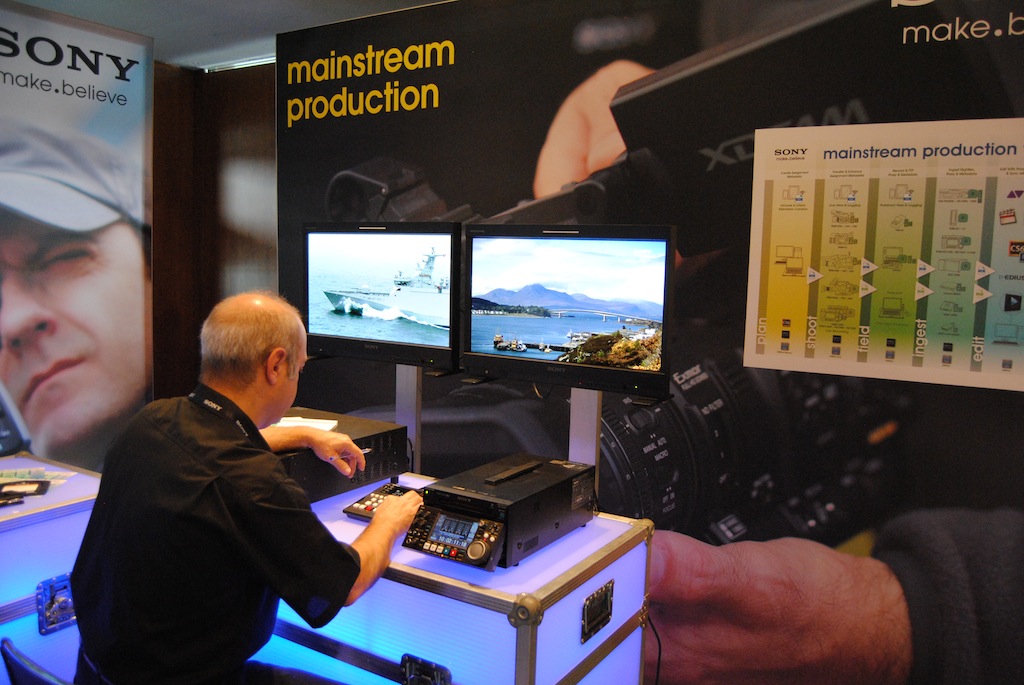
A specific area of the roadshow is intended to show a Mainstream environment working under any format with XDCAM EX PMW-F3 and XDCAM HD422 PDW-F800 and PDW-680 35mm camcorders.
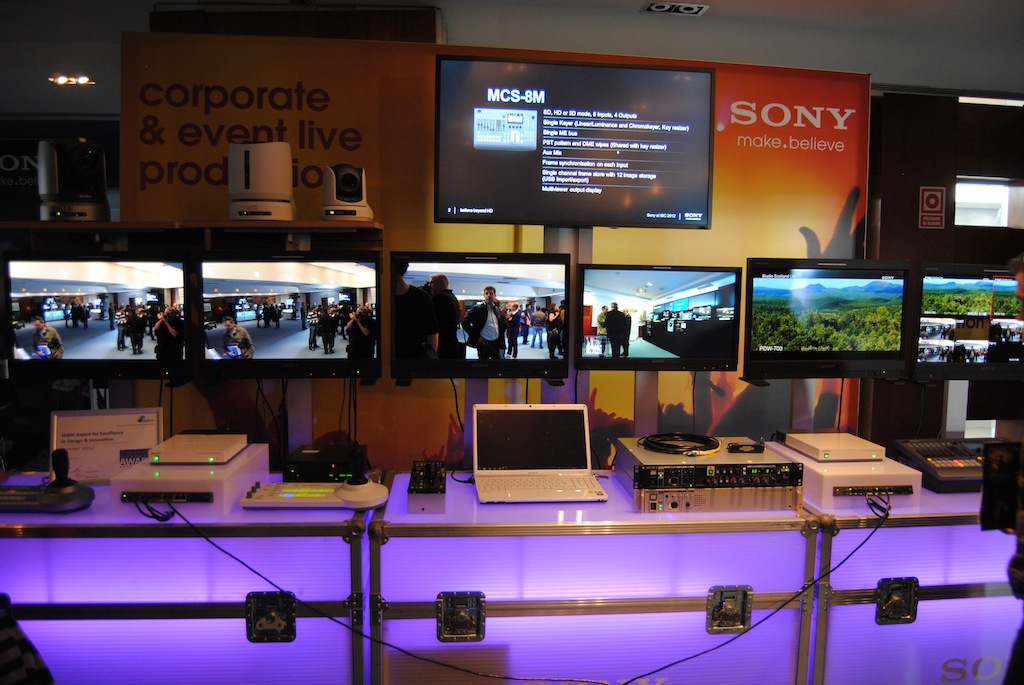
In terms of monitoring, the purest black of the Trimaster series (BVM-E250, BVM-E170, BVM-F250, BVM-F170, PVM-241) surprises the professionals who visit this roadshow. Additionally, the PVM-1741 and PVM-741 OLED monitors are shown.
Finally, in professional audio, Sony dedicates a section to show its latest wireless microphone systems.
Archiving solutions
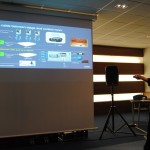
In the first seminar of this open day, the challenges of content archiving were addressed. Sony recommends, above all, considering what type of work we usually do, what the real value of the content is, how long we want to keep it and what budget we will have.
For production environments, at the videographer level a good solution could be to work with Bluray media, but in the case of a higher level of demand we will have to turn to robust solutions such as the XDCAM Disc that ensures a support with a long life of up to fifty years and great interoperability under workflows based on MXF files and formats.
 Regarding the use of memory cards, it has become clear in this seminar that archiving on this medium would mean a high archiving cost. Given this, you have to choose to copy the material on a low-cost media support. An alternative in these cases would be storage on hard drives under MXF formats, although they have the drawback that we do not know the real useful life of these drives. Another possibility is to opt for an LTO file solution but, although it is an economical solution for large volumes, access to the files is quite slow and control hardware and middleware are also required.
Given this panorama, the new archiving technology that Sony proposes is the use of the new generation Optical Disc Archive, whose support can accommodate between 300 GB and 1.5 TB (about 48 hours at 50 Mbps) with the possibility of choosing between single-use or rewritable units. One of its advantages is that its guaranteed life is more than half a century, being a technology very resistant to dust, water or magnetic fields. On the other hand, random archiving of files is much faster than in an LTO-based system (with the added advantage of direct connection to the PC without the need for middleware).
Along these lines, Sony has developed a new robotic library, the ODS-L10, which consists of two units with ten cartridges. The ODS-L10, which is scheduled to be available in early 2013, will be part of a complete range of solutions that includes an even larger and scalable robotics library that is currently under development.
For small bookstores, the ODS-D55U represents the latest innovation in storage with the ability to store data without power. From small-scale file backups to large network solutions, there will undoubtedly be numerous applications on the market for this powerful and efficient storage solution that allows high-quality content to be archived regardless of the original format.
Importantly, establishing an open platform around the Optical Disc Archive solution will allow Sony to collaborate with the rest of the industry and create the complete archiving solution for file-based workflows.
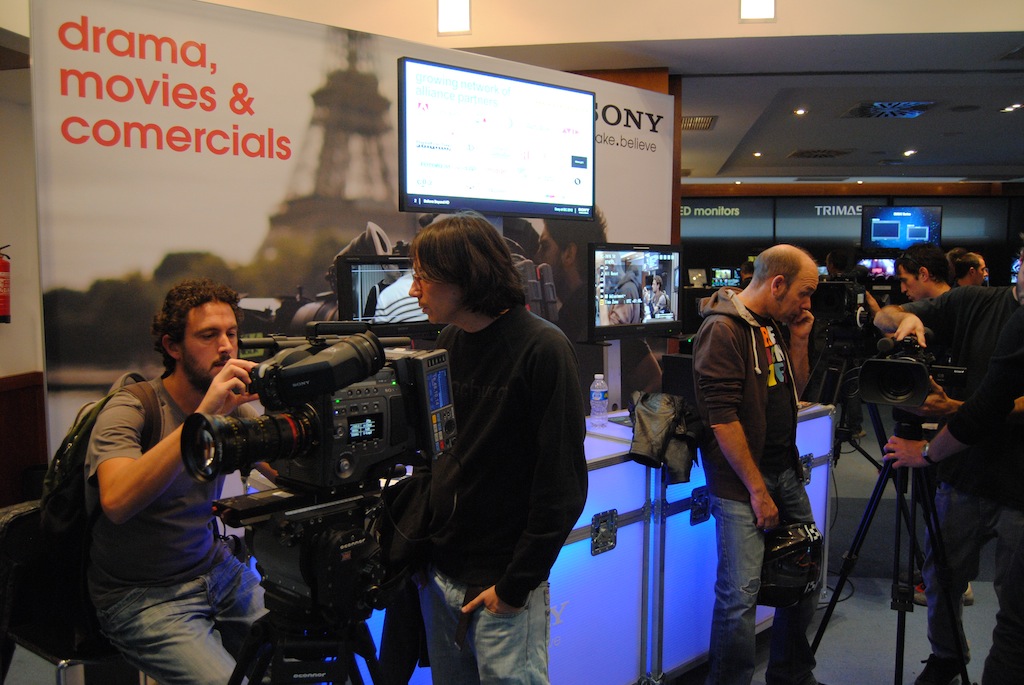 Super 35mm
Another of the sessions organized in the roadshow The future is in your hands has addressed the increasingly widespread Super 35mm production environments. Sony has reviewed some of its proposals, counting in its catalog with three resolutions F65 (8K), NEX-FS700 (4K) and PMW-F3 and NEX-FS100 (Full HD). As for equipment with an APS-C HD sensor, Sony has the NEX-EA50, NEX-VG20 and the NEX-5, 7 and 6. It should be noted that the Exmor APS HD CMOS sensor offers 16.1 effective megapixels to achieve DSLR quality images and full HD video with maximum clarity.
In this session it has become clear that Super 35mm in film is totally different from 35mm in photo due to the orientation of the frame (in film perpendicular to the edge of the film, being practically double the surface in the case of a Full Frame in photo).
The director of photography and director, Álvaro Bernal, has assured that "when we choose a camera, we take into account three variables: definition, how crystal clear the image looks; the response to low lights; and the dynamic range. We have to ask ourselves, depending on the budget we manage, which of these variables is the most important." From his point of view, “Sony presents a range of 35mm solutions designed for real work environments.”
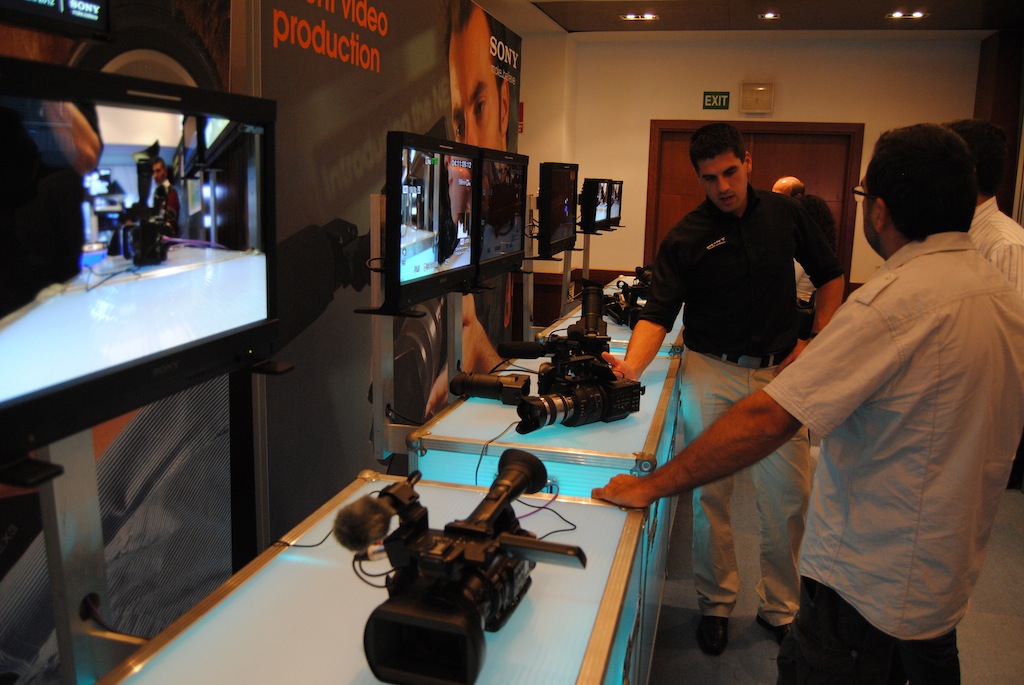
Camcorders
The different coding possibilities, depending on application and budget, focused the third session of the day, in which a review of the main camcorders offered by Sony was made.
Within the NXCAM family, the new HRX-NX30 (with a powerful image stabilizer and fluid-suspended sensor), NEX-EA50 (with APS-C HD sensor and motorized zoom) and NEX-FS700 (Super 35 4K Ready) stand out. To these we should add the models presented in recent months such as NX70 (high resistance to dust and water), NX5 (the best-selling NXCAM model with three 1/3" sensors), NX3D1 (3D camcorder with two 1/4" sensors) and FS100 (Super 35mm).
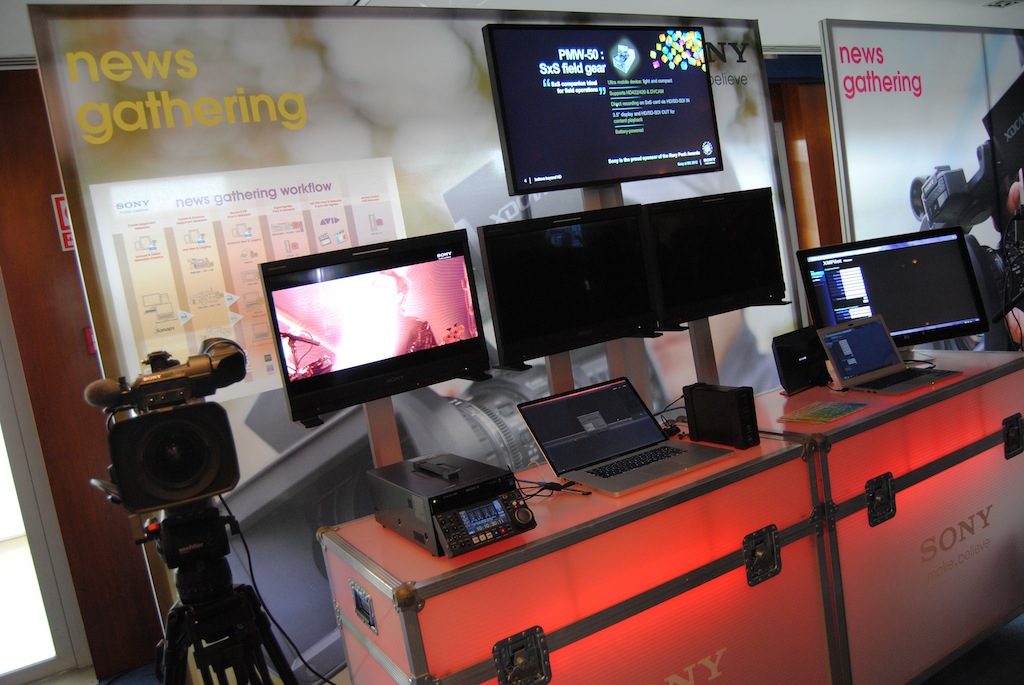 In a more broadcast environment, the
In the XDCAM family, we find new interesting models such as PMW-100 (1×1/2.9”), PMW-150 (3×1/2.9”) and PMW-200 (3×1/2”).
In relation to the growing wave of recording at 50 Mbps, the Sony professionals who participated in this event have highlighted that this is a format that today, thanks to the greater power of hardware and editing software, it is possible to move material with total fluidity in this encoding. Working at 50 Mbps allows, for example, to obtain a better response for chroma key and color grading. At the same time, we would avoid transcoding from 35 Mbps as some broadcasters and production companies are beginning to demand.
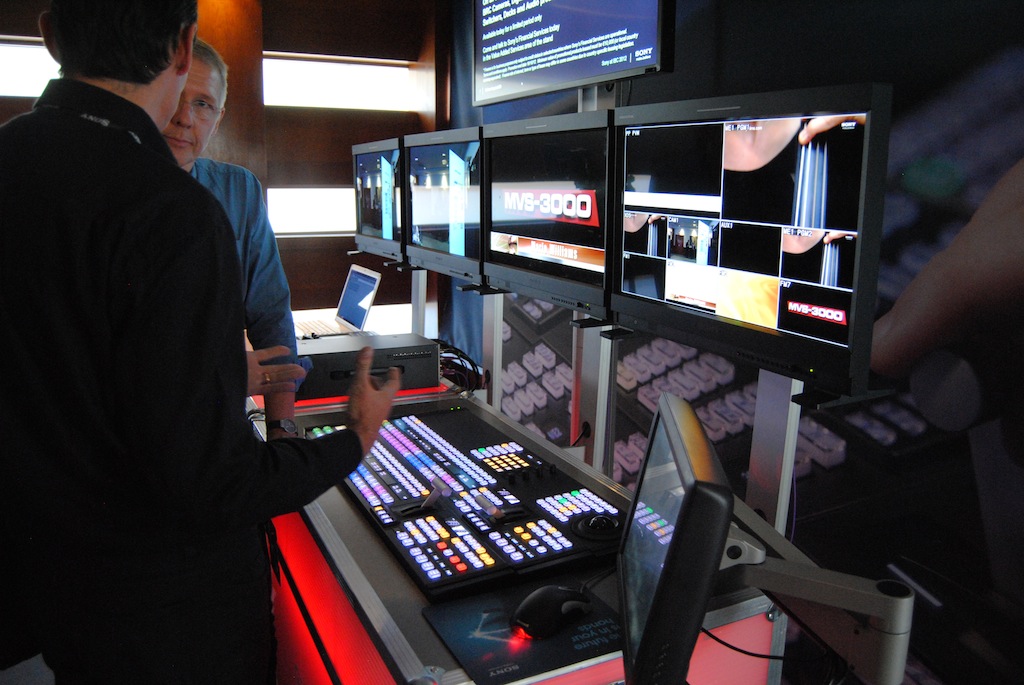
Direct
For live production, Sony has emphasized that a camera for this work environment must have the best response in both SD and HD, great ergonomics and operability, high performance and has a wide range of accessories, control and peripherals.
Sony has three product lines in its catalog: the HDC series (fiber optic/analog triax); HSC-300 (digital triax) and HXC-100 and HXC-D70 (fiber/digital riax/multicore). At this time, there are already a total of 4,300 Sony HD camera systems in Europe. All of these models are manufactured in the United Kingdom, with their own image sensors and camera control circuitry developed by the brand itself.
One of the Japanese manufacturer's star solutions is the HDC-2500 series. They are standard 3G cameras, with 16-bit A/D conversion, 1080/50p and 2x Slowmotion and Ethernet Trunk line (1 Gb).
For the first time, a studio camera presents a new carbon fiber chassis while offering new operational features such as correction of optical aberrations (both horizontal and vertical), OPAC function (allows the sensor itself to align the optical axis for 3D applications with a dual camera) or Adaptive Matrix (very suitable for LED lighting situations, to prevent the subcolor from going outside the space dictated by the standard, correcting itself automatically).
It should be noted that in the HDC family the entire transmission part is in the camera cover itself, which allows a camera to be converted into triax, fiber, or equipped with a wireless system from other manufacturers with complete ease. For this family, there are new improved CCUs that support bandwidths of up to 3.7 Gb, which allow working up to 4 km, having an HD prompter, HD Trucky and a 1 Gb Ethernet data line
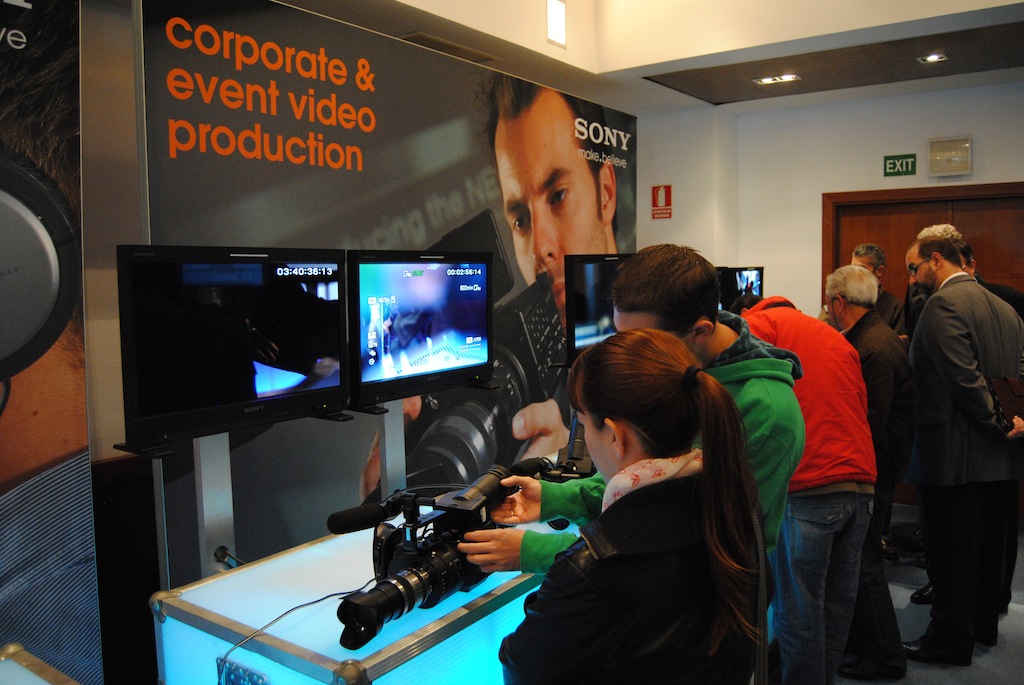 The roadshow equipment display also shows the HDC-1700 and HSCU-1700 models (a 1.5 G fiber camera system that allows working with 1080i and 720p) or the now classic HDC-P1, which without connection to CCU is widely used in 3D rigs. We can also see the HDFA-200, a 3G fiber adapter for two cameras, which provides power, genlock and control of the two cameras (very useful for stereoscopic production).
At an intermediate level, we find two digital triax models: HSC-300 (double motorized ND/CC turret, HDLA for studio optics, and the possibility of working with up to 1800 triax meters) and HXC-100 (with manual ND turret, HDLA compatible and up to 1200 meters in triax)
Another novelty in live or corporate production in the HXC-D70, Sony's most economical studio camera. The manufacturer uses in this type of studio camera for the first time three 2/3" CMOS sensors that offer Full HD, with HD/SD outputs as standard, with all the features of the highest ranges. The transmission has HD Digital Multicore with the new CCU HD Multicore and multicore transmission in SD (digital and analog) with the CCIU-D50P. As a novelty for this camera, Sony now offers adapters for digital triax and fiber optics.
As accessories, Sony offers countless studio control panels, countless scopes and optical adapters. It should also be noted that the D70 has a software application that would allow five units to be controlled from a single PC. In addition, a software application, which simulates the master setup, allows you to control up to 46 camera chains from a simple PC.
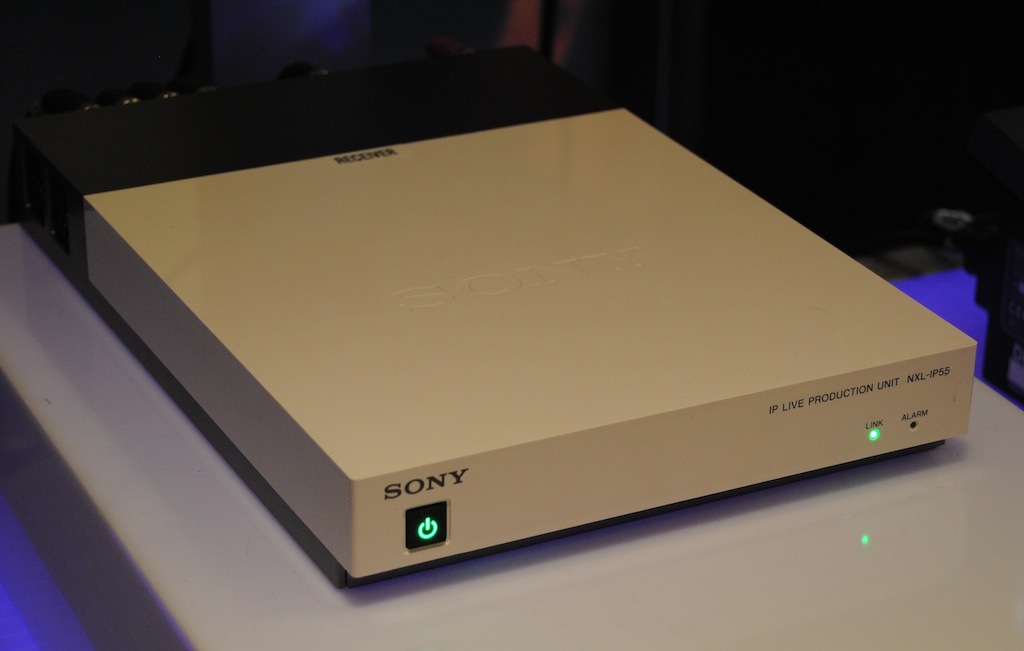
NXL-IP55: the replacement for BNC cabling?
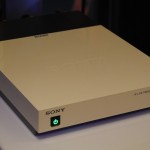
Finally, we would like to highlight one of the solutions that, presented for the first time at IBC, most draws the attention of all the professionals who come to the Sony roadshow is the possibility of producing live shows via IP with the new NXL-IP55 unit.
Unlike other video to IP converters, this solution allows you to make a live IP transmission. With Full HD quality (with the same codec as the CCU and camera head as the HXC-100) the NXL-IP55 allows very low latency (only one delay field) and allows working with genlocked equipment via IP (BB or Tri-Level).
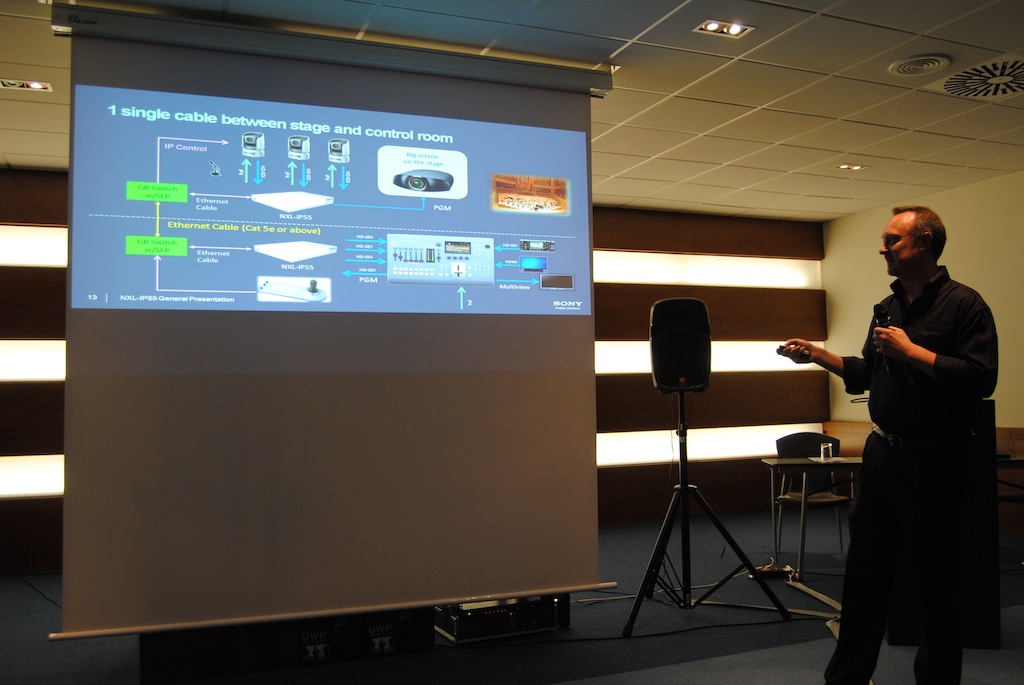 With multiple inputs/outputs, it handles four videos that can be configured 3 in one direction and one in the other, or two and two. In audio, it allows working with up to 10 audios over IP, eight GPI lines, in addition to three red and three green tally, and intercom.
Its use in live event production requires a layer 2 environment and IPv4 protocol with a 1 GB point-to-point network (always on a dedicated LAN).
This proposal allows, for example, over a simple CAT 5 cabling to connect the cameras with a production control located in another location or to deploy more additional cameras, with a cost-effective multi-camera solution over long distances via fiber.
After passing through the City of Image in Madrid this Tuesday, the roadshow The future is in your hands will stop on Thursday, October 18 at the Sony Spain headquarters (Sabino de Arana, 54 Sala Albéniz –see plan-) More information here.
Gallery
(click on any photo to start the carousel - scroll right and left by clicking on the arrow)


Did you like this article?
Subscribe to our NEWSLETTER and you won't miss anything.
Related articles
 Business management systems in broadcast: evolution and future in the third generation of BMS
 IBC 2023 opens its doors to redefine its future at the crossroads of technologies and business models
 The Sony HDC F5500, with 4K Super 35mm CMOS sensor and global shutter, is now available in Europe
 Digital transformation is essential to ensure the future of the pay television business
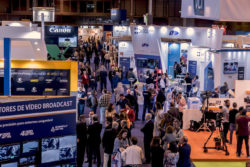 High-profile professionals once again trust BIT Audiovisual to anticipate the future of audiovisual
 The future of media companies is in the cloud
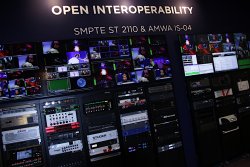 IP is not the future, it is already here
 Sony entrusts Damien Weissenburger to lead the solutions business for the film sector
 Monal and Tres60, a new audiovisual giant in the hands of HIG Europe
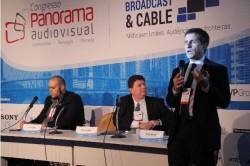 The Panorama Audiovisual Congress defines the future of the audiovisual industry in Brazil
 Sony organizes the roadshow 'The future is in your hands'
 Sony Media RoadShow: the latest in technology at the service of creativity
Sony Media RoadShow in Madrid
Sony Media RoadShow: the latest in technology at the service of creativity
Sony Media RoadShow in Madrid
 Veo Tv will become AXN under the Dahlia payment platform after an agreement between it and Sony Pictures