





The RAI uses Riedel networks for the reliable and flexible transport of audio and video in the Giro d'Italia
By using Riedel's fiber network, RAI has not only reduced the volume, weight and complexity of cabling, but has also gained flexibility to locate its mobile units in remote locations, something essential in a broadcast with the complexity of the Giro.
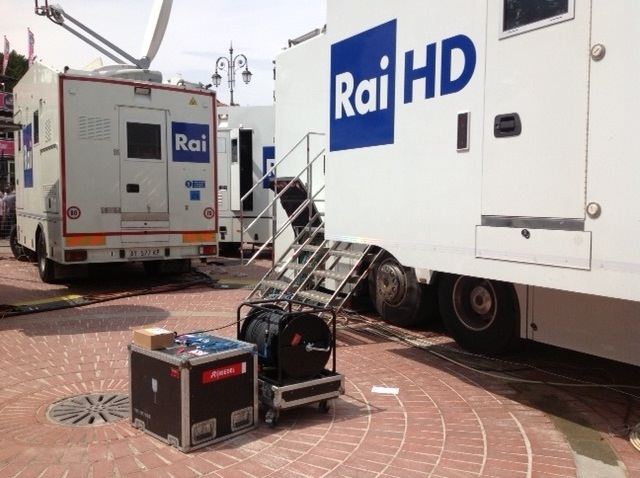
Italian broadcasters RAI has employed the RockNet and MediorNet networks of Riedel for the real-time distribution of audio, video and communication signals in the coverage of the 2013 Giro d'Italia. The 96th edition of the popular cycling tour began on May 4 in Naples and concluded 3,405 kilometers later in Brescia on the 26th.
As a host broadcaster, RAI extended a flexible fiber network linking commentator positions, the goal, and remote production areas.
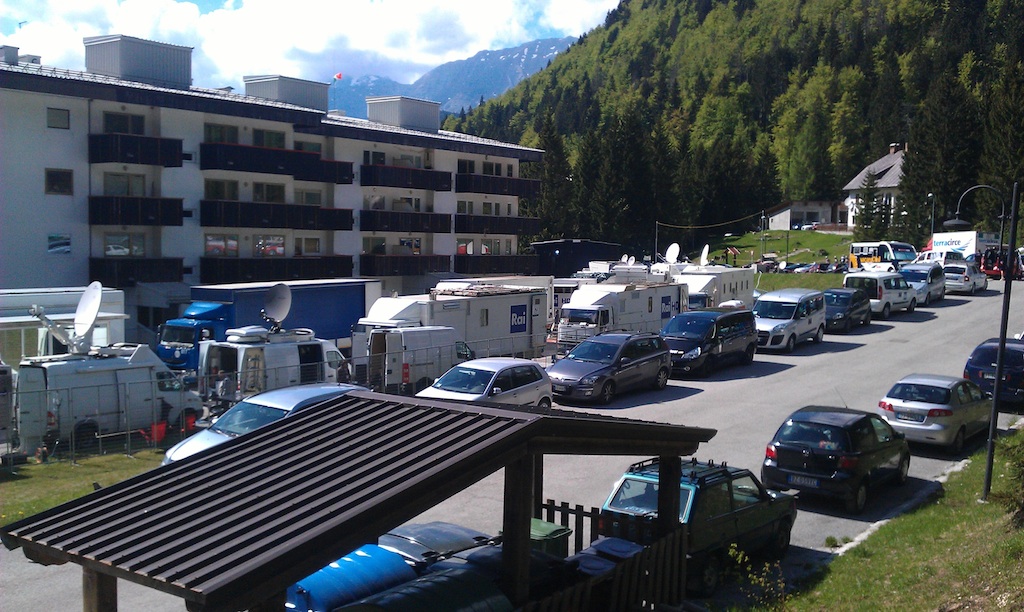 Each day the Giro moves to a new city along the race route. RAI engineers began early each morning to lay and test the fiber network, and then during the day they supported the production of the event. At night, they collected the network and moved their mobile units to the next city to prepare for the new stage.
During each day of the race, the RAI team produced from locations located within five kilometers of each other. A fully redundant configuration comprising a dozen MediorNet modular frames and five MediorNet compact frames ensured reliable signal transport between the different production locations. A Riedel RockNet real-time audio network has served to transport reliable audio throughout the venue.
The modular design of Riedel's MediorNet allows frames to be quickly configured and reconfigured according to production demands. Because the Riedel system supports both routing and transport, every signal is available at every node and can be made available through network management software.
By using the Riedel fiber network, RAI has not only reduced the volume, weight and complexity of the cabling, but has also gained flexibility to locate its mobile units in remote locations, something essential in a broadcast with the complexity of the Giro, without risking signal degradation or loss.
Did you like this article?
Subscribe to our NEWSLETTER and you won't miss anything.
Related articles
 Evertz to integrate RIST (VSF TR06) for live video transport over unmanaged networks
 Ross Video and Merging Technologies to Collaborate to Enable Fast and Easy Innovation in AES67 and ST 2110 Audio Networks
 NVP uses Lawo audio, video processing and control solutions in its new UM 4K
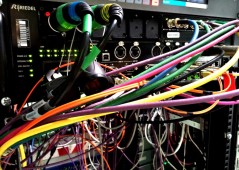 RAI used the full potential of Riedel's MediorNet network in the last Giro d'Italia
 AEQ-Kroma hires Dalibor Trifunovic as a specialist in IP networks for voice, audio and video
 Insertel Canarias uses AEQ Phoenix audiocodecs for transport and contribution over IP networks
 Lawo exhibits at NAB an innovative IP network for video, audio and intercom transport
 American ABC uses JVC GY-HM650 cameras for mobile news production via 4G networks
 Riedel, key technology in networks and intercom for Endemol
 Riedel: comprehensive solutions for large events with real-time networks for video, audio and communications
 Riedel: comprehensive solutions for large events with real-time networks for video, audio and communications
 Harris IP Link 100: a compact solution for reliable audio transport between two or more points
 Riedel RiLink, an innovative global fiber service for long-distance signal transport
 T-Vips expands its catalog of solutions for video transport in IP networks