





Riedel: comprehensive solutions for large events with real-time networks for video, audio and communications
The maximum reliability and total redundancy of its equipment in any circumstance have made Riedel essential in all large events to which it offers a comprehensive video, audio and communications service. Now that it has been in existence for a quarter of a century, we discover some of the solutions that have led to the meteoric growth of this German company.
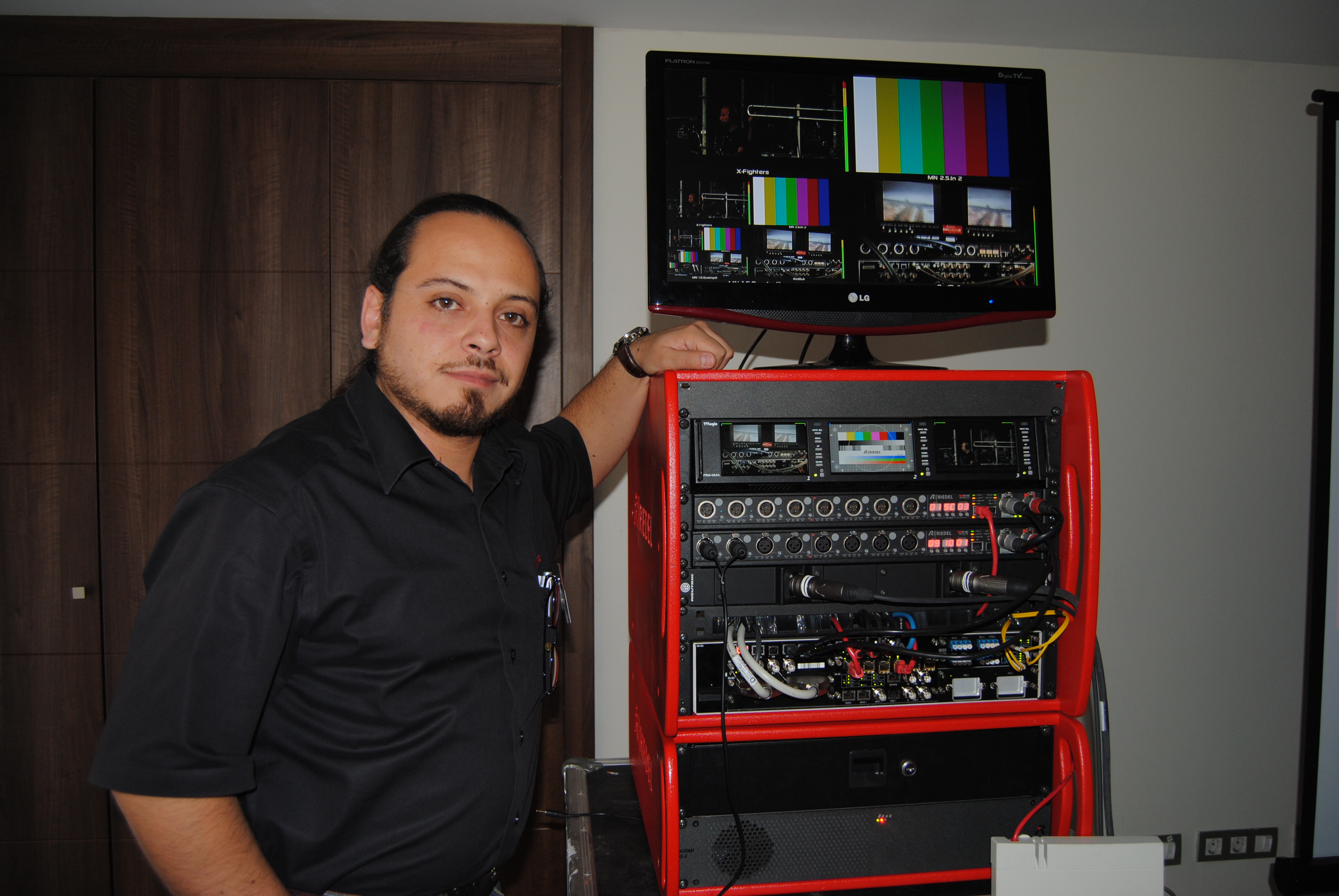
Founded in 1987 in Wuppertal (Germany), Riedel Communications It currently employs 250 professionals. It is noteworthy that more than forty engineers work in hardware and software engineering alone and a similar number work in the rental department for large events. Invoice of around 50 million euros, coming equally from the manufacturing of equipment and rental of equipment and services.
And the vocation for comprehensive service has always been present since Thomas Riedel founded the company 25 years ago as a rental provider of lighting, audiovisual and communications equipment. Years later, Riedel began to work hand in hand with Motorola, focusing on intercom systems.
But it would be its entry into the world of Formula 1 in 1993 that would mark a before and after in the meteoric growth of the company since this great event gave a strong push to technological development such as its first Riedel Compact intercom system.
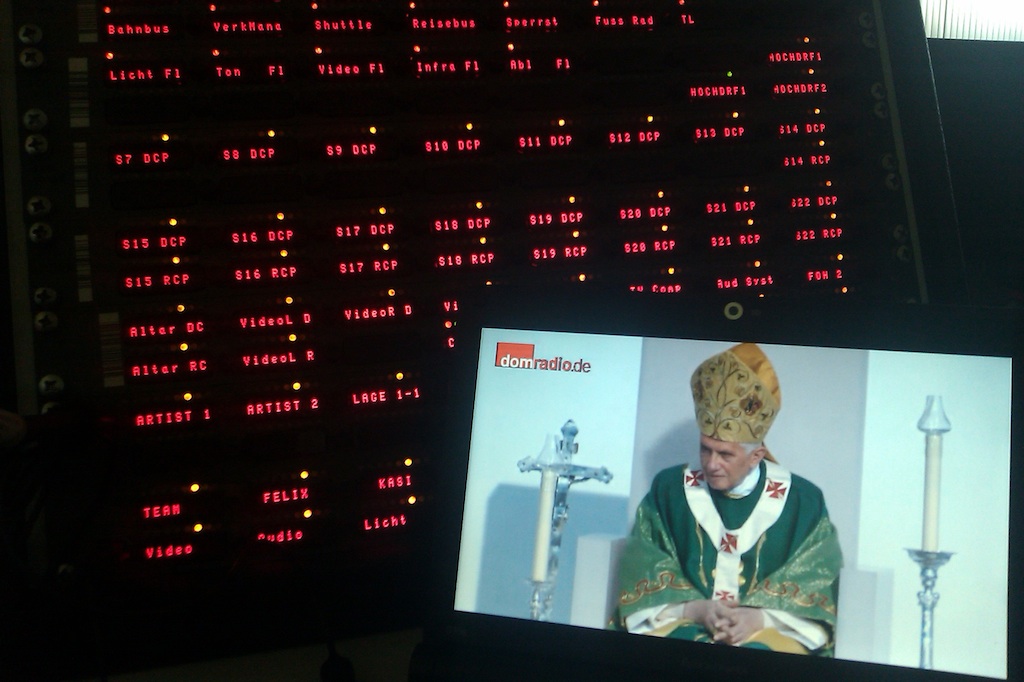 In 2000, he launched Artist, the world's first decentralized digital matrix intercom system. In 2004, coinciding with Athens, Performer, the first digital partyline, was launched and two years later, coinciding with the Turin Winter Games, they began to provide complete solutions rather than equipment itself. In this case, a communications network was launched between all the Olympic venues through TETRA digital wireless technology.
At the 2008 Beijing Games, it became the main supplier of radio and intercom technology and announced the purchase of the German company specialized in Audio Media networks Numerics RockNet
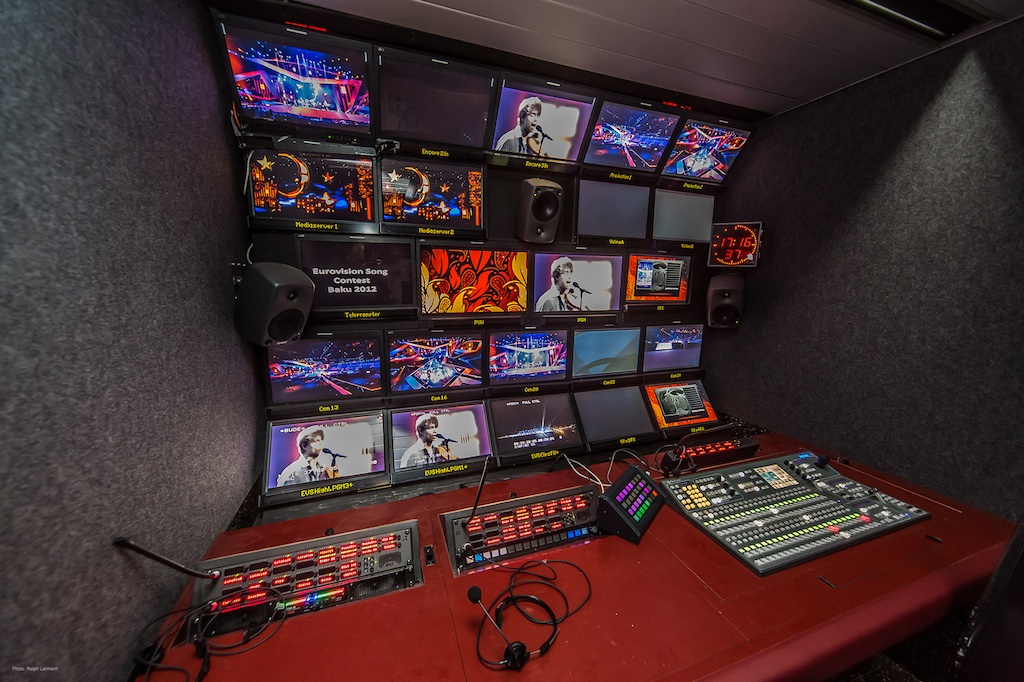 In 2009, MediorNet launched, the world's first system for building transport and routing networks, conversion and signal processing over fiber optics.
Last year it bought the company V-Private and launched its RiLink Global Fiber Optic Service that allows the transport of signals from the live broadcasts of Formula 1 for RTL and TV3 and the transport of the television transmission for the EBU in the Eurovision Song Contest.
Riedel is present in the largest international events such as the World Cups, the Olympic Games and others as unique as the recent Red Bull Stratos project. Its philosophy that equipment must offer maximum reliability with total redundancy in any circumstance has made it essential in this type of critical events.
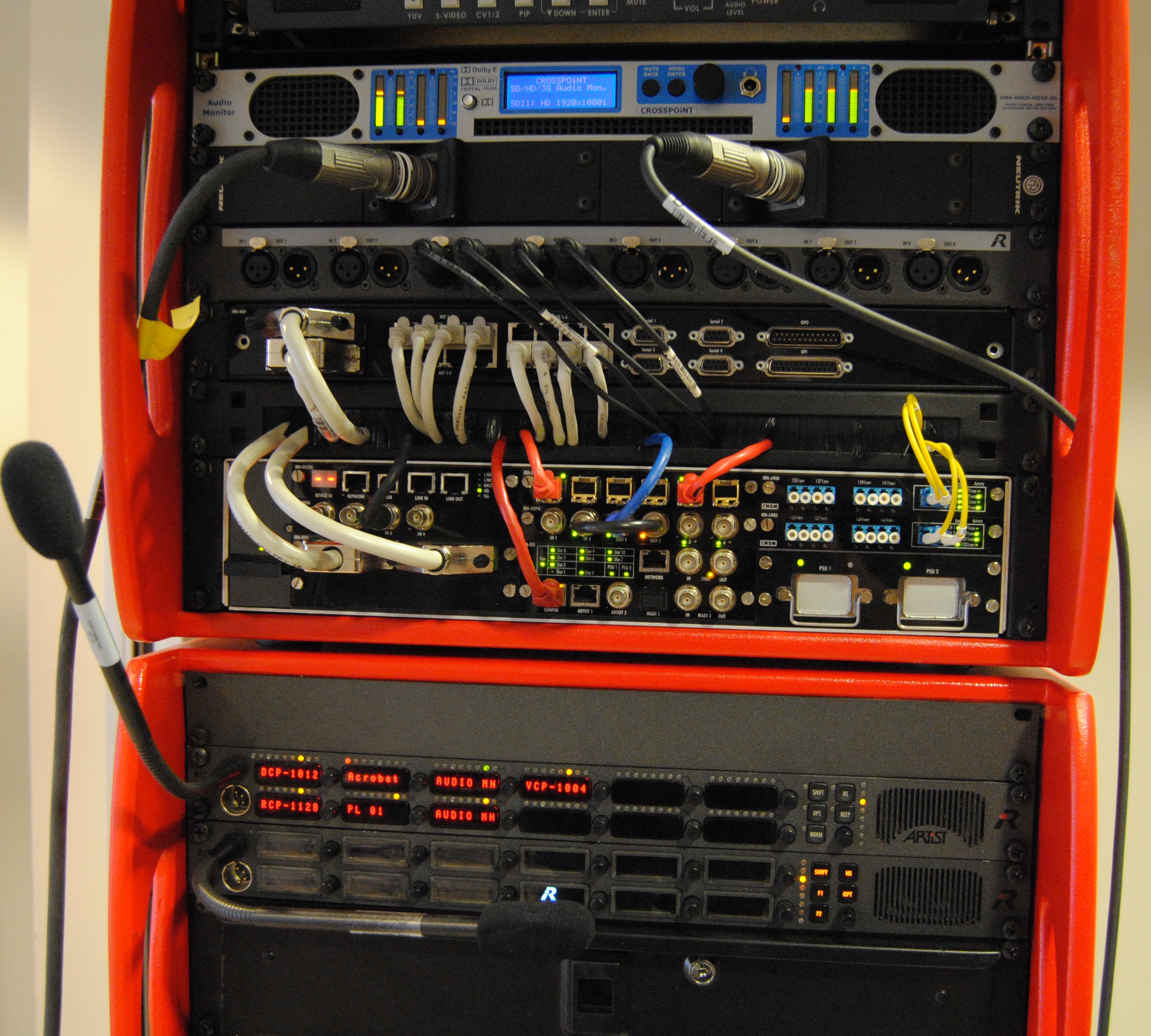
Communications
From the point of view of a Digital Communications Network, Riedel offers a centralized system in matrices (in three sizes to reach up to 1024 × 1024 ports by connecting up to 98 matrices per fiber), with up to 16 slots for client cards up to 128 x 128.
This proposal is totally redundant in terms of power and CPU card, and optionally with respect to the client cards. It is noteworthy that Riedel offers a wide variety of interfaces through which the director can have a single intercom panel in front of him, and from there they create the corresponding interfaces to communicate either by beltpack, intercom, telephony... without major concern about where the signal is traveling.
Audio
One of the company's most notable solutions is the Digital Audio Network (RockNet). It is a very low latency real-time network with up to 160 24-bit/48 kHz channels or 80 24/96 kHz channels on a single CAT5 cable. This network is so powerful that up to 99 devices can be included in a single system that provides transport, distribution and redundancy.
But perhaps its most notable aspect is the easy operation from each device or software since it can be controlled from the front panel without a laptop or through a laptop via software. In this network we can directly integrate the majority of consoles on the market such as Yamaha, Studer, SLL or Soundcraft... with independent gain for different consoles that would make up the network.
Video, audio and communications, under the same network
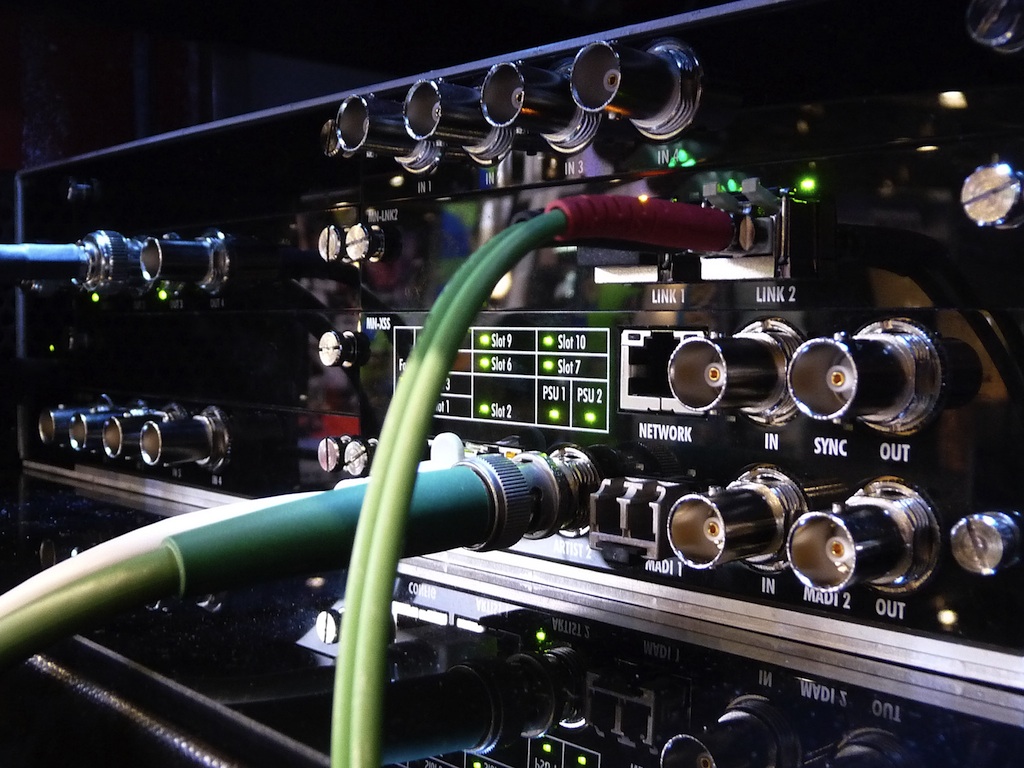
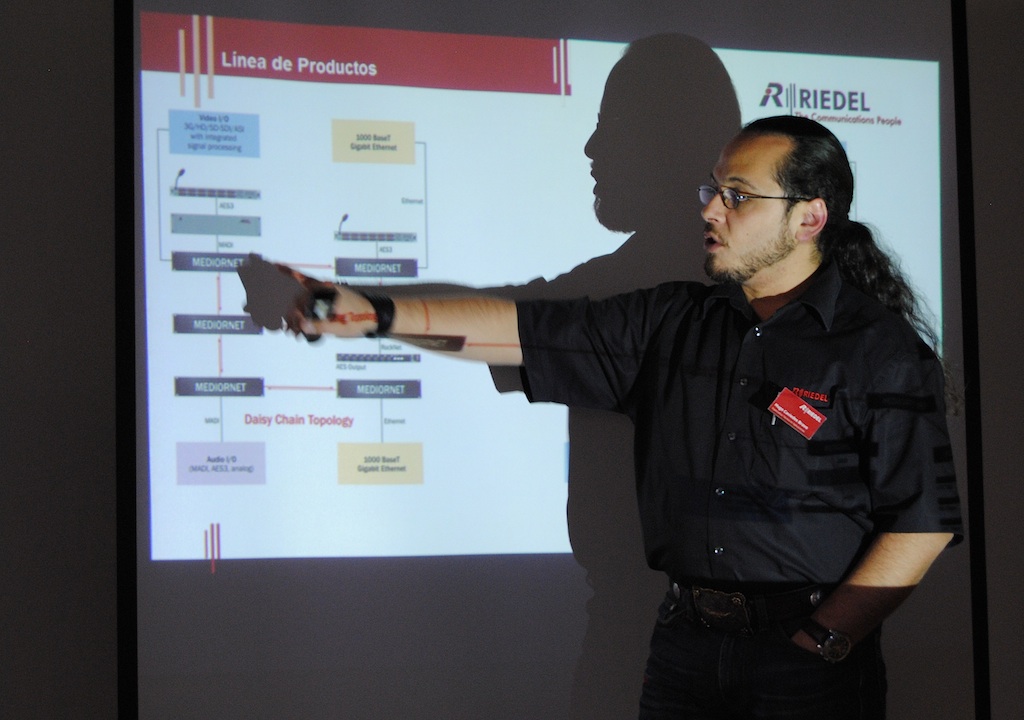
Three years ago, Riedel took a giant step by proposing MediorNet, a real-time digital network for video, audio and communications. Its principle is based on the fact that at every point where we need to insert or remove signals we have one node and the rest communicate through fiber optics in a decentralized matrix system that always optimizes the maximum use of the available network.
Riedel offers in this case two different types of matrix, according to the client's needs, Modular or Compact.
The network allows transport of SD HD-SDI and 3G video, analog and digital audio, Ethernet, communications (with own or other brands' equipment), GPI, RS 232, 422 and 485 and even a RockNet subnet.
MediorNet can be configured in different topologies: ring, star, chain... or a combination of several, guaranteeing total redundancy automatically.
Thanks to this Riedel solution we can forget about embedders, de-embedders, converters, scalers,... since all signals are processed and distributed in real time over the same fiber network.
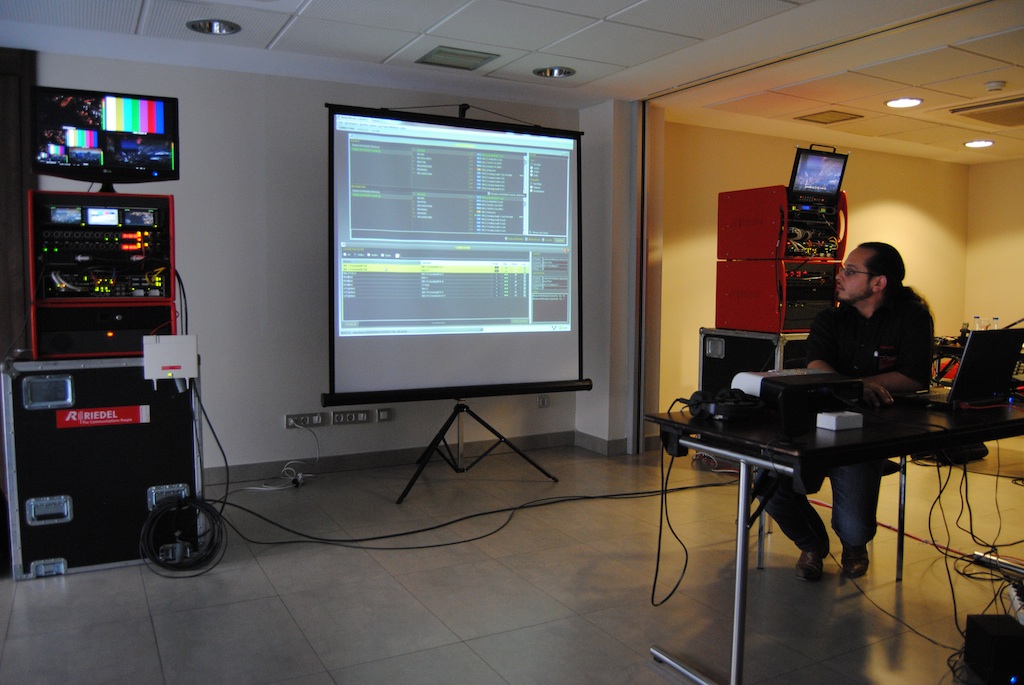
 MediorNet is a system that not only transports but also constantly processes and analyzes what the user is carrying out, warning them if any action occurs that could endanger basic functions. In fact, it is so intuitive that from the user interface itself on any PC it is enough to select inputs, processes and signal outputs so that with a simple drag and drop both points are linked. This interface shows the user in real time the status of the entire network, its configuration and possible incompatibilities.
Following this development, Riedel has launched its perfect complement to the market. It is a tactical fiber with two strands of single-mode fiber, which facilitates the deployment of a network wherever it is needed, forgetting about the typical problems that knotted fiber offers, vehicle traffic over it, bottlenecks... This fiber, which is manufactured in sections of one hundred meters, guarantees installing MediorNet chests anywhere even if thousands of people pass over the network at a concert or sporting event.
RiLink
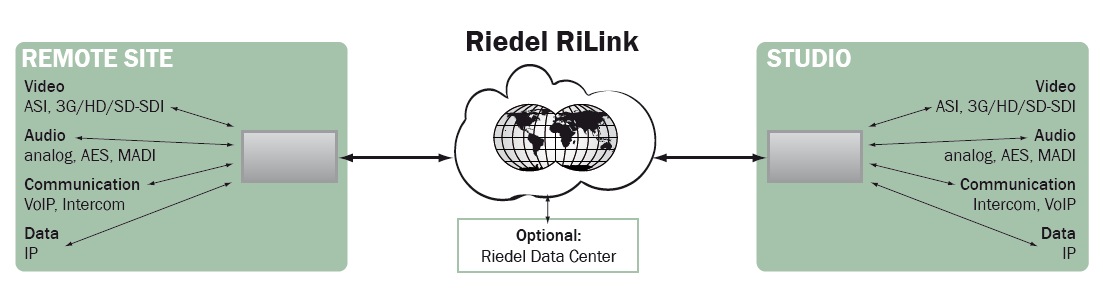
A year ago, Riedel launched RiLink, an innovative global fiber service for long-distance transport of HD video, audio and data in the broadcast sector.
RiLink represents a new way to transport broadcast signals from remote locations to studios or to connect the studios that production companies have abroad with their base studios, thus reducing costs and simplifying installation. Based on Riedel's own backbone, RiLink's MPLS (multiprotocol label switching) global fiber service provides bidirectional links between distant locations, thus enabling not only the transport of 3G/HD/SDSDI broadcast signals, but also return of video ingests, full dual communications, VoIP telephony and IP data.
RiLink also provides higher bandwidth connections than typical satellite links, which directly translates to improved video quality. RiLink's latency is also considerably shorter and its transmission is not at all dependent on weather conditions. Multiple layers of redundancy within the network provide optimal reliability and quality of service. Since RiLink's service is billed as a flat rate for the entire duration of the event, this allows for more live news and reporting at no additional cost. RiLink's guaranteed bandwidth can also be dynamically allocated, allowing time not spent streaming to be spent on high-bandwidth file transfer from digital files or other applications.
Riedel's RiLink represents a comprehensive point-to-point solution. The customer can choose the locations and signals to transport and Riedel provides a plug-and-play installation. Additionally, Riedel offers rental services for location cabling, as well as fiber-based wireless on-site transport for audio and video signals.
News in IBC
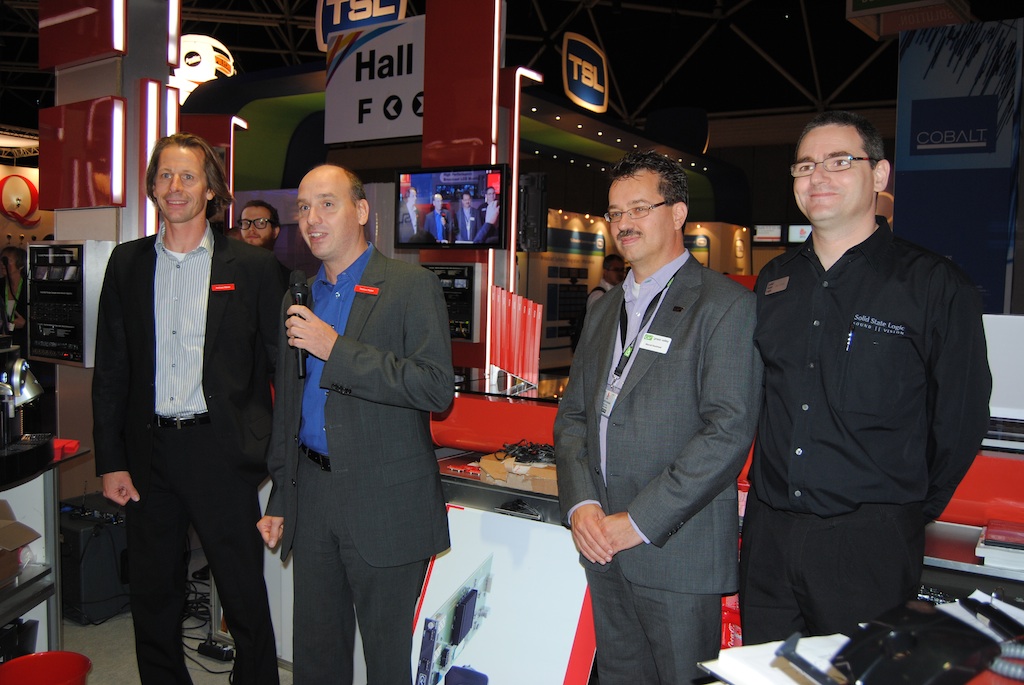
At this year's IBC, the Grass Galley camera card for MediorNet chests was presented. Until now, if an event had five cameras, it was necessary to deploy five fibers to each CCU. Now, it will be enough to deploy a Mediornet on the football field, for example, and connect each camera to that MediorNet chest.
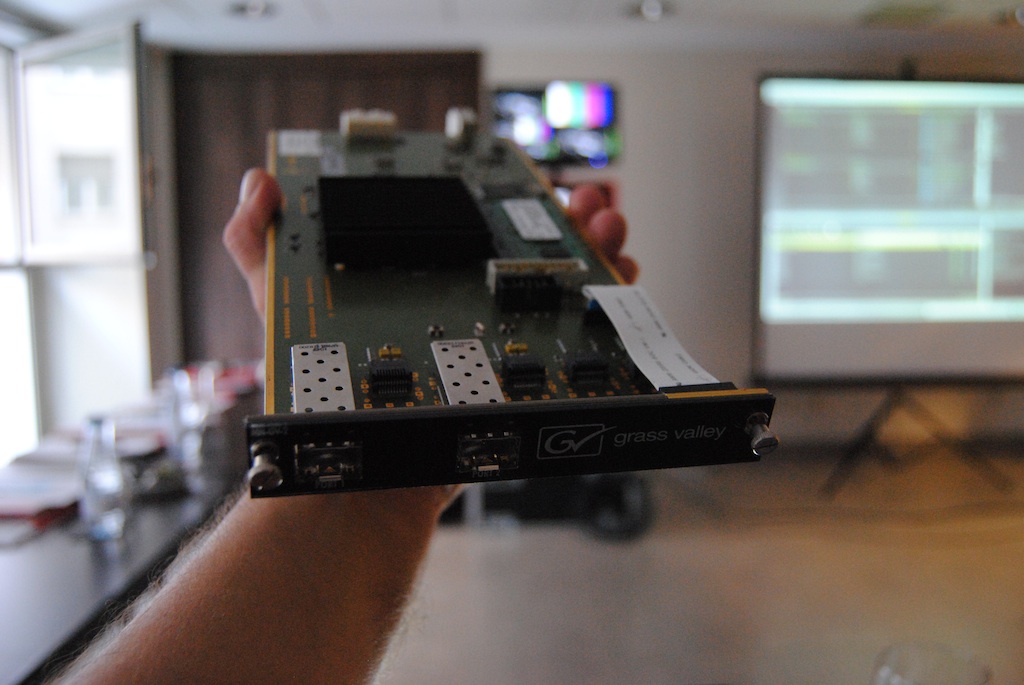 The system will take the signal from each camera and transport it via fiber to the chest located in the mobile unit. Thanks to this new card, up to eight Grass Valley can be connected to each box in a proposal that is much more than a multiplexer, which already transports the direct signal from the camera along with tally, intercom, embedded audio, telemetry... and all of this bidirectionally.
The card to integrate Soundcraft SI consoles into a RockNet network (compatible with 32 inputs and 32 outputs) was also premiered at IBC. The RN.344.SI card also allows the Soundcraft kit to become a part of the RockNet digital audio network and facilitates remote control of any RockNet microphone preamp.
Jornadas en Madrid
Riedel y Crosspoint, como Authorized Riedel Solutions Partner en España, están celebrando el 17 y 18 de octubre en Madrid unas jornadas en las que se están presentando todas estas soluciones.
En la demo, los profesionales que asisten a estas jornadas pueden comprobar las posibilidades de conectividad que se ofrecen entre dos puntos en los que se han integrado sistemas como MediorNet y RockNet junto a Acrobat, Performer y la unidad de monitorado y escucha de audio analógico-digital (embebido, AES o Dolby…) desarrollada por Crosspoint.
Did you like this article?
Subscribe to our NEWSLETTER and you won't miss anything.
Related articles
 Bitmovin develops a solution for real-time monitoring of video transmission
 Riedel revolutionizes its portfolio of SimplyLive video production solutions with great new features
 Will Waters (Audinate): “With Dante we offer great solutions for audio and video working over IP”
 3S: real-time immersive audio capture, encoding and transmission for broadcast
 Riedel supplied a MediorNet real-time network to the BNP Paribas Masters 2014
 Riedel improves its MediorNet real-time distribution network and launches its second generation
 wTVision will showcase its MCR, PCR, graphics and real-time data solutions for sports at IBC 2013
 The RAI uses Riedel networks for the reliable and flexible transport of audio and video in the Giro d'Italia
 Brainstorm will show at NAB its full range of solutions for real-time 3D graphics, virtual studios and playout
 Riedel: comprehensive solutions for large events with real-time networks for video, audio and communications
 Intercom reaches Ethernet in real time with Riedel AVB solutions
 T-Vips expands its catalog of solutions for video transport in IP networks
 Riedel MediorNet Compact, high capacity in the new integrated real-time network
 'Eva's fish tank', an innovative format that combines TV with social networks in real time