





The Sala Berlanga hosts a series of Moroccan cinema and human rights from January 9 to 15
The SGAE Foundation and the Association for Citizen University Cultural Action (APAIUC) organize a series of Moroccan cinema and human rights from January 9 to 15 in the Sala Berlanga.
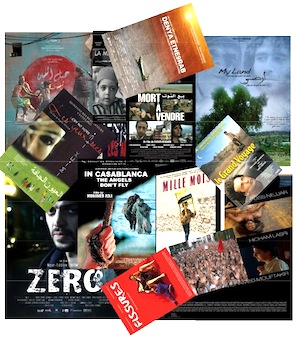 with the title After Tangier. An ethical look at the movement, the Sala Berlanga in Madrid (Andrés Mellado, 53) will host a series dedicated to Moroccan cinema and human rights. The initiative aims to show the evolution of Moroccan audiovisuals, which since 2000 has incorporated a social dimension, including topics that are part of the present: political violence, corruption, sex, homosexuality, gender violence, emigration or drugs, among others.
"Moroccan cinema maintained an inadequate discourse with respect to society for a long time. Since 2000 it re-emerged with a new look at reality and the profession. Its new voices are identified, without complexes or ideological clichés, with a philosophy and an attitude that frees art from the ideological paradigms that have always muzzled creation, in favor of one thought and against the diversity of others," explains El Arbi El Harti, president of APAIUC and director of the cycle.
A total of 15 works make up the exhibition: dry eyes, de Narjiss Nejjar; death for sale, by Faouzi Bensaid; Zero, by Nour-Edine Lkhamari; Our forbidden places, de Leila Kilani; The pioneers of the unknown, de Hassan Kher; In Casablanca, angels do not fly, by Mohamed Asli; The horses of God and My land, by Nabil Ayouch; life goes around, by Tarik El Idrissi; Amal, of Ali Benkirane; a short life, de Adil Fadili; Coping, by Omar Mouldouira; When they sleep, by Maryam Touzani; The left hand, by Fadil Chouika; and Mokhtar, by Halima Ouadiri.
In addition to the film screenings, the series includes debates with the participation of the directors themselves such as Narjiss Nejjar, Nourddine khamari and Leila Kilani; and experts who know closely the sociopolitical reality of the country: the filmmaker, Chus Gutiérrez; the journalist and writer, Javier Valenzuela; the former ambassador of Spain in Morocco, Luis Planas; the journalist and member of the Center for Mediterranean World Studies, Mohamed El Morabet; the lawyer and journalist and member of the Secretariat of the Hispanic-Moroccan Forum of Jurists, Marisa Mercado; or the mediator and writer, Zoubida Boughaba.
More information, here.
Did you like this article?
Subscribe to our NEWSLETTER and you won't miss anything.
Related articles
 The Sala Berlanga screens more than 30 finalist films for the Goya 2024
 Zinemaldia Movistar+ Virtual Room: for the first time a platform hosts a class A festival room
 The Sala Berlanga hosts the delivery of the 11th edition of the RNE Short Film Contest
 The SGAE Foundation recognizes the role of the 'Pioneers' with a film series
 The SGAE Foundation celebrates the Goya Awards with a film series at the Sala Berlanga
 The documentary series 'Europa Transit' participates in the San Sebastián Film and Human Rights Festival
 Mediapro will produce the concert for the understanding of civilizations and human rights under the Barceló dome at the UN
 The 'SGAE en Corto' sessions return to the Sala Berlanga
 The Sala Berlanga hosts the 2015 Goya Awards cycle from February 1 to 22
 The SGAE Foundation organizes the 'First Operas' cycle from January 7 to 11
 The Spanish Web Series Festival arrives at the Sala Berlanga
 Mexican Cinema Exhibition, from May 23 to 28 at the Sala Berlanga
 The Sala Berlanga in Madrid projects the 'Goya 2014' cycle from February 4 to 16
 Two jewels by Luis García Berlanga in the room that bears his name