





Immediacy, accessibility and adaptation: a safe bet
Enrique de Álzaga, director of VORáCINE, reflects in this Tribune on how the development of ICT, together with the evolution of high-speed lines on the Internet, the “digital era” and the different forms of audiovisual consumption based on a new transmedia concept, has had an impact on all elements of the production chain of the audiovisual environment.

The audiovisual industry has experienced the most decisive change in its history in the last 15 years. The evolution of recording, production and broadcast techniques has forced professionals in the audiovisual field to think in a broad, clear way. The competition has increased exponentially, the playing field has been liberalized, and the faces of the rivals have changed, they have rejuvenated. Technology expands the possibilities of accessing this terrain and provides the necessary elements so that anyone who wants to can be part of it.
The development of ICT, together with the evolution of high-speed lines on the Internet, the “digital era” and the different forms of audiovisual consumption, has had an impact on all elements of the production chain of the audiovisual environment. Firstly, the means of production became cheaper, which caused a greater supply, an excess of labor that, for a time, the labor market was able to absorb but which the economic crisis ended up dynamiting.
This liberalization of the means of production increased the competitiveness of the sector, since it allowed talent, until then hidden due to lack of the necessary economic resources, to emerge and favored its dissemination in the online environment.
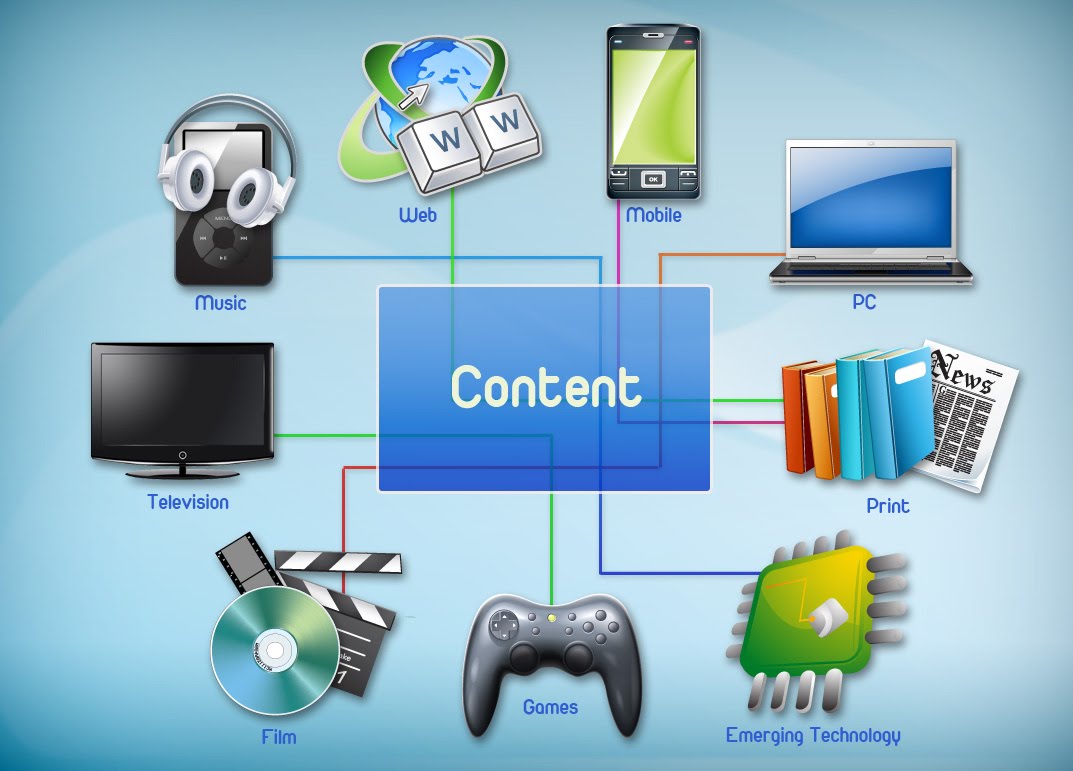 Secondly, the accessibility to content from various platforms has socialized the development of audiovisual products. That is, the actors change, and with them their performance in front of the camera. The lens no longer shoots to broadcast a video on a standard screen that outputs with a certain quality. The objective now records to transmit a message through numerous channels, with the particularities of each one. The adaptation and specialization of professionals to the new media reality is essential.
Finally, the profile of the professional behind the camera has also been modified. This point is mainly motivated by the emergence of smartphones, which allow the recording of videos in high quality, even 4K, regardless of the place or conditions. There are even terminals on the market that allow Ultra HD video recording underwater.
The convergence of all these factors leads to a challenge for professionals in the audiovisual industry, who must provide added value that allows them to differentiate themselves. Experience and creativity are, in this sense, the keys to overcoming the challenge that technology poses for this sector.
The trend towards immediacy, the consumer rules
Experience, together with specialization, allows the production of higher quality audiovisual content in less time. The Internet has shortened the useful life of audiovisual productions. That is, productions can remain on the web for an indefinite period of time; However, consumption tends towards immediacy. The Netflix platform serves as an example, which also generates its own productions, such as House of Cards.
Netflix's bet for its star series was not fragmentation, the weekly broadcast of each episode. Its users have access to complete content, and manage their viewing based on their tastes and needs. The viewer, the audiovisual consumer, is no longer a passive element, a mere receiver, but an active part of the process.
This audience has also become fragmented, which has caused us to turn towards easily consumable and digestible products, which remain “in the air” for a short period of time. There is a tendency towards immediacy, which influences the protagonists, from the client or contracting company, to the audiovisual production company and the content to be produced, all with the defined objective of accessing the audience that interests us.

Accessibility and adaptation, the transmedia product
The techniques, for their part, have not undergone such a drastic modification, what has varied enormously are the execution times, which are reduced day after day thanks to technological advances.
You can no longer think of a product for film or television. Now the ability for it to be transmedia is valued, so that the content can be broadcast on all channels, which has forced extreme care to be taken with the productions so that they are accessible to the platforms.
This causes us to rethink the format in which the images are filmed, the size at which they will be broadcast, the quality of the sound, or the size of the labels, among other aspects. The objective is to direct the content to other channels that provide added value for the viewer.
The active consumer can access the making of, exclusive content, related products and even motivate the generation of new products. The companies produce new content, derived from viewer demand, that emerges from the main message, such as spin-offs of series or documentaries that explain how the project came to be.
 Where is the command?
The battle for the remote control, present since the 80s, has cooled down due to the lack of interest of a part of the population, native to the digital world. This process leads to a fight for the presence and dominance of the “second screen.” According to a Deloitte study in the United States, digital natives, under 25 years of age, consume more television content through computers, tablets and smartphones than in front of the television itself (56% compared to 44% of the total time spent). In addition, 86% of the total respondents consider themselves a “multitasking public”, that is, they consume television while using another screen for a different purpose, such as browsing the web, interacting on social networks or checking email.
The presence of brands in the online environment and on social networks is, therefore, essential. This entails changes in audiovisual productions. The immediacy, to which we have referred previously, and the activity of social networks motivate the creation of content that can be viralized. The consumer is willing to pay you limited attention, which should translate into the generation of agile, brief, easy-to-consume products. It is also essential that these products are shared in the online environment, so that the volume of impacts counteracts the transience of the message and is not forgotten.
In short, the constant evolution of technology has meant, for companies in the audiovisual sector, an opportunity, but also a requirement for adaptation and specialization. It has forced the adoption of three-dimensional thinking, a new approach that has updated the way audiovisual content is conceived and produced. This industry faces a key challenge for its future, but we have the necessary tools to continue improving.
Enrique de Álzaga
Director of VORÁCINE

Did you like this article?
Subscribe to our NEWSLETTER and you won't miss anything.
Related articles
 ITV adopts Ooona for its location and accessibility needs
 Antena 3 Noticias improves its accessibility with the NaviLens QR
 Santiago Segura and his “family” film ‘Father there is no more than one 3’
 Avid bets on secure virtual post-production in the cloud with its Edit On Demand proposal
 The latest technology at the service of accessibility on television
 EGEDA will award its Gold Medal to Santiago Segura
 The UAB brings together experts in accessibility in connected television
 Digital AV Magazine renews its website in its commitment to quality and informative immediacy
 Fox Sport Eredivisie: efficiency, flexibility and immediacy in a new concept of production and broadcast center
 Red Bee Media to provide accessibility services to BBC
 Accessibility in the new audiovisual environment
 DTT in HD, payment services, interactivity and accessibility... the pending subjects
 Immediacy in broadcast with the integration of Snell's Morpheus and EVS servers
 More formats, accessibility and speed with Avid