





'Lucy', Luc Besson's latest film, with Scarlett Johansson and Morgan Freeman, filmed with Sony's F65
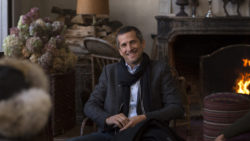
Thierry Arbogast, director de foto en ‘Lucy’, desgrana en esta entrevista algunos de los secretos del rodaje de la última película de Luc Besson que se estrena estos días.
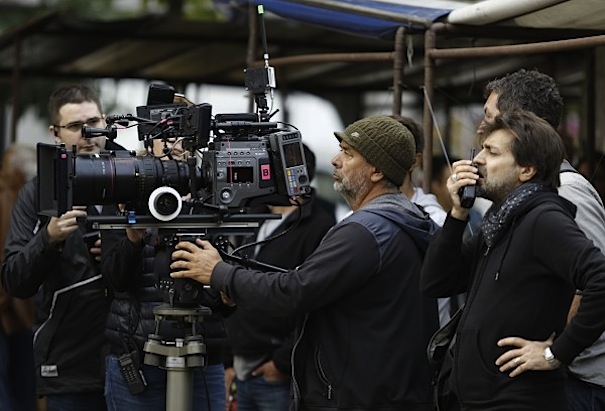
Lucy, la última película de Luc Besson, con Scarlett Johansson y Morgan Freeman y filmada con la F65 de Sony, llega ahora a las pantallas. Thierry Arbogast, AFC y director de fotografía de esta película y muchas otras de Besson, comparte su experiencia de grabación con la F65.
¿Qué te hizo elegir la F65?
Hasta ahora, Luc ha filmado muy poco en digital: solo unas pocas tomas aquí y allá por razones técnicas y nunca una película completa. Para Lucy, quería lanzarse. Por lo tanto, empezamos a realizar pruebas con las tres cámaras del momento, es decir, la Epic, la Alexa y la F65.
Después de las proyecciones de prueba, todos coincidimos en que la F65 era visualmente superior a las otras dos cámaras. Durante el etalonaje, siempre acabábamos combinando las tres cámaras, pero la imagen natural de la F65 nos conquistó a todos.
Durante la proyección, fue Luc quien habló primero. No tuvo ninguna duda de que era la F65 la que destacaba sobre las demás. Le atrajo mucho la fidelidad del color y la reproducción de los tonos de piel. Los colores estaban ahí realmente; podíamos reconocer el azul del suéter y los colores de la piel parecían muy naturales.
Pero en realidad grabamos con las tres cámaras por diferentes razones, sobre todo debido a cuestiones de espacio.
 ¿En qué sensibilidad usasteis la F65?
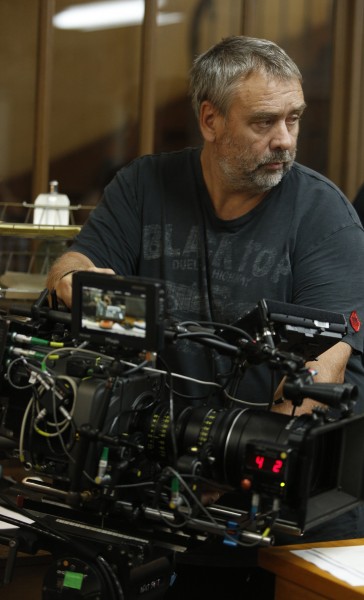
Trabajé con la sensibilidad nominal de la cámara, es decir 800 ISO. Y creo que la sensibilidad de la F65 es suficiente cuando la muestro en el monitor 800 ISO. Hemos llevado a cabo las pruebas en Pigalle, por la noche y con las tres cámaras. Me di cuenta de que la sensibilidad de la F65 y la Alexa eran muy similares, mientras que la sensibilidad de la Epic era mucho menor.
¿Cómo expusisteis la F65?
Como norma general, el técnico de imagen digital o DIT controla el iris con un mando a distancia. Antes de la toma, analizamos el efecto deseado y, de forma conjunta, acordamos la mejor exposición. Por ejemplo, le digo si quiero dejar que los obturadores vayan rapidísimos o no, el nivel de negro y dónde está la luz clave, entre otras cosas.
Después, si se necesitan cambios de iris durante la toma, él se encarga de ellos echándole un ojo a la curva del monitor.
¿Grabasteis en 8K?
No, trabajamos en 4K. Éramos conscientes de que teníamos un coche de carreras, pero no queríamos pisar demasiado el acelerador. Para esta película, no se necesitaba 8K, sobre todo teniendo en cuenta que se estrenará en 2K en la mayoría de cines.
Por supuesto, hay pases exclusivos previstos en 4K, pero las copias del estreno serán en 2K. El departamento de efectos especiales se sintió muy satisfecho con los ficheros 4K que les proporcionamos. Creo que 8K hubiera aumentado considerablemente su tiempo de cálculo.
8K es obviamente algo bueno en sí porque, como siempre decimos, es mejor empezar demasiado alto y bajar y, por supuesto, habríamos podido obtener un fichero 4K mejor de un fichero 8K. Desde la fase de preparación de la película, insistí en que Luc grabara en 4K. En ese momento, las primeras pantallas y televisores 4K estaban empezando a aparecer. El rango dinámico 4K ya está aquí, tal vez más en los Estados Unidos que en Francia, pero ha empezado.
¿Qué piensas acerca de la ergonomía?
Luc siempre encuadra sus películas. Él podría opinar mejor que yo.
Pero al igual que la Genesis o la F35, no estamos hablando de cámaras que sean muy atractivas desde el punto de vista ergonómico. Y es obvio que hubiéramos preferido una cámara que fuera más compacta. Sin embargo, su diseño hace que la F65 sea mucho más equilibrada sobre el hombro que una RED.
Para algunas tomas en las que queríamos grabar con un Movi, nos servimos de la Epic. Se trata de una cámara sorprendente, sobre todo por su ligereza. A pesar de sus formas redondeadas y su impresionante apariencia, es una cámara bastante ligera y supongo que esto es gracias a los materiales con los que está hecha. En mi opinión, su peso es prácticamente idéntico al de una Alexa, aunque su volumen es obviamente muy diferente.
¿Cómo fue el proceso de etalonaje?
Hay que decir que tratábamos con tres grandes cámaras y todo fue muy bien. Además, cuando se trabaja con un buen etalonador, siempre se logra eliminar las diferencias entre ellas.
Aunque sus sistemas de interpolación cromática no son los mismos, y a pesar de las otras diferencias, no tuvimos ningún problema al armonizarlos.
Si quisiéramos resumir sus respectivas ventajas, podríamos decir que la Alexa tiene el mejor rango dinámico, la F65 ofrece la mejor reproducción del color y la Epic es la más ligera.
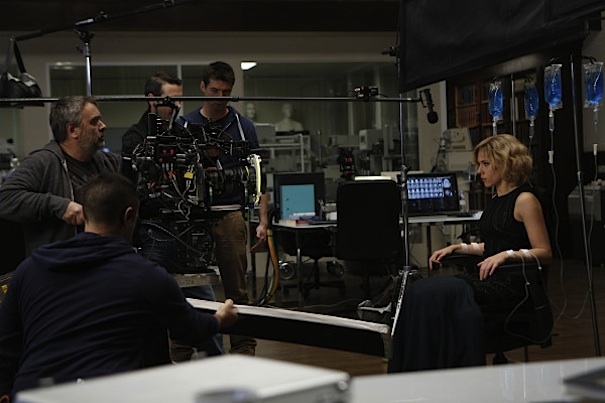
¿Usasteis los filtros de densidad neutra integrados?
Sí, fueron muy útiles. Son extremadamente rápidos de usar y eliminan la superficie de cristal de la parte frontal del objetivo. De vez en cuando lamentábamos un poco que empezaran en ND0.9. A veces nos hubiera gustado un ND0.6 o un ND0.3. Sin embargo, la elección de Sony es comprensible, porque los filtros neutros de alta densidad se utilizan principalmente solo cuando hay grandes cambios en la luz. De hecho, Thierry Arbogast tiene razón. Hay menos de un kilo de diferencia entre el peso de estas dos cámaras (13,5 kg para la F65 y 12,6 kg para la Alexa, equipadas ambas con dos módulos grabación RAW).
¿Grabasteis a 120 fps?
Tuvimos muy pocas tomas a alta velocidad, solo unas pocas para los efectos especiales. Hicimos tomas de multitudes a 100 fps y a velocidades de obturación muy rápidas de hasta 45 grados para evitar problemas de giro. Y aquí, la sensibilidad de la cámara me ayudó mucho. La secuencia se grabó en un estudio, donde recreábamos la luz del día. Yo tenía un HMI de 24 kW para el sol y dos HMI de 18 kW en el fondo para cubrir un set de 250 m2 y estaba a la máxima apertura. Nunca habría podido hacer eso con una cámara menos sensible.
¿Qué objetivos utilizasteis? ¿Pensasteis que era necesario filtrar?
Como norma general, Luc nunca filtra con difusores. Le gusta una imagen nítida, sin necesidad de un filtro de difusión. Por tanto, traté de elegir objetivos que no fueran demasiado duros, como por ejemplo los Cooke S4, que son muy suaves, redondos y flexibles. No son agresivos en absoluto.
Y como Luc adora el zoom, también teníamos un objetivo con zoom, un Fujinon Alura de 18-80 mm, que es un objetivo realmente eficaz. La ventaja de la lente de zoom es que, al ajustar a 80 mm, la imagen es un poco más suave que con un objetivo de enfoque fijo de 80 mm.
La mayor parte del tiempo, prefiero trabajar con soportes suaves. Para la cámara, prefiero la suavidad de RAW a la dureza de un archivo comprimido puesto que esta suavidad nos permite buscar información.
¿Tienes alguna queja de esta cámara o hay algo que te gustaría ver?
Estoy impaciente por tener una cámara digital capaz de hacer ramping, ya sabes, la idea de cambiar el ritmo al grabar mientras se compensa simultáneamente la exposición con el obturador. Para esta película, pensábamos hacerlo pero la F65 no lo permite.
También me gusta la idea de las cámaras actualizables, como la EPIC, que se ha convertido en la Dragon. Hoy en día, los componentes de cámara son principalmente electrónicos y la evolución en esta área es permanente. En este sentido, estaría bien ofrecer la posibilidad de cambiar estos componentes, al tiempo que se mantiene el embalaje.
Lo único que quisiera criticar acerca de esta cámara es el tamaño de su sensor porque prefiero sensores grandes. Cuanto más grande, mejor. La F65 está equipada con un sensor Super 35 mm (24,7 mm x 13,1 mm). Hubiera preferido un sensor 4:3, o incluso un 24 x 26 mm. Por tanto, estoy esperando impaciente la cámara de “70 mm” de Sony.
Entrevista de Pierre Souchar
[youtube]https://www.youtube.com/watch?v=YibFcTkJu3U[/youtube]
Did you like this article?
Subscribe to our NEWSLETTER and you won't miss anything.
Related articles
 Zeta Studios begins filming 'Thank you, team', its latest film for Netflix
 Paco Plaza directs 'Mugaritz', the latest original documentary film from Movistar Plus+
 'The Worst Team in the World', Taika Waititi's latest film, graded with DaVinci Resolve
 Barcelona hosts the filming of 'El 47', the latest film by The Mediapro Studio
 The Seville Festival will open the curtain with 'Non-Fiction', the latest film by Olivier Assayas
 This is how the historic screening of Ang Lee's latest film in 3D was prepared, at 120 fps, 4K and brightness of 28 feet-Lambert per eye
 'Julieta', Almodóvar's latest film, will compete for the Palme d'Or at the Cannes Film Festival
 Timothy Woodward Jr. shoots his latest film with Blackmagic's Ursa
 Terry Jones grades his latest film, 'Absolutely Anything', with DaVinci Resolve
 Spectacular premiere in Argentina of 'Futbolín (Metegol)', the latest film by Juan José Campanella
 HP technology brings DreamWorks' latest animated film 'Kung Fu Panda 2' to the cinema
 Nunes estrena su última película, ‘Res Publica’, en Barcelona y en Madrid
 Monte Hellman grades his latest film in Infinia
 Maurizio Scaparro presentará en Sevilla su última película con Azcona