





Harman launches new JBL 7 reference monitors
At AES 2014, JBL Professional has introduced the 708i 8-inch 2-way, and 705i 5-inch 2-way with remarkable frequency response and output that defy their small size.
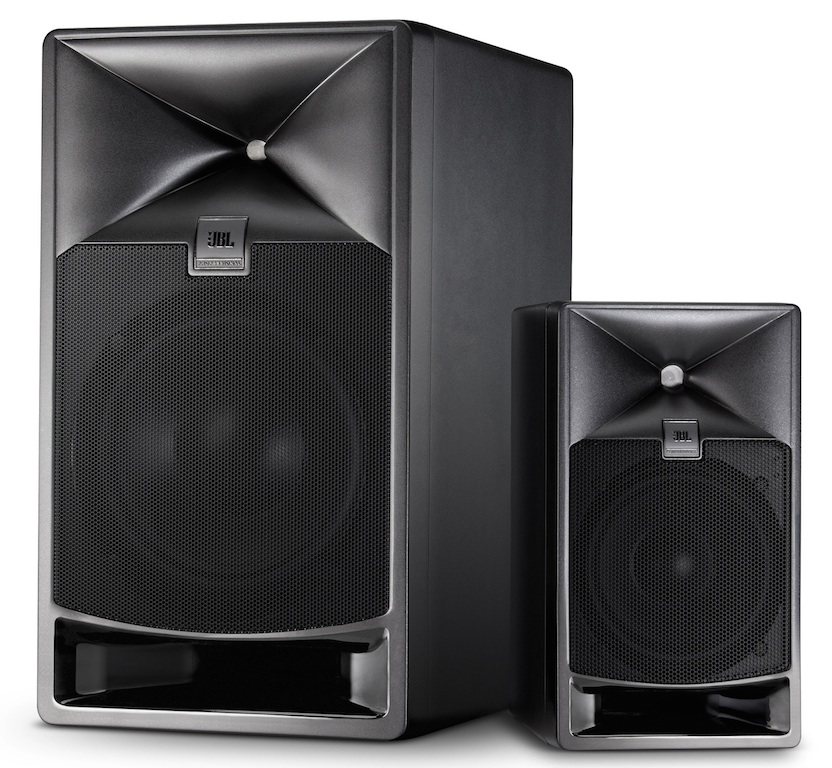
Harman today presented two new models of JBL Professional reference monitors. The new 7 Series models are the 708i and 705i. Taking advantage of the technologies developed by JBL in the M2 monitors, two models now appear on the market designed for broadcast environments, post-production, surround content production and immersive audio.
From a hardware perspective, multi-channel monitoring presents several challenges. The presence of video displays can limit speaker placement options, installing a power outlet at each speaker location is expensive, and managing a multichannel monitoring system requires expensive external equipment. Using traditionally powered studio monitors is problematic. The solution requires a next-generation approach to monitoring.
At AES 2014, JBL Professional has introduced the 708i 8-inch 2-way, and 705i 5-inch 2-way with remarkable frequency response and output that defy their small size.
To deliver exceptional performance, JBL has developed a new high-frequency transducer with a low-mass, ring-shaped miniature 2409H diaphragm design that enables very high performance with low distortion and high frequency response at 35 kHz. JBL has also designed two new 5- and 8-inch high-excursion woofers, the 725g and 728G that enable the speakers to deliver robust low-frequency outputs in the 30Hz range.
Both monitors feature birch plywood and bottom and rear mounting points.
Para reducir el tamaño y el costo de instalación, los altavoces están alimentados por el amplificador de potencia Corona DCi 8 | 300N de 8 y 4 canales. Tanto el 705i y 708i pueden configurarse con un solo canal de amplificador o bi-amplificado. Para mayor precisión en cualquier recinto, el procesador de señales BSS Soundweb London de Harman ofrece tuning de altavoces, room EQ, y gestión de graves. El procesador acepta 16 o más entradas analógicas y AES/EBU, y red con amplificación de potencia a través de CAT5. Todo el sistema puede ser controlado externamente con el software Harman HiQnet Audio Architect, un controlador de hardware, o una tableta inalámbrica.
Did you like this article?
Subscribe to our NEWSLETTER and you won't miss anything.
Related articles
 Canon launches new 4K HDR reference monitor and 4K PTZ camera
 Sony BVM-X300 OLED Reference Monitors Win Technical Emmy
 Yamaha lanza los monitores de referencia MSP3A compactos con tecnología Twisted Flare Port
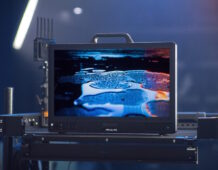 SmallHD expands its range of reference monitors with the new OLED 22 4K
 Yamaha launches new HS MP series self-powered monitors
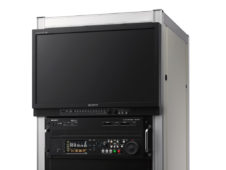 Sony presents the new generation of Trimaster 4K HDR reference monitors
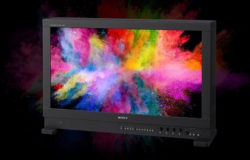 Sony debuts Trimaster HX series of 4K HDR reference monitors
 JVC launches three new monitors for HD production
 HP announces new 4K and 5K monitors
 Sony launches the new Bravia 4K LED professional monitors
 Harman launches an iPad remote control for the Soundcraft Compact Si and Vi
 TvLogic launches six new monitors
 Sony redefines the era of reference monitoring with its new OLEDs
 Focusrite VRM Box: virtual emulation of reference monitors and spaces