





Broadcasting and satellite: a couple for the future
The CEO of Hispasat, Carlos Espídos, analyzes in this Tribune the future of broadcasting taking into account the emergence of IPTV, hybrid television, the distribution of multi-screen content and Ultra High Definition.
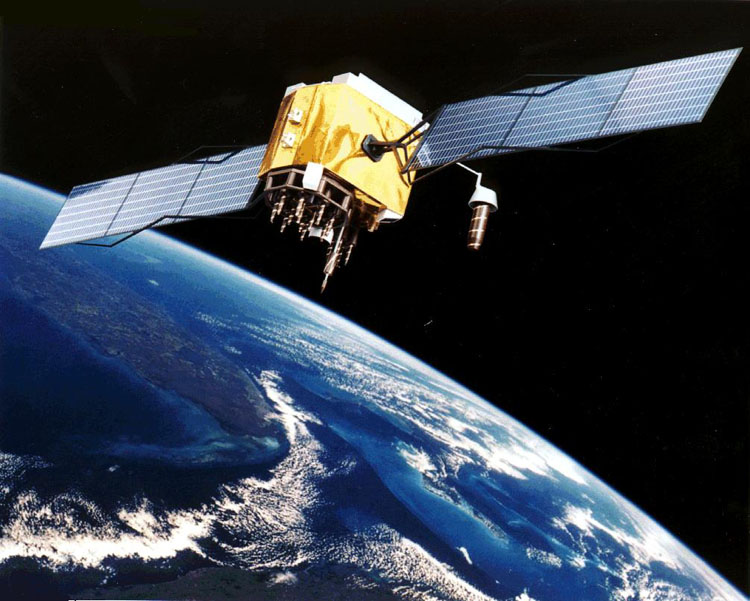
The broadcasting sector is experiencing an exciting time of changes and developments of all kinds: technological, consumer habits, business models. Some voices are already making dire predictions about the death, which they take for granted, of linear television, which is seen on the home screen and with pre-established programming. They say that in the almost immediate future, television will only be watched on the Internet and on demand, on different devices and anywhere.
However, that is not going to be exactly the case, at least in the next decade. It is true that new ways of watching television are opening up, but the most rigorous and recent data indicate, first of all, that the number of homes with television in the world will increase by more than 120 million between 2012 and 2015. And that, of all the technologies that transport this content, those that will grow the most are DTH television platforms, which broadcast through satellites, with an increase of 100 million homes (in fact, according to a study (Digital TV Research, satellite TV revenues will surpass cable TV revenues as early as this year); and cable companies, with 62 million more. While IP TV will not exceed 45 million more.
Thus, the screen and the more traditional formats for viewing audiovisual content continue to triumph. Euroconsult predicts that the supply of linear channels will increase by 50% in 10 years, reaching 48,000 in 2021. Within these, the increase in high definition (HD) channels will be even greater proportionally, since they will triple, going from 5,600 in 2012 to the estimated 17,000 for 2021.
Television consumption has also increased significantly in recent years, but even today linear television continues to be the clearly prevailing trend over on-demand television.
According to a study by IHS, this predominance will continue in the coming years: although the proportion is decreasing, in 2017 traditional channels will still exceed at least 75% of the television market even in the most technologically advanced countries, while online television consumption will not exceed 7% and pay video will reach a maximum of 5%. Within pay television, the market share of OTT services will not exceed 10% in 2017 in the US, one of the countries with the greatest development of the same; and this despite the fact that they are going to almost double their business figures in these years.
All these data indicate to us, therefore, that the first steps of a paradigm shift are being taken in the world of audiovisual content and in the way it is consumed, but that this change will not mean the end of television as we have known it until now. What is evolving very quickly is the demands of users regarding the quality of images and the possibility of viewing them wherever and whenever they want, as well as the technologies that allow us to respond to these demands. These demands are what will mark the future of television.
4K as a spearhead
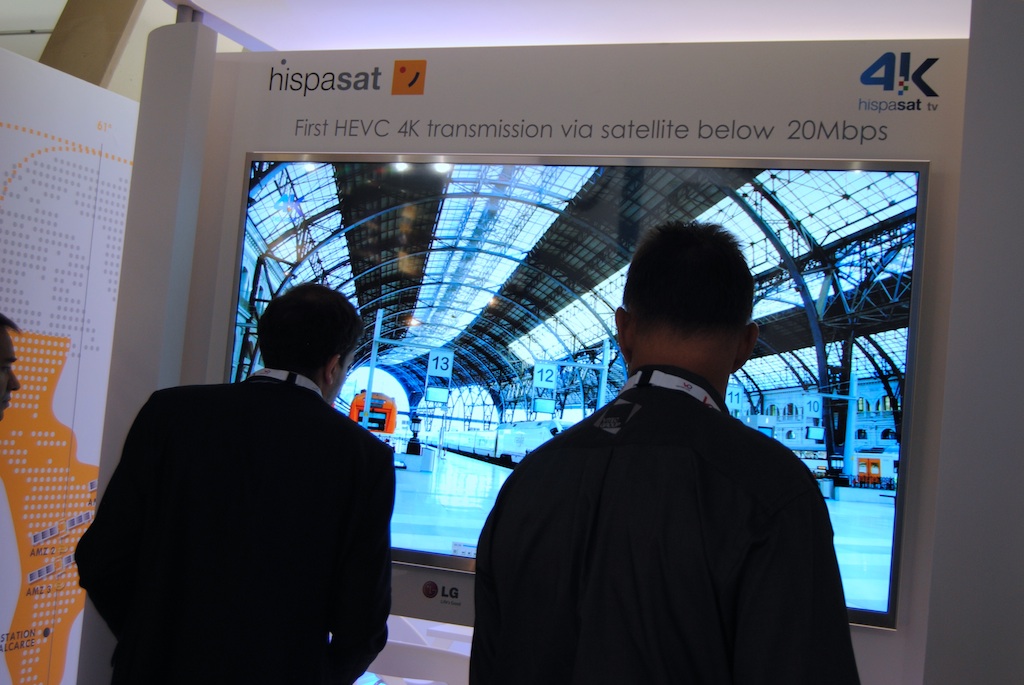
The technology that is making it possible to significantly increase the sharpness of the images and improve the immersive experience of users is Ultra High Definition (UHD). 4K multiplies the number of pixels of conventional high definition by four, achieving a much higher resolution (4,096×2,160). But it's not just that; UHD also means higher frame rate, which increases temporal resolution to perceive moving images with higher quality, a wider color range and greater bit depth, which allows improving the transition between colors, as well as an increase in dynamic range to better visualize details in low contrast conditions.
Image quality is one of the most relevant factors for the pay TV customer, so having 4K channels will constitute a competitive advantage for television platforms. In addition, the prices of UHD televisions have decreased exponentially in the last year, and it is expected that in one or two years they will be equivalent to current HD televisions. On the other hand, there is already a lot of content, such as film productions, that is being produced in 4K at source. All of this leads us to believe that the commercial development of this new technology will be rapid, even faster than that of HD. And we hope that satellite, which already played a leading role in the development of high definition or in the digitization of television as it is the most efficient channel for disseminating so much information, can also be the reference medium in this new process.
However, to achieve rapid implementation of this technology in homes, different complements will be needed to make its implementation viable. One of them is the HEVC (High Efficiency Video Coding) coding standard, which was published in January 2013 and is intended to be a key element in the development of 4K broadcasting, improving coding efficiency by 50% compared to the previous standard, MPEG-4.
This avenue of work is also being explored in the satellite sector. To achieve greater efficiency in transmission, an update to the DVB-S2 system has been developed, called DVB-S2X, which allows an increase in efficiency of 30-40% for bidirectional services and around 10% for unidirectional services, such as classic DTH platforms. The combined use of HEVC and DVB-S2X will allow improvements in efficiency of up to 60%, which will greatly facilitate the implementation of UHD by achieving better use of frequency bands and tighter prices. It is expected that within two years, coinciding with the Rio de Janeiro Olympic Games, these new coding and transmission systems will allow 4K to be transmitted in bandwidths similar to those of HD in its beginnings. The schedule, similar to that of the implementation of high definition, could materialize even in a shorter period of time, thanks to the enthusiasm that this new technology arouses among industry, operators and consumers.
Libertad multipantalla
Además de mayor calidad de imagen, los consumidores quieren tener la posibilidad de acceder a los contenidos audiovisuales desde cualquier dispositivo, en cualquier momento y lugar. No se renuncia a la televisión lineal, que sigue siendo la reina de las pantallas domésticas, pero ahora se suman otros dispositivos y otros formatos y se consume cada vez más televisión fuera de casa, aunque en proporciones aun pequeñas.
La televisión multipantalla es ya una realidad en todo el mundo, pero la mayor parte del consumo televisivo se sigue haciendo en casa en todos los tipos de dispositivos: televisiones, ordenadores de sobremesa, portátiles, smartphones o tablets.
Recapitulemos: si crece el consumo de contenidos audiovisuales multipantalla, si éste se sigue haciendo sobre todo en el hogar y si se ven mayoritariamente los canales tradicionales, la conclusión es que el satélite se constituye en el mejor medio para la transmisión de los mismos por su capacidad, cobertura global, alta calidad y versatilidad. La integración de los servicios de radiodifusión por satélite en las redes IP (Internet Protocol) y, por tanto, la conversión de la señal del satélite a IP es el elemento vertebrador de la experiencia multipantalla en el hogar, ya que permite la distribución de estos contenidos, en alta calidad y de forma simultánea y personalizada, a cualquiera de los dispositivos conectados a la red IP doméstica. Las ventajas de la distribución IP son evidentes: expande la experiencia de la televisión tradicional a los nuevos dispositivos en cualquier ubicación, libera el tráfico de las redes de banda ancha y aporta valor añadido al contenido de los operadores de pago.
Esta integración de las señales satelitales en las redes IP va a permitir que todas las mejoras conseguidas hasta ahora en términos de calidad, cantidad y ubicuidad de los contenidos televisivos del satélite se puedan disfrutar de la forma más rentable para operadores y consumidores, ya que se podrán aprovechar y optimizar las redes ya existentes. En Hispasat trabajamos en diferentes proyectos encaminados a lograr este objetivo, como la implantación del protocolo de telecomunicaciones SAT>IP, por medio del cual la señal del satélite es convertida a IP justo en el punto de recepción gracias a un pequeño servidor que puede estar localizado en la propia antena o en el hogar del usuario, sin tener que realizar instalaciones complejas ni generar costes añadidos. Así, esta tecnología permite ofrecer contenidos vía satélite de alta calidad en todas las pantallas del hogar de una forma más eficiente.
Estos mismos principios han guiado el proyecto de innovación ICT2020, liderado por Hispasat, que ha trabajado en la optimización de las Infraestructuras Comunes de Telecomunicación (ICT), con el fin de aprovechar los recursos ya existentes en los edificios para los nuevos desarrollos de tecnologías y servicios de telecomunicaciones y de mejorar su uso para soportar mayores volúmenes de información, con soluciones que permiten la integración entre el satélite y la fibra óptica.
Un horizonte híbrido
En definitiva, el sector de la radiodifusión vía satélite se encuentra en un momento de plena efervescencia y ofrece un interesante horizonte para la innovación tecnológica, que tendrá que responder a los múltiples desafíos que plantean las demandas de los usuarios, la convergencia de formatos y redes y los cambios que ya se están produciendo en los modos de ver televisión. Un horizonte que, como hemos visto, será, desde luego, híbrido y en el que convivirán muy diferentes formas de consumo de contenidos audiovisuales, lineales y bajo demanda, de transporte de las señales y de tipos de pantalla.
Para los profesionales del sector satelital se abre así un interesante camino en el ámbito de la radiodifusión, ya que los contenidos audiovisuales se están convirtiendo en el servicio más apreciado por los usuarios. El interés que las operadoras de telecomunicaciones están mostrando por ofrecer este tipo de servicios de valor añadido a sus clientes así lo pone de manifiesto. Las compañías telefónicas no quieren quedarse al margen del creciente mercado de los contenidos ni limitarse a ser sólo las que transportan voz y datos, y están adaptando sus estrategias comerciales para integrar televisión y cine.
En toda esta evolución, el satélite puede tener un papel muy importante. Ya es un elemento clave en la distribución de contenidos audiovisuales, tanto de manera directa en las plataformas DTH, que emiten a través de satélites, como en las redes de TDT y de cable, donde actúa muchas veces como enlace entre cabeceras.
También va a poder integrarse con las redes IP para distribuir contenidos vía satélite a todo tipo de dispositivos domésticos. Y está liderando la difusión de contenidos 4K de alta calidad. Por su gran capacidad, que le permite emitir con altísimos niveles de calidad; porque puede llegar a cualquier punto de la Tierra, cosa que las redes terrestres no siempre consiguen; y por su alto desarrollo tecnológico y la facilidad de despliegue de su red, el satélite está llamado a constituirse en una de las principales tecnologías para la radiodifusión.
Ahora tenemos que trabajar para transformar todas estas potencialidades en ventajas competitivas que nos permitan lograr este objetivo. Un desafío apasionante para todos los actores implicados en esta película.
Carlos Espinós
Consejero delegado de Hispasat

Did you like this article?
Subscribe to our NEWSLETTER and you won't miss anything.
Related articles
 Rádio Escola shapes the future of broadcasting with AEQ Forum IP Split
 Inés Sanz (Hispasat): “en la red del futuro uno de los componentes esenciales será el satélite”
 The European Broadcasting Union cancels the Eurovision Song Contest 2020
 NEP Finland and EVS, a perfect couple for 'Love Island Suomi'
 Hispasat advances the future of satellite television at IBC
 Aicox will show its latest developments in broadcast, satellite and radio broadcasting at BIT 2016
 Yamaha and Steinberg, the ideal couple for Dizale
 The European Union opens a public consultation to review copyright rules for satellite and cable broadcasting
 BC-Netstate facilitates administration and improves quality in broadcast networks
 Aicox, at BIT Broadcast 2014, with its systems for broadcast, satellite and radio broadcasting
 SES exposes in Malaga the importance of the satellite in the audiovisual ecosystem of the future
 LATSAT, first Latin American satellite communications and broadcasting congress
 Dynamic Broadcasting: a revolution for broadcasting?
 Egatel reinforces its presence in the radio broadcasting market at IBC